 by
by The area of Zimbabwe, Zambia, and Malawi is rich in history and geography. It was once known as Rhodesia and Nyasaland. Knowing its cartographic history helps us understand its growth over time.
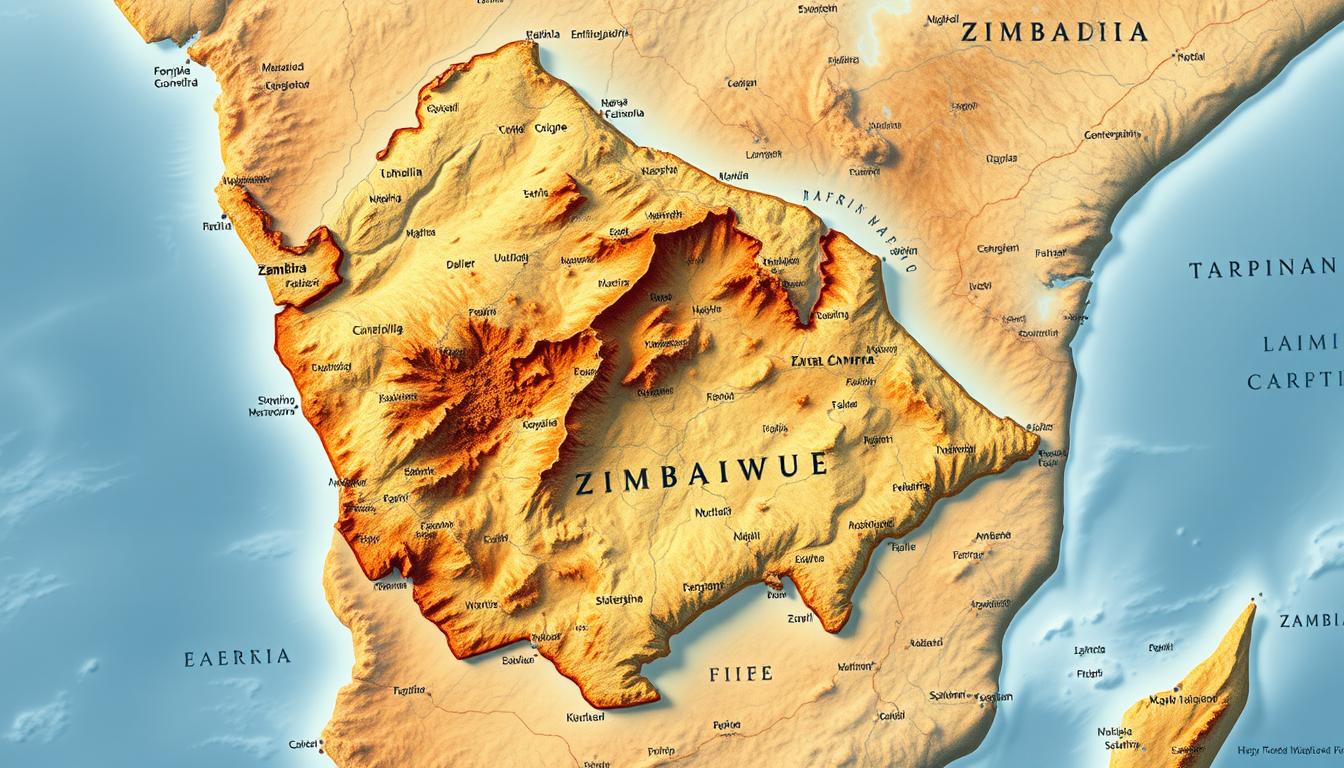
A printable Zimbabwe Map is great for learning about the country’s geography. It shows major cities, rivers, and landmarks. The region’s past as Rhodesia and Nyasaland makes its geography even more interesting.
Looking at maps of these countries reveals their shared history. It also shows how their borders have changed over time.
Historical Geography of Zimbabwe, Zambia, and Malawi
The history of Zimbabwe, Zambia, and Malawi is tied to their past as part of the Federation of Rhodesia and Nyasaland. This shared history has shaped their geography and borders.
The Federation of Rhodesia and Nyasaland
In 1953, the Federation of Rhodesia and Nyasaland was formed. It brought together Northern Rhodesia (now Zambia), Southern Rhodesia (now Zimbabwe), and Nyasaland (now Malawi). This union was key to the region’s geography.
Colonial Administration and Mapping Efforts
During colonial times, maps were made for administrative and economic reasons. The colonial powers worked on detailed maps to manage the area well.
Post-Independence Border Changes
After gaining independence, the countries saw many border changes. These changes were due to historical claims, economic needs, and regional politics.
Transition from Colonial to Modern Maps
Switching to modern maps involved updating information and reflecting new political lines. This shift has continued, with new technology making maps more accurate and detailed.
| Country | Independence Year | Colonial Name |
|---|---|---|
| Zambia | 1964 | Northern Rhodesia |
| Zimbabwe | 1980 | Southern Rhodesia |
| Malawi | 1964 | Nyasaland |
A historian noted, “The legacy of the Federation of Rhodesia and Nyasaland affects the geography and politics of Zimbabwe, Zambia, and Malawi.”
“The geographical features of these countries were not only shaped by their natural environment but also by the historical events that unfolded during the colonial and post-colonial periods.”
Comprehensive Zimbabwe Map Guide
Zimbabwe’s map shows its political lines, how it’s divided, and its natural features. This guide dives deep into the country’s map, helping you understand its layout and explore its different areas.
Political Boundaries and Administrative Divisions
Zimbabwe is split into several provinces, each with its own capital. These provinces have districts, which help with local government and management.
Provincial Structure and District Borders
Zimbabwe’s provinces help with good governance. There are 10 provinces, including Harare and Manicaland. Each province handles its own affairs, with district lines showing where they are in charge.
Where to Find High-Resolution Zimbabwe Maps
Looking for detailed Zimbabwe maps? Many online places and official sites have them. These maps are great for planning trips, research, or learning.
Online Resources and Official Government Sources
For the best Zimbabwe maps, check official sites and trusted mapping services. They offer maps that show the country’s cities, towns, and nature. A high-resolution Zimbabwe Map is perfect for detailed geography needs.
- Government websites
- Reputable mapping services
- Geographical databases
Geographical Features of Zimbabwe
Zimbabwe’s geography is full of wonders, from tall mountains to wide river basins. The country’s landscape is rich with different features. These features make Zimbabwe stand out.
Major Landforms and Natural Landmarks
Zimbabwe boasts many important landforms and landmarks. The Eastern Highlands stand out along the eastern border. They offer a beautiful view of the area.
The Eastern Highlands and Great Dyke
The Eastern Highlands have tough terrain and many ecosystems. The Great Dyke runs across the country. It’s known for its minerals.
River Systems and Water Bodies
Zimbabwe’s rivers and lakes are key to its geography. The Zambezi River Basin is a major one. It supports many animals and plants.
The Zambezi River Basin and Man-made Lakes
The Zambezi River is essential for water and tourism. Victoria Falls is a famous sight. Man-made lakes like Lake Kariba also add to the water features.
Detailed Zimbabwe Map with Cities and Towns
Looking at Zimbabwe’s detailed map shows us the country’s urban and rural areas. It gives us a clear view of the urban planning, geography, and regional development. Knowing these areas well helps us understand Zimbabwe’s geography and economy.
Major Urban Centers
Zimbabwe’s big cities are key for the economy, culture, and history. Harare, the capital, is the biggest city and a major economic center. Bulawayo, the second-largest, is famous for its history and culture.
Harare, Bulawayo, and Regional Capitals
Harare and Bulawayo are not just big cities. They are also regional capitals, with important roles in administration and economy. Other regional capitals also play key roles in their provinces, providing vital services and infrastructure.
Rural Settlements and Growth Points
Rural areas and growth points are key parts of Zimbabwe’s geography. These spots have smaller towns and villages that act as local economic centers.
District Centers and Border Towns
District centers are important for local administration and service delivery. Border towns, on the other hand, are critical for international trade and commerce.
The detailed map of Zimbabwe shows the importance of these areas in the country’s development. It’s vital for policymakers, investors, and travelers to understand the geography of these regions.
Physical Map of Zimbabwe: Topography and Natural Features
The physical map of Zimbabwe shows a varied geography. It has different elevations and types of vegetation. This variety comes from its location in southern Africa, where many geological and climatic factors have shaped its landscape over millions of years.
Elevation and Mountain Ranges
Zimbabwe’s terrain ranges from low-lying areas to high mountains. The Matobo Hills and the Majestic Matopos National Park are famous for their unique rock formations and granite landscapes. The country’s highest peak, Inyangani, is in the Nyanga Mountains, showing the variety of Zimbabwe’s mountain ranges.
Contour Mapping and Altitude Variations
Contour mapping helps us understand Zimbabwe’s altitude changes. This method uses contour lines to show different elevations. It gives us insights into the country’s topography.
By studying these maps, we can see areas of high and low elevation. This is important for agriculture, urban planning, and environmental conservation.
Vegetation Zones and Natural Regions
Zimbabwe’s vegetation is as varied as its topography. It includes savannahs, grasslands, and forests. The country’s natural regions have different vegetation types, influenced by climate, soil, and altitude.
Understanding these vegetation zones is key for managing natural resources and conserving biodiversity.
Savannah, Forest, and Grassland Distribution
The distribution of savannah, forest, and grassland in Zimbabwe varies by region. Savannah ecosystems cover much of the country. Forests are found in areas with more rainfall. Grasslands are common in regions with moderate climates.
Each ecosystem supports a unique set of plants and animals. They all contribute to Zimbabwe’s rich natural heritage.
Political Map of Zambia and Its Administrative Structure
Knowing Zambia’s political map is key to understanding its setup. The country’s history is rich, from Northern Rhodesia to its current form. It has evolved into the modern state we see today.
Provincial Boundaries and Major Cities
Zambia is split into ten provinces, each with its own capital. The provinces are:
- Lusaka Province
- Copperbelt Province
- Central Province
- Luapula Province
- Muchinga Province
- North-Western Province
- Northern Province
- Southern Province
- Western Province
- Eastern Province
Lusaka, Copperbelt, and Other Provinces
Lusaka, the capital, is in Lusaka Province. It’s the heart of Zambia’s government and economy. Copperbelt Province is famous for its copper mines.
Other provinces like Northern and Luapula are vital for farming and natural resources.
Historical Evolution of Zambia’s Political Map
Zambia’s map has changed a lot from its colonial days. It was once Northern Rhodesia, part of a larger federation.
From Northern Rhodesia to Modern Zambia
When Zambia got its freedom in 1964, it changed its name. It has kept its borders while tweaking its inside setup for better governance.
Zambia’s map has grown with the country. It’s now a key part of its development plans.
Malawi’s Geographical Layout and Map Features
Malawi’s landscape is shaped by Lake Malawi and the Great Rift Valley. This mix of mountains and lakeshores is key to the country’s climate, economy, and where people live.
Lake Malawi and the Great Rift Valley
Lake Malawi, or Lake Nyasa, is a major part of Malawi’s geography. It’s part of the Great Rift Valley, a famous African feature. The lake’s area has many ecosystems, like beaches and islands.
Shoreline Features and Island Geography
The lake’s shoreline has many bays and inlets, home to aquatic life. It also has islands like Likoma and Chizumulu. These spots are known for their beauty and wildlife.
Administrative Regions and Population Centers
Malawi is split into three main areas: the Northern, Central, and Southern Regions. Each region has districts with their own centers.
Lilongwe, Blantyre, and Regional Divisions
Lilongwe, the capital, is in the Central Region. It’s the country’s main administrative center. Blantyre, in the Southern Region, is the biggest city and a key business center. Knowing these areas helps understand Malawi’s government and economy.
Zimbabwe Map Outline and Border Regions
The map of Zimbabwe shows its international borders and disputed areas. It is a landlocked country in Southern Africa. It shares borders with South Africa, Botswana, Zambia, and Mozambique.
International Boundaries with Neighboring Countries
Zimbabwe’s borders were set by colonial times. The border with South Africa is about 225 km long, following the Limpopo River. The border with Botswana is 813 km, with Zambia’s being 797 km, mostly along the Zambezi River. Mozambique’s border is the longest, at 1,231 km.
Border Crossings and Transit Points
There are many border crossings between Zimbabwe and its neighbors. Beitbridge (South Africa), Kazungula (Botswana), Victoria Falls (Zambia), and Mutare (Mozambique) are key. These spots are important for trade, tourism, and people movement.
Disputed Territories and Historical Border Issues
Zimbabwe has had border disputes with its neighbors.
“The border between Zimbabwe and Mozambique has been a subject of dispute, particular in the Tete Province area, where the colonial-era demarcations were not clearly defined.”
These issues have been solved through diplomacy and international help.
Resolution of Colonial Border Discrepancies
Fixing old border issues has been a big part of Zimbabwe’s diplomacy. Working with neighbors has clarified and marked borders. This has helped reduce tensions and boost regional cooperation.
Interactive Zimbabwe Map Resources for Travelers
Interactive Zimbabwe maps are great for travelers. They show places to visit, safari paths, and historical sites. With digital tech, travelers can now explore Zimbabwe’s culture and nature in detail.
Digital Mapping Applications and GPS Navigation
Digital maps and GPS have changed how we travel in Zimbabwe. They give real-time info, making it easy to find attractions.
Mobile Apps and Online Platforms
Many mobile apps and websites offer interactive maps. They are easy to use and full of features. Some top apps include:
- Google Maps: Offers detailed maps and real-time traffic updates.
- Maps.me: Provides offline maps, useful for areas with limited internet connectivity.
- Zimbabwe Tourism Board App: Offers insights into tourist attractions and local information.
These tools are handy and make traveling better. They give useful info on the move.
Tourist Maps and Points of Interest
Tourist maps are key for finding places to see in Zimbabwe. They show national parks, historical sites, and cultural spots. These maps highlight:
- Major tourist attractions such as Victoria Falls and Hwange National Park.
- Safari routes that guide travelers through wildlife reserves.
- Heritage sites that offer insights into Zimbabwe’s history and culture.
Safari Routes and Heritage Sites
Zimbabwe is famous for its safaris and historical sites. Interactive maps help plan safaris and visits to places like the Great Zimbabwe Ruins. These maps ensure tourists get the most from their visit by providing detailed info on locations and significance.
Using interactive Zimbabwe map resources, travelers can have a more informed and fun trip in this beautiful country.
Zimbabwe Map for Kids and Educational Purposes
Maps can spark kids’ interest in geography. They are not just for finding places. They also teach about cultures, landscapes, and the role of geography in our lives.
Simplified Maps for Classroom Use
Simplified maps make learning easier for kids. They highlight major cities, rivers, and mountains. Educational maps of Zimbabwe include fun facts about wildlife, national parks, and history.
Age-Appropriate Cartography and Learning Tools
Choosing the right maps for kids is key. Young ones need maps with big labels and bright pictures. As they grow, more detailed maps can help them grasp complex ideas.
Interactive Learning Resources About Southern Africa
Interactive tools like digital maps and games make learning fun. Online platforms offer tools for deep exploration of Southern Africa’s geography.
Games and Activities Using Regional Maps
Games and quizzes using maps can make learning fun. For example, quizzes on Zimbabwe’s geography or games on trade routes and migrations are both fun and educational.
Teachers and parents can use these resources to help kids understand Zimbabwe’s geography. This way, they can appreciate its place in Southern Africa.
Natural Wonders and National Parks Across the Three Countries
The southern African region, including Zimbabwe, Zambia, and Malawi, boasts incredible natural wonders and national parks. These countries have diverse ecosystems. They support a wide range of wildlife and plants.
Victoria Falls and the Zambezi River Region
Victoria Falls, on the Zimbabwe-Zambia border, is a top natural wonder. It’s a UNESCO World Heritage Site and draws millions yearly.
Mapping the World Heritage Site
Mapping Victoria Falls and its area is key for conservation and tourism. Detailed maps aid in managing visitors and protecting nature.
Wildlife Reserves and Conservation Areas
The area has many wildlife reserves and conservation spots. Hwange National Park in Zimbabwe, South Luangwa in Zambia, and Liwonde in Malawi are some. These parks protect various species and their homes.
Hwange, South Luangwa, and Liwonde National Parks
Each park has its own charm and wildlife. Hwange is famous for elephants. South Luangwa is known for walking safaris and dense wildlife.
Great Rift Valley Features in Malawi
Malawi is marked by the Great Rift Valley. This valley, with Lake Malawi, is a big draw. Its unique geology and lake life are major attractions.
Geological Mapping of Rift Formations
Studying the rift formations in Malawi sheds light on its tectonic past. It helps us understand the geological forces that molded the area.
Transportation Networks and Infrastructure Mapping
Transportation systems are key to any economy’s success. Zimbabwe, Zambia, and Malawi are no different. Developing and mapping these networks is vital for trade, connectivity, and growth.
Road and Highway Systems
The region has a vast road network. It connects major cities and towns. Cross-border routes are essential for trade among the three countries.
Major Corridors and Cross-Border Routes
- The Beira Corridor links Zimbabwe and Zambia to Mozambique’s Beira port.
- The Nacala Corridor connects Malawi and Zambia to Mozambique’s Nacala port.
These routes are vital for both regional and international trade. They open doors to global markets.
Railways and Air Transportation Routes
The region’s railways are a key part of its transport system. Despite challenges, efforts are underway to improve and expand them.
Historical and Modern Transit Networks
In the past, the rail network was a major trade facilitator, mainly during colonial times. Now, there’s a push to modernize it, making it more efficient.
Air travel is also important, with several international airports in major cities.
Economic Geography and Resource Distribution
The region is rich in mineral deposits and fertile lands. Countries like Zimbabwe, Zambia, and Malawi have lots of natural resources. These resources are key to their economies.
Mining Regions and Agricultural Areas
The area is full of minerals like gold, platinum, and diamonds. Mining is a big part of the economy. Mining regions are found where minerals are plentiful.
Mineral Deposits and Farming Zones
There are also many fertile areas for farming. The places where mineral deposits and farming zones are found differ in each country. This affects their local economies.
Trade Routes and Economic Corridors
Zimbabwe, Zambia, and Malawi’s location helps with trade. Trade routes and economic corridors are key for regional trade.
Regional Economic Integration
Efforts to improve economic ties among the countries are underway. Better trade routes and economic corridors help the region’s economy grow.
The balance between mining, farming, and trade is vital in Zimbabwe, Zambia, and Malawi. Managing these resources well is essential for lasting economic growth.
Printable Zimbabwe Map Collections and Resources
Printable Zimbabwe map collections are key for travelers, researchers, and professionals. They offer detailed geographical info for many uses. This includes academic studies, travel planning, and work needs.
High-Quality Downloadable Maps for Various Purposes
There are high-quality downloadable maps of Zimbabwe for different needs. These include:
- Academic Research: Detailed maps for studies on geography, history, and environmental science.
- Travel Planning: Maps that highlight tourist spots, national parks, and other places of interest.
- Professional Use: Maps for urban planning, resource management, and other professional uses.
Academic, Travel, and Professional Uses
These maps meet a wide range of needs. They ensure users get accurate and current geographical info.
Custom Map Creation and Specialized Cartography
For specific needs, custom map creation services are available. They use GIS resources and map tools to make tailored maps.
GIS Resources and Map Customization Tools
GIS resources and map tools help create specialized maps. They are essential for professionals and researchers needing detailed data.
Conclusion: Understanding the Cartographic Legacy of Former Rhodesia and Nyasaland
The cartographic legacy of Rhodesia and Nyasaland is key to grasping the geography and history of Zimbabwe, Zambia, and Malawi.
Maps of these countries offer deep insights into their growth. They show the journey from the Federation of Rhodesia and Nyasaland to today.
Looking into the cartographic history helps us grasp the region’s border changes, geography, and colonial impact.
The detailed maps of Zimbabwe, Zambia, and Malawi reveal their varied landscapes. They show the Victoria Falls and the Great Rift Valley. Cartography is vital for appreciating these natural wonders.
Reflecting on Rhodesia and Nyasaland’s cartographic legacy, we see its importance. It’s essential for understanding the region’s history, geography, and cultural heritage.