 by
by Transylvania is a historic area in central Romania. It’s famous for its stunning natural beauty and rich culture. The region boasts rolling hills, medieval towns, and beautiful landscapes.
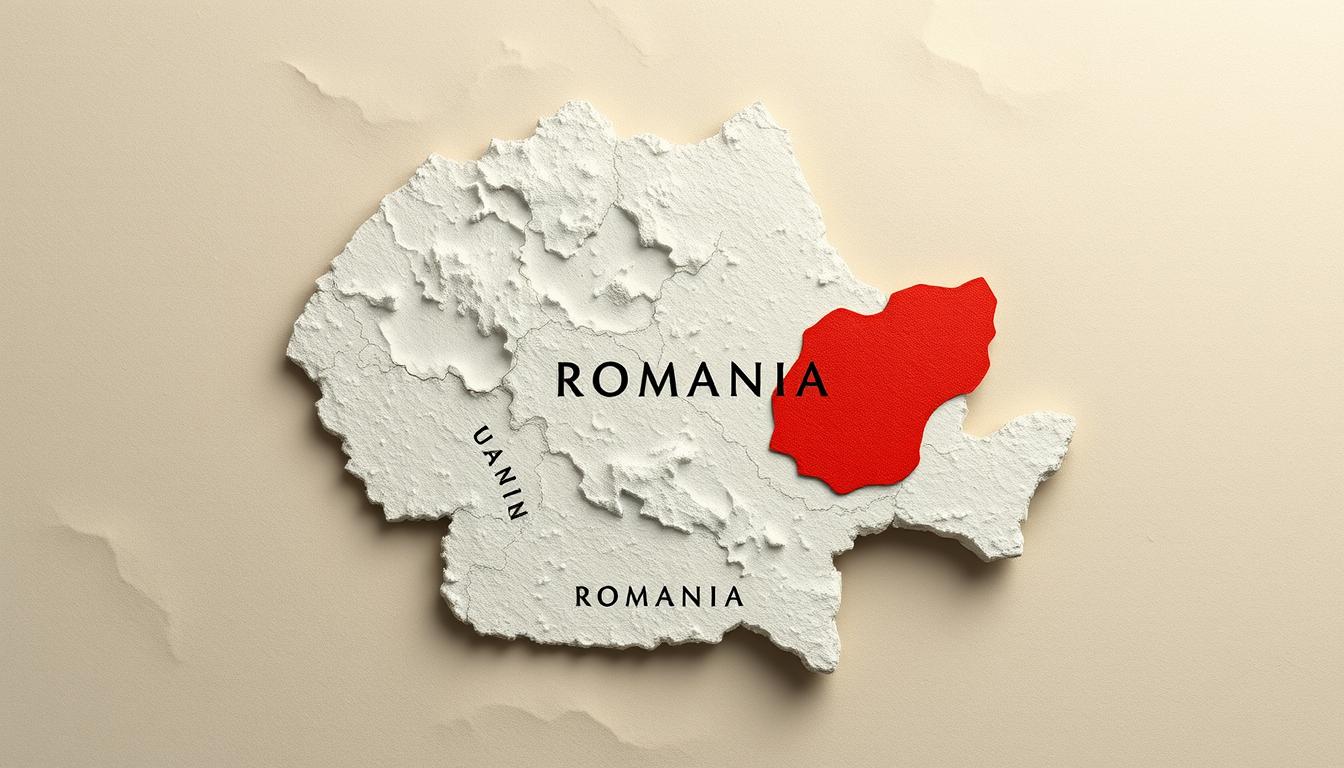
Looking closely at the map of Romania, we see Transylvania. It’s nestled in the Carpathian Mountains. This unique spot has shaped the region’s identity and cultural importance.
It’s important to understand Romania‘s geography and its regions. The Romania Map shows the country’s layout. It highlights Transylvania as a key area.
Overview of Romania’s Geography
Romania is in Southeastern Europe, with a mix of geographical features. Its landscape varies due to its location and borders. It touches several countries and has different topographical elements.
Location and Borders
Romania is in the southeastern part of Europe. It borders Moldova to the east, Ukraine to the north, Hungary to the west, Serbia to the southwest, and Bulgaria to the south. This location has shaped its culture and history. Romania is a mix of different influences at the crossroads.
Topographical Features
The Carpathian Mountains cover a big part of Romania. They define the country’s geography and affect the climate and ecosystems. Romania’s terrain includes hills, plains, and mountains. This variety supports a rich biodiversity.
Climate Zones
Romania’s climate varies, from temperate-continental to sub-Mediterranean in different areas. The mountains are colder, while the plains and Danube Delta are milder. This climate supports a wide range of plants and animals, enriching Romania’s natural heritage.
The Complete Romania Map Guide
Romania’s diverse landscape is best understood through its various map representations. To fully appreciate the country’s geography, it’s essential to explore the different types of maps available, each serving a unique purpose.
Political and Administrative Maps
Political and administrative maps of Romania provide a detailed overview of the country’s divisions, including its counties (județe) and major cities. These maps are key for understanding the administrative structure. They are very useful for travelers and researchers alike. A Romania map with cities is indispensable for navigating the country’s urban areas.
Topographic and Relief Maps
Topographic maps highlight Romania’s varied terrain, from the Carpathian Mountains to the Danube Delta. These maps are essential for outdoor activities such as hiking and camping. They detail elevation, landforms, and water bodies. A Romania detailed map of this nature is vital for understanding the country’s ecological diversity.
Road and Tourism Maps
For those planning to explore Romania, road and tourism maps are invaluable. They provide information on major highways, tourist attractions, and points of interest. These maps help in planning itineraries and navigating the country’s transportation networks efficiently.
In conclusion, the various maps of Romania—political, topographic, and road maps—each offer unique insights into the country’s geography. They are essential tools for both locals and visitors. By utilizing these maps, one can gain a deeper understanding of Romania’s complex landscape and plan travels with ease.
Historical Evolution of Romania’s Borders
The borders of Romania have changed a lot over time. These changes came from growing and shrinking territories and big shifts in politics. Knowing about these changes helps us understand Romania’s geography and politics today.
Pre-World War I Romania
Before World War I, Romania was much smaller than it is now. It gained freedom from the Ottoman Empire in 1878. But, its borders were not big. The Romania political map back then showed it was a new country, with many areas not yet part of it.
Interwar Period Changes
After World War I, Romania’s borders changed a lot. The Treaty of Trianon in 1920 made Romania much bigger. It added Transylvania, Bessarabia, and Bukovina. This made Greater Romania, which changed the country’s politics and culture a lot.
Modern Romanian Boundaries
After World War II, Romania’s borders changed again. The Paris Peace Treaties of 1947 set the country’s current borders. Romania lost some land, like Bessarabia and Northern Bukovina. Today, the map of Romania shows these changes, with Romania keeping its current shape.
Administrative Divisions on the Romania Map
Romania’s administrative divisions are key to understanding its geography and governance. The country is split into several units for governance, economic growth, and regional identity.
Counties (Județe) System
The main division in Romania is the county, or “județ” in Romanian. There are 41 counties, each with its own capital and government. These counties are divided into cities and communes, forming a structure for administration.
Counties are important for governance, handling tasks like education, healthcare, and infrastructure. For more details, visit the Wikipedia page on Administrative Divisions of Romania.
Development Regions
Romania is also split into eight development regions for statistics and economic planning. These regions are not administrative units but group counties for planning. They help in implementing policies and managing EU funds for projects.
The combination of counties and development regions on the Romania map offers a detailed view of the country. This division is vital for governance and economic planning, showing Romania’s complex regional dynamics.
Major Historical Regions of Romania
Romania is made up of several major historical regions. Each region has helped shape the nation’s rich heritage. These areas have greatly influenced Romania’s culture and geography.
Wallachia (Țara Românească)
Wallachia, also known as Țara Românească, is a key historical region in Romania. It has a long history, starting in the 13th century. It has been a major cultural and political hub.
Wallachia’s historical significance is clear in its architecture. Places like the Curtea de Argeș Monastery show its rich past.
Moldavia (Moldova)
Moldavia, or Moldova, is another important historical region. It’s known for its natural beauty and cultural heritage. The region is famous for its painted monasteries, which are UNESCO World Heritage Sites.
Moldavia’s history is closely tied to Romania’s. It has greatly influenced the nation’s folklore and traditions.
Dobruja (Dobrogea)
Dobruja, or Dobrogea, is in southeastern Romania. It’s known for its diverse landscape and rich history. The region has been shaped by cultures like the Romans and Ottomans.
Diverse cultural heritage is a hallmark of Dobruja. It’s also home to the Danube Delta, a unique natural area.
Banat and Crișana
Banat and Crișana are in western Romania. They are known for their cultural diversity and historical importance. Banat has been influenced by groups like Germans and Hungarians.
Crișana is famous for its natural beauty, like the Apuseni Mountains. It also has historical towns like Oradea.
The historical regions of Romania are more than just areas. They are the foundation of the nation’s identity. Each region has its own story. Understanding these regions helps us appreciate Romania’s complex history and cultural diversity.
Transylvania: The Heart of Romania
At the heart of Romania is Transylvania, a land of varied landscapes and rich culture. This area is not just a geographical center. It’s also a cultural and historical hub that has drawn visitors for centuries.
Geographical Boundaries and Definition
Transylvania is surrounded by the Carpathian Mountains, creating a stunning landscape of mountains, forests, and hills. Its geographical boundaries are somewhat flexible. But, it generally includes Cluj, Alba, Brașov, Covasna, Harghita, Mureș, and Sibiu counties. These areas make up a region that is both historically important and naturally stunning.
Historical Significance
Transylvania’s history is a mix of different cultures and empires. From the Roman Dacian wars to the medieval times and later, it has been a crossroads of civilizations. The region is filled with landmarks like Bran Castle, known for Dracula, and fortified cities of Sighisoara and Brasov. These sites show the region’s strategic value and its rich history.
- The medieval fortresses and citadels that dot the landscape.
- The influence of the Austro-Hungarian Empire on the region’s architecture and culture.
- The role of Transylvania in the unification of Romania.
Cultural Identity
The cultural identity of Transylvania is diverse, showing the influences of many groups, like Romanians, Hungarians, Saxons, and others. This diversity is seen in the region’s folk traditions, cuisine, and architecture. Transylvania is famous for its traditional folk dances, music, and colorful embroidery, celebrated at festivals and cultural events.
- Traditional folk festivals that showcase local customs.
- The blend of Eastern European and Latin influences in local cuisine.
- The preservation of historical sites and cultural heritage.
Mapping Transylvania’s Unique Landscape
Transylvania’s landscape is a mix of mountains, plateaus, and valleys. It’s a place of great geographical diversity.
Carpathian Mountain Range
The Carpathian Mountains surround Transylvania, acting as a natural shield. They have shaped the climate and ecosystems here. The mountains are home to a wide variety of plants and animals.
Transylvanian Plateau
In the center of Transylvania is the Transylvanian Plateau. It’s known for its rolling hills, fertile plains, and mix of farmland and forests. This area is key for farming, thanks to its rich soil and mild weather.
River Systems and Valleys
Many rivers and streams cross Transylvania, carving out valleys over time. These waterways are essential for the area’s ecosystem. They provide water for farming, industry, and people. The valleys are also home to many people and are important for travel.
| Geographical Feature | Description | Significance |
|---|---|---|
| Carpathian Mountains | Surrounds Transylvania, creating a natural border | Protects the region, influences climate and biodiversity |
| Transylvanian Plateau | Rolling hills and fertile plains at the heart of Transylvania | Crucial for agriculture, rich soil, and mild climate |
| River Systems and Valleys | Numerous rivers and streams carving out valleys | Vital for ecosystem, agriculture, and transportation |
Ethnic Diversity in Transylvania
Transylvania is known for its rich ethnic diversity. For centuries, it has been a place where different cultures blend. This mix has made the region culturally rich and historically complex.
Romanian Communities
The majority of people in Transylvania are ethnically Romanian. Romanian communities have greatly shaped the region’s identity. Their language, traditions, and customs are key to the local culture.
The Romanians have been in Transylvania for centuries. They have made big contributions to the region’s history and culture.
Hungarian Influence
Transylvania also has a large Hungarian population. Their culture and architecture have left a mark on the region. Hungarian communities have enriched Transylvania’s food, folklore, and buildings.
Saxon Heritage
The Saxon heritage is another important part of Transylvania’s diversity. The Saxons arrived in the 12th century. They have left behind fortified churches, towns, and traditions.
Their influence has made Transylvania a unique cultural and historical place. It’s a fascinating destination for anyone interested in history and culture.
Key Cities and Towns in Transylvania
Transylvania, at the heart of Romania, is filled with cities and towns each with its own story. These places are key to the region’s economy and culture. They also help us grasp Transylvania’s rich history and heritage.
Cluj-Napoca
Cluj-Napoca is often called the unofficial capital of Transylvania. It’s known for its lively culture, historic sites, and many students. The city has grown a lot, mixing old history with new buildings.
Its cultural festivals and historic architecture draw in visitors from everywhere.
Brașov
Brașov is a big city in Transylvania, surrounded by mountains. It’s famous for its old town and Bran Castle, linked to Dracula. Brașov is a top spot for tourists, with culture and outdoor fun.
Sibiu
Sibiu is a lovely city with a deep history. It’s known for its medieval architecture and lively culture. The historic center is a UNESCO World Heritage Site, drawing visitors worldwide.
Sibiu’s bridges, colorful houses, and lively squares make it a beautiful place to visit.
Sighișoara
Sighișoara is a UNESCO World Heritage Site and one of Europe’s best-preserved medieval towns. Its historic citadel and colorful buildings stand out. Sighișoara shows off Transylvania’s rich history and cultural variety.
These cities, along with others, make Transylvania a fascinating place to explore. From their history to their modern life, Cluj-Napoca, Brașov, Sibiu, and Sighișoara are essential to understanding Transylvania.
Natural Landmarks on the Romania Map
The Romania geographical map shows many natural wonders. These include the Danube Delta, Carpathian Mountains, and Black Sea Coast. They add to the country’s varied geography and draw in tourists and nature lovers.
Danube Delta
The Danube Delta is a UNESCO World Heritage Site. It’s one of Europe’s most diverse places. Over 300 bird species and 45 fish species call it home. Its unique ecosystem supports a wide range of plants and animals, making it a key natural landmark in Romania.
Carpathian Mountains
The Carpathian Mountains stretch across Eastern Europe, with a big part in Romania. They have different landscapes, from dense forests to alpine meadows. The mountains are also rich in minerals and home to many animals, like bears, wolves, and eagles.
Black Sea Coast
Romania’s Black Sea Coast is a favorite spot for tourists. It’s known for its stunning beaches, resorts, and historic sites. The coast offers both relaxation and cultural experiences, with cities like Constanța providing access to history and fun.
In conclusion, Romania’s natural landmarks are a showcase of the country’s rich diversity. From the Danube Delta’s wetlands to the Carpathian Mountains’ peaks and the Black Sea Coast’s beaches, Romania is a unique and captivating place.
Cultural and Historical Sites in Transylvania
Transylvania is a place where cultures blend, showing off its rich history. You can see this in its buildings, art, and traditions. It’s a place that draws both historians and tourists.
Medieval Fortresses and Castles
Transylvania is famous for its medieval castles and fortresses. Bran Castle, known as Dracula’s Castle, is a top attraction. Other castles like Corvin Castle and Banffy Castle also have their own stories and styles.
UNESCO World Heritage Sites
The area has several UNESCO World Heritage Sites. The Villages with Fortified Churches and the Historic Center of Sighisoara are among them. They highlight the region’s rich cultural and historical background.
Religious Monuments
Transylvania is also known for its religious sites. The Biserica Neagra (Black Church) in Brasov and the Corvin Castle’s Chapel are examples. These sites are not just places of worship but also historical and cultural treasures.
| Site | Location | Significance |
|---|---|---|
| Bran Castle | Near Brasov | Popularly known as Dracula’s Castle |
| Corvin Castle | Hunedoara | One of the largest castles in Europe |
| Sighisoara Citadel | Sighisoara | Well-preserved medieval fortified city |
Transportation Networks Across Romania
Romania has a wide range of transportation options. This includes highways, railways, and air travel hubs. These make traveling within the country and abroad easy.
Major Highways and Roads
Romania’s highway system is growing. It connects big cities like Bucharest, Cluj-Napoca, and Timisoara. The A1 and A3 highways are key. They help connect the country and its neighbors.
Recently, Romania has focused on improving its roads. This makes driving a good choice for travel.
Railway System
The railway network in Romania is run by Căile Ferate Române (CFR). It’s a fast way to travel across the country. It links major cities and towns, giving a comfy alternative to driving.
Important routes include those from Bucharest to Brașov and Sibiu. These places are in Transylvania and are very popular.
Air Travel Hubs
Romania has several international airports. Henri Coandă International Airport in Bucharest is the biggest. Other big airports are Cluj-Napoca International Airport and Traian Vuia International Airport in Timisoara.
These airports offer flights to big European cities and more. They help with international travel.
These transportation networks make Romania easy to get to. Whether you’re traveling inside the country or coming from abroad, it’s simple. The ongoing work on these networks makes the region even more connected and accessible.
Digital Navigation Tools for Romania
Exploring Romania’s diverse landscapes and cities is now easier than ever. Travelers can plan their trips and navigate through the country’s complex roads with digital aids.
Google Maps and Navigation Apps
Google Maps is a top choice for navigating Romania. It has detailed maps, real-time traffic updates, and street view imagery. Other apps like Waze and Maps.me also offer GPS navigation and traffic info.
Specialized Romania Travel Apps
Specialized travel apps for Romania offer more insights and features. Apps like Romania GPS Navigation have detailed maps and routing for Romanian roads. They also include points of interest and tourist attractions.
GPS Considerations for American Travelers
American travelers should know that GPS devices may need extra maps or subscriptions for Romania. Check if your GPS works with local networks to avoid issues. Using a GPS or app with offline capabilities is helpful in areas with no internet.
Planning a Transylvanian Road Trip
A road trip through Transylvania is an unforgettable adventure. You’ll explore the region’s rich heritage and stunning scenery. With its well-connected roads and beautiful landscapes, it’s perfect for those seeking adventure and cultural experiences.
Recommended Routes and Itineraries
Consider exploring the Transylvanian Plateau and the Carpathian Mountains on your trip. A popular route includes Cluj-Napoca, Brașov, and Sibiu. These cities are known for their history and cultural landmarks. You can customize your journey to fit your interests, whether it’s medieval fortresses, natural beauty, or local cuisine.
Seasonal Considerations
The best time for a road trip in Transylvania is spring (April-May) and autumn (September-October). The weather is mild and perfect for outdoor activities. Summer is busy with tourists, while winter is serene but may limit access to some areas due to snow.
“Transylvania in autumn is a spectacle of colors, with the foliage turning the landscapes into a painter’s canvas.”
Must-See Destinations
Don’t miss the Bran Castle, famous for Dracula’s legend, the Medieval Town of Sighișoara, a UNESCO World Heritage Site, and the Turda Salt Mines, a unique underground world. Each place offers a glimpse into Transylvania’s diverse history and cultural richness.
- Bran Castle
- Sighișoara Medieval Town
- Turda Salt Mines
- Cluj-Napoca
- Brașov
Conclusion: Embracing Romania’s Geographic and Cultural Diversity
Romania is a country full of wonder, with its varied geography and rich culture. The Carpathian Mountains and the Danube Delta are just a few of the natural wonders you can see. Each region, like Transylvania, Wallachia, and Moldavia, has its own story and traditions.
Exploring Romania means more than just seeing its beauty. It’s about understanding its history and culture too. A Romania Map is key for any traveler. It guides you through the country’s history, landmarks, and natural beauty, deepening your appreciation for Romania.
Romania’s map is not just for finding your way. It opens doors to the country’s complex history, diverse culture, and stunning landscapes. By diving into this diversity, visitors can truly experience all that Romania has to offer, from its medieval towns to its breathtaking nature.