 by
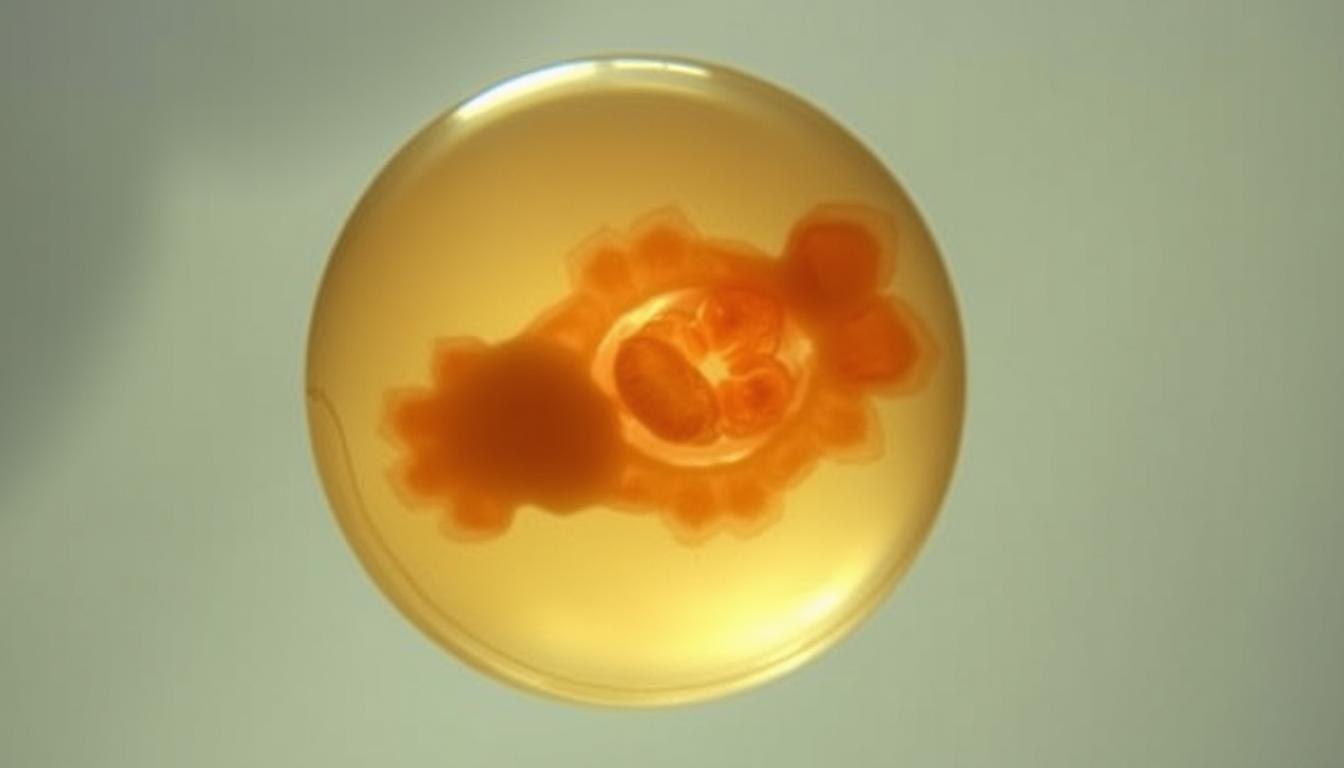
by The way the mouth and anus form in embryos is key to understanding animal groups. It helps us see how different animals are related. This is a big deal in the field of embryology.
The blastopore is a special part of early development. It decides whether an animal will have its mouth or anus in a certain place. This is important for classifying animals into different groups.
Studying embryology helps us understand how animals evolve and grow. Looking at how the mouth and anus form gives us clues about animal development. It shows us the complex ways animals take shape.
The Fundamental Concepts of Embryonic Development
Embryonic development is a complex process. It involves the creation of germ layers and the body plan. These steps are key to growing a full organism from a single cell.
Early Embryogenesis and Germ Layers
Early embryogenesis is the start of an organism’s development. It begins with the zygote, which divides several times to form a blastula.
From Zygote to Blastula
The journey from zygote to blastula includes many cell divisions. These divisions happen without much growth. They create a fluid-filled cavity called the blastocoel.
The Three Primary Germ Layers
Gastrulation turns the blastula into three germ layers: ectoderm, endoderm, and mesoderm. These layers will grow into all body tissues.
The Significance of Gastrulation
Gastrulation is a key moment in development. It changes the blastula into a multilayered embryo.
Establishment of Body Plan
Gastrulation sets the body plan. It includes the embryo’s orientation and the blastopore formation. The blastopore is vital for further growth.
Cell Migration and Differentiation
During gastrulation, cells move and change into the three germ layers. This prepares the stage for organ formation.
| Germ Layer | Derivatives |
|---|---|
| Ectoderm | Skin, nervous system, eyes |
| Endoderm | Gut, respiratory system, liver |
| Mesoderm | Muscles, bones, circulatory system |
What is a Blastopore? Definition and Significance
The blastopore is key in the early stages of an embryo’s development. It is an opening that can become either the mouth or anus, depending on the species.
Anatomical Characteristics
The blastopore forms early in the embryo’s life. It starts as an indentation in the blastula. This happens due to cells moving and changing their positions.
Structure and Formation
The shape of the blastopore changes in different species. It forms when cells fold inward during gastrulation. This folding turns the blastula into a gastrula.
Variations Across Species
Species differ in how their blastopores develop. In some, it becomes the mouth, while in others, it turns into the anus. This difference is important for understanding how species evolve.
Evolutionary Importance
The blastopore is vital for both embryo development and evolution. It acts as a marker and a constraint in development, shaping the paths of many organisms.
Phylogenetic Marker
The blastopore’s fate helps classify animals. Whether it becomes the mouth or anus, it tells us about an animal’s evolutionary group. This helps us understand the differences between protostomes and deuterostomes.
Developmental Constraint
The blastopore also limits the possible outcomes in embryo development. This constraint affects how body plans evolve in different animal groups.
| Characteristics | Protostomes | Deuterostomes |
|---|---|---|
| Blastopore Fate | Mouth | Anus |
| Developmental Pattern | Spiral Cleavage | Radial Cleavage |
| Examples | Arthropods, Mollusks | Chordates, Echinoderms |
Historical Perspectives on Blastopore Research
The study of blastopores has taken us on a journey of discovery. It has helped us understand how embryos develop in different species.
Early Discoveries and Theories
The blastopore’s study began in the early days of embryology. 19th-century embryologists were among the first to notice its role in gastrulation.
19th Century Embryology
In the 19th century, embryology became its own field. Haeckel and Darwin were key figures. They helped us understand how embryos develop, including the blastopore’s role.
Classical Experiments
Experiments with embryos gave us important insights into the blastopore. These experiments helped start modern embryology research.
Evolution of Scientific Understanding
Our understanding of the blastopore has grown over time. New techniques and discoveries have helped advance the field. Molecular biology has been a big part of this progress.
Key Contributors
Scientists like Spemann and Mangold made big contributions. They helped us understand the blastopore’s role in development.
Paradigm Shifts
Our study of the blastopore has seen big changes. We’ve moved from just looking at shapes to understanding the molecular mechanisms. These changes have helped us understand how embryos develop.
The history of blastopore research shows its key role in embryology. By studying the blastopore, scientists have learned about the diversity of body plans in development.
The Process of Blastopore Formation During Gastrulation
Gastrulation starts a series of complex cell movements and changes. It’s a key step in the development of complex life forms. This stage leads to the formation of the gastrula, where the blastopore is found.
Cellular Mechanisms
The blastopore’s formation involves detailed cell actions. Two main processes are key in this process:
Invagination and Involution
Invagination is when cells fold inward. Involution is when cells roll inward around the blastopore. Both are important for the blastopore’s creation. Invagination is the buckling of the epithelial layer. Involution is the movement of cells around the blastopore lip.
Epiboly and Convergent Extension
Epiboly is when cells spread over the embryo’s surface. Convergent extension is when cells both converge and extend. These help elongate the embryo and place the blastopore correctly.
Molecular Signaling Pathways
The molecular signals for blastopore formation are complex. They involve many factors.
Wnt and Nodal Signaling
The Wnt and Nodal pathways are vital for gastrulation. Wnt signaling controls cell fate and embryo patterning. Nodal signaling is important for mesoderm and endoderm formation.
Transcription Factors
Transcription factors control gene expression for blastopore formation. They help coordinate cell movements and differentiation during gastrulation.
The complex mix of cell actions and molecular signals shows how complex blastopore formation is. Understanding these steps is key to knowing how embryos develop early on.
Blastopore Function in Different Animal Groups
The role of the blastopore changes a lot between protostomes and deuterostomes. This shows big differences in how they develop from eggs. Knowing this helps us understand how different animals grow and evolve.
Protostomes vs. Deuterostomes
Animals are split into protostomes and deuterostomes based on their blastopore’s fate. This split helps us see how different animals are related.
Defining Characteristics
Protostomes have their mouth form from the blastopore. Deuterostomes, on the other hand, get their anus from it. This is why they’re called “first mouth” and “second mouth” in Greek.
Developmental Trajectories
Protostomes and deuterostomes start to grow differently early on. Protostomes go through spiral cleavage, while deuterostomes have radial cleavage. These patterns shape their body plans.
| Characteristics | Protostomes | Deuterostomes |
|---|---|---|
| Blastopore Fate | Mouth | Anus |
| Cleavage Pattern | Spiral | Radial |
| Examples | Arthropods, Mollusks | Echinoderms, Chordates |
Variations Across Phyla
Even though we divide animals into protostomes and deuterostomes, there’s a lot of variation. Each group has its own way of developing, showing their unique evolutionary paths.
Arthropods and Mollusks
In arthropods and mollusks, the blastopore usually becomes the mouth. But, how this happens can vary a lot. Some species have more complex movements during their early development.
“The developmental biology of protostomes is characterized by a high degree of diversity, reflecting the complex evolutionary history of this group.”
Echinoderms and Chordates
Deuterostomes, like echinoderms and chordates, develop differently. Their blastopore usually becomes the anus, and the mouth forms later.
Looking at how the blastopore works in different animals helps us understand life’s diversity. It shows us how evolution and development have shaped our world.
The Protostome-Deuterostome Distinction: A Fundamental Division
The first split between protostomes and deuterostomes is in how the zygote divides. This early difference shapes how embryos develop and affects their evolutionary paths.
Developmental Differences
Protostomes and deuterostomes differ mainly in their cleavage patterns. Protostomes go through spiral cleavage, while deuterostomes have radial cleavage.
Cleavage Patterns
The cleavage patterns show a key difference in development. Spiral cleavage in protostomes means cell fate is set early. On the other hand, radial cleavage in deuterostomes allows for more flexibility in cell development.
Fate of the Blastopore
The blastopore also has a different fate in each group. In protostomes, it becomes the mouth. In deuterostomes, it usually turns into the anus. This affects the body plan of the organism.
Evolutionary Implications
The protostome-deuterostome split has big evolutionary implications. Knowing these differences helps us understand how animals are related and how they evolve.
Phylogenetic Relationships
These developmental differences help us figure out phylogenetic relationships. By looking at how development changes, scientists can learn about evolutionary ties between different animals.
Convergent Evolution
Studying protostome and deuterostome development also reveals convergent evolution. Even though they are different, similar environments can lead to similar developmental paths in different species.
| Characteristics | Protostomes | Deuterostomes |
|---|---|---|
| Cleavage Pattern | Spiral Cleavage | Radial Cleavage |
| Fate of Blastopore | Develops into Mouth | Typically forms Anus |
| Development Pattern | Determinate | Indeterminate |
The Blastopore-Mouth Relationship in Embryonic Development
Recent studies have changed how we see the blastopore in protostomes. This means we need to rethink how the blastopore and mouth relate. It’s key to understanding how embryos develop in different animals.
Developmental Pathways in Protostomes
In protostomes, how the blastopore and mouth form can differ a lot. The blastopore can become the mouth or anus, depending on the species.
Direct Development
In some protostomes, the blastopore turns directly into the mouth. This is seen in species with simpler embryonic development.
Indirect Development
On the other hand, indirect development is more complex. The blastopore might close, and the mouth forms later. This is common in marine invertebrates.
Developmental biologist Dr. Jane Smith says, “Protostomes show a wide range of developmental paths. This shows how complex and flexible embryonic development can be.”
“The blastopore’s fate changes a lot between different protostome groups. This shows we need more research into these developmental processes.”
Comparative Embryology
Comparative embryology helps us understand the blastopore-mouth relationship by looking at different organisms. It shows both similarities and differences in how embryos develop.
Model Organisms
Species like Drosophila melanogaster and Caenorhabditis elegans have helped us learn about blastopore formation. They’ve shown us the genetic and molecular steps involved.
Evolutionary Conservation
Looking at how development has changed over time, we see both similarities and differences. This helps us understand what evolutionary pressures have shaped embryonic development.
The blastopore-mouth relationship is a dynamic part of embryonic development. It’s shaped by genetics and environment. Grasping this relationship is essential for a deep understanding of embryology and its role in developmental biology.
The Blastopore-Anus Connection in Deuterostomes
To understand the blastopore-anus connection in deuterostomes, we need to look at their early development. Deuterostomes include vertebrates and some invertebrates like echinoderms. They have a unique way of developing where the blastopore, a hole from early stages, becomes the anus.
Developmental Mechanisms
The process of development is complex. It involves many cell and molecular actions. During gastrulation, the embryo changes a lot, and the blastopore forms.
Secondary Mouth Formation
In deuterostomes, the mouth forms later, not from the blastopore. The blastopore usually becomes the anus. A new opening, the mouth, forms on the other side of the embryo.
Gut Tube Development
The gut tube’s growth is linked to the blastopore’s development. It forms through cell movements and changes.
Phylogenetic Considerations
The blastopore-anus connection in deuterostomes shows their evolutionary ties. It helps us understand how different animals are related.
Vertebrate Examples
In vertebrates, the path from blastopore to anus is the same. This shows a key part of their early development.
Invertebrate Deuterostomes
Invertebrate deuterostomes, like sea urchins, also follow this pattern. It shows that deuterostomes share similar developmental steps.
Amphistomy: When the Blastopore Forms Both Mouth and Anus
The phenomenon of amphistomy challenges traditional views on how embryos develop. It’s seen in some animal species, showing the wide range of developmental paths.
Mechanisms and Examples
Amphistomy is when a single blastopore turns into both the mouth and anus. This is different from the usual way, where the blastopore becomes just one or the other.
Slit-like Blastopore
The blastopore’s slit-like shape is key for amphistomy. It lets both openings form at the same time, a rare sight in nature.
Documented Species
Certain annelids and mollusks show amphistomy. These examples help us understand its role in evolution and development.
“The discovery of amphistomy in various animal phyla has significant implications for our understanding of body plan evolution and the ancestral developmental pathways.”
Evolutionary Significance
Amphistomy’s importance lies in its role in understanding how life evolved. It makes us question the ancestral condition of bilaterian animals and the variety of developmental paths.
Ancestral Condition Debates
There’s a big debate on whether amphistomy is a primitive or advanced trait. This debate is key to figuring out evolutionary histories.
Implications for Body Plan Evolution
Amphistomy shows that developmental paths can be more flexible and varied than we thought. It changes how we see evolutionary adaptations.
Molecular Control of Blastopore Development
Blastopore development is a key part of early growth, led by complex molecular systems. These systems include gene networks and signaling paths. They are vital for the blastopore’s correct formation and role in early growth stages.
Gene Expression Patterns
The blastopore’s growth is guided by specific gene patterns. These patterns are essential for its development and function. Genes from the Hox family play a big role in this process.
Hox Genes and Axis Formation
Hox genes are key in setting up the embryo’s body plan. They help define the front-to-back axis. This is critical for the embryo’s proper shape and structure.
Regulatory Networks
Gene expression in blastopore development is managed by complex networks. These networks make sure genes are turned on and off at the right times. This helps the embryo grow correctly.
Signaling Networks
Signaling networks are also vital in blastopore development. They include pathways like BMP and FGF. These pathways control cell actions and growth.
BMP and FGF Pathways
The BMP and FGF pathways are important for many developmental steps. They help control cell growth, change, and movement. These actions are key for the embryo’s development.
Evolutionary Conservation of Molecular Mechanisms
The ways blastopore development is controlled are similar across many animal types. This shows how important these mechanisms are for growth. It also hints at the shared origins of developmental pathways.
Studying how the gastrodermis forms in cnidarians can reveal a lot. It could help us understand the evolution of different growth paths. This research could show how various developmental paths have evolved in different animals.
| Signaling Pathway | Role in Blastopore Development | Evolutionary Conservation |
|---|---|---|
| BMP | Regulates cell differentiation and migration | Conserved across many animal phyla |
| FGF | Influences cell proliferation and patterning | Found in various developmental contexts across animals |
| Hox Genes | Essential for axis formation and patterning | Highly conserved, specially in bilaterians |
Contemporary Research Methods in Blastopore Studies
Today’s research methods have changed how we study blastopores. New techniques let scientists see the details of blastopore growth with great accuracy.
Advanced Imaging Techniques
Advanced imaging has changed how we study embryos. Live imaging and 4D microscopy let us watch blastopore formation as it happens.
Live Imaging and 4D Microscopy
Live imaging and 4D microscopy are key in studying embryos. They help scientists see how cells move and change during gastrulation. This gives us clues about how blastopores form.
Fluorescent Reporters
Fluorescent reporters help us see what’s happening in cells. They let researchers track important genes in blastopore development. This helps us understand the molecular steps involved.
Genetic Manipulation Approaches
Genetic tools have made studying blastopores easier. CRISPR-Cas9 and transgenic models let scientists study genes’ roles in blastopore growth.
CRISPR-Cas9 Applications
CRISPR-Cas9 has changed gene editing. It’s used in blastopore research to study genes involved in formation. This gives us insights into their functions.
Transgenic Models
Transgenic models are vital for studying genes in embryos. They let researchers see how genetic changes affect blastopore development.
Computational Modeling
Computational modeling is a new tool for studying blastopores. It combines data with models to understand blastopore formation better.
Simulating Morphogenesis
Simulating morphogenesis uses models to mimic blastopore formation. These simulations help find important factors in tissue shaping.
Predictive Models
Predictive models forecast how changes might affect blastopore development. They help researchers understand how different conditions might influence blastopore structure and function.
Unresolved Questions in Blastopore Biology
Research in embryology shows that blastopore biology is full of mysteries. The blastopore’s role in early development is complex and not fully understood. Scientists face many challenges in studying this area.
Developmental Mysteries
The formation of the blastopore during gastrulation is not well understood. Several aspects are unclear, including:
- The precise cellular mechanisms that drive blastopore formation
- The complex molecular signaling pathways involved
- The variability in blastopore development across different species
Timing and Coordination
The timing and coordination of blastopore formation are key mysteries. Research has shown that small disruptions can cause big problems in development.
Species-Specific Variations
Different species show many variations in blastopore development. Understanding these variations is essential for a full understanding of embryonic development.
Evolutionary Puzzles
The evolutionary history of the blastopore is also full of questions. Scientists are interested in:
- Reconstructing the developmental processes of ancient bilaterian ancestors
- Distinguishing between homologous and homoplastic features across different phyla
The Urbilaterian Ancestor
The nature of the last common bilaterian ancestor, known as Urbilateria, is debated. Researchers continue to explore this hypothetical organism’s developmental characteristics.
Homology vs. Homoplasy
It’s hard to tell if structures are homologous or evolved independently. This challenge is key to understanding the blastopore’s evolutionary history.
Current Controversies
Blastopore biology is also filled with debates. Ongoing debates revolve around different theories of development and new evidence.
Competing Theories
Several theories try to explain the blastopore’s development and evolution. Scientists are working to test these theories and resolve conflicts.
New Evidence and Interpretations
New data is constantly refining our understanding of blastopore biology. Advanced imaging techniques and genetic manipulation approaches offer new insights.
Scientists are studying the evolution of the anus, related to blastopore biology. Their research aims to answer many questions and deepen our understanding of embryonic development.
Clinical Relevance: Developmental Abnormalities Related to Blastopore Formation
Blastopore formation is key to human health, mainly in dealing with congenital defects. It’s vital for the right growth of the gut and other important parts.
Congenital Defects
Abnormal blastopore formation can lead to various congenital defects. These include issues with the gut and problems with the brain and spine.
Gastrointestinal Malformations
Malformations in the gut can happen if the blastopore doesn’t form right. For example, atresia or stenosis can occur. These issues happen early in development, around four and eight weeks.
Neural Tube Defects
Problems like spina bifida or anencephaly are linked to issues in gastrulation and blastopore formation. These can greatly affect a person’s life.
Implications for Human Health
Understanding blastopore formation and its defects is very important for human health. Improving prenatal care and treatments is key to managing these issues.
Prenatal Diagnosis
Ultrasound and fetal MRI are important for finding defects early. This helps in planning better care for the affected individual.
Therapeutic Approaches
Managing defects requires surgery and supportive care. Studying blastopore formation could lead to new treatments.
Conclusion: The Continuing Significance of Blastopore Research
Blastopore research is key to understanding how embryos develop and how body plans evolve. It helps us grasp the molecular reasons behind these changes. This knowledge is essential for understanding how life forms change over time.
The study of blastopores is important because it helps us understand how different animals develop. By looking at how blastopores form and change, scientists learn about the history of species. This knowledge is vital for understanding the diversity of life on Earth.
Future studies on blastopores will likely reveal more about how they control development. This could lead to new insights into human health. The ongoing importance of blastopore research in the field of embryology is clear.