 by
by Cement burns are a big risk in jobs like construction.
A study in the Journal of Burns shows concrete injuries are common in burn units. This shows we need to know how to treat them right.
It’s very important to know the signs of cement burns. Quick and right first aid can really help.
This guide will help you understand cement burns better. It will show you how common they are and what symptoms to look for. This way, you can spot and treat cement burns well.
Understanding Cement Burns
Cement burns happen when wet cement reacts with human skin. This reaction can cause serious injuries. These burns are not just on the surface but can go deep into the skin, leading to a lot of damage.
The Chemical Nature of Cement Burns
Cement burns are caused by the alkaline nature of wet cement. When cement meets water, it turns into calcium hydroxide. This is a very alkaline substance that can go through clothes and skin easily.
The high pH level of wet cement is what causes the burns. It can change proteins and harm skin tissues badly.
Why Cement Burns Are Different from Other Burns
Cement burns are different because they are chemical burns. They keep causing damage as long as the cement stays on the skin. This can lead to burns that go all the way through the skin.
It’s important to treat cement burns right away to prevent more harm. Knowing how cement burns work is key to treating cement burns well and avoiding long-term problems.
How Cement Causes Chemical Burns
To understand how cement causes chemical burns, we need to look at its makeup. Cement is a key material in building projects. It has a complex mix that can be dangerous if not handled right.
The Alkalinity of Wet Cement
Wet cement is very alkaline because of its high pH level. This alkalinity is the main reason it can cause severe burns when it touches skin. The high pH comes from calcium oxide reacting with water to make calcium hydroxide, a strong alkaline substance.
Key factors contributing to the alkalinity include:
- The presence of calcium oxide
- Reaction with water to form calcium hydroxide
- High pH level of the resulting mixture
Reaction Between Cement and Human Skin
When wet cement touches human skin, it starts a harmful reaction. The alkaline cement messes with the skin’s natural pH, causing harm to the skin tissues. If not treated quickly, this can lead to serious injuries, like deep burns and long-term damage.
Immediate action is key to lessen the harm. It’s important to remove the cement from the skin and wash the area well to prevent more injury.
Common Scenarios Leading to Cement Burns
It’s important to know when cement burns can happen. These burns occur when wet cement touches the skin. This causes chemical reactions that burn the skin. Knowing these situations helps us stay safe.
Construction Work Incidents
Construction sites are dangerous for cement burns. Workers often touch wet cement while mixing, pouring, or finishing. Wearing proper protective clothing, like gloves and boots, is key. Teaching workers about risks and safety rules can lower burn chances.
DIY Home Projects
DIY projects at home can also lead to cement burns. It’s vital to wear protective gear and keep the area well-ventilated. Spills can cause burns if skin isn’t covered.
Accidental Exposure
Wet cement accidents can happen in many ways, like spills or mishandling. Being careful and ready for accidents helps prevent burns. If you get burned, treat it right away with first aid.
Why Lower Legs Are Particulary Vulnerable
The lower legs are more at risk for cement burns. This is because of their anatomy and how often they are exposed. Cement burns happen when skin touches wet cement, a common issue in construction and DIY projects.
Anatomical Considerations
The lower legs are more prone to cement burns because of their anatomy. The skin here is thinner than in other parts of the body. Medical experts say thinner skin areas are more likely to get burned by chemicals because they can’t block the harmful effects of wet cement.
Work Posture and Exposure Patterns
Work posture and how often you’re exposed also matter. When working, people often kneel or stand in wet cement, putting their lower legs at risk. A study found that bad kneeling habits raise the chance of getting cement burns. So, it’s important to work safely to avoid these injuries.
Visual Identification of Cement Burns
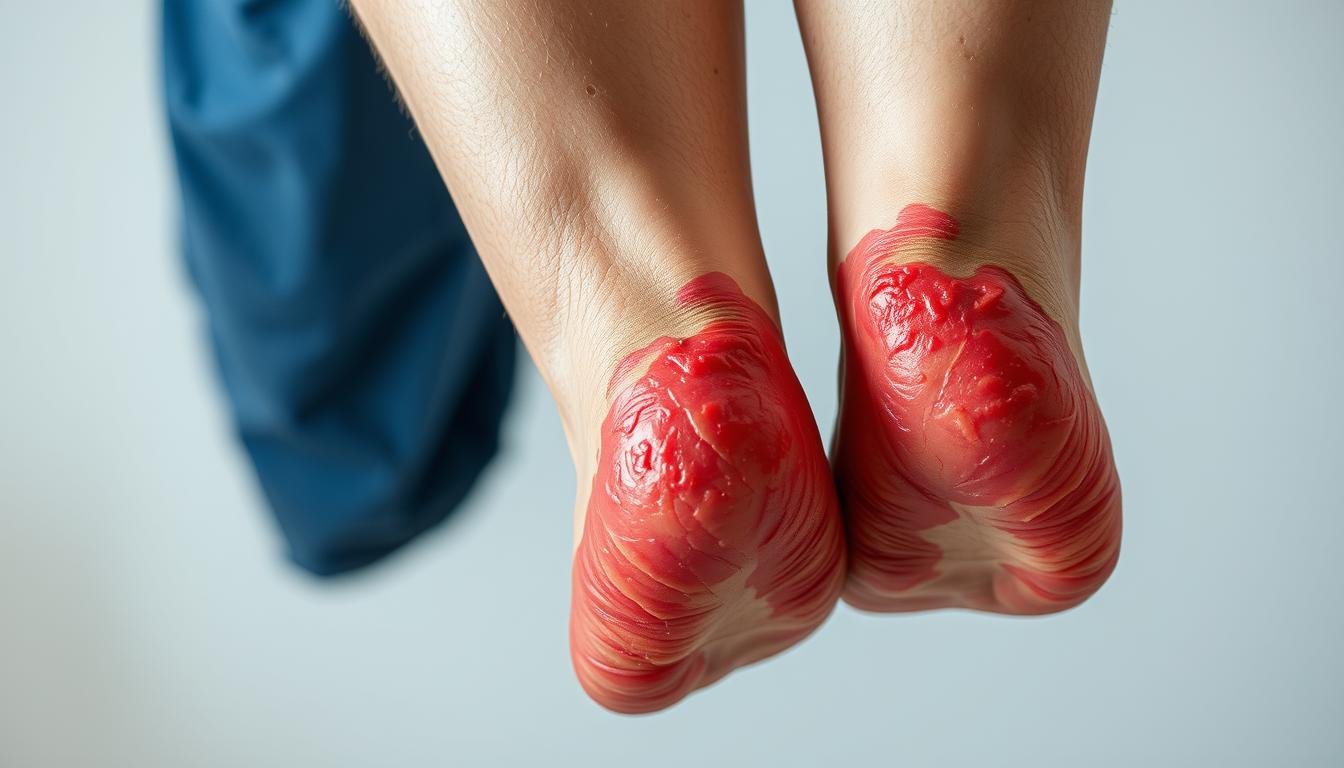
It’s important to know how to spot cement burns to treat them right. These burns happen when wet cement reacts with skin. The look of the burn can change a lot, depending on how bad it is.
First-Degree Cement Burns
First-degree burns hit the skin’s outer layer. They show up as red, swollen, and painful.
Appearance and Characteristics
The skin might look red and swollen. You might feel pain, like a mild sunburn.
Example Images
Looking at pictures can help you see what first-degree burns look like.
Second-Degree Cement Burns
Second-degree burns go deeper, causing more harm. They show blisters and hurt more.
Appearance and Characteristics
You’ll see blisters or vesicles on the skin. It will be red and swollen more. The pain is worse than first-degree burns.
Example Images
Third-Degree Cement Burns
Third-degree burns are the worst. They go through all skin layers and can cause permanent harm.
Appearance and Characteristics
The skin looks charred or white. It feels leathery. There’s deep tissue damage, and you might feel numb.
Example Images
Spotting cement burns right is key to treating them well. Knowing the different types helps manage them better.
Early Warning Signs of Cement Burns
It’s important to know the early signs of cement burns to act fast and avoid more harm. Cement burns happen because wet cement is very alkaline. If not treated quickly, they can cause serious injuries.
Immediate Symptoms
Right after a cement burn, you might see redness, irritation, and a burning feeling on your skin. This is because wet cement is very harsh and can burn your skin. You should wash off the cement right away to lessen the damage.
Delayed Reactions
Some cement burn reactions can show up hours or even days later. You might see blisters, swelling, and a lot of pain. Knowing about these late reactions is key to giving the right first aid and getting medical help if needed.
| Symptom | Immediate/DDelayed | Action Required |
|---|---|---|
| Redness and Irritation | Immediate | Wash off cement, apply cool water |
| Blistering and Swelling | Delayed | Seek medical attention, apply topical creams |
| Burning Sensation | Immediate | Remove contaminated clothing, wash skin |
Knowing both the quick and late signs of cement burns can really help with treatment and recovery. Always take safety steps when working with cement. Wear protective clothes and gloves to avoid getting hurt.
Progression of Untreated Cement Burns
Untreated cement burns get worse fast, leading to serious problems. It’s key to know how these issues develop to stress the need for quick medical help.
Hours After Exposure
Right after touching wet cement, the skin may show signs of burns. The alkaline nature of cement damages the skin right away, causing redness and irritation. It’s vital to wash the area and remove any contaminated clothes quickly. If not done, the burn can go deeper, making the injury worse.
Days After Exposure
As time goes on, the burn can get worse, possibly causing blisters and open sores. The chance of getting an infection goes up, making healing harder. Doctors say early treatment is key to avoid these problems. Without the right care, the situation can get worse, leading to long-lasting pain and scars.
Long-Term Complications
Untreated cement burns can cause lasting damage like permanent scars, chronic pain, and sensitivity to chemicals. In bad cases, it might even lead to long-term disability. As a medical expert points out,
“The key to avoiding these complications is prompt and proper treatment.”
It’s also important to prevent cement burn accidents. This shows the need for safety when working with cement.
Distinguishing Cement Burns from Other Skin Conditions
It’s important to tell cement burns apart from other skin problems. Cement burns can look like heat burns, allergic reactions, or friction injuries. This is because they share some similar signs.
Comparison with Heat Burns
Cement burns and heat burns have different causes and chemical makeup. Heat burns come from high temperatures, while cement burns are from the alkaline wet cement. Cement burns show a unique chemical injury pattern, unlike heat burns.
Comparison with Allergic Reactions
Allergic reactions can look like cement burns with redness and irritation. But, cement burns usually affect a smaller area where the cement touched. Allergic reactions can spread more.
Comparison with Friction Injuries
Friction injuries, like abrasions, are different from cement burns. Cement burns cause deeper damage because of the chemical reaction with the skin.
| Condition | Cause | Characteristics |
|---|---|---|
| Cement Burns | Chemical reaction with wet cement | Localized, deep tissue damage |
| Heat Burns | Exposure to high temperatures | Thermal injury, blistering |
| Allergic Reactions | Immune response to an allergen | Widespread redness, itching |
| Friction Injuries | Mechanical friction | Superficial damage, abrasions |
Immediate First Aid for Cement Burns
Cement burns are chemical burns that need quick action. Wet cement is very alkaline and can burn the skin badly. So, it’s important to act fast and do the right first aid.
Removing Cement from Skin
The first thing to do is to remove the cement from your skin. Be gentle to avoid making it worse. Gently brush off any dry cement from your skin. Don’t use water yet, as it can make the burn worse.
Proper Washing Techniques
Once you’ve removed as much cement as you can, rinse the area with cool or lukewarm water. Keep rinsing for at least 20 minutes. This helps neutralize the alkalinity. Also, remove any clothes or jewelry to prevent further irritation.
When to Seek Medical Attention
If the burn is bad, covers a lot of area, or is deep, get medical help right away. Look for signs like severe pain, blisters, or if it doesn’t heal in a few days. Also, watch for signs of infection like more redness, swelling, or pus.
Doctors say, “Quick and right first aid can lessen the harm from cement burns.” Good care early on can help a lot in healing and prevent long-term problems.
Medical Treatment Options for Cement Burns
Treating cement burns depends on how bad the injury is. It can range from simple first aid to complex surgeries. Cement burns, caused by wet cement’s alkaline nature, can be very serious if not treated right.
Clinical Assessment Procedures
When someone comes in, a detailed check is key. It looks at how deep and wide the burn is, if there’s infection, and the patient’s overall health. Doctors use different systems to figure out how bad the burn is, which helps decide what to do next.
Treatment for Minor Cement Burns
For minor burns, treatments are more straightforward. First, rinse with lots of water to get rid of cement. Then, apply topical antibiotics to stop infection. Cover it with a dressing that doesn’t stick. Watch for infection signs and get medical help if you see any.
Treatment for Severe Cement Burns
Severe burns need more serious treatment. This might include surgery to remove dead skin and help it heal. Sometimes, skin grafting is needed to cover big skin areas. Patients with severe burns also need help with pain and close watch for any problems.
| Treatment Approach | Minor Burns | Severe Burns |
|---|---|---|
| Immediate Care | Rinsing with water, topical antibiotics | Surgical debridement, pain management |
| Wound Management | Non-stick dressing | Skin grafting, dressing changes |
| Follow-Up | Monitoring for infection | Close monitoring for complications |
Knowing how to treat cement burns is key to managing them well. By understanding the burn’s severity and using the right treatment, doctors can help patients a lot.
Recovery Timeline and Expectations
The time it takes to recover from cement burns can vary a lot. This is because cement burns are caused by the alkaline nature of wet cement touching the skin. It’s important to know how the healing process works and what long-term effects might happen.
Healing Process for Different Severities
The healing time for cement burns depends on how bad the burn is. First-degree burns, which only affect the outer skin layer, usually heal in a few days to a week. Second-degree burns, which go deeper, can take weeks to heal and might leave scars. Third-degree burns, the worst, go through all skin layers and may need surgery, taking even longer to heal.
| Burn Severity | Healing Time | Potential Complications |
|---|---|---|
| First-Degree | A few days to a week | Minimal scarring |
| Second-Degree | Several weeks | Scarring, infection risk |
| Third-Degree | Extended, potentially months | Significant scarring, infection, long-term damage |
Potential Scarring and Long-Term Effects
Cement burns can lead to serious scarring, more so if the burn is severe or if the wound isn’t cared for properly. Long-term effects might include skin color changes, sensitivity, or even permanent damage. Doctors say, “Getting the right care right away and following up is key to avoiding long-term problems.”
If you have cement burns, see a doctor if symptoms are severe or if you see signs of infection like more redness, swelling, or fever. Quick and right treatment can help a lot with recovery and lower the chance of lasting problems.
Preventing Cement Burns During Construction Work
To lower the number of cement burns on construction sites, we need to take several steps. This includes wearing the right clothes, handling cement safely, and following safety rules at work.
Proper Protective Clothing
Wearing the right gear is key to avoiding cement burns. Protective clothing like long sleeves, pants, and closed shoes helps keep skin safe. Also, wearing waterproof gloves stops cement from touching your skin.
Safe Handling Practices
Safe ways to handle cement are very important. Workers should learn how to mix and pour cement without spills. It’s also vital to avoid kneeling or leaning on wet cement to prevent long skin contact.
| Safe Handling Practice | Description | Benefit |
|---|---|---|
| Proper Mixing Techniques | Mixing cement in a well-ventilated area and using tools to minimize direct contact. | Reduces risk of skin contact |
| Avoiding Direct Contact | Using shovels or other tools to handle wet cement instead of bare hands. | Minimizes exposure to wet cement |
| Immediate Washing | Washing skin immediately after contact with wet cement. | Reduces severity of cement burns |
Workplace Safety Protocols
Setting up safety rules at work is essential to prevent cement burns. This means training workers on the dangers of cement and how to stay safe. Employers should also make sure safety gear is easy to find and encourage reporting any accidents or close calls.
Essential Safety Equipment for Working with Cement
When working with cement, safety is key to avoid injuries. Cement burns can happen because wet cement is very alkaline. The right safety gear can greatly lower injury risks.
Protective Boots and Leg Coverings
Protective boots and leg coverings are key to avoid cement burns on the legs. Waterproof boots that keep cement out are a must. Also, wearing kneepads adds extra protection against splashes.
Gloves and Hand Protection
Gloves are essential for hand protection against cement burns. Heavy-duty, waterproof gloves must be worn when handling cement. Make sure the gloves are in good shape and not damaged.
Eye and Face Protection
Protecting eyes and face from cement is also critical. Safety goggles or face shields can block splashes. This keeps eyes and face safe.
Wearing the right safety gear helps prevent cement burns. It makes the work area safer for everyone.
Legal Considerations and Workers’ Compensation
Legal steps and workers’ compensation are key for workers with cement burns. Knowing their rights is vital for getting the right compensation.
Reporting Workplace Injuries
It’s important to report workplace injuries quickly. Workers should tell their employer right away, giving all the details. Timely reporting is key for any claims later on.
They need to fill out an incident report form well. Keeping a personal record of the incident is also important. This includes witness statements and medical reports.
Seeking Compensation for Cement Burns
Getting compensation for cement burns involves several steps. Workers must file a claim with the workers’ compensation authority. They need to provide comprehensive documentation of their injury.
The process can be complex. Getting legal advice can help a lot. Knowing the legal side and having help can greatly improve a claim’s outcome.
Conclusion
Cement burns are a big risk in the construction world. It’s important to know how to avoid them to stay safe.
To prevent cement burns, we need to train well and wear the right gear. Workers should also follow safety rules closely. They should watch for signs of burns and act fast if they see them.
By focusing on prevention, we can make workplaces safer. Wearing the right clothes, handling cement safely, and following safety rules are key. This helps protect us from getting hurt by wet cement.
Stopping cement burns early and treating them right can help avoid serious problems. This makes the workplace safer for everyone who works with cement.