 by
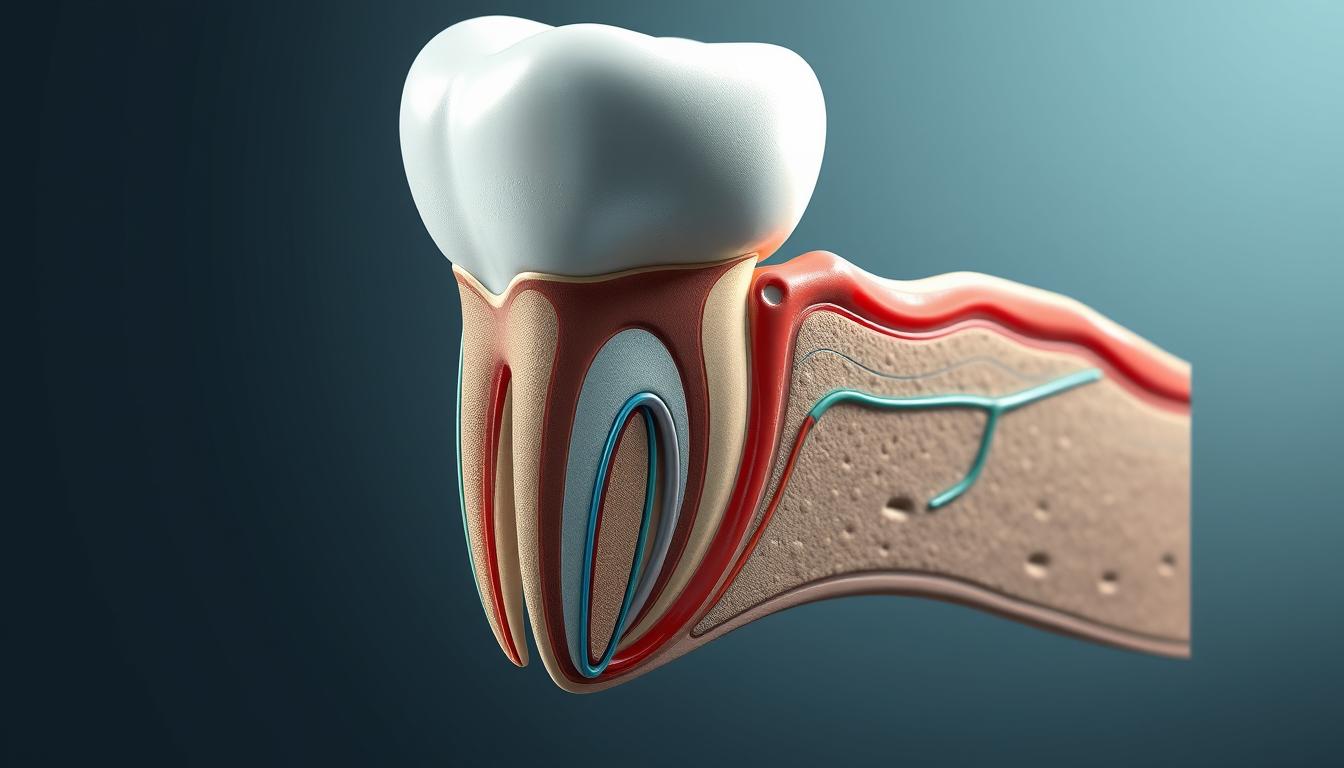
by A joint is a connection between two bones in our body. The dentoalveolar joint, also known as the gomphosis, connects teeth to the bony sockets in our jaw.
This complex structure is key to our oral health. Lymphocyte development and function are vital here. Lymphocytes are white blood cells that help fight off infections.
Knowing how the dentoalveolar joint works with lymphocyte function helps us understand its role in oral health.
Overview of the Dentoalveolar Complex
Understanding the dentoalveolar complex is key to oral health and immune function. It’s a complex structure that supports teeth and aids in oral functions.
Definition and Basic Structure
The dentoalveolar complex includes teeth, alveolar bone, and the periodontal ligament. It gives teeth the support they need for chewing and speaking. The periodontal ligament is important for tooth attachment and houses immune cells.
Functional Significance in Oral Health
The dentoalveolar complex is vital for oral health. It supports teeth and helps fight off infections. The immune cells in the periodontal ligament are key to defending against pathogens.
In short, the dentoalveolar complex is a critical part of oral anatomy. Its structure and function are linked to immune responses. Knowing about it helps us understand health and disease better.
Structural Components of the Dentoalveolar Joint
The dentoalveolar joint is key for dental health. It includes teeth, alveolar bone, and the periodontal ligament. This joint supports the teeth and helps with chewing and speaking.
Teeth and Their Attachment Apparatus
Teeth are held in place by the periodontal ligament. This fibrous joint supports the teeth and allows for tooth movement. The attachment apparatus includes cementum, the periodontal ligament, and the alveolar bone socket. The integrity of this apparatus is vital for tooth stability and orthodontic movement.
Alveolar Bone Architecture
The alveolar bone houses the tooth sockets. It has compact bone on the outside and spongy bone inside. The bone’s structure changes with the forces from teeth and the periodontal ligament. This flexibility is key for orthodontic treatments and joint health.
Periodontal Ligament Organization
The periodontal ligament connects the tooth to the alveolar bone. It has cells like fibroblasts and immune cells. The ligament’s structure is important for its function, with fibers arranged to handle forces.
Lymphocytes in the ligament help fight infections. A study shows the periodontal ligament is dynamic, changing with the immune environment. This highlights the need to understand the dentoalveolar joint for better oral health.
Histological Features of the Dentoalveolar Junction
Understanding the dentoalveolar junction is key to knowing its role. It’s made up of different cells and matrix that keep the mouth healthy.
Cellular Composition
The periodontal ligament has many cells like fibroblasts, osteoblasts, and immune cells like lymphocytes. These cells help fix and keep the periodontal tissues healthy. Lymphocytes are important for lymphocyte proliferation and lymphocyte migration, which help fight off infections.
| Cell Type | Function |
|---|---|
| Fibroblasts | Produce collagen and other matrix components |
| Osteoblasts | Involved in bone formation |
| Lymphocytes | Play a role in immune response and surveillance |
Extracellular Matrix Components
The periodontal ligament’s matrix includes collagen fibers, proteoglycans, and glycoproteins. These help hold the structure together and let cells stick to it.
Vascular and Neural Supply
The dentoalveolar junction gets blood from the maxillary and mandibular arteries. It also gets nerve supply from the trigeminal nerve, which helps with feeling. This blood and nerve supply is vital for keeping tissues healthy and controlling lymphocyte function.
The Immune Microenvironment of the Dentoalveolar Complex
The immune system in the dentoalveolar complex is complex. It involves many cell types and defense methods. This system is key to protecting the area from pathogens and keeping it healthy.
Resident Immune Cells
The dentoalveolar complex is home to many immune cells, like lymphocytes and macrophages. These cells are vital for fighting off microbes. Immature lymphocytes are important in the immune response’s growth and development.
Lymphocytes, like T cells and B cells, are key for adaptive immunity. Macrophages help with innate immunity by eating pathogens and waste. Their work is essential for the dentoalveolar complex’s health.
Barrier Function and Defense Mechanisms
The dentoalveolar complex has a strong barrier to keep pathogens out. This barrier is made up of the periodontal ligament and alveolar bone. Together, they offer a strong defense against infections.
It also uses other defense methods, like making antimicrobial peptides and activating immune cells. These work together to keep the complex safe from disease.
Immunological Surveillance
Immunological surveillance is a key function in the dentoalveolar complex. It involves always watching for signs of infection or disease. Immune system cells, such as lymphocytes and macrophages, are central to this.
This surveillance is important for quickly spotting and dealing with threats. It helps keep the dentoalveolar complex healthy and intact.
Lymphatic System in Oral Tissues
The lymphatic system is key to keeping oral tissues healthy. It helps control how the body fights off infections.
In the mouth, it helps keep gums and teeth healthy. It stops diseases from spreading.
Lymphatic Drainage Pathways
The mouth has complex lymphatic pathways. These paths help remove harmful stuff and extra fluids.
Regional Lymph Nodes
Nodes like the submandibular and cervical ones are very important. They filter out bad stuff and start the body’s defense against infections. This is linked to lymphocyte subpopulations.
Lymph Circulation in Periodontal Tissues
Lymph circulation is essential for periodontal health. It removes harmful stuff and helps heal tissues. This involves white blood cell differentiation and maturation.
Immature Lymphocyte: Origin and Development
Hematopoietic stem cells in the bone marrow start the journey of immature lymphocytes. This process is complex, with many stages and factors at play.
Hematopoietic Stem Cell Differentiation
The journey of immature lymphocytes starts with hematopoietic stem cells. These cells can become any blood cell type, including lymphocytes. Growth factors and cytokines control this process.
The bone marrow microenvironment supports lymphocyte development. It gives the necessary signals for their growth. Knowing this helps us understand how lymphocytes help our immune system.
Stages of Lymphocyte Maturation
Lymphocyte maturation goes through several stages. Each stage has its own changes in cells and molecules. The main stages are:
| Stage | Description | Key Features |
|---|---|---|
| Pro-lymphocyte | Early stage of lymphocyte development | Expression of specific surface markers |
| Pre-lymphocyte | Stage following pro-lymphocyte | Rearrangement of immunoglobulin genes |
| Immature Lymphocyte | Final stage before maturity | Testing for self-reactivity |
Factors Influencing Lymphocyte Development
Many factors affect lymphocyte development. These include genetics, environment, and specific cytokines. These elements can change lymphocyte proliferation and lymphocyte migration patterns.
The development of immature lymphocytes is vital for the immune system. Understanding their development stages and factors helps us see how they impact health and disease.
Role of Immature Lymphocytes in Dentoalveolar Homeostasis
Immature lymphocytes play a key role in keeping our mouths healthy. They help keep the dentoalveolar complex in balance.
These cells are important for the health of the dentoalveolar joint. They watch over the area and keep it safe from harm.
Surveillance Functions
Immature lymphocytes act like guards, watching for infections or damage. They are key in stopping diseases before they start.
Contribution to Tissue Maintenance
They also help keep the dentoalveolar tissues healthy. They make sure the immune response is just right.
They work with other cells in the area to keep everything in check. This teamwork helps the tissues stay strong.
Interaction with Resident Cells
They talk to other cells like fibroblasts and epithelial cells. This helps keep the tissues balanced and healthy.
| Function | Description | Impact on Dentoalveolar Homeostasis |
|---|---|---|
| Surveillance | Monitoring for pathogens and damage | Prevents infection and disease |
| Tissue Maintenance | Regulation of local immune response | Ensures proportionate response to threats |
| Cell Interaction | Crosstalk with resident cells | Facilitates coordinated response and tissue resilience |
In conclusion, immature lymphocytes are vital for our mouth’s health. They watch over the area, help keep it balanced, and work with other cells. Knowing their role helps us prevent and treat mouth diseases.
Lymphocyte Trafficking in Dentoalveolar Tissues
Learning about lymphocytes moving to dentoalveolar tissues helps us understand the immune system in the mouth. These cells travel through the blood and lymphatic system. They are key to keeping our mouths healthy.
Recruitment Mechanisms
The process of getting lymphocytes to dentoalveolar tissues is complex. Lymphocyte maturation is important. It helps these cells fight off infections.
Adhesion Molecules and Chemokines
Adhesion molecules and chemokines guide lymphocytes to their destinations. They help these cells stick to the blood vessels and move into the tissues.
Lymphocyte Migration Patterns
Lymphocytes move in specific ways in dentoalveolar tissues. The immune environment around them guides their path. This ensures they reach the right spots to fight off infections.
In short, lymphocytes moving to dentoalveolar tissues is a vital process for oral health. Knowing how it works can help us prevent and treat mouth diseases.
Lymphocyte Subpopulations in Periodontal Health
It’s key to know about different lymphocyte subpopulations for periodontal health. The mouth’s tissues have T cells, B cells, and natural killer cells. These cells help keep our mouths healthy.
T Cell Lineages and Functions
T cells are important in the immune system of our mouths. They help fight off infections. CD4+ T cells help activate other immune cells. CD8+ T cells kill infected cells directly.
B Cell Development and Antibody Production
B cells are also key in keeping our mouths healthy. They turn into plasma cells that make antibodies. These antibodies fight off harmful microbes. Antibody production is vital for protecting our mouths.
Natural Killer Cells in Oral Immunity
Natural killer (NK) cells are part of our innate immunity. They fight off viruses and tumors. In our mouths, they help control infections and keep tissues balanced. Their job is to spot and destroy stressed or infected cells.
It’s important for these cells to work well together for our mouth’s health. If they don’t, it can lead to mouth diseases. This shows how vital it is to understand their roles and how they interact.
Lymphocyte Activation in Dentoalveolar Environments
The process of lymphocyte activation in the dentoalveolar area is complex. It involves many cell interactions. Lymphocytes are key to the immune response and keeping our mouths healthy.
Antigen Recognition and Processing
Lymphocytes find antigens with specific receptors. Antigen processing breaks down antigens into smaller pieces. These pieces are then shown to lymphocytes by special cells called antigen-presenting cells (APCs). This step is vital for starting an immune response.
Costimulatory Signals
Costimulatory signals are also needed for lymphocytes to fully activate. These signals come from the interaction between special molecules on APCs and lymphocytes. Without these signals, lymphocytes might not work properly.
Cytokine Networks
Cytokines help coordinate the immune response. They can either help or hinder lymphocyte activation. The right balance of cytokines is essential for a strong immune response. For example, some cytokines help lymphocytes move to where they’re needed.
Lymphocyte activation depends on their maturity. Immature Lymphocytes go through a critical stage before they can respond to antigens. Knowing how lymphocytes function helps us understand the immune response in our mouths.
Lymphocyte-Mediated Inflammation in Periodontal Disease
Lymphocytes are key in causing periodontal disease through inflammation. The immune response, led by lymphocytes, decides the disease’s outcome.
Dysregulation of Lymphocyte Function
Lymphocyte function goes awry in periodontal disease. Lymphocyte development and maturation are complex. They can be influenced by many factors, causing an immune imbalance.
This imbalance leads to too much or wrong inflammation. Immune system cells, like lymphocytes, are key. They fight off pathogens and react to other triggers.
Inflammatory Mediators and Tissue Destruction
Inflammatory mediators from lymphocytes and other cells harm periodontal tissues. Cytokines and other substances cause inflammation and damage.
- Cytokines like IL-1β and TNF-α start inflammation.
- Matrix metalloproteinases break down the extracellular matrix.
- Osteoclasts cause bone loss.
Chronic Inflammation and Bone Loss
Chronic inflammation in periodontal disease causes a lot of bone loss. This can lead to tooth loss if not treated. Lymphocyte maturation and the immune response are key here.
“The complex interplay between lymphocytes and other immune cells in the periodontal environment highlights the need for a detailed understanding of the immune mechanisms behind periodontal disease.”
Understanding lymphocyte-mediated inflammation in periodontal disease is vital. It helps in creating effective treatments. By focusing on lymphocyte function and inflammation, we might stop or slow down periodontal disease.
Developmental Aspects of Dentoalveolar Immune System
The dentoalveolar immune system’s growth is key to our oral health. It involves the development of immune cells and structures in the mouth.
Prenatal and Postnatal Development
The immune system in the mouth starts growing before birth and keeps growing after birth. This early growth lays the groundwork for the immune system’s function. It happens through white blood cell differentiation and the setup of lymphoid tissues.
Age-Related Changes in Lymphocyte Populations
As the immune system in the mouth grows, lymphocyte subpopulations change a lot. These changes help the immune system fight off infections and keep the mouth healthy.
| Age Group | Lymphocyte Population Changes | Impact on Oral Health |
|---|---|---|
| Prenatal | Initial lymphoid cell formation | Foundation for immune system |
| Postnatal | Expansion of lymphocyte subpopulations | Development of immune responses |
| Adulthood | Stabilization of lymphocyte populations | Maintenance of oral health |
Maturation of Local Immune Responses
The immune system in the mouth gets better at fighting off infections as it matures. This is thanks to lymphocyte activation. It’s vital for keeping the mouth healthy and fighting off diseases.
In conclusion, the growth of the dentoalveolar immune system is complex. It involves many cell and molecular interactions. Knowing about these processes helps us understand how the immune system keeps our mouth healthy.
Clinical Implications of Dentoalveolar Lymphocyte Dynamics
The study of dentoalveolar lymphocyte dynamics has many uses. It helps in diagnosing, treating, and predicting the outcome of diseases. Knowing about lymphocyte proliferation, lymphocyte migration, and lymphocyte function is key to managing periodontal disease well.
Diagnostic Approaches
Diagnosing periodontal disease is getting better, thanks to a focus on lymphocytes. Looking at lymphocyte subsets and their activity helps understand the disease’s progress and how it will react to treatment.
New diagnostic tools like flow cytometry and molecular analysis help doctors check lymphocyte function. They also find biomarkers for disease activity.
Immunomodulatory Therapies
Immunomodulatory therapies are a new hope for treating periodontal disease. They aim to control the immune response. This can lower inflammation and stop tissue damage.
Strategies that manage lymphocyte activity can lead to better treatment results. They also help improve patient outcomes.
Prognostic Indicators in Periodontal Disease
Finding out who will get worse and who will get better is important. Studying lymphocyte dynamics gives clues. This helps doctors make treatment plans that fit each patient’s needs.
By understanding how lymphocytes work with other immune cells, doctors can make better treatment plans. This leads to better results for patients.
Advanced Research Techniques in Studying Dentoalveolar Lymphocytes
Advanced research techniques have greatly improved our knowledge of lymphocytes in the dentoalveolar complex. This complex includes teeth, alveolar bone, and the periodontal ligament. It’s a special place where immune system cells are key to keeping our mouths healthy.
Flow Cytometry and Cell Sorting
Flow cytometry and cell sorting are key tools for studying immature lymphocytes. They help researchers find and separate specific lymphocytes. This lets us learn more about how these cells grow and work.
Molecular and Genetic Analysis
Molecular and genetic analysis, like PCR and gene expression profiling, shed light on lymphocyte behavior. They show how genes are turned on and off in immune system cells. This helps us understand their role in the dentoalveolar complex.
Animal Models and Translational Approaches
Animal models are vital for studying lymphocytes in the dentoalveolar environment. Translational research using these models helps link scientific discoveries to new treatments. This improves our grasp of lymphocyte behavior in both health and disease.
By using these advanced methods, scientists can better understand how lymphocytes interact with other cells in the dentoalveolar joint. This knowledge is essential for finding new ways to treat periodontal diseases.
Conclusion: Integrating Dentoalveolar Anatomy and Immunology
The dentoalveolar complex is a special structure that needs both anatomy and immunology knowledge. It’s important to understand how the structure and immune function work together. This helps us see how lymphocyte maturation and white blood cell differentiation keep our mouths healthy.
Lymphocyte subpopulations in the dentoalveolar complex are key to fighting off infections. Knowing both anatomy and immunology helps us understand periodontal health and disease better.
Understanding these interactions can lead to new ways to treat periodontal diseases. This shows why we need to keep studying the immunological side of the dentoalveolar complex.