 by
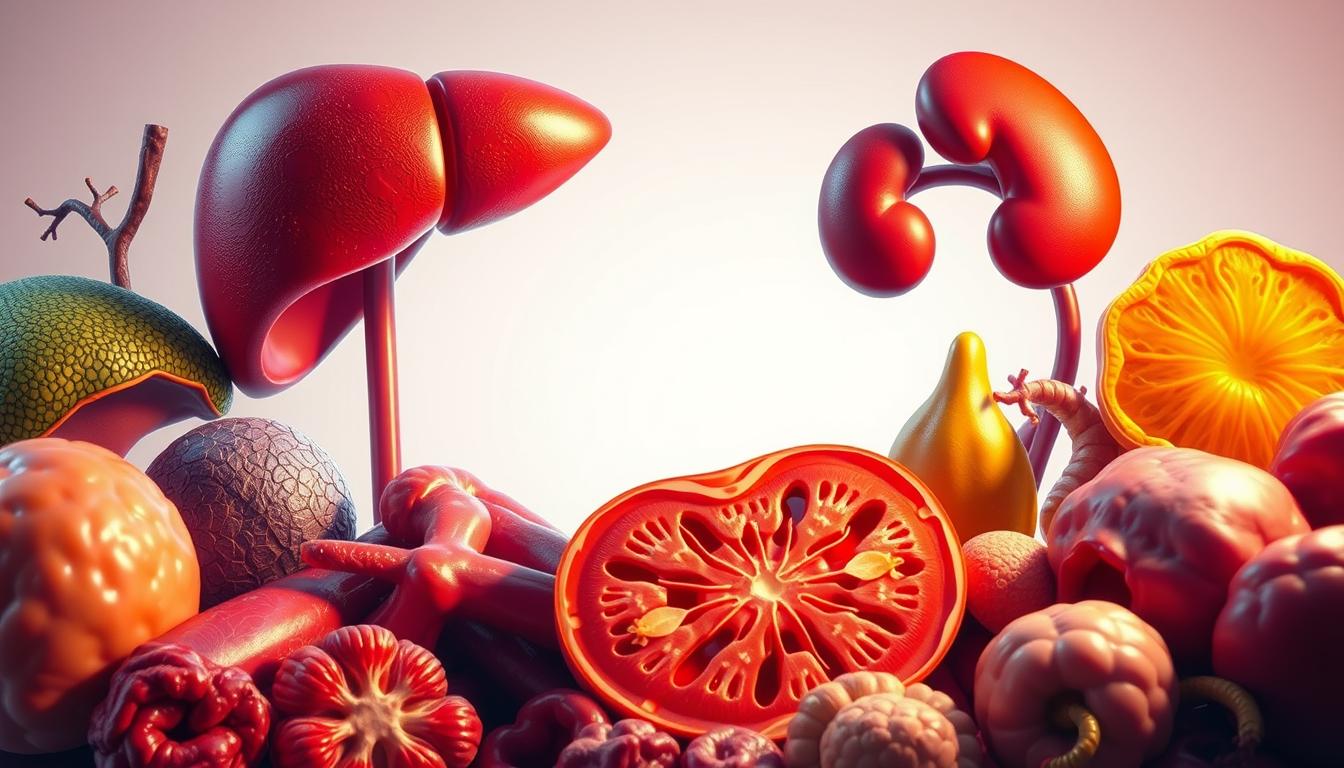
by Parenchymatous organs have a lot of functional substance. The brain is a great example. It has important parts like the Lentiform Nucleus, which is key in Brain Anatomy.
Parenchyma is vital for organs like the brain and lungs to work right. Knowing about parenchymatous organs helps us understand and treat diseases. The Lentiform Nucleus is important for brain functions, making it a key area in neuroanatomy.
Learning about parenchymatous organs helps us understand the human body better. It shows us how important the Brain Anatomy is for our health.
Understanding Parenchymatous Tissues and Organs
Parenchymatous refers to the main parts of an organ, not the supporting tissue. These tissues are the heart of an organ, making it work right.
Definition and Histological Characteristics
Parenchymatous tissues have specialized cells for each organ’s job. For example, liver cells clean toxins and make bile. Their shape and how they’re arranged help us understand how organs work.
Functional Significance in Human Physiology
Parenchymatous tissues are key to organ function. They handle tasks like filtering in the kidneys and hormone making in glands. Their health affects our body’s balance and how well organs work.
Classification of Parenchymatous Organs
Parenchymatous organs are grouped by their structure and function. Here’s a simple way to sort them:
| Organ | Parenchymatous Tissue | Function |
|---|---|---|
| Liver | Hepatocytes | Detoxification, Metabolism |
| Kidneys | Nephrons | Filtration, Waste Removal |
| Brain | Neurons | Control, Coordination |
This shows how different parenchymatous tissues work in various organs.
The Lentiform Nucleus: A Critical Parenchymatous Structure
The lentiform nucleus is a key part of the brain’s motor control system. It’s in the basal ganglia, which help with moving, learning, and controlling emotions. This area is vital for our brain’s functions.
Anatomical Location and Boundaries
The lentiform nucleus is found near the internal capsule. It’s deep in the brain, next to the insula. It’s surrounded by the external and internal capsules.
Cellular Composition and Microstructure
The lentiform nucleus has two main parts: the putamen and the globus pallidus. The putamen is bigger and on the outside. The globus pallidus has two parts. It’s filled with different types of neurons.
Vascular Supply and Metabolic Requirements
The lentiform nucleus gets blood from the lenticulostriate arteries. These arteries come from the middle cerebral artery. This blood supply is key for its high energy needs.
The lentiform nucleus is a key part of the basal ganglia. Problems here can cause many brain disorders. Knowing about its structure and function helps us understand its importance.
Subdivisions of the Lentiform Nucleus
The Lentiform Nucleus is made up of two main parts: the Putamen and the Globus Pallidus. These parts are key to understanding how the brain controls movement. They work together in the basal ganglia to help us move.
The Putamen: Structure and Function
The Putamen is the bigger part of the Lentiform Nucleus. It helps control movements and learn new ones. It gets signals from the brain’s outer layer and helps with motor control.
The Globus Pallidus: External and Internal Segments
The Globus Pallidus has two parts: the external and internal segments. The external segment is in the indirect pathway, while the internal segment is in the direct pathway. Both are important for controlling voluntary movements.
Connectivity with Other Brain Regions
The Lentiform Nucleus connects with other brain areas like the caudate nucleus, subthalamic nucleus, and substantia nigra. These connections help integrate motor control signals and regulate movement. Below is a table showing the key connections and functions of the Putamen and Globus Pallidus.
| Structure | Function | Connections |
|---|---|---|
| Putamen | Regulation of movements, influence on learning new movements | Cerebral cortex, basal ganglia |
| Globus Pallidus (External Segment) | Involved in the indirect pathway of basal ganglia | Subthalamic nucleus, other basal ganglia structures |
| Globus Pallidus (Internal Segment) | Part of the direct pathway of basal ganglia | Thalamus, other basal ganglia structures |
The Putamen and Globus Pallidus are vital for the basal ganglia circuitry and motor control. Problems in these areas can lead to movement disorders. This shows how important they are for our health.
Functional Anatomy of the Basal Ganglia System
The Basal Ganglia’s anatomy shows its key role in motor function and neuroanatomy. It’s a group of structures at the brain’s base, linked to the thalamus. They are vital for controlling movement.
Components of the Basal Ganglia Circuit
The Basal Ganglia circuit has several important parts. These include the caudate nucleus, putamen, globus pallidus, substantia nigra, and subthalamic nucleus. Together, they help control movement through complex connections.
“The Basal Ganglia are key for controlling voluntary movements, learning, and emotions.” This highlights their role in both motor and non-motor functions.
Direct and Indirect Pathways
The Basal Ganglia circuit has two main paths: the direct and indirect pathways. The direct pathway helps movement by reducing thalamic inhibition. The indirect pathway stops movement by increasing thalamic inhibition.
- The direct pathway helps in making desired movements.
- The indirect pathway is important for stopping unwanted movements.
The Lentiform Nucleus Within Motor Control Networks
The Lentiform Nucleus, made up of the putamen and globus pallidus, is a key part of the Basal Ganglia. It’s vital for motor control by being part of both pathways.
The Lentiform Nucleus is essential for movement control. The putamen gets input from the cortex, and the globus pallidus is a main output structure.
Neurotransmitters and Signaling Pathways in the Lentiform Nucleus
The balance of neurotransmitters in the lentiform nucleus is key for motor control. It helps prevent neurological disorders. This balance comes from the complex work of many neurotransmitter systems.
Dopaminergic Modulation
Dopamine is vital in the basal ganglia circuitry. It helps with motor control and thinking. The lentiform nucleus gets dopamine from the substantia nigra, which is important for motor functions.
When dopamine signaling is off, it can lead to diseases like Parkinson’s.
GABAergic and Glutamatergic Signaling
The lentiform nucleus also gets signals from GABAergic and glutamatergic pathways. GABA helps control neuron activity. Glutamate, on the other hand, excites neurons.
The right balance between these neurotransmitters is key for good motor function.
Neuropeptides and Neuromodulators
Neuropeptides and neuromodulators also play big roles in the lentiform nucleus. They can change how neurons work and affect things like pain and emotions. When they’re not working right, it can lead to neurological problems.
The complex mix of neurotransmitters and pathways in the lentiform nucleus shows how complex the basal ganglia circuitry is. Understanding this is important for finding treatments for motor control disorders.
The Liver: Exemplar of Glandular Parenchyma
The liver is a key example of glandular parenchyma. It plays a big role in metabolism, detoxification, and making important proteins. This makes it a vital glandular parenchymatous organ.
Hepatic Parenchymal Architecture
The liver’s main cells, called hepatocytes, make up about 80% of it. These cells are arranged in a special way, forming thin plates. They are surrounded by tiny blood vessels called sinusoids.
“The liver can heal itself,” a unique ability it has. This is thanks to its cells and stem cells.
Functional Units: Hepatic Lobules
The liver’s main unit is the hepatic lobule. It’s shaped like a hexagon and has a central vein. The lobules have hepatocytes arranged in a specific pattern, with important blood vessels at the edges.
- Hepatocytes do many important jobs, like making proteins and cleaning toxins.
- The sinusoids help move substances between the cells and blood.
- Bile canaliculi collect bile from hepatocytes and send it to the bile ducts.
Comparison with Neural Parenchyma
Hepatic and neural parenchyma have different cells and structures. Hepatocytes are in plates, while neurons form complex networks. The liver focuses on metabolism and detox, while the brain handles information.
The difference between the liver and brain shows how diverse parenchymatous organs are. Each has its own role in keeping the body working right.
Renal Parenchyma: Structure and Specialization
Renal parenchyma is key for keeping our body balanced. It filters waste and helps control electrolytes. It’s split into the cortex and medulla, each with its own job.
Cortical and Medullary Parenchyma
The cortex is the outer layer. It has the parts that filter blood and help with waste. The medulla, on the other hand, focuses on making urine more concentrated. The renal parenchyma’s layout is vital for its work.
Nephrons as Functional Units
Nephrons are tiny but mighty in the kidney. They filter blood, take back nutrients, and get rid of waste. Each nephron has parts that work together to filter and balance electrolytes.
Parenchymal Adaptations for Filtration
The renal parenchyma is set up for top-notch filtration. It has special blood vessels and cells like podocytes. The filtration process is smooth thanks to the glomerular capillaries, which let waste through but keep important stuff inside.
The kidney’s parts work together to keep it running smoothly. Knowing about the renal parenchyma helps us understand how the kidney keeps us healthy.
Pulmonary Parenchyma and Respiratory Function
The lung’s parenchyma is key for gas exchange. It includes alveoli and interstitial tissue that work together. This complex structure is vital for exchanging oxygen and carbon dioxide between air and blood.
Alveolar Structure and Gas Exchange
The alveoli are the main units of the lung’s parenchyma for gas exchange. These tiny air sacs are surrounded by capillaries. This setup helps oxygen get into the blood and carbon dioxide leave the blood.
The alveoli are designed for gas exchange. They have a large surface area and a thin layer. This makes gas exchange efficient, supporting the body’s needs.
Key features of alveolar structure include:
- Thin alveolar-capillary membrane
- Large surface area for gas exchange
- Rich capillary network
Interstitial Components
The interstitial tissue supports the alveoli and has various cells. It’s important for the lung’s structure and for responding to injury or infection.
This tissue also plays a role in lung diseases. For example, in pulmonary fibrosis, it can lead to scarring and poor gas exchange.
Comparative Analysis with Other Parenchymatous Tissues
Pulmonary parenchyma is unique for gas exchange. Unlike the liver or kidney, it’s not involved in metabolism or filtration. It’s adapted for gas exchange.
“The lung’s parenchyma is a remarkable example of evolutionary adaptation, with its intricacy supporting gas exchange.” – Dr. Respiratory Specialist
Comparing it to other organs shows its special features. The lung’s high surface area and close alveoli-capillary relationship are unique.
Additional Examples of Parenchymatous Organs
Many vital organs, aside from the liver and kidneys, have parenchymatous characteristics. These organs are key to keeping the body balanced, managing metabolism, and boosting the immune system.
Splenic Parenchyma and Immune Function
The spleen is a vital part of the immune system. It has parenchyma that filters blood and stores lymphocytes. The splenic parenchyma is made up of white and red pulp. The white pulp is full of lymphoid cells, and the red pulp cleans the blood.
“The spleen acts as a filter for the blood, removing old red blood cells and housing immune cells called macrophages and dendritic cells.” This is key for a strong immune system and good health.
Pancreatic Parenchyma: Endocrine and Exocrine Components
The pancreas has two main jobs, thanks to its unique parenchymal parts. The pancreatic parenchyma includes islets of Langerhans, which make insulin and glucagon, and acinar cells, which make digestive enzymes. This helps control blood sugar and aids in digestion.
Thyroid and Adrenal Gland Parenchyma
The thyroid gland makes hormones that control metabolism. The adrenal glands produce hormones that help with stress, balance, and other important functions. The parenchyma of these glands is designed to support their hormone-making roles. The thyroid gland’s follicles make thyroglobulin, and the adrenal cortex makes corticosteroids.
In summary, the variety of parenchymatous organs shows how complex our bodies are. Organs like the spleen, pancreas, thyroid, and adrenal glands each have special structures. These structures help them do important jobs, from fighting off infections to controlling hormones.
Pathological Conditions Affecting the Lentiform Nucleus
The lentiform nucleus is a key part of the basal ganglia. It plays a big role in how we move. When it doesn’t work right, it can cause serious problems with movement.
Parkinson’s Disease Pathophysiology
Parkinson’s Disease harms the dopamine-making cells in the basal ganglia. This includes the lentiform nucleus. Without these cells, our motor control goes off track, causing tremors, stiffness, and slow movements.
Huntington’s Disease and Striatal Degeneration
Huntington’s Disease also hits the lentiform nucleus hard. It’s a genetic disorder that slowly damages the basal ganglia. This damage affects our thinking, movement, and mood, leading to serious problems.
Dystonia and Other Movement Disorders
Dystonia is a condition where muscles move on their own. It can affect the lentiform nucleus. Other disorders, like Wilson’s Disease, also harm this area, leading to movement issues.
Wilson’s Disease and Metal Accumulation
Wilson’s Disease causes too much copper in the brain and liver. This copper builds up in the basal ganglia, including the lentiform nucleus. It can cause symptoms like dystonia and Parkinson’s disease. Finding and treating it early is key to avoiding lasting damage.
The lentiform nucleus is vital in the basal ganglia. Its problems are linked to many neurological issues. Knowing how these conditions work is important for finding better treatments.
Diagnostic Imaging of Parenchymatous Organs
Diagnostic imaging is key in modern medicine for checking parenchymatous organs. It lets doctors see how these organs work and what’s wrong with them. This helps in making the right diagnosis and treatment plans.
MRI and CT Visualization of the Lentiform Nucleus
Magnetic Resonance Imaging (MRI) and Computed Tomography (CT) scans are used to see brain structures like the Lentiform Nucleus. MRI gives clear images of soft tissues. This makes it great for looking at the brain’s details.
A study found that MRI is the top choice for brain imaging. It does this without using harmful radiation.
“MRI is better than CT for seeing soft tissues. It’s perfect for finding problems in the Lentiform Nucleus,”
Functional Neuroimaging Techniques
Techniques like Functional MRI (fMRI) and Positron Emission Tomography (PET) check brain activity and function. They help understand the Lentiform Nucleus’s role in movement and thinking.
| Imaging Modality | Primary Use | Advantages |
|---|---|---|
| MRI | Structural Imaging | High-resolution soft tissue imaging |
| fMRI | Functional Imaging | Assesses brain activity |
| CT | Structural Imaging | Quick and widely available |
Imaging Approaches for Other Parenchymatous Organs
Other organs like the liver, kidneys, and lungs are also checked with imaging. For example, ultrasound and CT scans are used for the liver and kidneys. High-resolution CT is best for the lungs.
The right imaging method depends on the organ and the question being asked. As technology gets better, so does our ability to help patients.
Therapeutic Approaches and Clinical Significance
Managing disorders of the Lentiform Nucleus has made big strides in recent years. Many treatments have been created to tackle the complex issues behind these conditions.
Deep Brain Stimulation of the Lentiform Nucleus
Deep Brain Stimulation (DBS) is a key treatment for many neurological problems, including those affecting the Lentiform Nucleus. DBS involves the surgical implantation of electrodes in certain brain areas. These are then stimulated by a pulse generator.
This method has shown great promise in managing symptoms of Parkinson’s disease and dystonia.
Pharmacological Interventions for Basal Ganglia Disorders
Pharmacological treatments are a mainstay in treating Basal Ganglia disorders. Dopaminergic medications are often used to treat Parkinson’s disease. Other drugs target specific symptoms or pathways involved in the disease.
Emerging Therapies and Regenerative Approaches
The field of neurology is seeing a rise in new treatments and regenerative methods for Lentiform Nucleus disorders. These include new drugs, gene therapies, and stem cell therapies. They aim to repair or change the affected brain circuits.
Gene Therapy for Lentiform Nucleus Disorders
Gene therapy is a promising area in treating genetic disorders of the Lentiform Nucleus. It targets the genetic causes of the disease, aiming to stop or reverse it. Recent advances in viral vector technology have made gene therapies more effective. This offers new hope for patients with these conditions.
Conclusion
Parenchymatous organs, like the Lentiform Nucleus, are key in human health, mainly in the brain and how diseases affect it. This article has looked into these organs, showing their importance and how diseases can harm them.
The Lentiform Nucleus is vital for moving and thinking. Knowing its parts and how it connects helps doctors diagnose and treat brain diseases. New imaging techniques have made it easier to study and treat these areas.
Managing brain diseases in these organs needs a deep understanding of their structure and how they work. Treatments like deep brain stimulation and medicines are helping patients with Parkinson’s and dystonia. More research on the Lentiform Nucleus and similar organs is needed to find better treatments and help more people.