 by
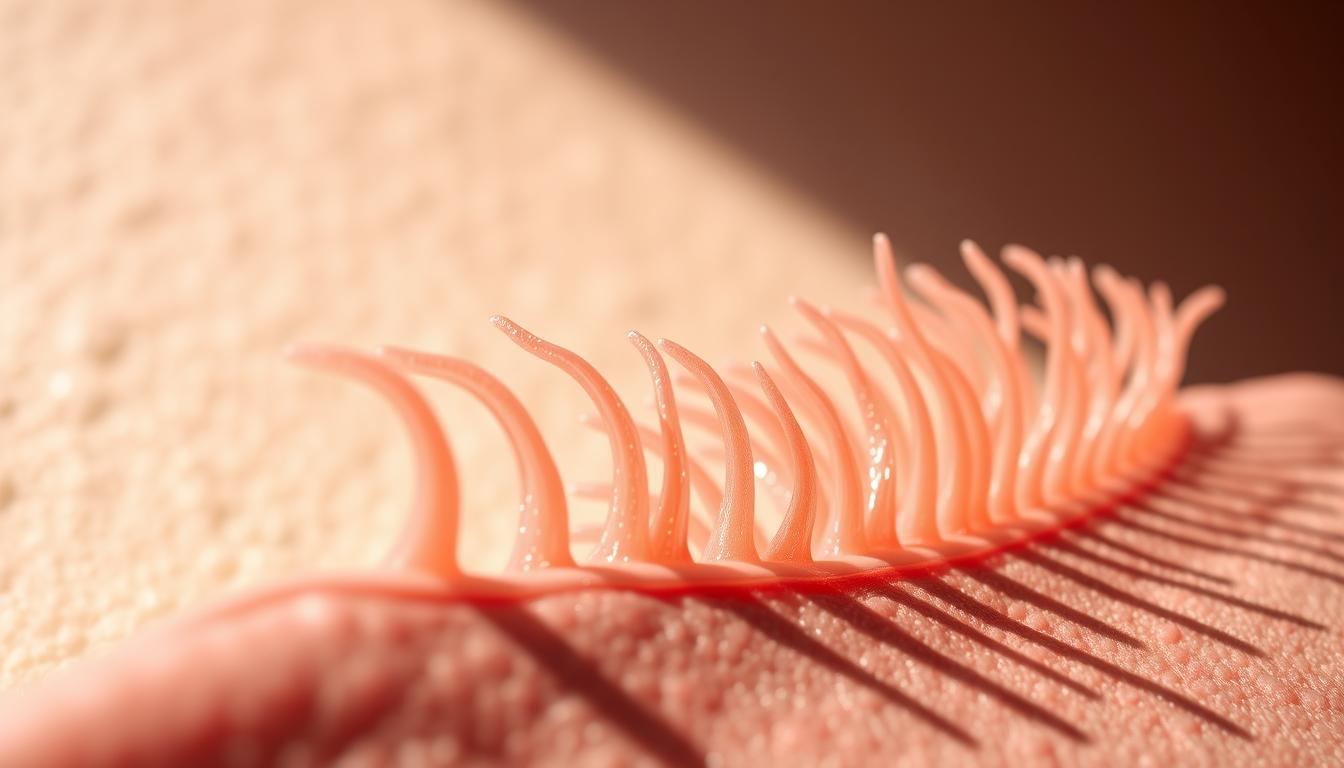
by Plicae Fimbriatae, also known as the fimbriated fold, is a slight fold on the underside of the tongue. It’s a key part of tongue anatomy.
Knowing about Plicae Fimbriatae helps us understand the tongue’s structure and function. The fimbriated fold is important in the mouth. Its study is key in medicine and dentistry.
Learning about Plicae Fimbriatae helps us appreciate the human mouth’s complexity. It also shows why keeping our mouths healthy is so important.
Definition and Basic Anatomy of Plicae Fimbriatae
The Plicae Fimbriatae are detailed structures found on the tongue’s underside. They are part of the oral mucosa. This makes them key to the tongue’s anatomy.
Anatomical Location on the Undersurface of the Tongue
These folds are on both sides of the frenulum on the tongue’s bottom. Knowing their location helps us understand their role in the tongue’s anatomy.
Structural Characteristics and Appearance
The Plicae Fimbriatae have unique features. They are fold-like, adding to the tongue’s detailed look.
Size and Shape Variations
The size and shape of these folds differ from person to person. Here’s a table showing these differences:
| Characteristic | Range | Average |
|---|---|---|
| Length | 5-15 mm | 10 mm |
| Width | 2-5 mm | 3 mm |
| Shape | Linear to curved | – |
Knowing these differences is vital for studying the tongue and oral mucosa.
Historical Discovery and Naming of Plicae Fimbriatae
To understand Plicae Fimbriatae, we must look at their history. The term “Plicae Fimbriatae” comes from old anatomical studies.
Etymology and Linguistic Origins
The word “fimbriated” comes from Latin, meaning fringe. This tells us about the fringed look of Plicae Fimbriatae. Latin was often used in science back then, showing the impact of ancient languages.
Documentation in Early Medical Texts
Plicae Fimbriatae have been in early medical texts, showing their importance. Anatomists have always been curious about these structures.
“The fimbriated folds under the tongue have been a subject of interest for anatomists for centuries, providing valuable insights into oral anatomy and function.”
Looking at old medical books, we see more knowledge about Plicae Fimbriatae over time. Below is a table of important moments in their documentation.
| Century | Documentation | Significance |
|---|---|---|
| 16th | Initial descriptions in anatomical texts | Recognition of Plicae Fimbriatae as anatomical features |
| 18th | Detailed illustrations and descriptions | Enhanced understanding of their structure and function |
| 20th | Advanced studies on their role in oral mechanics | Clarification of their physiological significance |
The history of Plicae Fimbriatae shows how our knowledge of anatomy has grown. Studying them has helped us learn more about the human body.
Embryological Development of Plicae Fimbriatae
Plicae Fimbriatae formation is closely tied to the early stages of oral development. This process involves complex interactions between cells and tissues.
Formation During Fetal Development
During fetal development, Plicae Fimbriatae form alongside the tongue and oral cavity. Their development is linked to cell growth and differentiation in the tongue.
Developmental Milestones and Changes
Several milestones mark the formation of Plicae Fimbriatae. These include the tongue bud’s first appearance, the differentiation of lingual tissues, and the formation of characteristic folds.
Relationship to Other Oral Structures
The development of Plicae Fimbriatae is tied to other oral structures like salivary glands and the lingual frenulum. This shows how oral development is integrated.
| Developmental Stage | Characteristics |
|---|---|
| Embryonic Stage | Initial formation of tongue bud |
| Fetal Stage | Differentiation of lingual tissues and formation of Plicae Fimbriatae |
The development of Plicae Fimbriatae is key to oral anatomy. It affects both the tongue’s structure and function.
Histological Features and Microscopic Anatomy
The microscopic anatomy of Plicae Fimbriatae shows a unique tissue composition and cellular structure. These features are key to understanding their functions and clinical importance.
Tissue Composition and Cellular Structure
Plicae Fimbriatae are made of mucous membrane and connective tissue. The mucous membrane has a protective layer of stratified squamous epithelium. This layer guards against mechanical and environmental stresses.
The connective tissue beneath has a network of blood vessels, nerve fibers, and cells like fibroblasts and immune cells. This supports the overall health of Plicae Fimbriatae.
Vascular and Neural Supply
The vascular supply comes from the lingual artery, ensuring good blood flow. This blood flow is vital for their metabolic needs. The neural supply comes from the lingual nerve, carrying sensory information like pain, temperature, and touch.
This innervation is key for their sensory functions.
Microscopic Appearance Under Different Staining Techniques
Under the microscope, Plicae Fimbriatae show different features with various staining techniques. Hematoxylin and eosin (H&E) staining reveals their cellular structure and tissue architecture. Other stains, like Masson’s trichrome, help differentiate between collagen and other tissue components.
These staining methods are important for studying their histological features and diagnosing conditions.
In conclusion, the histological features and microscopic anatomy of Plicae Fimbriatae are complex and multifaceted. Understanding these characteristics is essential for appreciating their role in oral health and disease.
Physiological Functions of Plicae Fimbriatae
Plicae Fimbriatae are key to our oral health and function. They help with oral mechanics, sensory perception, and keeping our mouth clean.
Oral Mechanics and Speech
Plicae Fimbriatae help move food and saliva in our mouth. They are on the tongue’s underside and help with chewing and swallowing. They also affect how we speak by changing the tongue’s movement.
These structures allow the tongue to move food and help with speech. This shows their role in eating and talking.
Sensory Functions and Taste Perception
Plicae Fimbriatae are richly innervated, which helps with taste and texture. They are near the lingual frenulum and salivary glands, making them more important for taste.
They help us taste by working with taste buds on the tongue. This is key for our sense of taste.
Relationship to Salivary Flow and Oral Hygiene
Plicae Fimbriatae also affect saliva flow and oral hygiene. They create a space that can change how saliva moves. Saliva keeps our mouth clean, neutralizes acids, and helps teeth.
They help clear out food and bacteria, which is good for our mouth. Having enough saliva is important to avoid dry mouth and other problems.
In short, Plicae Fimbriatae are important for our mouth’s health. They help with eating, sensing, and keeping our mouth clean. Knowing how they work helps us understand our mouth better.
- Plicae Fimbriatae aid in food manipulation and mastication.
- They contribute to sensory functions and taste perception.
- Their structure influences salivary flow and oral hygiene.
Variations in Plicae Fimbriatae Among Different Populations
Research shows that Plicae Fimbriatae vary a lot among different groups. These changes come from genetics, environment, and demographics.
Genetic and Hereditary Factors
Genetics are key in shaping Plicae Fimbriatae. Studies found certain genes linked to their size and shape. For example, some groups might have bigger or more complex Plicae Fimbriatae because of their genes.
Age-Related Changes
Age also affects Plicae Fimbriatae. As people get older, these structures can change. Older folks might have smaller or fewer Plicae Fimbriatae than the young.
Demographic and Ethnic Differences
Different ethnic groups show unique Plicae Fimbriatae. This is because of their genetics and environment.
| Population Group | Average Size of Plicae Fimbriatae | Prevalence of Complex Plicae Fimbriatae |
|---|---|---|
| Group A | 2.5 mm | 30% |
| Group B | 3.1 mm | 45% |
| Group C | 2.8 mm | 40% |
Common Conditions and Disorders Affecting Plicae Fimbriatae
Plicae Fimbriatae can face many issues, from inflammation to injuries. These parts under the tongue are prone to different problems. These can affect their work and the health of your mouth.
Inflammatory Conditions and Infections
Inflammation can happen due to infections, irritation, or other reasons. The Plicae Fimbriatae can get inflamed by bacteria or viruses. This can cause pain and discomfort.
Common causes of inflammatory conditions include:
- Poor oral hygiene
- Infection
- Irritation from dental appliances or sharp teeth
Congenital Abnormalities and Developmental Issues
Some people are born with issues that affect the Plicae Fimbriatae. These can be small changes or big problems. They might change how you eat or taste things.
| Congenital Issue | Description | Potential Impact |
|---|---|---|
| Hypoplasia | Underdevelopment of Plicae Fimbriatae | May affect taste or oral mechanics |
| Hyperplasia | Overdevelopment of Plicae Fimbriatae | Can cause discomfort or affect speech |
Trauma-Related Injuries and Complications
Getting hurt in the tongue or mouth can harm the Plicae Fimbriatae. This can cause pain, swelling, and might lead to infection if not treated right.
Examples of trauma-related injuries include:
- Sports injuries
- Accidental biting
- Dental procedures gone wrong
When to Seek Medical Attention
Seeing a doctor is important if symptoms don’t go away or get worse. Look for signs like ongoing pain, swelling, trouble swallowing, or infection signs.
Diagnostic Approaches for Plicae Fimbriatae Conditions
To diagnose Plicae Fimbriatae conditions, a detailed approach is needed. This includes clinical exams and advanced imaging. Getting the diagnosis right is key for good treatment and care.
Clinical Examination Techniques and Tools
Diagnosing Plicae Fimbriatae starts with a clinical exam. This involves looking closely and feeling the tongue’s underside. Dentists use mirrors and probes to check the tongue’s shape and any issues.
Key aspects of clinical examination include:
- Looking for signs of inflammation, swelling, or lesions
- Feeling for tenderness or texture changes
- Checking the patient’s medical and dental history
Advanced Imaging Methods
Advanced imaging is sometimes needed to check the Plicae Fimbriatae and nearby tissues. These methods give detailed info for diagnosis and treatment.
Common advanced imaging methods include:
- Radiographic imaging (e.g., X-rays)
- Ultrasound
- Magnetic Resonance Imaging (MRI)
- Cone Beam Computed Tomography (CBCT)
| Imaging Method | Advantages | Limitations |
|---|---|---|
| Radiographic Imaging | Quick, widely available | Limited soft tissue detail |
| Ultrasound | Non-invasive, real-time imaging | Operator-dependent, limited depth penetration |
| MRI | Excellent soft tissue detail | Expensive, not always readily available |
| CBCT | High-resolution 3D imaging | Radiation exposure, cost |
Biopsy Considerations and Laboratory Testing
When exams and imaging aren’t enough, biopsy and lab tests might be needed. This means taking a tissue sample for further study.
By using clinical exams, imaging, and sometimes biopsy and lab tests, doctors can accurately diagnose and treat Plicae Fimbriatae conditions.
Treatment Options for Plicae Fimbriatae Disorders
There are many ways to treat Plicae Fimbriatae conditions. These include conservative, pharmacological, and surgical methods. The right treatment depends on the disorder, its severity, and the patient’s needs.
Conservative Management and Home Care
For many Plicae Fimbriatae disorders, the first step is conservative management. This means practicing good oral hygiene like brushing and flossing regularly. It also means staying away from things that can irritate your mouth, like tobacco and spicy foods.
It’s also important to eat a balanced diet full of vitamins and minerals. This helps keep your mouth healthy.
| Treatment Aspect | Description | Benefits |
|---|---|---|
| Oral Hygiene | Regular brushing and flossing | Reduces plaque and gingivitis |
| Dietary Adjustments | Avoiding irritants and maintaining a balanced diet | Supports healing and overall oral health |
Pharmacological Interventions
If conservative methods don’t work, medicines might be needed. These can include anti-inflammatory medications to lessen swelling and pain. They also include antimicrobial mouthwashes to fight infections.
- Anti-inflammatory drugs
- Antimicrobial mouthwashes
- Pain relief medications
Surgical Approaches and Techniques
For severe or ongoing Plicae Fimbriatae disorders, surgery might be the best option. The surgery can be simple or complex, depending on the case.
After treatment, it’s key to take good care of your mouth. This means going to follow-up appointments, keeping up with oral hygiene, and possibly changing your diet.
Plicae Fimbriatae in Comparative Anatomy
Plicae Fimbriatae are found in humans and other mammals. This leads to a closer look at their role and evolution. Studying them helps us understand their function and history.
Presence and Function in Different Mammalian Species
Plicae Fimbriatae are not the same in all mammals. Some are similar to humans, while others are different. For example, some primates and carnivores have Plicae Fimbriatae like humans, hinting at a shared evolutionary past.
Looking at different species, we see Plicae Fimbriatae have various roles. They help with food handling and might also sense the environment. Below is a table with key findings from these studies.
| Species | Presence of Plicae Fimbriatae | Noted Function |
|---|---|---|
| Humans | Present | Sensory and mechanical functions |
| Chimpanzees | Present | Similar to humans, with a possible role in food manipulation |
| Cats | Present, but less pronounced | May aid in grooming and sensory perception |
| Rodents | Absent | N/A |
Evolutionary Significance and Adaptations
Plicae Fimbriatae have evolved to fit different species’ needs. These changes often match the diet and environment of each species.
Comparative Studies and Findings
Studies have uncovered the history of Plicae Fimbriatae. They suggest these structures evolved with changes in diet and the need for better food processing.
More research on Plicae Fimbriatae will likely give us more insights. It will help us understand their role and evolution better.
Recent Research and Scientific Advances
Recent studies have greatly improved our understanding of Plicae Fimbriatae. These studies are looking into how these structures affect our oral health and diseases. This section will cover the latest research, new theories, and what’s next in Plicae Fimbriatae studies.
Current Studies and Clinical Trials
Recent research has focused on the structure and function of Plicae Fimbriatae. Clinical trials are exploring their link to oral diseases. For example, a study in the Journal of Oral Anatomy found a connection between Plicae Fimbriatae shape and oral diseases.
| Study | Focus | Findings |
|---|---|---|
| Journal of Oral Anatomy | Morphology and Oral Pathologies | Correlation between Plicae Fimbriatae morphology and oral pathologies |
| Oral Diseases Journal | Role in Salivary Flow | Plicae Fimbriatae influence on salivary flow and oral hygiene |
Emerging Theories and Hypotheses
New theories suggest Plicae Fimbriatae might be more important in oral mechanics and taste than we thought. Researchers are looking into their connection to sensory functions. For instance, some studies think Plicae Fimbriatae’s unique shape could help with taste.
Future Directions in Plicae Fimbriatae Research
Future studies will dive into the genetic and hereditary aspects of Plicae Fimbriatae. New imaging and genetic techniques will offer deeper insights. Also, studying Plicae Fimbriatae in comparative anatomy and evolutionary biology is promising.
As research advances, we’ll learn more about Plicae Fimbriatae’s role in oral health. This will lead to better ways to diagnose and treat oral diseases.
Clinical Significance in Dental and Medical Practice
Understanding Plicae Fimbriatae is key for full oral exams and diagnosis. These structures are vital for oral health and disease. So, checking them is a must in clinical work.
Relevance to Comprehensive Oral Examinations
When doing oral exams, look at Plicae Fimbriatae for any odd signs. This includes inflammation, lesions, or changes in shape. A thorough check can tell a lot about a patient’s mouth health.
Checking Plicae Fimbriatae involves looking and feeling them. This can spot issues that need more looking into or treatment.
Importance in Differential Diagnosis of Oral Conditions
Plicae Fimbriatae are linked to many oral issues. This makes them key in figuring out what’s wrong. Issues like oral lichen planus, candidiasis, and injuries can affect them.
| Condition | Characteristics | Differential Diagnostic Considerations |
|---|---|---|
| Oral Lichen Planus | White, lacy patches; erosive areas | Biopsy for confirmation; assess for other oral mucosal involvement |
| Candidiasis | White plaques; erythematous areas | Clinical appearance; microbiological testing |
| Traumatic Lesions | Ulceration; swelling | History of trauma; resolution upon removal of causative factor |
Educational Approaches for Healthcare Professionals
Teaching healthcare pros about Plicae Fimbriatae is vital. Training programs should cover their anatomy, role, and importance. This knowledge helps in better care.
Keeping up with education on Plicae Fimbriatae helps in diagnosing and treating related issues. This leads to better patient care.
Conclusion
Plicae Fimbriatae are key parts of tongue anatomy. They play a big role in keeping our mouth healthy and working right. We’ve talked about their unique shape, how they grow, and what they do.
These structures affect how we speak, eat, and taste food. They can change in different people. This shows how important it is to understand and diagnose them well.
New studies and treatments show how vital Plicae Fimbriatae are. Knowing how to diagnose and treat them helps keep our mouths healthy.
In short, knowing about Plicae Fimbriatae is key for health care workers and anyone wanting good oral health. By understanding them, we can see how complex the tongue is and its importance for our health.