 by
by Effective team leadership is key to reaching organizational goals. Knowing the stages of Group Development helps improve team effectiveness.
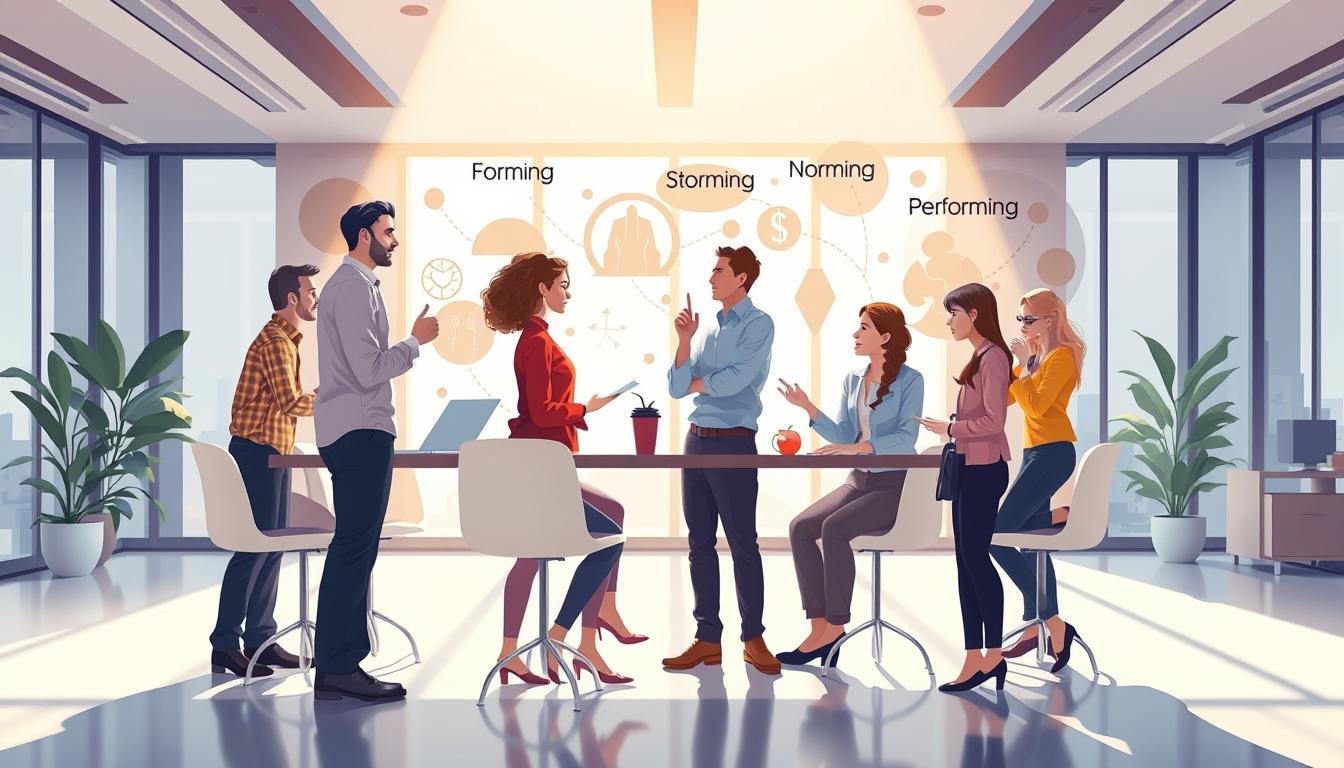
Tuckman’s Model is a major theory in team management. It shows the stages teams go through from starting to becoming mature.
By knowing these stages, leaders can create a better team environment. This leads to success.
This section will explain why knowing Group Development stages is important. It will also introduce Tuckman’s Model as a key framework for leading teams well.
The Science of Group Development and Team Dynamics
Team dynamics are key to success. Knowing the science behind group development helps leaders and team members work better together. This creates a collaborative and productive team environment.
Why Understanding Team Evolution Matters
Knowing how teams evolve is important. It helps leaders prepare for challenges and opportunities at different stages. By spotting signs of growth or stagnation, leaders can improve team cohesion and performance.
“The whole is more than the sum of its parts.” – Aristotle
This saying shows the power of synergy in teams. As teams grow, understanding what makes them cohesive and productive is essential.
Core Elements of Effective Team Formation
Good team formation needs clear communication, defined roles, and a shared vision. These elements help build a strong foundation for team dynamics.
| Element | Description | Impact on Team Dynamics |
|---|---|---|
| Clear Communication | Open and transparent exchange of information | Enhances trust and reduces misunderstandings |
| Defined Roles | Clearly assigned tasks and responsibilities | Promotes accountability and efficiency |
| Shared Vision | Common goals and objectives | Fosters collaboration and direction |
By focusing on these core elements, teams can enhance their dynamics and reach higher success levels.
Bruce Tuckman’s Model: Historical Context and Research
Understanding the historical context of Tuckman’s work is key to seeing its value today. Bruce Tuckman introduced his model of group development in the 1960s. It was a groundbreaking framework that showed how teams grow over time.
Tuckman’s Academic Background and Methodology
Bruce Tuckman was an American psychologist who studied group dynamics deeply. His background in psychology helped him understand team development. He observed and analyzed groups to find common patterns and stages.
Key aspects of his methodology included:
- Observing group interactions
- Analyzing the roles of group members
- Identifying stages of group development
Evolution of Group Development Theory
The theory of group development has grown a lot from Tuckman’s first model. He started with four stages: forming, storming, norming, and performing. Later, he added a fifth stage, adjourning, for when teams end.
| Stage | Description |
|---|---|
| Forming | Initial team formation stage |
| Storming | Conflict and resistance stage |
| Norming | Establishing team cohesion stage |
| Performing | High productivity stage |
| Adjourning | Team dissolution stage |
The Five Stages of Group Development Explained
Bruce Tuckman’s model of group development stages offers insights into team building and group synergy. His work helps us understand how teams grow over time.
The original framework by Tuckman has seen a lot of growth over the years.
The Original Four-Stage Framework
Tuckman first outlined four stages: forming, storming, norming, and performing. These stages show how a team moves from starting to becoming a top performer.
“Tuckman’s model provides a straightforward framework for understanding the dynamics of team development.”
Each stage has its own behaviors and challenges. For example, in the storming stage, teams face conflicts as members show their unique sides.
| Stage | Characteristics |
|---|---|
| Forming | Team members meet, learn about the task, and start building relationships. |
| Storming | Conflict starts as team members have different views and ways to reach goals. |
| Norming | The team comes together, setting norms and feeling united. |
| Performing | The team works well towards its goals, with great teamwork and productivity. |
The Addition of Adjourning as the Fifth Stage
Tuckman later added a fifth stage, adjourning. This stage is about the team ending after its task is done. It’s key for team building as it helps wrap up the team’s work and review its success.
The addition of adjourning shows the value of closure and reflection in team growth. It boosts group synergy by letting team members end on a positive note.
Stage1: Forming – Building the Foundation
The first stage of team development is called forming. It’s key for setting the tone and laying the groundwork for success. Team members come together, feeling both excited and a bit nervous about their new roles.
Key Characteristics of Teams in Formation
Teams in the forming stage feel uncertain and are polite. They are getting to know each other and are careful with their words. Effective group communication is very important here to keep everyone in sync.
Common Challenges During the Forming Stage
One big challenge is figuring out clear roles and expectations. Without knowing their duties, team members might feel lost or do the same tasks. Group communication helps by making sure everyone understands their part.
Leadership Strategies for Newly Formed Teams
Effective leaders in the forming stage use a few key strategies. They focus on setting clear goals and helping the team connect.
Setting Clear Expectations and Goals
Leaders need to clearly share the team’s goals, roles, and what’s expected. They should give details about tasks, deadlines, and how performance will be measured. This helps the team know where they’re headed and why.
Facilitating Initial Team Connections
To help team members connect, leaders can plan team-building activities. These activities promote teamwork and open communication. They help team members get to know each other, build trust, and create a positive team atmosphere. Effective group communication is key here, allowing team members to share their thoughts and feedback freely.
Understanding the forming stage’s characteristics, challenges, and leadership strategies helps teams move forward. It sets a strong foundation for their future success.
Stage2: Storming – Navigating Conflict and Resistance
Teams move through Tuckman’s model and hit the storming stage. This stage is all about conflict and resistance. Team members start to show their individuality, challenge the norms, and fight for their place in the group.
Recognizing Storming Behaviors and Patterns
Storming shows up as competition and criticism among team members. Spotting these early is key to managing well. Teams might resist leadership, question how things are done, or get defensive when given feedback.
Sources of Tension and Conflict in Teams
Conflict in the storming stage comes from differences in opinion, personalities, and work styles. Unclear roles and responsibilities also cause tension. Team members might feel their roles are at risk or too similar.
Leadership Approaches to Manage Storming Effectively
Good leadership is essential in the storming stage. Leaders need to use methods that boost group problem solving and teamwork. This means encouraging open talk, feedback, and clear goals.
Conflict Resolution Techniques
Leaders can use mediation and negotiation to solve disputes. Encouraging team members to listen actively and empathize can also help solve problems.
Building Psychological Safety
Creating a safe space for group problem solving is critical. Leaders should foster an environment where everyone feels safe to share ideas and worries without fear.
By tackling the storming stage’s challenges, leaders can help their teams work better together. This leads to better performance and teamwork.
Stage3: Norming – Establishing Team Cohesion
The norming stage is a key moment in team growth. Here, members come together as one. They start to feel a sense of unity and identity, which is key for group decision making.
Signs Your Team Has Reached the Norming Stage
A team is in the norming stage when they value each other’s strengths and weaknesses. They work better together. You’ll see more teamwork, less arguing, and everyone knows their role.
Potential Setbacks During Norming
Even in the norming stage, teams can hit bumps. They might struggle with old conflicts or finding ways to talk clearly. Leaders need to watch out and fix these problems fast to keep the team moving forward.
Leadership Methods to Reinforce Team Norms
Leaders are key in keeping the team together during the norming stage. They can use several strategies to help.
Developing Communication Protocols
It’s important to have clear ways to talk. Leaders should make sure everyone gets a chance to speak. This creates a space where effective group decision making can happen.
Strengthening Group Identity
Leaders can boost team spirit by planning team activities and celebrating each person’s role. This builds trust and makes the team feel more united.
| Leadership Method | Description | Benefits |
|---|---|---|
| Developing Communication Protocols | Establishing clear channels for information exchange | Enhances collaboration and reduces misunderstandings |
| Strengthening Group Identity | Promoting team-building activities and recognizing contributions | Fosters unity and trust among team members |
Stage4: Performing – Achieving High Productivity
The performing stage is the top level of team growth. Here, teams work together to get amazing results. They’ve overcome early hurdles and now focus on quality work. Team effectiveness is at its best as they use their varied skills to push projects ahead.
Hallmarks of High-Performing Teams
High-performing teams share some key traits. They know their goals well, trust each other, and can decide on their own. They also handle conflicts well and adjust to new situations. Leaders say, “These teams are about more than just results. They’re about teamwork and new ideas.” Effective communication keeps these teams moving forward.
Obstacles to Sustained Performance
Even top teams face challenges that can slow them down. These include feeling too comfortable, getting burned out, or facing changes in the organization. Leaders must stay alert and act fast to prevent these problems.
Leadership Techniques to Maintain Excellence
Leaders are key to keeping teams at their best. They should empower teams to decide and celebrate their wins.
Empowering Team Decision-Making
Letting teams decide helps them feel responsible and creative. This makes them more flexible and ready for new challenges.
Recognizing and Celebrating Achievements
It’s important to praise team successes to keep everyone motivated. Leaders can do this through public thanks, rewards, or bonuses.
“Celebrating success is not just about acknowledging past achievements; it’s about motivating teams to strive for future excellence.”
Using these methods, leaders can keep their teams at the top. This leads to ongoing success and team dynamics that are both collaborative and productive.
Stage5: Adjourning – Managing Team Transitions
Teams reach the end of their projects in the adjourning stage. This stage is all about finishing tasks and breaking up the team. It’s key to keep group cohesion strong and make sure everyone has a good experience.
Recognizing the Signs of Team Completion
The adjourning stage shows when projects are done and team activities slow down. Leaders need to spot these signs to help the team move on smoothly.
- Project milestones are achieved
- Team tasks are completed or reassigned
- Team members begin to disengage
Emotional Aspects of Team Dissolution
The adjourning stage can be tough for team members. They might feel sad or left out. Leaders should support their team during this time.
It’s important to deal with these feelings to keep a positive team vibe.
Leadership Strategies for Positive Closure
Good leaders use several ways to close things off well. They focus on sharing knowledge and celebrating what the team has done.
Knowledge Transfer Processes
Sharing knowledge is key in the adjourning stage. Leaders should help document what was learned and make sure everyone knows their part in it.
| Knowledge Transfer Method | Description | Benefits |
|---|---|---|
| Documentation | Creating detailed project records | Preserves knowledge, facilitates future projects |
| Training Sessions | Conducting workshops or training for team members | Enhances skills, promotes knowledge sharing |
| Mentorship | Pairing experienced team members with new members | Fosters guidance, supports skill development |
Celebrating Team Accomplishments
It’s vital to celebrate what the team has achieved. This helps keep group cohesion strong and shows appreciation for everyone’s hard work. Leaders can plan special events or activities to mark the end of projects.
The Cyclical Nature of Group Development Processes
Group development is a complex, cyclical process with many stages. Teams may move forward and then go back to earlier stages as they grow. This cycle is key to understanding how teams work together effectively.
Many factors influence this process, like team dynamics, leadership, and outside pressures. Knowing about this cycle is vital for good team building and creating group synergy.
Why Teams Regress to Earlier Stages
Teams often go back to earlier stages because of changes in the team, new challenges, or big changes in project goals. This can happen for many reasons, including:
- Changes in leadership or team membership
- Introduction of new tasks or projects
- External pressures or crises
As Bruce Tuckman said, “The process of development is not a linear one, but a cyclical process with progress and regression.” This shows how important it is for leaders to be flexible and adaptable.
“The greatest glory in living lies not in never falling, but in rising every time we fall.” – Nelson Mandela
Strategies for Managing Stage Transitions
Managing stage transitions well is key to keeping team momentum and reaching project goals. Here are some strategies:
| Strategy | Description | Benefits |
|---|---|---|
| Regular Team Check-ins | Frequent meetings to check on team progress and solve problems | Spotting issues early, better communication |
| Adaptive Leadership | Leadership that changes with the team’s current stage | Aligns better with team needs, more flexibility |
| Team Building Activities | Activities to boost group synergy and team spirit | Improves teamwork, builds trust |
By grasping the cyclical nature of group development and using effective strategies, teams can handle stage transitions better. This leads to better performance and reaching goals.
Practical Applications of Tuckman’s Model in Modern Organizations
Tuckman’s Model is key to understanding team dynamics. It offers insights for tackling modern organizational challenges. It helps in managing teams from start to finish.
To use Tuckman’s Model well, you need to know each stage of team development. You also need to use the right strategies. Improving group communication is important at every stage.
Implementing Stage-Appropriate Team Building Activities
Team building activities that match each stage of Tuckman’s Model can boost group problem-solving skills. For example, icebreaker activities help team members connect at the forming stage.
- Forming stage: Icebreaker activities
- Storming stage: Conflict resolution workshops
- Norming stage: Team bonding exercises
- Performing stage: Collaborative problem-solving tasks
- Adjourning stage: Reflection and feedback sessions
Integrating the Model into Project Management Frameworks
Using Tuckman’s Model in project management helps teams face challenges better. Project managers can adjust their leadership based on the team’s stage.
Experts say, “Knowing the stages of team development is vital for project success.”
“The way to get started is to quit talking and begin doing.” – Walt Disney
Measuring and Accelerating Team Progress Through Development Stages
To speed up team progress, it’s key to know the stages of group development and use the right strategies. Leaders must first figure out where their team is in its development.
Assessment Tools for Team Stage Identification
There are many tools to find out a team’s current stage. These include:
- Surveys and questionnaires to check team cohesion and trust
- Watching how the team acts and talks
- Regular talks to get a feel for team dynamics
With these tools, leaders can see where their team stands and spot areas to get better.
| Assessment Tool | Description | Stage Identification |
|---|---|---|
| Surveys/Questionnaires | Gauges team cohesion and trust | Forming, Norming |
| Observation | Analyzes team behaviors and communication | Storming, Performing |
| Feedback Sessions | Understand team dynamics and challenges | All Stages |
Interventions to Expedite Stage Progression
After figuring out the current stage, leaders can start using strategies to move the team forward. These strategies might be:
- Team-building activities to boost cohesion and trust
- Leadership training to improve communication and solving conflicts
- Planning sessions to make sure team goals match the company’s goals
By using these strategies, teams can move faster through the development stages. This makes group decision making and team effectiveness better.
Enhancing Group Cohesion and Synergy Across All Stages
Building strong team bonds is key at every stage of team growth. From the start to the end, keeping the team united and working well together is essential. This ensures the team performs at its best and achieves great results.
Building Trust Throughout Team Development
Trust is the base of a strong team. It’s built when team members feel free to share, take risks, and work together. Leaders play a big role by being open, encouraging talk, and being reliable.
Here are ways to build trust:
- Regular team-building activities
- Clear and consistent communication
- Empathy and understanding in conflict resolution
Communication Techniques for Stronger Team Bonds
Good communication is key to a strong team. Using active listening, giving helpful feedback, and talking openly can really help. It makes the team more united and open to each other’s ideas.
| Communication Technique | Description | Benefits |
|---|---|---|
| Active Listening | Fully concentrating on what the other person is saying | Improves understanding, reduces misunderstandings |
| Constructive Feedback | Giving specific, actionable feedback | Enhances performance, promotes growth |
| Open Dialogue | Encouraging open and honest communication | Fosters trust, promotes collaboration |
By using these methods, teams can become more united and effective. This leads to better performance and success at every stage of their journey.
Limitations and Criticisms of Tuckman’s Group Development Model
Tuckman’s Group Development Model is widely used but faces criticism. Both academics and practitioners have pointed out its flaws.
Academic Perspectives on Model Shortcomings
Academics say Tuckman’s model is too simple. It doesn’t capture the complexity of group development. “The stages are not as distinct or sequential as Tuckman suggests, and groups may oscillate between stages or skip certain stages altogether.” They believe a more detailed understanding of team dynamics is needed.
Some researchers also say the model overlooks outside factors. These include the company culture and leadership styles. Understanding these is key for team success.
Practical Challenges in Real-World Application
Using Tuckman’s model in real life is hard. Teams vary greatly, and so do their settings. For example, virtual teams or teams from different cultures may not follow the model as expected.
“Teams are complex systems that are influenced by a multitude of factors, making it difficult to apply a one-size-fits-all model like Tuckman’s.”
To improve group synergy in diverse teams, leaders need to be flexible and adaptable.
Knowing the model’s limits helps practitioners use it better. It also prepares them for its shortcomings in boosting team cohesion and synergy.
Alternative Frameworks for Understanding Team Development
Tuckman’s model is well-known, but it’s not the only way to understand team growth. Many other models have come up, each with its own view on team formation and performance.
Comparison with Contemporary Team Models
Models like the GRPI model (Goals, Roles, Processes, and Interpersonal Relationships) look at different parts of team life. The GRPI model highlights the need for clear goals, roles, efficient processes, and good relationships. Tuckman’s model, on the other hand, focuses on the stages a team goes through. Looking at both can give a deeper understanding of how to build teams and improve group communication.
Creating an Integrated Approach to Team Development
By mixing parts from different models, leaders can make a more detailed and effective team-building plan. For example, using Tuckman’s stages with the GRPI model’s focus on goals and roles can help teams grow better. This way, team leadership can be more flexible and meet the team’s needs at each stage.
Case Studies: Successful Implementation of Tuckman’s Model
Tuckman’s Model has shown great success in real-world settings. It has greatly improved group problem solving and group decision making. Many organizations across different fields have used it to boost team work and efficiency.
Corporate Success Stories and Lessons Learned
Many big companies have seen great results from using Tuckman’s Model. For example, a top tech company used it to change how their product teams worked. This led to better teamwork and new ideas.
Important lessons from these stories are clear. Leadership is key in guiding teams through growth stages. Also, being flexible with the model is important to fit the needs of each organization.
Applications in Cross-Functional and Virtual Teams
Tuckman’s Model works well for teams that work together but are not in the same place. These teams face extra challenges because of different skills and working from home.
Knowing the stages of team growth helps leaders of these teams. They can plan ways to build trust, improve talking, and make the team better overall.
Conclusion: Mastering the Art and Science of Team Development
Effective team development is key for success in any organization. Tuckman’s Model helps us understand the stages of group growth. By learning this, leaders can improve team performance and drive growth.
The five stages of group development are important. They help teams grow and mature. Leaders can use these stages to guide their teams and reach their best.
Using Tuckman’s Model, teams can work better together and be more productive. Leaders can help teams move forward and solve problems. This leads to better team performance.
In short, Tuckman’s Model is a valuable tool for team development. By using its principles, leaders can help their teams succeed. This is important in today’s fast business world.