 by
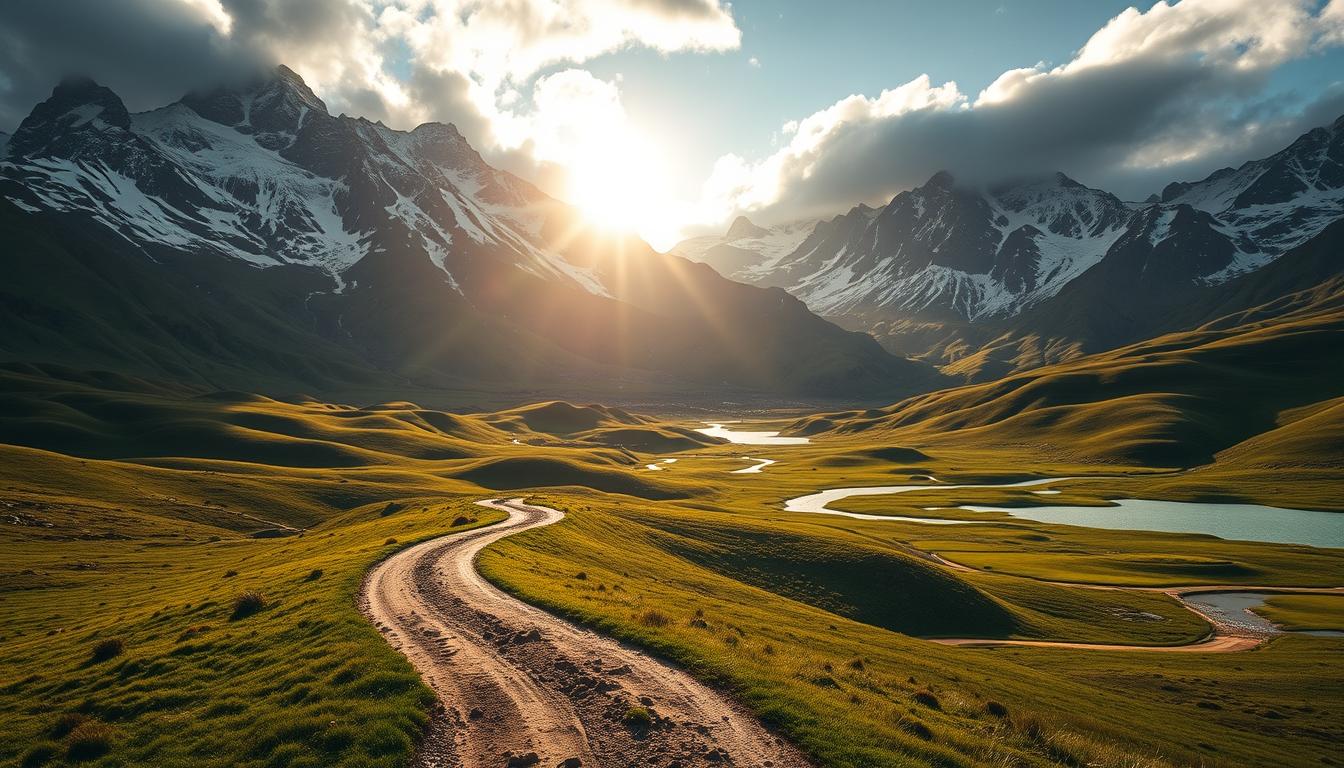
by The Andean mountains are a key natural feature in South America. They stretch through seven countries, including Argentina and Chile.
The South Central Andean Region is vast and diverse. It includes different geographical and cultural landscapes. This area is home to the longest mountain range in the world. It runs along the western edge of South America.
The Andean heritage is rich and diverse. It shows the history and culture of the people living here. The region’s significance goes beyond its geography. Its deep cultural heritage is worth exploring.
The Geographical Scope of the South Central Andean Region
The South Central Andean Region spans across several countries. It is known for its unique geography and rich cultural heritage.
Defining the Boundaries
The South Central Andean Region is part of the Andes mountain range. This range is the longest in the world. To grasp its scope, we must define its boundaries.
The region includes parts of Peru, Bolivia, Argentina, and Chile. These countries are key to understanding its geography.
Countries and Territories Encompassed
The region covers diverse territories, including the Peruvian Andes. These areas are known for their rich culture and history. Other countries in the region also have their own Andean cultures.
This diversity adds to the rich Andean identity.
- Peru
- Bolivia
- Argentina
- Chile
Key Geographical Coordinates
The South Central Andean Region’s coordinates vary. It is generally found between latitudes 10°S and 30°S. Its longitudinal span covers a large part of western South America.
Geological Formation and History of the Andes
The Andes mountains were formed by the subduction of the Nazca Plate under the South American Plate. This has led to a rich geological history. It includes tectonic activity, volcanic events, and mountain building.
Tectonic Activity and Mountain Building
Tectonic activity is key to the Andes’ formation. The Nazca Plate’s subduction compressed and thickened the Earth’s crust. This caused the mountains to rise, a process called orogenesis.
Volcanic Features in the Region
The Andes are home to many volcanoes and volcanic fields. These are due to the subduction process. It melts the Earth’s mantle, causing magma to rise to the surface.
Geological Timeline of the South Central Andes
The geological history of the South Central Andes is as follows:
| Period | Event | Geological Significance |
|---|---|---|
| Mesozoic Era | Initial subduction of the Nazca Plate | Beginning of Andean mountain building |
| Cenozoic Era | Continued subduction and volcanic activity | Uplift and shaping of the Andes |
| Present Day | Ongoing tectonic activity | Continued geological evolution of the region |
The Andes’ formation and history show the complex and dynamic forces that shape our planet.
Major Mountain Ranges and Peaks
The South Central Andes boast some of the world’s most breathtaking mountain ranges. The area’s varied landscape features parallel mountain chains like the Cordillera Occidental and Cordillera Oriental. These ranges are not just beautiful but also play key roles in the region’s geology and ecology.
Cordillera Occidental
The Cordillera Occidental, or Western Cordillera, is a major mountain range in the South Central Andes. It marks the western edge of the Andes and is home to many high peaks. Known for its volcanic activity, this range boasts summits over 6,000 meters high.
Cordillera Oriental
The Cordillera Oriental, or Eastern Cordillera, is another significant range in the area. It features a mix of volcanic and folded mountains, creating a varied landscape. The Cordillera Oriental is notable for its height, biodiversity, and cultural significance.
Notable Summits and Their Elevations
The South Central Andes are famous for their high peaks, like Aconcagua, the highest in the Western Hemisphere. Other notable peaks include Ojos del Salado and Monte Pissis. Their heights reflect the region’s geological past and tectonic activity.
| Peak Name | Elevation (meters) | Location |
|---|---|---|
| Aconcagua | 6,962 | Argentina |
| Ojos del Salado | 6,879 | Chile-Argentina border |
| Monte Pissis | 6,793 | Argentina |
Significant Valleys and Plateaus
Valleys and plateaus in the South Central Andes are more than just land. They support life and cultures. These areas have helped many civilizations grow over time.
The Sacred Valley of the Incas
The Sacred Valley of the Incas is a key spot in Peru. It was sacred to the Incas, who saw it as a place of plenty. The valley is famous for its beauty, villages, and sites like Machu Picchu.
Altiplano Region
The Altiplano Region is a high plateau across Peru, Bolivia, and parts of Chile and Argentina. It’s known for its high altitude, cold weather, and special wildlife. The Altiplano is home to many indigenous people and their traditions.
Lesser-Known Valleys and Their Importance
There are many valleys in the South Central Andes that are not as well-known. Yet, they are very important for culture, nature, and the economy. These valleys support local farming, protect wildlife, and house traditional communities. Visiting these valleys gives us a glimpse into the area’s varied ecosystems and the lives of its people.
The valleys and plateaus of the South Central Andes are not just natural wonders. They are also the heart of the region’s culture and economy. Learning about them helps us understand the rich heritage of this special place.
Hydrological Features of the South Central Andean Region
The Andes mountain range is home to many important hydrological features. These include major river systems, lakes, and glaciers. They are key for the region’s ecosystem, supporting biodiversity and providing water.
Major River Systems
The South Central Andes are the source of several major river systems. These include the Amazon River, the Ucayali River, and the Madeira River. These rivers are vital for the regional ecosystem, supporting a wide range of flora and fauna.
River Systems and Their Importance
- The Amazon River is one of the largest rivers in the world by discharge volume.
- The Ucayali River is a major headwater of the Amazon River.
- The Madeira River contributes significantly to the Amazon River’s water volume.
Lakes and Their Ecological Significance
Lakes in the South Central Andes, such as Lake Titicaca, play a key role in the regional ecology. They support local wildlife and are important for fishing and tourism.
Ecological Significance of Lakes
| Lake | Location | Ecological Importance |
|---|---|---|
| Titicaca | Peru/Bolivia | Supports unique biodiversity and local fishing industries. |
| Poopó | Bolivia | Important for migratory birds and local communities. |
Glaciers and Water Resources
Glaciers in the Andes are a critical source of freshwater. They feed rivers and lakes. But, they are under threat due to climate change. This could have significant implications for water resources.
The hydrological features of the South Central Andean Region are diverse and vital to the local ecosystem. Understanding and preserving these features is essential for maintaining ecological balance and ensuring the sustainability of water resources.
Climate Zones and Biodiversity
The South Central Andes have a varied climate with altitude. This leads to diverse ecosystems and a wide range of life. Many plants and animals found here are unique to the area.
Altitude-Based Climate Variations
As you go up in altitude, the climate changes a lot. The lower slopes are covered in cloud forests, with high humidity and moderate temperatures. At higher elevations, it gets drier and colder, with snow in winter.
This change in climate supports different ecosystems. Each one has its own special features and life forms.
Endemic Flora Species
The South Central Andes are home to many unique plants. The Polylepis tree and the Puya raimondii, a giant bromeliad, are examples. These plants have adapted to the harsh conditions of high altitudes.
Efforts are being made to protect these plants and their homes.
Native Fauna and Conservation Status
The region’s varied climate supports a wide range of animals. This includes the vicuña and the Andean condor. Many of these animals are endangered due to habitat loss and climate change.
Conservation programs are working to save these animals and their homes. This includes setting up protected areas and studying the effects of climate change.
The biodiversity of the South Central Andes is important for both nature and culture. The unique ecosystems have inspired and supported indigenous communities for centuries.
Pre-Incan Civilizations of the Region
Before the Incas, the South Central Andes were home to advanced cultures. The Tiwanaku and Wari empires were key players. They left a lasting mark on the region’s culture and history.
Tiwanaku Culture and Influence
The Tiwanaku culture thrived from 300-1000 CE. It was known for its agricultural practices and architectural achievements. Its influence spread far, shaping the Andean region through trade networks and cultural exchange.
Wari Empire
The Wari Empire was a major force around the same time as Tiwanaku. It was famous for its military organization and administrative systems. Its architectural styles and cultural practices were widespread in the region.
Archaeological Sites and Discoveries
Archaeological sites like Tiwanaku’s capital and Wari’s centers offer insights into their lives. Excavations have found ceramics, textiles, and more. These artifacts show the artistic and technological achievements of these cultures.
Studying these pre-Incan civilizations deepens our understanding of the region’s history. It also highlights the rich cultural diversity of the South Central Andes.
The Rise and Legacy of the Inca Civilization
The Inca civilization rose from the ingenuity and resilience of the Andes’ indigenous people. They created advanced systems for farming, building, and spirituality. Starting in the 13th century, the Incas quickly grew their empire across the South Central Andes.
Expansion Through the South Central Andes
The Incas expanded greatly through the South Central Andes. They built a vast network of roads, terracing, and settlements. Their growth was fueled by strategic alliances and military victories, allowing them to control a large area.
- Established a vast road network
- Created terracing for farming
- Built settlements and administrative centers
Engineering and Agricultural Achievements
The Incas are famous for their engineering and farming skills. They built complex irrigation systems, terracing, and road networks. These helped with trade and communication across their vast empire.
Key achievements include:
- Advanced irrigation systems
- Terracing for crop cultivation
- Road networks for trade and communication
Spiritual Connection to the Andean Landscape
The Incas deeply connected with the Andean landscape, seeing it as sacred. They built temples and ritual sites at sacred places like mountain peaks and river sources.
Their spiritual practices were linked to the natural cycles and features of the landscape. This showed their deep respect for the land and its resources.
Machu Picchu: Crown Jewel of the Andes
Machu Picchu, the mystical Inca citadel, has captured the hearts of many. It sits on a mountain ridge over 7,000 feet high. It shows the Inca civilization’s amazing building and engineering skills.
Historical Significance and Discovery
Machu Picchu is a symbol of the Inca Empire’s greatness. Built in the 15th century, it was left untouched by the Spanish conquistadors. It was hidden for centuries until Hiram Bingham found it in 1911.
Architectural and Astronomical Features
The site is famous for its advanced architecture. It has precisely carved stone walls and advanced irrigation systems. It also shows the Incas’ knowledge of the stars. The Temple of the Sun is a key example, where sunlight passes through stone windows at solstices.
Conservation Challenges and Tourism Impact
Machu Picchu faces big challenges due to many visitors. Over 1 million visitors each year stress the site and its environment. Efforts to control tourism are underway, like limiting numbers and guided tours. This helps keep this UNESCO World Heritage Site safe for the future.
In summary, Machu Picchu is a wonder of architecture and culture. It needs careful balance to keep it safe for visitors and future generations.
Other Significant Historical Sites and Ruins
Beyond Machu Picchu, the South Central Andes have many historical sites and ruins. These places show the Incas’ skill in building and give us a peek into their lives. They are a window to the past.
Ollantaytambo and Its Strategic Importance
Ollantaytambo is a sign of the Incas’ smart military tactics. It’s in the Urubamba Valley and was key during the Spanish conquest. Its impressive stone walls and terracing show the Incas’ engineering skills.
Its location controlled who could enter the area, making it a vital military spot.
Sacsayhuamán and Incan Stonework
Sacsayhuamán sits above Cusco and is a wonder of stonework. Its huge stone walls are a testament to ancient building skills. The zigzagging walls were made to confuse enemies, showing the Incas’ clever planning.
But Sacsayhuamán was more than a military site. It was also important for the Incas’ spiritual and ceremonial practices.
Lesser-Known Archaeological Treasures
While Machu Picchu, Ollantaytambo, and Sacsayhuamán are famous, there are many other sites in the South Central Andes. Places like Choquequirao and Vitcos give us a glimpse into the Incas’ lives and their interactions with others. Though not as well-known, these sites are just as important for understanding the region’s history.
Indigenous Cultures of the South Central Andes
The South Central Andes are home to many indigenous cultures. These communities have kept their traditions alive for centuries. The Quechua and Aymara peoples are key to the region’s cultural identity.
Quechua Communities and Traditions
The Quechua people live in Peru, Bolivia, Ecuador, and Argentina. They have a rich heritage in textiles, music, and farming. They see themselves as custodians of the land and have a deep spiritual bond with the Andes.
Quechua communities have faced many challenges but remain strong. Their weaving and farming traditions are alive, thanks to their community spirit.
Aymara People and Their Heritage
The Aymara live mainly in Bolivia, Peru, and Chile. They are skilled in growing potatoes and other high-altitude crops. Their culture is vibrant, with music, dance, and textiles.
“The Aymara culture is a testament to the enduring spirit of the indigenous peoples of the Andes.”
Modern Indigenous Life in the Andean Highlands
Indigenous communities in the Andean highlands face modern challenges. Yet, they adapt and keep their culture alive. Efforts to save their traditions and languages are underway.
As the world connects more, the indigenous cultures of the South Central Andes are more important. They add to the region’s diversity and richness.
Colonial Influence and Historical Transformations
When Spanish colonizers arrived in the South Central Andes, big changes came. These changes affected the area’s buildings, culture, and politics. The Spanish brought their culture, language, and ways of life to the native people. This mix created a rich cultural heritage that we see today.
Spanish Conquest and Its Impact
The Spanish conquest changed the South Central Andean Region a lot. It ended the Inca Empire and started colonial rule. The conquest changed the area’s people, economy, and culture a lot.
The use of local resources and labor led to a decline in indigenous populations. Also, European diseases made things worse for the native people.
Colonial Architecture and Urban Planning
The buildings in the South Central Andes show a mix of Spanish and native styles. Cities like Cusco and Sucre were built with Spanish plans. They have central plazas, cathedrals, and government buildings.
The buildings were made with local materials and labor. This made them stand out.
Independence Movements and Their Regional Context
The fight for independence in the South Central Andes was part of a bigger Latin American movement. Local leaders, inspired by the Enlightenment and other successes, helped the cause. Their efforts have shaped the region’s identity and politics.
Modern Cities and Urban Centers
The South Central Andean region is filled with modern cities. Each city has a mix of old traditions and new life. These cities are key for business and culture, and they keep the area’s history alive.
Cusco: Ancient Capital and Modern Hub
Cusco was once the heart of the Inca Empire. Today, it shows off its history and modern side. Visitors from everywhere come to see its Inca buildings and lively culture. The city’s old center is a UNESCO site, with famous spots like Plaza de Armas and Sacsayhuamán. Cusco’s blend of old and new is truly interesting.
La Paz and the Bolivian Highlands
La Paz is Bolivia’s main city, set in a stunning canyon. It’s famous for its amazing views and busy markets. The city mixes old traditions with new buildings. The Bolivian Highlands nearby offer beautiful views and a peek into the area’s culture.
Other Significant Urban Areas
Sucre and Arequipa are also important cities in the area. Sucre is Bolivia’s constitutional capital, and Arequipa is a big city in Peru. These cities have their own special charm and history. They add to the area’s urban life, with old buildings, festivals, and local food.
| City | Country | Notable Features |
|---|---|---|
| Cusco | Peru | Inca architecture, Plaza de Armas, Sacsayhuamán |
| La Paz | Bolivia | Dramatic landscape, vibrant markets, mix of traditional and modern architecture |
| Sucre | Bolivia | Colonial architecture, constitutional capital |
| Arequipa | Peru | Colonial architecture, nearby natural attractions like the Colca Canyon |
Economic Activities and Resources
The South Central Andes’ economy is a mix of traditional farming, mining, and tourism. This blend is shaped by the area’s geography and rich culture.
Traditional Agriculture and Farming Practices
Traditional farming is key to the region’s economy. Communities grow crops like maize, potatoes, and quinoa. They also raise llamas and alpacas for wool and meat.
These practices feed people and keep the culture alive. They are important for the indigenous communities.
Mining and Natural Resources
The South Central Andes are full of minerals like copper, gold, and silver. Mining has helped the economy for centuries. Today, mining uses new tech to be more efficient and protect the environment.
Tourism Economy and Its Growth
Tourism is growing fast in the region. People come for the beauty, history, and culture. Places like Machu Picchu, the Sacred Valley, Cusco, and La Paz are big draws.
Tourism has opened up new jobs in hospitality and tours. It’s helping the economy grow.
The mix of farming, mining, and tourism makes the South Central Andes’ economy strong. As it grows, it’s important to keep the environment and culture safe.
Traveling Through the South Central Andean Region
Exploring the South Central Andean Region is a big adventure. It’s full of diverse landscapes and rich cultures. Travelers will find it a memorable journey.
Transportation Networks and Accessibility
The region has a good network of transportation. Buses like Ormeño and Cruz del Sur link cities. For longer trips, domestic flights are a great option.
| Transport Mode | Operator | Route |
|---|---|---|
| Bus | Ormeño | Lima to Cusco |
| Flight | LAN Peru | Lima to La Paz |
Recommended Routes and Itineraries
There are many routes to explore in the South Central Andean Region. The Inca Trail is a four-day hike to Machu Picchu. Or, you can visit cities like Cusco and La Paz.
“The Inca Trail is a must-do experience for any traveler to the region. The scenery is breathtaking, and the history is palpable.” –
Altitude Considerations and Travel Tips
Travelers should know about the risks of high altitude. Drink lots of water, avoid hard activities, and consider altitude sickness medication. Stay safe by being aware of your surroundings.
Conclusion: The Enduring Significance of the South Central Andes
The South Central Andean Region is a treasure trove of culture and nature. It boasts a rich heritage that draws in visitors and fills locals with pride. The area’s varied landscapes, from towering mountains to peaceful valleys, nurtured ancient civilizations like the Inca Empire.
In modern cities and rural areas, the Andean spirit is alive and well. Traditional ways and cultural expressions are strong. This region’s history, seen in places like Machu Picchu, and the spirit of its people are key to its cultural value.
This region is a gem for those who love to explore and learn. It offers a mix of geological marvels, diverse wildlife, and cultural treasures. It’s not just a piece of history; it’s a living, breathing part of our world, inspiring and teaching us every day.