 by
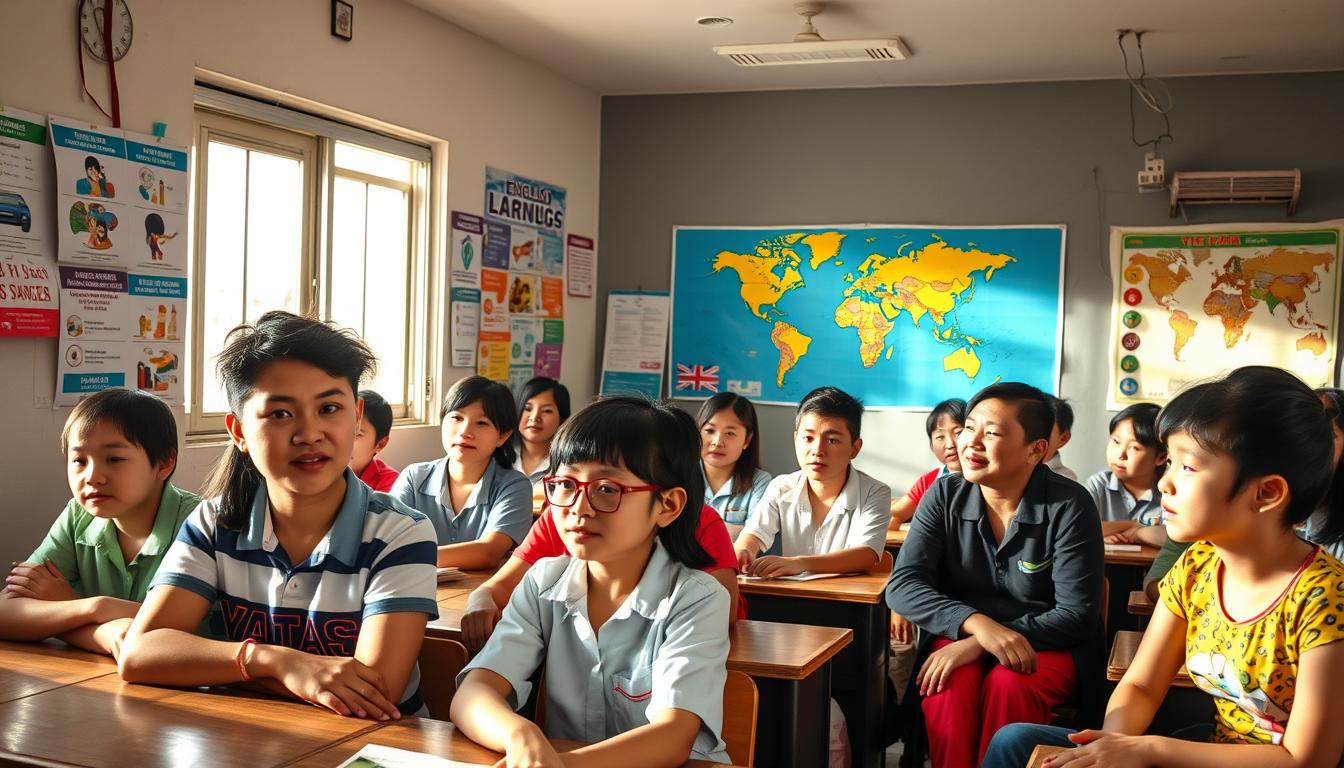
by The importance of English language proficiency has grown a lot in Vietnam. This change started with the Đổi Mới policy in 1986. It marked a big shift towards joining the world and embracing globalization.
As Vietnam opens up more, English plays a key role in education, business, and tourism. The need for English language schools has really increased. This shows how people see English as key for their future.
This article looks at English in Vietnam today. It covers its history, current uses, and what the future holds. It highlights the reasons behind the rise of English language learning in Vietnam.
The Historical Context of English in Vietnam
Vietnam’s language history has been influenced by many foreign languages. English has become a key language in recent times. Before European colonizers arrived, Vietnamese was the main language, with Chinese also playing a big role due to Chinese rule.
Pre-Colonial Language Landscape
In pre-colonial Vietnam, Vietnamese was the dominant language. Chinese was important in official and literary areas. This set the stage for the introduction of other foreign languages later on.
Impact of French Colonization
The French colonization brought French into Vietnam’s administration, education, and culture. French became a major language among the Vietnamese elite. The French influence is seen in Vietnam’s language education today.
English During and After the Vietnam War
English became more important in Vietnam during the Vietnam War, thanks to American troops. After the war, English remained key for international communication, trade, and diplomacy. Today, English is seen as vital for Vietnam’s economic growth and global connection.
The story of English in Vietnam shows how colonialism, war, and globalization have shaped its language identity. As Vietnam becomes more global, English’s importance will likely increase.
English in Vietnam: Evolution of Language and Economy
The Đổi Mới policy, started in the late 1980s, changed Vietnam’s language and economy. This policy moved Vietnam towards a market economy. It led to more people wanting to learn English, changing how Vietnamese talk and connect with the world.
The Đổi Mới Policy and Language Shifts
The Đổi Mới policy was a big change for Vietnam’s economy. It opened the country to foreign investment and trade. This made English the key language for business and communication, boosting the need for English courses and language training.
Globalization’s Impact on Language Needs
As Vietnam joined the global economy, English became more important. Globalization brought new economic chances but also made language skills a challenge. English skills were needed in business, education, and tourism.
English as a Gateway to International Opportunities
English is now key for Vietnamese people wanting global chances. Knowing English can lead to better jobs and access to global markets. So, ESL in Vietnam has grown, with many schools and centers providing English programs.
Current Official Status of English in Vietnam
Government policies have shaped English’s status in Vietnam. The Vietnamese government has launched many efforts to boost English education.
Government Policies on Foreign Languages
The National Foreign Language Project 2020 was a big step. It aimed to improve English skills among Vietnamese people. This project wanted to change how foreign languages are taught and learned.
English in Relation to Other Foreign Languages
English is the top foreign language taught, but others like Chinese, Japanese, and French are also available. Yet, English gets the most attention because of its global role.
| Language | Popularity in Education | Economic Importance |
|---|---|---|
| English | High | Very High |
| Chinese | Moderate | High |
| Japanese | Moderate | High |
| French | Low | Moderate |
Regional Language Policy Variations
Language policies differ by region. Cities like Hanoi and Ho Chi Minh City focus more on English. This is not as true for rural areas.
English in the Vietnamese Education System
The Vietnamese government has made English a key part of education. It’s taught from primary school up. This move aims to boost Vietnam’s standing globally.
English is now a must-have subject. It shows how vital it is for Vietnam’s economy and cultural ties.
National Foreign Language Project 2020
The National Foreign Language Project 2020 was a big step for Vietnam. It started in 2008 and focused on teaching English better. It trained teachers, updated curricula, and introduced new teaching methods.
This project was key in updating Vietnam’s language education.
English in Primary Education
English is taught from Grade 3 in primary school. The curriculum helps students learn the basics. It covers listening, speaking, reading, and writing.
The goal is to lay a solid foundation for more language learning.
English in Secondary and High School Curriculum
In secondary and high schools, English is a main subject. The curriculum gets harder as students go up. It focuses on improving communication skills in English.
The syllabus covers a wide range of topics. It includes general knowledge and specialized subjects.
University-Level English Requirements
At university, English skills are very important. Many schools require students to show they can speak English well. English is often used in classes, mainly in international business and technology.
To show how English education works in Vietnam, here’s a simple overview:
| Educational Level | English Curriculum Focus | Assessment Methods |
|---|---|---|
| Primary | Basic language skills | Oral and written tests |
| Secondary | Communication skills | Written exams, oral presentations |
| High School | Advanced language skills | Standardized tests, essays |
| University | Specialized English, academic writing | Proficiency tests (IELTS, TOEFL), academic papers |
English Language Schools and Centers in Vietnam
English language schools in Vietnam are growing fast. This shows Vietnam’s big dreams for the economy. As Vietnam joins the global market, more people want to speak English. So, schools and centers for English are popping up everywhere.
Growth of Private English Education
Private English schools in Vietnam are booming. They offer many English courses, from simple to advanced. These schools welcome students of all ages.
International Language Centers
International language centers are now in Vietnam too. They provide top-notch English lessons. These centers help students prepare for big tests and get international certifications.
Online English Learning Platforms
Online English learning platforms are changing how Vietnamese students learn. These sites offer flexible, affordable English courses. They meet the needs of many learners.
Franchise English Schools
Franchise English schools are getting popular in Vietnam. They bring well-known brands and teaching methods to the country. These schools focus on teaching English for real-life conversations.
The variety of English schools in Vietnam shows the country’s dedication to improving English skills. As more people want to speak English, these schools will be key in Vietnam’s future.
Learning English in Vietnam: Methods and Approaches
Vietnamese learners use many ways to get better at English. This shows how important English is becoming in Vietnam.
Popular English Courses and Programs
Many Vietnamese students take English language courses. These courses cover everything from basic grammar to advanced conversation skills. Schools and centers offer many programs to meet different needs.
These courses help students in many ways. They can improve their school work or get better job chances.
Self-Study Resources and Communities
Self-study is also very popular. Online tools, language apps, and English language exchange websites give learners flexible options.
English Clubs and Conversation Groups
Joining English clubs and conversation groups is another great way to improve. These groups let learners talk with others and practice their speaking.
Learning Challenges for Vietnamese Speakers
Even with many learning methods, Vietnamese speakers face special challenges. These include grammar and pronunciation issues.
| Learning Method | Advantages | Challenges |
|---|---|---|
| Formal English Courses | Structured learning, qualified instructors | Cost, time commitment |
| Self-Study Resources | Flexibility, cost-effective | Lack of direct feedback, motivation |
| English Clubs and Conversation Groups | Practical experience, social interaction | Finding consistent groups, varying language levels |
English Proficiency Testing and Certification
In Vietnam, knowing English is more important than ever. This is because the country is becoming more connected to the world. English tests are now key for getting into school or finding a job.
IELTS, TOEFL, and TOEIC in Vietnam
In Vietnam, IELTS, TOEFL, and TOEIC are very well-known. These tests are needed for getting into college, applying for scholarships, and for jobs in big companies.
- IELTS is widely accepted for immigration and educational purposes.
- TOEFL is commonly used for university admissions.
- TOEIC is preferred by employers to assess employees’ English proficiency.
Test Preparation Industry
The industry that helps people prepare for these tests is growing fast. There are many places and online sites that offer help. This growth is because more people want to do well on these tests.
Importance of Certificates in Education and Employment
Having an English certificate is very important. It helps you get into college and find a job. Many schools and employers look at these scores when making decisions.
English Proficiency Levels Across Vietnam
Vietnam shows a wide range of English skills, with big differences between cities and countryside. The country’s growing economy and culture have made English more important. But, the skill levels vary a lot in different places and among different people.
Urban vs. Rural Proficiency Disparities
There’s a big gap in English skills between cities and rural areas. Cities like Hanoi and Ho Chi Minh City have more English learners and speakers. This is because they have better schools and job chances. But, rural areas have less access to good English education.
Vietnam’s EF English Proficiency Index Rankings
Vietnam’s ranking in the EF English Proficiency Index (EF EPI) shows its English skills. The country has gotten better over time but faces challenges. The EF EPI shows the need for more investment in English education.
Regional Variations in English Competency
English skills vary by region in Vietnam. This is because of things like economic growth, school quality, and cultural exposure. Cities, with their international business and tourism, tend to have better English skills.
Age-Related Proficiency Patterns
Age also affects English skills in Vietnam. Younger people usually have better English because of school focus on English and global media.
As stated by
“Improving English proficiency is key for Vietnam’s future and joining the world.”
This shows why it’s vital to keep working on English education all over the country.
English in Vietnamese Business and Economy
Vietnam is becoming more connected to the world economy. This means English is now key in business. The country’s economic changes have brought in more foreign investments, making English vital for talking business.
English as a Requirement in Multinational Corporations
Big companies in Vietnam need their workers to speak English well. This is because English is the main language for international business. Knowing English helps workers talk to partners and clients from other countries.
Impact on Employment Opportunities
Being able to speak English well is a big plus in Vietnam’s job market. Employers look for people who can speak English well. This skill helps them work with clients and join global business projects.
English in Vietnamese Startups and Entrepreneurship
For Vietnamese startups and entrepreneurs, English is key to growing their businesses worldwide. It lets them talk to investors, partners, and customers from other countries. This helps them enter new markets.
Business English Training Programs
Many programs now teach English for business. These programs focus on skills like negotiating, presenting, and writing business emails. They help people learn English for work.
| Industry | English Proficiency Requirement | Training Programs Available |
|---|---|---|
| Multinational Corporations | High | Yes |
| Startups | Medium to High | Yes |
| Small Businesses | Medium | Limited |
English is very important in Vietnam’s business and economy. As Vietnam connects more with the world, the need for English will keep growing. It’s becoming a must-have skill for success in business.
English in Tourism and Hospitality Sectors
English is key in Vietnam’s tourism, helping locals talk to visitors from abroad. As tourism grows, more people need to speak English well.
English as a Tool for Tourism Development
Knowing English is vital for Vietnam’s tourism growth. It lets service providers meet international tourists’ needs better. This makes tourists happy, leading to more visits.
Key areas where English is essential include:
- Frontline staff in hotels and resorts
- Tour guides and tour operators
- Restaurant and cafe staff
- Travel agency representatives
Training Programs for Tourism Professionals
Many training programs now focus on English for tourism workers. They aim to improve both writing and speaking skills. This ensures workers can talk well with tourists.
Some notable initiatives include:
- English language courses tailored to the tourism industry
- Certification programs for tour guides and hospitality staff
- Workshops on cultural awareness and customer service
Tourist Experiences with English in Vietnam
The English skills of tourism workers greatly affect tourists’ experiences in Vietnam. Some places have many English speakers, but others face language challenges.
A comparative analysis of tourist experiences in different regions is presented in the following table:
| Region | English Proficiency Level | Tourist Experience |
|---|---|---|
| Hanoi | High | Generally positive, with good service |
| Ho Chi Minh City | High | Positive, with many English-speaking staff |
| Rural Areas | Moderate to Low | Variable, with some language barriers |
In conclusion, English is very important in Vietnam’s tourism and hospitality. Training programs are key to better tourist experiences. By improving English skills, Vietnam can keep attracting visitors and stay competitive globally.
The TESOL Industry in Vietnam
Vietnam’s TESOL industry is growing fast. More people want to speak English. This is why there are more English schools and a need for native English teachers.
Demand for Native English Teachers
There’s a big need for native English teachers in Vietnam. Many schools want qualified teachers. Native English speakers are wanted for their real English teaching skills.
Qualifications and Requirements
To teach English in Vietnam, you need a TEFL (Teaching English as a Foreign Language) certification and a bachelor’s degree. Some places might also want a TESOL (Teaching English to Speakers of Other Languages) certification.
Salary and Working Conditions
English teacher salaries in Vietnam depend on the school, location, and your skills. Teachers usually get a good salary and benefits. The work environment is often supportive.
Cultural Challenges for Foreign Teachers
Teaching in Vietnam can be rewarding but comes with cultural challenges. It’s important to learn about local customs and the education system to succeed.
| Qualification | Average Salary (Monthly) | Typical Benefits |
|---|---|---|
| TEFL Certification | $1,500 – $2,000 | Health insurance, housing allowance |
| TESOL Certification | $1,800 – $2,500 | Flight reimbursement, paid holidays |
| Bachelor’s Degree + TEFL/TESOL | $2,000 – $3,000 | Comprehensive benefits package |
Study Abroad Programs and English Learning
More and more Vietnamese students need English to study abroad. This has changed how English is taught and learned in Vietnam.
English as a Prerequisite for International Education
Vietnamese students must show they can speak English well to study abroad. They use tests like IELTS or TOEFL. This has made English courses and test prep very popular.
Preparation Programs for Overseas Study
Many programs now help students get ready for studying abroad. They offer language classes, cultural lessons, and help with applications.
Returning Students’ Impact on English Standards
Students who come back from abroad share their better English and cultural knowledge. This helps improve English in Vietnam.
| Aspect | Pre-Study Abroad | Post-Study Abroad |
|---|---|---|
| English Proficiency | Limited | Advanced |
| Cultural Understanding | Local | Global |
| Career Opportunities | Limited | Enhanced |
Challenges in English Language Acquisition in Vietnam
Learning English in Vietnam comes with its own set of hurdles. Despite English’s growing importance, Vietnamese learners face many obstacles. These challenges slow down their progress.
Linguistic Distance Between Vietnamese and English
The main challenge is the big difference between Vietnamese and English. Vietnamese is a tonal language, while English is stress-timed. This makes learning English pronunciation hard. Also, the grammar of both languages is very different, causing confusion for learners.
Teacher Quality and Training Issues
Another big challenge is the quality of English teachers in Vietnam. Many teachers don’t have the right training. Their English skills might not be good enough. This problem is worse in rural areas where resources are scarce.
Resource Limitations in Rural Areas
Rural areas in Vietnam face big challenges in learning English. They often have old textbooks, no technology, and limited access to English media.
Cultural Factors Affecting Learning
Culture also affects learning English. The traditional Vietnamese education system focuses on memorization, not communication. This makes it hard for learners to use English in real life.
Key challenges include:
- Linguistic differences between Vietnamese and English
- Inadequate teacher training and quality
- Limited resources in rural areas
- Cultural factors that affect learning approaches
Innovative Approaches to English Education in Vietnam
English education in Vietnam is changing fast. New teaching methods and technologies are being used. This is to help Vietnamese students and workers get better at English.
Communicative Language Teaching Methods
Communicative Language Teaching (CLT) is a big change. It focuses on talking and using English in real life. This helps learners have better conversations and use English more effectively.
Technology Integration in English Classrooms
Technology is now a big part of English classes. Digital tools and platforms make learning fun and interactive. Apps and online resources help students learn in new ways.
Public-Private Partnerships in Language Education
Public and private groups are working together to improve English education. They create effective English courses and training. This helps meet the needs of today’s job market.
Mobile Apps and Digital Learning Platforms
Mobile apps and digital platforms are changing English teaching and learning. They offer flexible learning options. Students and workers use these apps to improve their English skills.
These new approaches are making English education in Vietnam better. Vietnamese learners are getting more skilled in English. This opens up new opportunities in education and the job market.
Future Trends for English in Vietnam
English in Vietnam is set to grow a lot. This is because Vietnam is becoming more involved in the world. As it does, speaking English well will become even more important.
Projected Growth and Demand
More people in Vietnam will need to speak English. This will be true in schools, businesses, and tourism. The government wants Vietnam to be more competitive globally.
Potential Policy Changes
New policies might make learning English even more important. The government could start new programs to help teach and learn English better.
Impact of Digital Transformation
Digital changes will change how we learn English in Vietnam. Online classes and digital tools are becoming more common. This makes learning English easier for everyone.
English in Vietnam’s International Integration
As Vietnam joins the global market, English will be key. Knowing English well will help Vietnamese businesses and workers succeed worldwide.
| Trend | Impact | Timeline |
|---|---|---|
| Increased demand for English education | More English language schools and programs | Short-term |
| Digital transformation in education | Greater use of online learning platforms | Medium-term |
| Policy changes to support English learning | Improved English language proficiency nationwide | Long-term |
Conclusion
English is very important in Vietnam’s growth. It affects education, business, and how the country connects with the world. The need for English skills has grown as Vietnam’s economy has changed.
Many English language schools have opened in Vietnam. Both local and international schools offer different programs. More people are learning English, using online classes and studying on their own.
Vietnam’s role in the world is growing, making English even more important. The government is working hard to improve English education. This includes the National Foreign Language Project 2020.
In short, English is key to Vietnam’s success. As the need for English skills keeps growing, it’s vital to focus on good English education and training.