 by
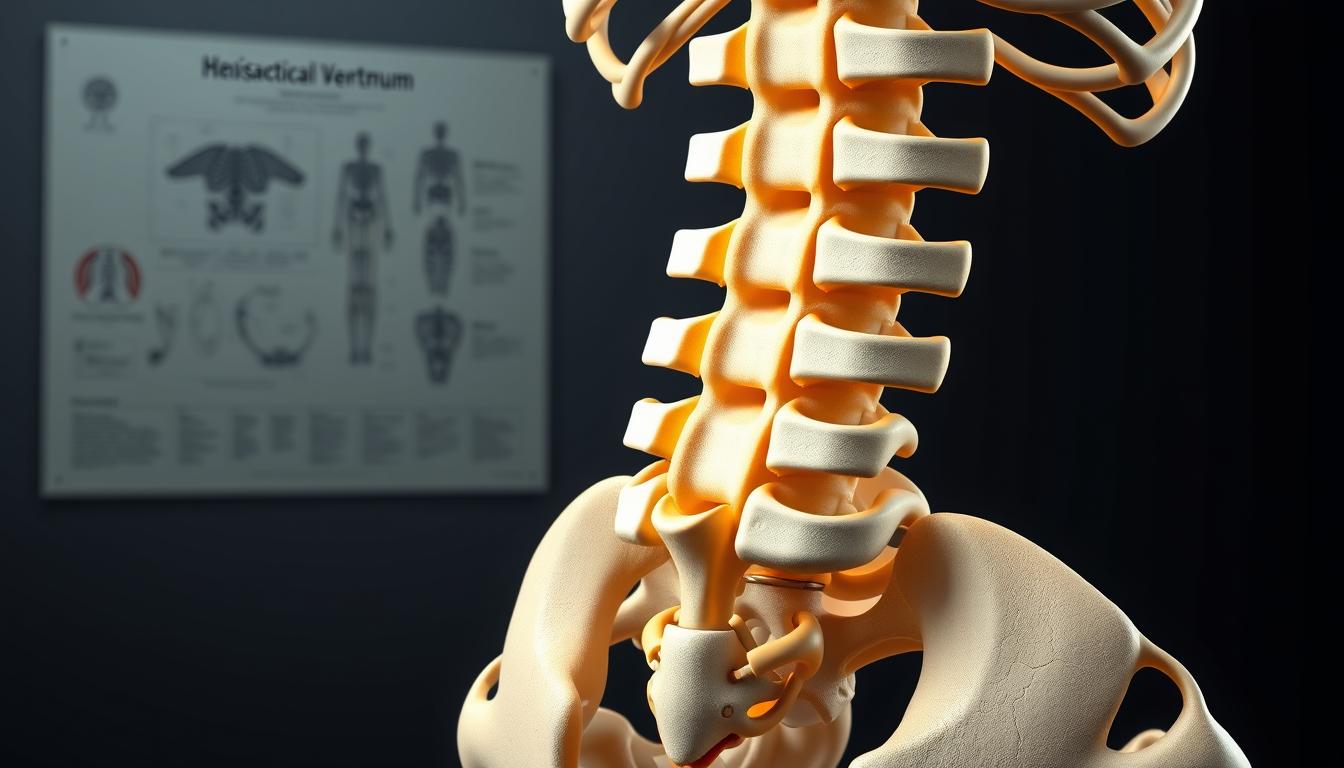
by Hemisacrum is a rare birth defect. It happens when part of the sacrum doesn’t develop fully or is missing.
This issue often comes with other birth defects like Sacral Agenesis and Caudal Regression Syndrome. These make diagnosing and treating Hemisacrum Congenital Anomaly more complex.
It’s important to know about the causes, symptoms, and treatment options for Hemisacrum Congenital Anomaly. This knowledge helps in giving the right care to those affected.
Because Hemisacrum Congenital Anomaly is so rare, a team of many healthcare experts is needed to manage it. They work together to help those with this condition.
What is Hemisacrum?
Hemisacrum is when some sacral vertebrae don’t develop fully or are missing. This usually affects vertebrae S2 to S5, but S1 is okay. It’s a type of sacral agenesis, a birth defect that affects the sacrum’s development.
Definition and Basic Anatomy
The sacrum is a triangular bone at the base of the spine. It’s made from five sacral vertebrae that fuse together. In Hemisacrum, these vertebrae don’t develop fully. The first sacral vertebra is usually preserved, but the others are either missing or not fully formed.
Distinguishing Features from Normal Sacral Development
Normally, all five sacral vertebrae develop and fuse together. Hemisacrum is different because vertebrae S2 to S5 are underdeveloped or missing. This can cause problems like neurological and urological issues.
| Characteristics | Normal Sacral Development | Hemisacrum |
|---|---|---|
| Sacral Vertebrae Involved | All 5 vertebrae (S1-S5) fully formed | S2-S5 underdeveloped or absent |
| Clinical Implications | Typically none due to anomaly | Potential neurological and urological issues |
Knowing the differences between Hemisacrum and normal sacral development is key for diagnosis and treatment. The impact on a person’s life can vary a lot, depending on how much the sacrum is underdeveloped.
Embryological Development of the Sacrum
Learning how the sacrum forms in the womb is key to understanding Hemisacrum. The sacrum is made of five vertebrae that fuse together. It’s vital for our spine and pelvis, supporting our body and protecting it.
Normal Sacral Formation
The sacrum starts forming at the end of the spine early in pregnancy. This happens around the fourth week. It begins with the primitive streak, which turns into cells that will become the spine.
These cells move and group around the notochord, forming the spine’s bodies and discs. Normally, the sacrum is fully formed by the time we’re 25, from the fusion of five vertebrae.
Sacral formation is a complex mix of genetics and environment. The Hox genes are key in deciding how many sacral vertebrae we have. Any issues with these genes can cause sacral development problems.
Developmental Disruptions Leading to Hemisacrum
Hemisacrum happens when sacral development goes wrong. This can be due to genetic problems, environmental factors, or both. The exact reasons are not clear, but it’s thought that issues with the sclerotome or vertebral fusion are to blame.
| Developmental Stage | Normal Development | Developmental Disruption |
|---|---|---|
| Primitive Streak Formation | Mesenchymal cells differentiate into sclerotome | Abnormal sclerotome formation |
| Sclerotome Migration | Cells migrate around the notochord | Incomplete or abnormal migration |
| Vertebral Body Formation | Vertebral bodies and discs form | Asymmetric or incomplete formation |
The table shows the important stages in sacral development and where problems can occur. Knowing these steps is vital for diagnosing and treating Hemisacrum.
Classification of Sacral Anomalies
Understanding sacral anomalies is key to grasping sacral agenesis and related issues. These anomalies affect the sacrum, a vital part of the spine and pelvis. They are congenital malformations that impact sacral development.
Types of Sacral Agenesis
Sacral agenesis means the sacrum might be missing partially or fully. It’s divided into types based on how much of the sacrum is missing:
- Type I: Total or almost total unilateral sacral agenesis.
- Type II: Partial sacral agenesis with a partial sacrum remaining.
- Type III: Variable fusion of the remaining sacral elements.
- Type IV: Total sacral agenesis with or without lumbar spine involvement.
Where Hemisacrum Fits in the Spectrum
Hemisacrum is a unique sacral anomaly where one side of the sacrum develops abnormally. It’s a special case within sacral agenesis, often linked with other birth defects. Knowing where Hemisacrum falls in the classification is critical for diagnosis and treatment.
Classifying sacral anomalies, including Hemisacrum, is essential for doctors. It helps them offer the right care and management plans for those affected.
Etiology and Risk Factors
The exact cause of Hemisacrum is not fully understood. Research points to a mix of genetic and environmental factors.
Understanding Hemisacrum’s causes is key to finding risk factors and prevention methods. Several factors may lead to this congenital anomaly.
Genetic Factors
Genetics are thought to be a big part of Hemisacrum’s development. Family history and genetic predisposition can raise the risk. Scientists are studying genes and mutations linked to Hemisacrum.
Environmental Influences
Exposure to toxins or infections in pregnancy might also cause Hemisacrum. The effect of environmental factors is complex and needs more study.
Maternal Conditions Associated with Increased Risk
Certain conditions in the mother can increase Hemisacrum risk. Maternal diabetes is a big risk factor. Managing diabetes in pregnancy is critical. Other health issues in the mother may also play a part, and research is ongoing to understand these connections.
The mix of genetic, environmental, and maternal factors in Hemisacrum shows its complexity. More research is needed to uncover causes and risk factors. This will help in developing prevention and management strategies.
Epidemiology of Hemisacrum
Understanding Hemisacrum’s epidemiology is key to knowing its impact. Studies on this rare birth defect offer insights into its spread and who it affects. This knowledge helps doctors and researchers improve care and treatments.
Prevalence and Incidence Rates
Hemisacrum is rare, and finding data on it is hard. Research shows sacral anomalies, like Hemisacrum, occur in 1 in 5,000 to 1 in 25,000 births. But, exact numbers for Hemisacrum are hard to find, making it tough to know how common it is.
Available data indicate that Hemisacrum often comes with other birth defects. This makes it hard to say how common it is alone.
Demographic Patterns
There’s not much known about who gets Hemisacrum. But, studies on similar sacral anomalies show some patterns. For example, some research says females might get these anomalies more often than males.
- Geographic variations may exist due to genetic or environmental factors.
- The condition’s rarity complicates the identification of clear demographic trends.
Further research is needed to understand who gets Hemisacrum. This includes looking into ethnic or socioeconomic differences.
Clinical Presentation and Symptoms
Hemisacrum shows a mix of physical, neurological, and urological signs. These symptoms can really change someone’s life.
Physical Manifestations
People with Hemisacrum might have visible back and pelvis issues. These problems can cause uneven posture or walking problems. Sometimes, these issues are very noticeable and can hurt or cause pain.
Neurological Symptoms
Neurological signs are common in Hemisacrum. They come from nerves being squished or damaged by the sacrum’s shape. Symptoms can be anything from mild numbness to serious muscle weakness or paralysis. How bad these symptoms are depends on the sacrum’s problem.
Urological and Gastrointestinal Complications
Urological and gastrointestinal problems are big worries for those with Hemisacrum. The sacrum’s shape can mess with nerves that control the bladder and bowels. This can lead to issues like not being able to hold urine or constipation. These problems can be treated, but they need constant care.
Knowing about Hemisacrum’s symptoms is key to helping those affected. Healthcare teams can make better plans by understanding all the possible symptoms and problems. This way, they can help each patient in their own special way.
- Visible deformities or asymmetries of the lower back and pelvis
- Numbness or tingling in the lower extremities
- Muscle weakness or paralysis
- Urinary incontinence
- Constipation
Getting a diagnosis early is very important. It helps manage Hemisacrum’s symptoms and improves life quality for those affected.
Associated Congenital Anomalies
Hemisacrum often comes with other congenital issues. This makes diagnosis and treatment harder.
VACTERL Association
VACTERL association is a group of birth defects. It includes Vertebral, Anal, Cardiac, Tracheo-Esophageal, Renal, and Limb problems. Hemisacrum is common in those with VACTERL.
A study in the Journal of Pediatric Surgery found 30% of VACTERL patients had sacral issues, like hemisacrum (1). This shows why a full check-up is key for hemisacrum patients.
Caudal Regression Syndrome
Caudal Regression Syndrome (CRS) affects the lower spine. It often happens with hemisacrum because both deal with sacrum development issues.
“Caudal regression syndrome is a complex condition that often coexists with other congenital anomalies, including hemisacrum, necessitating a multidisciplinary approach to management.”
Hemisacrum and CRS together can cause serious health issues. Early diagnosis and treatment are vital.
Other Related Developmental Disorders
Hemisacrum is also linked to other disorders like spinal dysraphism and cloacal exstrophy. These need complex surgeries and ongoing care.
| Condition | Characteristics | Association with Hemisacrum |
|---|---|---|
| VACTERL Association | Multiple congenital anomalies including vertebral, anal, cardiac, tracheo-esophageal, renal, and limb abnormalities | Commonly associated with sacral anomalies, including hemisacrum |
| Caudal Regression Syndrome | Abnormal development of the lower spine | Frequently observed with hemisacrum |
| Spinal Dysraphism | Congenital anomalies of the spine and spinal cord | May coexist with hemisacrum due to shared embryological origins |
Knowing about the other conditions with hemisacrum is key for good care. A team effort is needed to handle these complex cases.
Diagnostic Approaches and Imaging
There are many ways to diagnose Hemisacrum before and after birth. Finding out if someone has this condition is key to helping them. It’s important for their treatment and care.
Prenatal Detection Methods
Ultrasound is the main tool for finding Hemisacrum before birth. Newer ultrasound methods like 3D and 4D give clear pictures of the baby’s body. This helps spot sacral problems early.
Prenatal ultrasound is usually done in the second trimester. It checks the baby’s body, including the sacrum and spine. Finding problems early helps doctors talk to parents and get ready for after birth.
Postnatal Imaging Techniques
After birth, imaging is key to confirm the diagnosis and see how big the problem is. Different methods give different kinds of information.
X-ray Evaluation
X-rays are often the first step after birth. They give a quick look at the sacral area and can spot big problems.
MRI Assessment
MRI gives detailed views of soft tissues and bones. It’s great for looking at the spinal cord and nerves. This helps understand the whole problem.
CT Scanning Applications
CT scans show bones in high detail. They’re useful for planning surgery by showing the exact shape of the sacral defect.
Choosing the right imaging depends on the situation and what’s needed. Often, using more than one method gives a full picture of the problem.
| Imaging Modality | Primary Use | Benefits |
|---|---|---|
| Ultrasound | Prenatal detection | Non-invasive, early detection |
| X-ray | Initial postnatal assessment | Quick, widely available |
| MRI | Soft tissue evaluation | Detailed soft tissue imaging |
| CT Scan | Bony structure evaluation | High-resolution bone imaging |
Genetic Testing and Counseling
Genetic testing and counseling are key for families with Hemisacrum. They offer vital info on the condition’s genetic roots. This helps families grasp the risks and outcomes.
Available Genetic Tests
Many genetic tests can diagnose and shed light on Hemisacrum’s genetic causes. These include:
- Chromosomal Analysis: To spot chromosomal issues.
- Molecular Genetic Testing: To find specific gene mutations linked to the condition.
- Array Comparative Genomic Hybridization (aCGH): To find copy number variations.
These tests confirm the diagnosis and reveal the genetic roots of the condition.
Importance of Family Counseling
Family counseling is vital for managing Hemisacrum. It offers emotional support and aids in making care decisions. Counseling helps families cope with the condition’s psychological effects and guides them on managing it.
Recurrence Risk Assessment
Assessing recurrence risk is a key part of genetic counseling for Hemisacrum. It looks at the chance of the condition in future pregnancies. Family history and genetic test results are used for an accurate assessment.
Knowing the recurrence risk helps families plan for future pregnancies. It aids in making informed reproductive choices.
Surgical Management Options
Hemisacrum often needs a detailed treatment plan, with surgery being a key part. Deciding on surgery depends on several factors. These include how severe the condition is, the symptoms, and the patient’s health.
Indications for Surgical Intervention
People with Hemisacrum who have bad symptoms or problems might need surgery. These symptoms can be:
- Severe lower back pain that doesn’t get better with usual treatments
- Neurological problems from nerve pressure or tethering
- Big deformities or instability in the sacrum
- Urological or gastrointestinal issues that need surgery
These signs mean surgery might be needed to make life better and stop more problems.
Surgical Techniques and Approaches
There are many ways to fix Hemisacrum through surgery, based on what each patient needs. Some common methods are:
- Sacral osteotomy: Fixes deformities or instability in the sacrum.
- Nerve release: Relieves nerve pressure, which can help with nerve function.
- Spinal fusion: Stabilizes the spine and sacrum, mainly for big instability.
The right surgery depends on the patient’s body, symptoms, and health.
Postoperative Care Considerations
After surgery, taking good care of the patient is very important. Important things to think about are:
- Pain management: Keeping pain under control is key for comfort and moving around early.
- Monitoring for complications: Watching for any surgery problems, like infection or nerve issues.
- Rehabilitation: A plan to help the patient get strong, move well, and be independent again.
Good care after surgery helps patients do well and recover well from Hemisacrum surgery.
Non-Surgical Treatment Approaches
For those with Hemisacrum, non-surgical treatments can greatly improve life quality. These methods aim to manage symptoms, boost mobility, and enhance overall health.
Physical Therapy Protocols
Physical therapy is key in treating Hemisacrum without surgery. It includes tailored exercises to increase flexibility, strengthen muscles, and correct posture. Therapists also use heat, cold, or electrical stimulation to control pain and swelling.
Key components of physical therapy for Hemisacrum include:
- Stretching exercises to improve flexibility
- Strengthening exercises for core and lower back muscles
- Postural education to reduce strain on the spine
- Modalities for pain management
Pain Management Strategies
Managing pain is essential for Hemisacrum patients. This can involve both medication and non-medication methods.
| Pain Management Method | Description |
|---|---|
| Medications | Use of analgesics, NSAIDs, or muscle relaxants to manage pain |
| Physical Modalities | Application of heat, cold, or electrical stimulation |
| Alternative Therapies | Use of acupuncture, chiropractic care, or massage therapy |
Orthotic Devices and Mobility Aids
Orthotic devices and mobility aids are vital for Hemisacrum patients. They help improve posture, reduce pain, and increase mobility.
Examples include:
- Custom orthotics to support the lower back and pelvis
- Canes or walkers to aid in mobility
- Wheelchairs for individuals with significant mobility impairment
By using these non-surgical treatments, Hemisacrum patients can manage symptoms better and enjoy a higher quality of life.
Long-term Outcomes and Quality of Life
Hemisacrum is a complex birth defect that brings many challenges. It affects the sacrum and can lead to physical and mental issues. Getting the right care is key to managing these problems.
Functional Prognosis
The future outlook for people with Hemisacrum varies. It depends on how severe the defect is and any other health issues. Some may have little trouble, while others might struggle with moving and pain. Early treatment and a custom care plan can help a lot.
Psychosocial Implications
Hemisacrum also has big emotional and social effects. People might struggle with how they see themselves and feel about their body. Help from counselors and support groups is important for their mental health and happiness.
Educational and Vocational Considerations
Planning for school and work is important for those with Hemisacrum. Knowing their strengths and needs helps teachers and employers. This way, they can do well and be happy in their careers.
In summary, the future for those with Hemisacrum looks better with a well-rounded approach. This includes physical, emotional, and educational support. With the right care, they can live a better life.
Recent Advances in Research
New research is changing how we treat Hemisacrum, a complex birth defect. Medical science has led to new treatments that can greatly improve life for those with Hemisacrum.
Emerging Therapeutic Approaches
New ways to treat Hemisacrum are being developed. These include minimally invasive surgical techniques and personalized rehabilitation programs. Scientists are also looking into gene therapy to fix the genetic issues behind Hemisacrum.
Stem Cell and Regenerative Medicine Applications
Regenerative medicine is showing great promise for Hemisacrum treatment. Stem cell therapy might help fix damaged tissue and reduce symptoms. Researchers are also looking into biomaterials to help grow new tissue and stabilize the spine.
Genetic Research Developments
Genetic research is uncovering more about Hemisacrum. Scientists are finding genetic markers that could lead to earlier diagnosis and better treatments. Genetic counseling is becoming key for families dealing with Hemisacrum.
As research keeps moving forward, we can expect even better treatments for Hemisacrum. This will greatly improve the lives of those with this condition.
Conclusion
Hemisacrum is a complex congenital anomaly that needs careful management. It’s important to understand its development, types, and risks for early diagnosis and treatment.
The symptoms of Hemisacrum can vary, making it key to use advanced tests and imaging. Genetic testing and counseling are also vital, mainly in families with a history of the condition.
Treatment options include surgery and non-surgical methods like physical therapy and pain management. New research in stem cells and regenerative medicine is also promising.
More research and better management strategies are needed to improve life for those with Hemisacrum. By focusing on diagnosis, treatment, and care, we can help those affected.