 by
by It’s important to know about the male reproductive system for health and hygiene. The debate on circumcision has made people curious about the differences in penises.
Recent studies show both sides of circumcision. They talk about lower risks of urinary tract infections and the need for good hygiene for uncircumcised men. For more details, check out Healthy Male, a reliable source on male health.
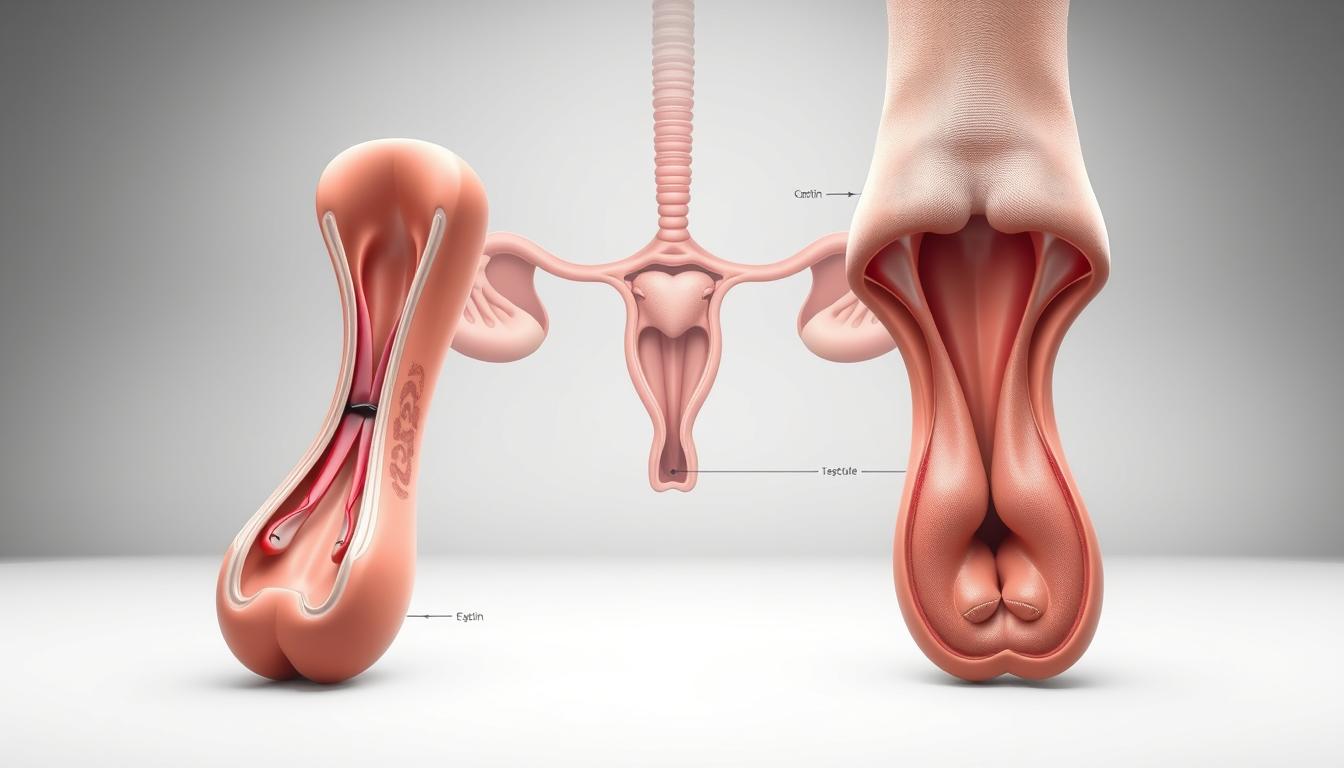
This article will give you a full look at the anatomy. It includes detailed Penis Illustrations to show the differences between circumcised and uncircumcised penises.
The Anatomical Structure of the Penis
Knowing how the penis is made up is key for doctors and anyone curious about male anatomy. The penis has many parts, each with its own job. These jobs are important for how the penis works.
Primary Components and Tissues
The penis has both outside and inside parts. The outside parts are the glans penis, foreskin (for those not circumcised), and penile shaft. The glans penis is very sensitive and is covered by the foreskin in uncircumcised men.
External Structures
The outside parts protect and help the penis work. For example, the foreskin covers the glans and has lots of nerves. This makes it sensitive during sex.
Internal Structures
Inside, the penis has the corpora cavernosa and corpus spongiosum. These are key for getting an erection. The corpora cavernosa fill with blood when a man gets aroused, causing an erection.
Vascular and Nervous Systems
The penis’s blood system includes arteries and veins. Arteries bring blood to the erectile tissues, and veins take it away. The nervous system has nerves that help control getting an erection and ejaculation.
| Component | Function |
|---|---|
| Glans Penis | Highly sensitive structure |
| Foreskin | Protects the glans |
| Corpora Cavernosa | Essential for erection |
Accurate medical illustrations are key to understanding these complex parts. Detailed drawings of male anatomy teach both medical students and patients about the penis’s details.
Penis Illustrations Throughout Medical History
Medical illustrations of the penis have changed a lot over time. As we learned more about the body and got better at drawing, so did our pictures of the penis.
Renaissance Anatomical Drawings
In the Renaissance, drawings of the body got more detailed. Artists like Leonardo da Vinci drew the body, including the penis, to help us understand it better. These drawings were important for future studies of the body.
Modern Medical Illustration Evolution
The 20th century brought big changes to medical illustrations. New tools and materials let artists use photography and computer design. This made pictures of the penis more clear and useful for doctors and patients.
Digital Era Representations
Now, in the digital age, pictures of the penis are even better. We use 3D models and interactive pictures to show its anatomy. These new ways help us learn and care for patients better. As technology grows, so will our understanding of the penis.
As noted by a medical illustrator,
“The shift to digital tools has revolutionized the field of medical illustration, allowing for greater precision and interactivity in our work.”
Uncircumcised Penis Anatomy in Detail
Understanding the uncircumcised penis requires a close look. It has unique features important for doctors and everyone to know.
The Foreskin: Structure and Function
The foreskin is key to the uncircumcised penis. It’s made of a mucosal membrane that lubricates and protects.
Mucosal Membrane Characteristics
The foreskin’s mucosal membrane is full of blood vessels and nerves. This makes it very sensitive. It keeps the glans moist and safe.
Protective Functions
The foreskin acts as a shield. It protects the glans from irritation and friction. It also helps fight off infections.
Glans and Frenulum in the Natural State
In an uncircumcised penis, the glans is covered by the foreskin. This retracts when aroused. The frenulum, a band of tissue, connects the foreskin to the glans.
The glans is very sensitive, with lots of nerve endings. The frenulum keeps the foreskin from retracting too far.
Variations in Uncircumcised Anatomy
Uncircumcised penises vary a lot. The length and tightness of the foreskin differ greatly.
- The foreskin can be long or short, tight or loose.
- Some have a more noticeable frenulum.
- The glans can vary in size and shape.
These differences are normal. They are shaped by genetics and environment.
Genital drawings are vital for understanding these differences. They give a clear view of the complex structures.
Circumcised Penis Anatomy Explained
It’s important to know how circumcision changes the penis’s anatomy. This surgery removes the foreskin, making the penis look and work differently.
Post-Circumcision Structural Changes
Circumcision changes the penis’s structure. Without the foreskin, the glans is exposed. This can change how the penis works.
Surgical Removal Points
The foreskin is removed during circumcision. This changes the penis’s anatomy. The amount removed depends on the surgery method.
Healing and Scarring Patterns
After circumcision, the penis heals and scars. Scarring patterns vary. They depend on the surgery and how the body heals.
Glans Exposure and Keratinization
Exposing the glans after circumcision can make the skin thicker. This can change the penis’s sensitivity and function.
Variations in Circumcision Techniques and Results
There are different circumcision methods. Knowing these variations is key for doctors and those considering circumcision.
Techniques vary in how much foreskin is removed and how it’s closed. These differences affect the penis’s look and function.
Comparative Penis Illustrations: Side-by-Side Analysis
Comparing penis anatomy illustrations side by side helps us understand the differences between circumcised and uncircumcised penises. Man anatomy drawings are key in medical education. They let us see the detailed differences in anatomy between the two types of penises.
External Appearance Differences
The main difference in appearance is the foreskin. Informative diagrams show that uncircumcised penises have a foreskin covering the glans. Circumcised penises, on the other hand, have the glans fully exposed. These visual comparisons help us see how circumcision changes the anatomy.
Functional Anatomy Comparisons
Illustrations also show functional anatomy differences. For example, the foreskin in uncircumcised penises can affect sensitivity and lubrication. Circumcised penises have a keratinized glans, which changes their function. Detailed anatomical drawings help us understand these changes and their effects on physiology.
Cross-Sectional Visualization Techniques
Cross-sectional views give us a deeper look at the internal anatomy of both types of penises. Advanced imaging techniques create detailed diagrams of internal structures. These informative diagrams are essential for medical professionals and students to grasp the complex anatomy.
Physiological Differences Between Circumcised and Uncircumcised Penises
It’s important to know how circumcision affects the penis. This knowledge helps doctors and individuals understand the differences. These differences can impact how sensitive the penis is, how well it lubricates, and its sexual function.
Sensitivity and Nerve Distribution
The penis’s sensitivity comes from its nerve distribution. The foreskin, which is removed during circumcision, has many nerve endings. This has led to mixed results in studies about sensitivity after circumcision.
Some studies say sensitivity might decrease after circumcision. Others find no big difference. The nerve endings in the foreskin are key to sexual sensation. They might affect how sensitive the penis is.
Lubrication and Natural Protection
The foreskin helps with lubrication and protects the glans penis. In uncircumcised men, the foreskin keeps the glans moist. This can make sex more comfortable and reduce friction.
Circumcision exposes the glans, which can make the skin tougher. This change might affect how well the foreskin lubricates and protects.
Mechanical Function During Sexual Activity
The way the penis works during sex can differ based on circumcision. The foreskin in uncircumcised men can reduce friction. This makes sex more comfortable.
Circumcised men might feel more friction, but this depends on their anatomy and how they use lubrication. The mechanical aspects of sexual function are complex. They can be influenced by many factors, including circumcision status.
In summary, there are many differences between circumcised and uncircumcised penises. These include sensitivity, lubrication, and how the penis works during sex. Knowing these differences is key for making informed choices and for healthcare providers to give the right care.
Medical Perspectives on Anatomical Variations
Healthcare providers need to know the differences between circumcised and uncircumcised penises. These differences are key for patient care and treatment choices.
Healthcare Provider Insights
Doctors stress the need for medical illustrations to grasp the male reproductive system complexities. A study in a top medical journal found that knowing anatomy well is vital for good patient care.
Research-Based Anatomical Findings
Research reveals big differences between circumcised and uncircumcised penises. These differences change how they look and work. Studies point out differences in nerve paths and sensitivity.
Clinical Implications of Structural Differences
The clinical effects of these differences are big. Knowing about sensitivity and nerve paths helps in clinical practices and better patient results. Also, medical illustrations help in teaching patients and planning surgeries.
Creating Accurate Penis Illustrations for Medical Education
Medical illustrations of the penis need to be very accurate. This is to help students and professionals learn well. The penis’s anatomy, whether it’s circumcised or not, must be shown precisely.
Anatomical Precision Requirements
Illustrations must show the penis’s detailed anatomy. This includes the foreskin in uncircumcised penises and the changes after circumcision.
Detail Level Considerations
The detail in medical illustrations is key. For example, showing the frenulum and its role in the penis is important. It helps in understanding sexual function and surgery.
Color and Texture Representation
Using color and texture well makes illustrations clearer. For instance, different colors can help show different tissue types. This makes the anatomy easier to understand.
Balancing Clinical Accuracy with Visual Clarity
Medical illustrators need to find a balance. They must simplify complex structures while keeping important details. This makes the illustrations informative and easy for learners to grasp.
| Illustration Aspect | Clinical Accuracy | Visual Clarity |
|---|---|---|
| Anatomical Detail | High precision required | Simplification for understanding |
| Color Usage | Realistic representation | Contrast for visibility |
| Texture Representation | Accurate texture depiction | Clear differentiation between tissues |
A medical illustrator once said, “The challenge is to make illustrations both accurate and easy to understand.” This balance is key for good medical education.
“The art of medical illustration is not just about drawing; it’s about communicating complex information in a clear and concise manner.”
The Role of Penis Illustrations in Patient Education
Penis illustrations are key in teaching patients about surgery. Visual aids like these help patients understand their body and what surgery might involve.
Explaining Surgical Procedures
These illustrations are great for explaining surgeries like circumcision. They show the difference between a circumcised and uncircumcised penis. This helps patients feel more at ease and follow instructions better.
Addressing Patient Concerns Through Visuals
Visual aids are also good for answering patient worries. For example, they can show how a penis heals after surgery. This reduces fear and makes patients feel better.
Age-Appropriate Educational Materials
It’s important to use the right materials for each patient’s age. For kids, pictures can explain body changes in a way they can understand. This makes learning easier and less scary for them.
In short, penis illustrations are a big help in teaching patients. They make complex ideas simple and clear. This way, doctors can better explain things, answer questions, and care for their patients.
Digital Technologies Advancing Anatomical Visualization
New digital tools are giving doctors better and more detailed views of the body. Medical illustrations are changing a lot because of these new technologies.
3D Modeling and Interactive Visualizations
Three-dimensional modeling is changing how we see body parts. Interactive tools let students and doctors dive into complex anatomy in a fun and detailed way.
Augmented Reality in Medical Education
Augmented reality (AR) is becoming a big part of medical school. It adds digital info to the real world, making anatomy easier to understand.
Mobile Applications for Anatomical Learning
Mobile apps are making learning about the body easier. They have interactive 3D models and quizzes that help students learn better.
| Technology | Application in Medical Education | Benefits |
|---|---|---|
| 3D Modeling | Interactive anatomical visualizations | Enhanced understanding of complex structures |
| Augmented Reality | Immersive learning experiences | Increased engagement and retention |
| Mobile Applications | Accessible anatomical learning | Flexible learning opportunities |
These digital tools are improving medical illustrations, like penile art. They give us more accurate and detailed views of the body.
Common Misconceptions About Penis Anatomy
Many people have wrong ideas about penis anatomy. This is because of myths and misconceptions. We need clear educational visuals to fix these wrong ideas.
Debunking Myths Through Visual Education
Using accurate man anatomy drawings is a great way to clear up wrong ideas. These pictures show how different parts of the penis work.
Some think bigger penis means better sex. But, educational visuals show penis size varies. There’s no link to how satisfied you are during sex.
Addressing Size and Shape Variations
Penis size and shape vary a lot, but many think this is weird. In truth, these differences are normal in human anatomy.
- The average length and girth of the penis can vary significantly.
- Both circumcised and uncircumcised penises have their unique anatomical characteristics.
- Visual education can help individuals understand these variations.
Cultural Misunderstandings About Circumcision
Circumcision is often misunderstood. Man anatomy drawings can show the differences between circumcised and uncircumcised penises. This helps clear up myths.
By sharing correct info and using educational visuals, we can improve understanding of penis anatomy. This helps reduce wrong ideas.
Ethical Considerations in Creating and Sharing Penis Illustrations
Medical professionals often face tough choices when making and sharing pictures of genital anatomy. These pictures are used in medical education. But, they bring up big ethical questions that need to be solved to make learning respectful and useful.
Medical Ethics and Consent
Using genital drawings in medical books needs strict ethical rules, mainly about getting consent and keeping privacy. These pictures must be made and shared in a way that honors people’s dignity and rights.
Balancing Educational Needs and Sensitivity
Materials for learning, like pictures of the penis, must find a middle ground. They need to give a lot of information but also be careful with what they show. This is key for good medical education.
Cultural Sensitivity in Global Medical Education
Different cultures see and accept pictures of genital anatomy in different ways. Teachers in medicine need to know this to make their lessons fit everyone’s needs.
| Ethical Consideration | Description | Importance Level |
|---|---|---|
| Medical Ethics and Consent | Adherence to ethical standards in creating and sharing illustrations | High |
| Balancing Educational Needs | Striking a balance between thorough knowledge and sensitivity | High |
| Cultural Sensitivity | Knowing and adjusting to cultural differences in medical teaching | Medium |
The Future of Penis Illustrations in Medical Science
Penis illustrations are on the verge of a big change thanks to new medical science tech. We can expect better and more detailed pictures of penis anatomy soon.
Emerging Visualization Technologies
New tech is making medical illustrations better. 3D modeling and augmented reality are key. They help create detailed and interactive pictures of body parts.
Integration with Surgical Planning Tools
Penis illustrations are now part of surgical planning. This helps surgeons understand the body better before surgery. It could lead to better results.
Personalized Anatomical Education
Now, education is more personal. Tailored illustrations help patients grasp their health issues and treatments. This makes learning easier and more effective.
| Technology | Application | Benefit |
|---|---|---|
| 3D Modeling | Surgical Planning | Improved Accuracy |
| Augmented Reality | Medical Education | Enhanced Understanding |
Conclusion
Accurate pictures of the male reproductive system are key in medical education. They help us understand the penis better. This article has shown us the differences between circumcised and uncircumcised penises.
These detailed pictures help doctors and patients understand the penis’s structure. They show the differences between circumcised and uncircumcised penises. This knowledge helps in discussing health and surgery options.
As medical technology gets better, so will our educational tools. Advanced visualization will make learning more accurate and fun. This will help doctors teach better and improve patient care.