 by
by Knowing the city map of Dhaka is key to moving around this crowded city. Dhaka, the capital of Bangladesh, is a center for business, culture, and government.
The city’s layout is complex, and it’s growing fast. A comprehensive map is a must-have for locals, tourists, and companies. It helps you understand Dhaka’s areas, landmarks, and how to get around.
Learning about the Dhaka Map helps you see the city’s layout. It also helps you plan your trips or business moves better.
Geographic Overview of Dhaka City
Dhaka, the capital of Bangladesh, is a lively city with a deep history. Its geography is key to understanding its layout and landmarks.
Geographical Coordinates and Boundaries
Dhaka City’s location is vital for its growth and planning. Its coordinates and boundaries shape the city’s development.
Latitude and Longitude Position
Dhaka sits between 23°53′ and 23°39′ north latitude. It’s also between 90°21′ and 90°31′ east longitude. This spot has helped it become a big city in Bangladesh.
Natural and Administrative Boundaries
The city’s edges are marked by rivers and divisions. Dhaka is surrounded by the Buriganga River to the south. It has grown to include more areas.
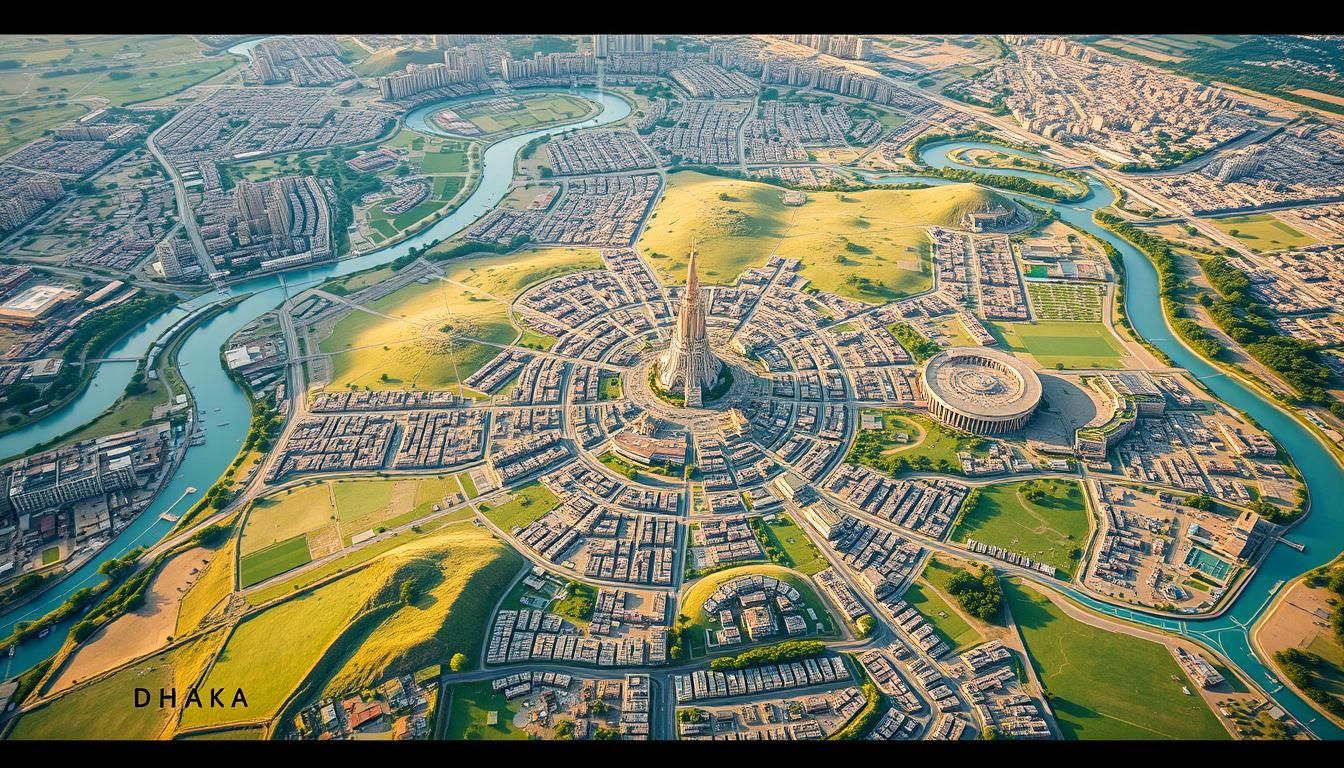
To explore Dhaka well, knowing its geography is key. The satellite view of Dhaka shows its urban growth and structure.
Historical Evolution of Dhaka’s Urban Landscape
Dhaka started as a small trading post and now it’s a megacity. Its location on the Buriganga River helped it grow. This spot was perfect for trade and commerce.
Pre-Colonial Urban Development
Before the British came, Dhaka was a bustling commercial center. It had a mix of local and foreign cultures. The city’s layout was dense, with narrow streets and traditional buildings.
Looking at the Dhaka street map from then shows a city deeply connected to its culture.
Colonial Period Urban Changes
The British era changed Dhaka a lot. They built modern roads and public buildings. A detailed map of Dhaka from then shows new areas and commercial spots.
This shows Dhaka’s rise as a colonial center.
Post-Independence Urban Expansion
After Bangladesh became independent in 1971, Dhaka grew fast. The city’s population increased, leading to new areas for living and work. The Dhaka Map shows this growth with new roads and bridges.
Rapid Growth and Challenges
Ever growing, Dhaka is now one of the world’s biggest cities. But, this fast growth brings problems like housing shortages and too much traffic.
Modern Metropolitan Development
Today, Dhaka is a lively city with old and new buildings. There are efforts to make the city better and more sustainable. The goal is to make Dhaka a better place to live.
Understanding the Dhaka Map: A Complete Guide
The Dhaka map is a vital tool for locals and visitors. It offers insights into the city’s layout and infrastructure. Knowing the map’s parts is essential for using it well.
Map Orientation and Scale
Map orientation is key for finding your way. It helps you know the directions and important spots.
Cardinal Directions and Major Landmarks
Understanding cardinal directions (north, south, east, west) is important. It helps match the map with Dhaka’s real geography. Key landmarks like the Buriganga River and the Lalbagh Fort are also important references.
Distance Measurement and Proportions
The map’s scale is vital for measuring distances and seeing proportions. It shows the ratio of map distances to real-world distances.
Map Legend and Symbols
The map legend explains the symbols and colors used. This ensures users can understand the map’s information correctly.
Standard Cartographic Elements
Standard elements include symbols for roads, buildings, and more. These are usually found in the map legend.
Dhaka-Specific Mapping Conventions
Dhaka’s map might have special symbols or conventions. These could include informal settlements or major business areas.
Here’s a table to show the map’s parts:
| Map Element | Description | Example |
|---|---|---|
| Scale | Represents the ratio of map distance to actual distance | 1:10,000 |
| Legend | Explains symbols and colors used on the map | Color-coded roads |
| Cardinal Directions | Indicates north, south, east, and west | Compass rose |
Knowing these parts is essential for using the Dhaka map. By learning about orientation, scale, and the legend, you can navigate Dhaka more easily and accurately.
Administrative Divisions of Dhaka City
Knowing the administrative divisions of Dhaka City is key to exploring its neighborhoods and getting city services. As Bangladesh’s capital and a major city, Dhaka has a detailed system to manage its people and growth.
Dhaka North and South City Corporations
The city splits into two main parts: Dhaka North City Corporation (DNCC) and Dhaka South City Corporation (DSCC). They handle city services and manage projects in their areas.
Jurisdictional Boundaries
DNCC and DSCC have their own areas. DNCC includes Mirpur, Mohammadpur, and Uttara. DSCC covers Old Dhaka, Demra, and Shyampur. Knowing these areas is important for everyone.
Administrative Functions and Services
Both corporations deal with many tasks. They manage waste, water, and public spaces. They also take care of parks, health services, and more.
Thanas and Police Stations
Dhaka is split into thanas and police stations for law and order. Key thanas are Mirpur, Motijheel, and Dhanmondi. These help keep the city safe and support local needs.
Ward Divisions and Local Governance
Dhaka is divided into wards for local governance. Each ward has councilors who listen to local issues. This system helps in community involvement and governance.
| Administrative Division | Description | Key Areas |
|---|---|---|
| Dhaka North City Corporation | Provides municipal services in the northern part of Dhaka | Mirpur, Mohammadpur, Uttara |
| Dhaka South City Corporation | Provides municipal services in the southern part of Dhaka | Old Dhaka, Demra, Shyampur |
| Thanas/Police Stations | Handles law enforcement and administrative tasks | Mirpur, Motijheel, Dhanmondi |
| Ward Divisions | Smallest administrative units for local governance | Varies across the city |
“The administrative divisions of Dhaka City are a testament to the city’s complex urban landscape and the need for structured governance.”
This shows why it’s important to know these divisions for better navigation and use of city services.
Major Districts and Neighborhoods in Dhaka
Dhaka’s different districts and neighborhoods are key to its identity and daily life. The Dhaka street map and city map of Dhaka help us navigate these areas.
Old Dhaka Neighborhoods
Old Dhaka is a treasure trove of history and culture. Its neighborhoods show the city’s rich heritage. The area has narrow streets, historic buildings, and lively markets.
Historical Quarters and Heritage Areas
The historical quarters of Old Dhaka, like Lalbagh and Hussaini Dalan, are full of heritage sites and landmarks. These areas highlight the city’s Mughal past and cultural importance.
Commercial and Residential Characteristics
Old Dhaka’s neighborhoods mix commercial and residential areas. The streets have shops selling traditional clothing and local handicrafts. Residential areas are densely populated with families living together.
Central Dhaka Areas
Central Dhaka is the city’s commercial heart, with areas like Motijheel and Banani being major business districts. These areas boast modern infrastructure, upscale shopping, and diverse dining options.
Northern and Eastern Suburbs
The northern and eastern suburbs of Dhaka are growing fast. New residential and commercial areas are emerging. Neighborhoods like Gulshan and Uttara are favored by the middle and upper classes. They offer a more relaxed life compared to the city center.
Commercial and Business Districts on the Dhaka Map
Dhaka’s economic heart beats in its busy commercial and business areas. These spots are key for the city’s money matters. They are marked on the Dhaka Map.
Motijheel Commercial Area
Motijheel is Dhaka’s main business center. It’s filled with corporate offices, banks, and financial places. It’s a big spot for business.
Gulshan and Banani Business Districts
Gulshan and Banani are fancy business spots. They have modern buildings and diplomatic places. Many businesses, big and small, call these areas home.
Emerging Commercial Hubs
Dhaka is always changing, with new business areas popping up. Two new spots are:
Uttara Business Center
Uttara is becoming a big business center. It has lots of businesses and shopping places.
Bashundhara Commercial Zone
The Bashundhara Commercial Zone is also growing. It’s known for its homes and business spots.
| Commercial District | Key Features |
|---|---|
| Motijheel | Central business district, corporate offices, banks |
| Gulshan and Banani | Upscale business districts, modern infrastructure, diplomatic missions |
| Uttara | Emerging commercial center, businesses, shopping complexes |
| Bashundhara | Residential and commercial developments, emerging commercial zone |
The detailed map of Dhaka shows all these business areas. It helps people get around and plan the city.
Residential Areas and Housing Developments
Dhaka’s residential areas are a mix of planned and informal settlements. Knowing about these areas helps us understand the city’s housing scene.
Planned Residential Areas
Planned areas in Dhaka aim to offer a safe and organized living space. They are well-kept and have many amenities.
DOHS and Cantonment Housing
The Defense Officers’ Housing Scheme (DOHS) and Cantonment housing stand out. They provide a high standard of living. These places are known for their well-planned infrastructure and safety.
Private Housing Estates
Private estates are another planned residential option. They have modern features and are for the middle and upper classes.
Informal Settlements and Urban Villages
Informal settlements and urban villages grow without a plan. They often lack basic services. Yet, they house a big part of Dhaka’s people.
Distribution Patterns on the Map
A Dhaka neighborhood map shows informal settlements on the city’s edges or flood-prone areas. Knowing where they are helps in urban planning.
Density and Population Characteristics
Informal settlements are denser and have a more varied population than planned areas. They have higher population densities and diverse socioeconomic groups.
Transportation Infrastructure on the Dhaka Map
Getting around Dhaka is easier with the right map. The city’s transport system includes roads, public transport, and waterways.
Major Roads and Highways
Dhaka’s roads are key to moving around. They connect the city to the rest of the country.
Primary Arterial Roads
The main roads in Dhaka help keep traffic moving. They are crucial for reducing congestion and making travel faster.
Ring Roads and Connectors
Dhaka’s ring roads and connectors help avoid the city center. They reduce congestion and improve air quality.
Public Transportation Routes
Public transport is a big part of Dhaka’s transport system. The city has many bus routes and a metro rail.
Bus Routes and Terminals
Dhaka’s buses are very popular. The routes cover most areas, and terminals make transfers easy.
Metro Rail and BRT Corridors
The metro rail and BRT corridors offer fast travel. They are expected to reduce traffic congestion a lot.
Waterways and River Ports
Dhaka’s waterways and river ports are important but often overlooked. The rivers offer a sustainable and scenic way to travel.
The main river ports in Dhaka are:
- Sadarghat River Port
- Other river ports
Educational Institutions and Healthcare Facilities
Dhaka’s urban landscape includes vital educational and healthcare services. The city’s detailed map shows where these services are. This makes it easy for residents to find them.
Universities and Colleges
Dhaka boasts several top universities and colleges. The University of Dhaka, Jahangirnagar University, and Dhaka Medical College are among them. These places offer higher education and training to students nationwide.
There are over 50 universities and colleges in Dhaka. They provide a variety of academic programs.
Schools and Educational Zones
The city has many schools and educational zones. They serve students of all ages and backgrounds. Schools like Dhaka Residential Model College and Viqarunnisa Noon School are well-known.
The Dhaka neighborhood map helps find these schools. It makes it easier for parents to choose schools close to their homes.
Hospitals and Medical Centers
Dhaka’s healthcare system includes public and private hospitals. These places offer medical care to the city’s people.
Public Healthcare Facilities
Public healthcare in Dhaka is affordable. Places like Dhaka Medical College Hospital and Sir Salimullah Medical College Hospital are key. They provide essential healthcare to the population.
Private Medical Institutions
Private hospitals like United Hospital and Labaid Hospital offer specialized care. They have modern technology and skilled staff. This ensures high-quality services for patients.
The detailed map of Dhaka is very useful. It helps find educational and healthcare services. This makes navigating the city easier for everyone.
“The integration of educational institutions and healthcare facilities within Dhaka’s urban planning is critical. It’s essential for the city’s growth and the well-being of its people.” – Urban Planning Expert
Cultural and Historical Landmarks of Dhaka
Dhaka is a city with a rich history. It’s filled with cultural and historical landmarks that show its true self. You can find museums, heritage sites, religious buildings, and places of worship here. It’s a city that’s full of stories waiting to be explored.
Museums and Heritage Sites
Dhaka has many museums and heritage sites. They tell the story of the city’s past and its cultural importance. These places are key to keeping Dhaka’s heritage alive.
National Museums and Galleries
The National Museum of Bangladesh is a must-see. It gives you a deep look into the country’s history and cultural growth. The Bangladesh Shilpakala Academy is also worth visiting. It celebrates the arts.
Historical Buildings and Monuments
Places like the Lalbagh Fort and Ahsan Manzil show Dhaka’s long history. Their architecture shows the city’s cultural variety.
Religious Structures and Places of Worship
Dhaka is home to many religious buildings. You’ll find mosques, temples, and churches. These buildings show the city’s religious diversity and tolerance.
Mosques and Islamic Architecture
The Star Mosque and Binat Bibi Mosque are famous for their Islamic designs. They are important parts of Dhaka’s history.
Temples, Churches, and Other Religious Sites
The Dhakeswari Temple and Armenian Church are also important. They add to Dhaka’s cultural mix.
| Landmark | Description |
|---|---|
| Lalbagh Fort | A 17th-century Mughal fort |
| Ahsan Manzil | A historic palace and museum |
| Star Mosque | A mosque known for its star-shaped decorations |
Parks, Recreation Areas, and Green Spaces
Parks and recreation areas in Dhaka City are like the lungs of the city. They give people green spaces to relax and have fun.
Major Parks and Gardens
Dhaka City has many big parks and gardens. They are loved by both locals and visitors. Some of these include:
- Ramna Park, a historic park in the heart of the city
- Neighborhood parks and playgrounds that cater to local communities
Ramna Park and Central Green Areas
Ramna Park is a big green space in Dhaka. It’s a calm place away from the city’s noise. It’s great for fun and relaxation.
Neighborhood Parks and Playgrounds
There are also smaller parks and playgrounds all over the city. They give locals green spaces for fun and community events.
Lakes and Waterfront Areas
Dhaka City also has lakes and waterfront areas. They add to the city’s beauty and offer fun activities.
Dhanmondi Lake and Surrounding Areas
Dhanmondi Lake is a favorite spot for fun. It has walking paths and areas perfect for enjoying leisure activities.
Hatirjheel and Gulshan Lakes
Hatirjheel and Gulshan Lakes are also important waterfront areas in Dhaka. They offer beautiful views and places for fun.
These green spaces and recreational areas are key for Dhaka City’s health. As the city grows, it’s important to keep and grow these areas.
Interactive Dhaka Map Resources and Tools
Interactive maps have changed how we see Dhaka, making it easier to get around. Now, with digital tools, navigating Dhaka’s streets is simpler.
Digital Mapping Platforms for Dhaka
Many digital mapping platforms cover Dhaka well. They offer features that help with navigation and exploring.
Google Maps and OpenStreetMap Coverage
Google Maps and OpenStreetMap are key platforms for Dhaka. Google Maps gives real-time traffic and street views. OpenStreetMap lets users edit maps and work together.
Government and Official Map Resources
The Bangladesh government offers official maps online. These include detailed topographic maps and urban plans.
Mobile Applications for Navigating Dhaka
There are also mobile apps for Dhaka. These apps have various features, like ride-sharing and local info.
Ride-sharing and Navigation Apps
Apps like Uber and Pathao offer ride-sharing and navigation. They include updates on traffic and arrival times.
Local Travel and Tourism Map Applications
Apps for local travel and tourism show Dhaka’s landmarks. They help visitors and give insights into the city.
These interactive map tools help everyone in Dhaka. They make finding the best routes or exploring easier. These digital resources are very helpful.
Satellite View and Aerial Imagery of Dhaka
Satellite imagery lets us see Dhaka’s complex city layout. The satellite view of Dhaka City shows us its urban landscape. We can look at urban density, land use, and environmental features.
Interpreting Satellite Images of Dhaka
Satellite images of Dhaka are key for urban planning. They help us spot patterns and trends in the city’s growth.
Urban Density and Land Use Patterns
The satellite view shows high-density areas and land use patterns. It helps us see where homes, businesses, and factories are. This info is vital for city planners and policymakers.
Environmental Features and Green Cover
Satellite imagery also shows environmental features like rivers, lakes, and green spaces. Keeping an eye on these is key for ecological balance.
Historical Aerial Photography Comparison
Looking at old aerial photos of Dhaka shows big changes over time. This helps us understand the city’s growth and development.
Urban Growth Visualization
By looking at old aerial photos, we see how the city has grown. We can see changes in land use. This helps in planning for the future.
Changes in River Courses and Wetlands
Old aerial photos also show changes in rivers and wetlands. They highlight how urbanization affects natural water bodies and ecosystems.
Navigating Dhaka: Practical Tips for Visitors and Residents
Knowing how to get around Dhaka is key for both visitors and locals. The city’s complex streets and crowded areas can be tough to navigate. But, with the right strategies, you can explore Dhaka easily.
Understanding Street Naming Conventions
Dhaka’s street names can be confusing. Main roads are named after important figures or events. Smaller streets often have local or traditional names. Knowing these conventions helps you move around the city.
Landmark-Based Navigation Strategies
Landmarks are great for navigating Dhaka. The city has many notable spots, from old monuments to new malls. Identifying key landmarks on your route can guide you. Places like Lalbagh Fort, Baitul Mukarram National Mosque, and Gulshan Lake are good for getting your bearings.
Traffic Patterns and Peak Hours
Dhaka’s traffic can be overwhelming, mainly during peak hours. Knowing the traffic patterns is key for planning your trip.
Morning and Evening Rush Hours
The morning rush is from 7:00 AM to 9:00 AM. The evening rush is from 5:00 PM to 7:00 PM. Traveling outside these times can save you a lot of time.
Alternative Routes and Shortcuts
Knowing alternative routes and shortcuts can help with traffic. A good map or GPS can help find these paths.
| Time of Day | Traffic Condition | Recommended Action |
|---|---|---|
| 7:00 AM – 9:00 AM | Heavy Traffic | Avoid Travel |
| 9:00 AM – 5:00 PM | Moderate Traffic | Plan Your Route |
| 5:00 PM – 7:00 PM | Heavy Traffic | Avoid Travel |
By understanding Dhaka’s street names, using landmarks, and knowing traffic patterns, you can navigate the city better. These tips are useful for both visitors and locals, helping you explore Dhaka with ease.
Urban Development and Future Expansion Plans
Dhaka’s urban development is moving fast, thanks to plans for growth. The city’s quick expansion needs careful planning. This ensures a better life for everyone living there.
Dhaka Structure Plan 2016-2035
The Dhaka Structure Plan 2016-2035 is key for the city’s future. It covers zoning, land use, and managing density. These are all important for the city’s growth.
Zoning and Land Use Projections
The plan sets rules for land use. Efficient land use is vital for Dhaka’s growing population and economy. It aims for more organized and green land use.
Density Management Strategies
To handle more people, the plan suggests a few things. It talks about vertical expansion in some spots. It also plans for new towns outside the city to ease the load on the center.
Upcoming Infrastructure Projects
Dhaka’s infrastructure is about to get a big boost. There are plans for better transport and new urban areas.
Transportation Network Expansion
Improving transport is a big goal. Enhanced road networks and public transport are key. This will make getting around Dhaka easier.
New Urban Centers and Satellite Towns
New areas and towns are being built to spread out the population. These places aim to be self-sufficient. They’ll help ease the pressure on Dhaka’s core.
Conclusion: The Evolving Map of Dhaka City
The Dhaka Map shows the city’s growth and changes. It’s key for getting around Dhaka’s complex layout and systems. We’ve looked at the map’s many sides, from its geography and history to its parts and how people move around.
The city map of Dhaka is more than a guide. It shows the city’s deep history, culture, and fast growth. As Dhaka grows, a detailed map is vital for everyone living there or visiting.
Knowing the Dhaka Map helps people understand the city better. It’s important for both locals and visitors. It opens up the city’s possibilities.