 by
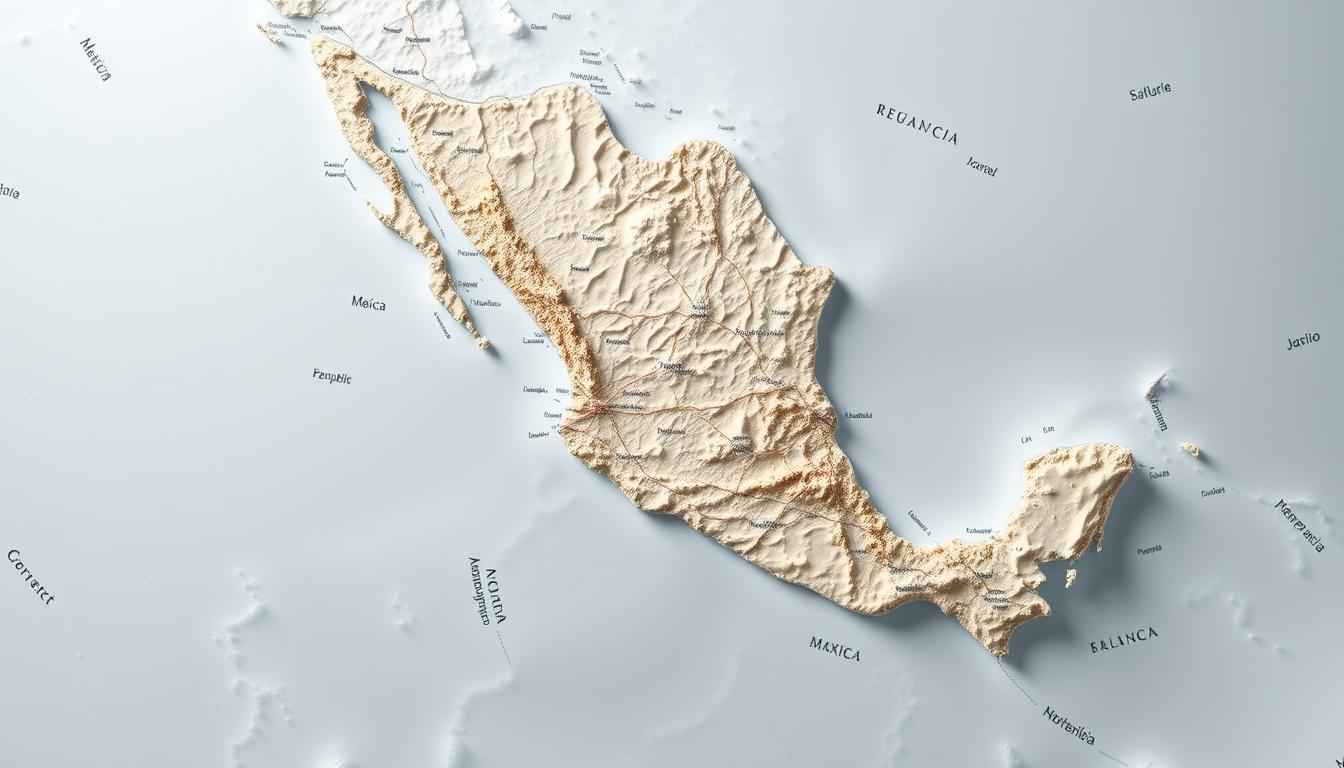
by The Mexican Republic, also known as Mexico, is in North America. It borders the United States to the north and Belize and Guatemala to the south.
Mexico is known for its varied landscapes, deep history, and lively culture. This makes it a favorite spot for tourists. Many Mexican landmarks draw visitors from all over.
Mexico’s spot on the North American continent is key. It boosts its role in global and regional affairs. This is good for its international relations and Mexican tourism.
Geographic Position of Mexico in North America
Mexico’s location in North America has greatly influenced its culture and economy. It connects North and Central America, making it a key link between the two.
Coordinates and Continental Context
Mexico lies between 14.5°N and 33°N latitudes, and 86°W to 119°W longitudes. This spot affects its climate, culture, and economy.
Latitude and Longitude Specifications
The country spans from 14.5°N to 33°N latitudes. This range includes various climates, from tropical to desert. Its longitudes, from 86°W to 119°W, place Mexico uniquely among its neighbors.
Position Between North and Central America
Mexico connects North and Central America. It borders the United States to the north and Guatemala and Belize to the south. This has helped in cultural exchange and trade.
Mexico’s Place in the North American Continent
Mexico is the third-largest nation in North America, after Canada and the United States. Its size and location make it strategically important.
Size Comparison with Other North American Nations
| Country | Area (Square Kilometers) |
|---|---|
| Canada | 9,984,670 |
| United States | 9,161,928 |
| Mexico | 1,964,375 |
Strategic Geographic Significance
Mexico’s location has been vital for its history and culture. Historian David A. Bradt notes, “Mexico’s location has made it a crossroads for various cultures, influencing its identity and interactions with neighboring countries.”
“Mexico’s unique position between North and Central America has made it an important player in regional trade and cultural exchange.”
Mexico’s strategic location is also key in international trade and its rich cultural heritage. It acts as a bridge between two American regions.
Borders and Neighboring Countries
The borders of Mexico have greatly influenced its Mexican history and government policies. Knowing about these borders helps us understand the country’s geopolitical situation.
Northern Border with the United States
The northern border with the United States is very busy, spanning over 1,954 miles. The Rio Grande River is a key part of this border, separating the two countries.
Major Border Crossing Points
Important crossing points like San Ysidro, El Paso, and Laredo help with trade and travel between Mexico and the U.S. These spots are essential for both countries’ economies.
Rio Grande River Boundary
The Rio Grande River has been a point of disagreement between the U.S. and Mexico. They have agreements to manage its waters and boundaries.
Southern Borders with Guatemala and Belize
Mexico’s southern borders are with Guatemala and Belize. These areas are covered in dense jungles and mountains. They are less traveled but full of life.
Jungle and Mountain Boundaries
The jungles and mountains of Mexico’s south are home to many ecosystems and indigenous groups.
Border Communities and Crossings
Communities near these borders trade and share cultures, despite the tough terrain.
Maritime Boundaries
Mexico’s maritime borders include the Gulf of Mexico and the Pacific Ocean. These areas are key for trade and have diverse ecosystems.
Gulf of Mexico Coastline
The Gulf of Mexico coastline is vital for oil and tourism. It has major ports for international trade.
Pacific Ocean Boundary
Mexico’s Pacific coast is rich in marine life and is a major spot for ports and shipping.
In summary, Mexico’s borders are more than just lines on a map. They are key to its economy, culture, and politics. The Mexican government works hard to manage these borders, ensuring security while also supporting trade and travel.
Physical Geography of the Mexican Republic
The Mexican Republic is known for its diverse geography. It has mountains, deserts, and coastlines. These features shape its climate, culture, and economy.
Major Mountain Ranges
Mexico has several important mountain ranges. These include:
- Sierra Madre Occidental: This range is on Mexico’s west. It’s known for its tough terrain and valuable minerals.
- Sierra Madre Oriental: On the east, this range runs along the Gulf of Mexico. It’s full of different ecosystems.
- Trans-Mexican Volcanic Belt: This area is full of volcanoes. It goes through central Mexico and has high peaks, like Pico de Orizaba.
Deserts and Plains
Mexico also has big deserts and plains. Some examples are:
- Sonoran and Chihuahuan Deserts: These are huge and very important. They have many plants and animals that live in dry places.
- Central Mexican Plateau: This area is between the Sierra Madre ranges. It’s great for farming because of its good soil and variety of crops.
Coastlines and Peninsulas
Mexico’s coastlines and peninsulas are also key. They have helped shape the country’s history and economy. Some important ones are:
- Yucatán Peninsula: This area is flat and has a rich culture. It’s famous for its Maya ruins and is a big draw for tourists.
- Baja California Peninsula: This long, thin peninsula is between the Pacific and the Gulf of California. It’s known for its stunning landscapes and delicious food, which shows off the region’s culture and Mexican cuisine.
Mexico’s varied geography adds to its beauty and biodiversity. It also shapes the country’s culture and economy, making it a place with a rich heritage.
Political Divisions of the Mexican Republic
Mexico is divided into 31 states and a federal district. This setup is key to how the country is run.
31 States and Federal District
Each of Mexico’s 31 states has its own government. They have some freedom to make their own decisions. Mexico City, the capital, is the heart of politics and business.
Northern Border States
States near the U.S., like Baja California and Chihuahua, are big in trade. Their close ties to the U.S. shape their economies.
Central States and Mexico City
Mexico City and the central states are centers of politics, business, and culture. As the capital, Mexico City is where national decisions are made.
Southern and Coastal States
The south and coast, like Chiapas and Quintana Roo, have their own cultures. Their history and sea connections make them special for tourism.
Regional Distinctions
Mexico’s regions differ in economy and culture. Knowing these differences helps us see the country’s variety.
Economic Development Variations
Some areas, like the north, are more industrial. The south focuses on farming.
Cultural and Historical Regions
Mexico’s history and culture are rich and varied. From the south’s indigenous roots to the north’s mix of cultures, each area is unique.
Mexico’s political divisions show its complex culture and economy. A historian said, “The diversity in Mexico’s political divisions highlights its rich culture and ability to change with the economy.“
Historical Evolution of Mexican Territory
The history of Mexico’s territory is complex. It was shaped by indigenous cultures, colonial rule, and changes after independence.
Pre-Colonial Boundaries
Before the Spanish arrived, Mexico was home to many indigenous nations. Each had its own territory.
Aztec and Maya Territories
The Aztecs ruled a large empire around today’s Mexico City. The Maya lived in the southeast.
Other Indigenous Nations
Other groups like the Tarascans, Zapotecs, and Mixtecs also lived in different parts of the land.
Spanish Colonial Period
The Spanish conquest changed Mexico’s territory a lot. It created the Viceroyalty of New Spain.
New Spain’s Boundaries
New Spain’s area was bigger than today’s Mexico. It included parts of the US and Central America.
Administrative Divisions
The Spanish divided their land into provinces and missions. This helped them govern their colonies well.
Post-Independence Territorial Changes
After Mexico gained independence, it lost a lot of land to the US.
Mexican-American War and Territory Loss
The Mexican-American War (1846-1848) made Mexico give up a lot of land. This was done through the Treaty of Guadalupe Hidalgo.
Consolidation of Current Borders
Over time, Mexico’s borders were defined and solidified. This was done through agreements and treaties.
Modern Border Establishment
In the 20th century, Mexico worked on its borders. It made agreements with its neighbors.
20th Century Border Agreements
Many important agreements were made in the 20th century. They helped set and manage the borders.
Current Border Management
Today, Mexico manages its borders through diplomacy, security, and trade agreements. This shows its complex history and geography.
As historian Miguel León-Portilla once said,
“The history of Mexico is a story of continuous transformation, from the ancient civilizations to the modern nation.”
This quote captures the essence of Mexico’s territorial evolution. It shows how its history has always been changing.
Climate Zones Across Mexico
Mexico has many climate zones because of its wide range of landscapes. These zones affect farming, tourism, and daily life in different parts of the country.
Tropical and Subtropical Regions
The Yucatán and southern coastal areas have tropical and subtropical climates. They are known for lush greenery and attract tourists with their beaches and culture.
Yucatán and Southern Coastal Areas
The Yucatán Peninsula has a tropical climate with high heat and humidity all year. It’s famous for cenotes and jungles, making it a top spot for eco-tourism.
Seasonal Weather Patterns
These areas have little seasonal change, with steady temperatures. But, the rainy season brings a lot of rain, impacting farming and Mexican cuisine.
Arid and Semi-Arid Areas
The north of Mexico has arid and semi-arid climates. These areas get little rain and are very hot, like the deserts.
Northern Desert Regions
Sonora and Chihuahua have extreme heat in summer. The dry conditions need special farming methods, like irrigation, to grow crops.
Central Highlands
The central highlands have a semi-arid climate with cooler temperatures. This area is key for Mexico’s farming, growing crops used in Mexican cuisine.
Highland Climate Zones
Mexico’s highlands, like mountains, have unique climates. The higher you go, the cooler it gets, making them different from lower areas.
Mountain Climate Variations
Mountain areas have climates ranging from mild to cold, based on height. These places are rich in biodiversity and support many ecosystems.
Valley Microclimates
Valleys in highlands have their own microclimates, which are milder than the mountains. These areas are good for specific farming and are used for coffee, helping the local economy and Mexican tourism.
Major Cities and Population Distribution
Major cities in Mexico are key hubs for culture and economy. The country’s cities are dominated by the Mexico City area, the US-Mexico border, and other big cities.
Mexico City Metropolitan Area
The Mexico City area is one of the biggest in the world. It has a rich history, dating back to the Aztecs. It’s a cultural center with landmarks like the Palacio de Bellas Artes and the Zócalo.
Historical Development and Growth
The city has grown fast, thanks to its role as the country’s center. Its architecture shows its history, from Aztec ruins to modern buildings.
Modern Urban Challenges
Despite its importance, Mexico City faces big challenges. These include traffic, pollution, and the need for sustainable growth.
Urban Centers Along the US Border
Cities like Tijuana and Ciudad Juárez are key for trade and culture. They have a unique identity shaped by their location.
Tijuana-San Diego Metropolitan Area
The Tijuana-San Diego area is a unique binational region. Tijuana is a major city in Mexico and boosts the local economy.
Ciudad Juárez and Other Border Cities
Ciudad Juárez is known for its manufacturing and cultural events. It shows the mix of Mexican culture and international influences.
Coastal and Interior Population Hubs
Guadalajara and coastal cities are also important. Guadalajara is known for its culture, and coastal cities are tourist hotspots.
Guadalajara and Central Cities
Guadalajara is a major city in western Mexico. It’s famous for its historic center, cultural events, and as a tech hub.
Coastal Tourism Centers
Cities like Cancun and Puerto Vallarta are famous for their beaches. They attract visitors worldwide with their Mexican landmarks and cultural experiences.
The population in these cities shows Mexico’s diverse culture and economy. Understanding these cities is key to tackling their challenges and opportunities.
Natural Resources and Geographic Advantages
Mexico has a lot of natural resources like minerals, farmland, and energy. Its geography, with mountains, deserts, and coastlines, adds to its wealth.
Mineral Deposits and Mining Regions
Mexico is famous for its minerals, like silver and gold. Silver and gold mining happen in places like Guanajuato, Zacatecas, and Durango.
Silver and Gold Production Areas
Mexico used to be a top silver producer. The Fresnillo mine in Zacatecas is one of the biggest silver mines in the world.
Industrial Minerals and Metals
Mexico also has lots of industrial minerals like copper, zinc, and lead. These are important for building and making things.
Agricultural Zones
Mexico’s farms are all over the place, from watered areas to ones that get rain. They grow many crops and raise animals.
Crop Production Regions
Places like the Yaqui Valley in Sonora grow wheat and corn. The Bajío region is famous for strawberries and beans.
Livestock and Fishing Areas
Chihuahua is big on cattle ranching. Mexico’s long coasts also offer a lot of fish for eating and selling.
Energy Resources
Mexico has a lot of energy, like oil and gas, and also renewable energy.
Oil and Natural Gas Fields
Most of Mexico’s oil and gas is in the Gulf of Mexico. The Cantarell Field is a huge offshore oil field.
Renewable Energy Sources
Mexico is getting into renewable energy, like wind and solar. Places like Oaxaca and Baja California are leading the way.
Mexico’s Strategic Position in North American Trade
Mexico is a key player in North American trade. Its location opens up big chances for economic growth. It helps Mexico join in on regional trade deals and connect better with its neighbors.
USMCA and North American Economic Integration
The United States-Mexico-Canada Agreement (USMCA) has made Mexico even more important in North American trade. This deal has deepened the economic bond between the three countries. It has also helped create strong trade paths and partnerships.
Trade Corridors and Partnerships
The USMCA has helped build strong trade paths across North America. Mexico’s role in these paths has made its economic ties with the U.S. and Canada stronger.
Economic Interdependence
The agreement has made the three countries more economically dependent on each other. Mexico is key in the regional supply chain. This has helped keep the economy stable and growing.
Transportation Networks and Trade Routes
Mexico’s wide range of transportation networks is vital for trade. These include highways, rail systems, and ports. They connect Mexico to its North American partners, making trade routes more efficient.
Highway and Rail Systems
Mexico’s highways and rail systems are essential for its trade. They link the country to the U.S. and Canada. These systems help move goods quickly, supporting timely delivery and supply chain management.
Ports and Maritime Trade
Mexico’s ports are key for maritime trade, handling a lot of international cargo. The country’s ports on the Pacific and Gulf coasts give direct access to major shipping lanes. This makes global trade easier.
Mexico’s role in North American trade is boosted by its investment in transportation. The country’s efforts to improve trade facilitation have made it a great place for foreign investment.
Cultural Regions of Mexico
Mexico’s culture is a mix of history and geography. This mix has created different cultures in various parts of the country.
Northern Mexican Culture
The culture of northern Mexico is shaped by its border with the U.S. It combines Mexican and American traditions in a unique way.
Border Influences and Traditions
Northern Mexico has its own customs and practices. For example, carne asada and norteno music are big parts of its culture.
Regional Cuisine and Music
The region’s music and food show American influence. Local artists mix traditional Mexican styles with American ones. This mix is key to northern Mexico’s identity.
Central Mexican Traditions
Central Mexico is known for its colonial history and indigenous cultures. It has many historical sites and cultural landmarks.
Colonial Heritage Sites
Cities like Puebla and San Miguel de Allende are famous for their colonial buildings. They draw tourists and historians.
Indigenous Cultural Preservation
There are ongoing efforts to save indigenous cultures. These efforts aim to protect traditional practices and languages.
Southern and Indigenous Cultural Zones
The south of Mexico, including Oaxaca and Chiapas, is rich in indigenous culture. This area is home to the Maya and other cultures.
Maya Cultural Region
The Maya region is in southeastern Mexico. It was once home to the ancient Maya. Today, Maya communities keep their traditions alive.
Oaxacan and Chiapas Traditions
Oaxaca is known for its diverse cultures, like the Zapotec and Mixtec. It’s famous for its festivals, food, and crafts. Chiapas also has many indigenous groups, each with its own culture.
Environmental Challenges Related to Geography
Mexico’s diverse geography brings many environmental challenges. The country’s landscapes, from deserts to tropical forests, face ecological issues. These issues affect both the environment and local communities.
Water Scarcity Issues
Water scarcity is a big problem in Mexico, mainly in deserts and cities. It’s important to manage water resources well to solve this issue.
Desert and Urban Water Management
In deserts, using water wisely is key. In cities, managing water supply and demand is vital for growing populations.
Transboundary Water Conflicts
Mexico shares water with countries like the United States. Conflicts over water can happen, needing cooperation and agreements to use resources sustainably.
Deforestation and Habitat Loss
Deforestation and habitat loss are big concerns in Mexico, mainly in tropical forests.
Tropical Forest Degradation
Forest degradation harms biodiversity and contributes to climate change. Saving these forests is critical.
Conservation Efforts
The Mexican government has started conservation efforts. These include protected areas and reforestation programs to fight deforestation and habitat loss.
Natural Disaster Vulnerability
Mexico faces many natural disasters like earthquakes, volcanic eruptions, and hurricanes. These can harm local communities and the tourism sector.
Earthquake and Volcanic Hazards
Mexico is in a seismically active area with active volcanoes. Being ready for earthquakes and volcanic eruptions is important to reduce risks.
Hurricane and Flooding Risks
Coastal areas are at risk from hurricanes and flooding. Having disaster plans in place is essential to protect people and buildings.
Tourism Destinations Across Mexico’s Diverse Landscapes
Mexico has a wide range of places to visit, from beaches to colonial cities and natural wonders. Its varied landscapes draw visitors from all over the world.
Beach and Coastal Attractions
Mexico’s coastlines along the Caribbean Sea and Pacific Ocean are stunning. Caribbean coast resorts like Cancun and Playa del Carmen are famous for their beautiful beaches and clear waters.
Caribbean Coast Resorts
- Cancun: Known for its vibrant nightlife and luxury hotels.
- Playa del Carmen: Famous for its shopping and dining experiences.
- Tulum: A favorite among eco-tourists for its ancient Mayan ruins and sustainable tourism practices.
Pacific Coast Destinations
- Puerto Vallarta: A coastal city with a mix of traditional Mexican culture and modern amenities.
- Los Cabos: A popular destination for golfing and luxury travel.
- Guaymas: Known for its historic downtown and seafood.
Colonial Cities and Cultural Sites
Mexico is rich in cultural heritage, with many colonial cities and historical sites. These places showcase the country’s colonial past through architecture, museums, and historical centers.
UNESCO World Heritage Locations
Some of Mexico’s colonial cities are recognized as UNESCO World Heritage Sites, including San Miguel de Allende and Guanajuato.
Historical Centers and Museums
- Mexico City’s Historic Center: Features the Zócalo, the main square, and the Catedral Metropolitana.
- Museo Frida Kahlo: Located in the former home of the artist Frida Kahlo.
Natural Wonders and Protected Areas
Mexico’s diverse geography includes many natural wonders and protected areas. These places offer eco-tourism and outdoor activities.
Biosphere Reserves and National Parks
- Sian Ka’an Biosphere Reserve: A protected area on the Caribbean coast known for its biodiversity.
- Sumidero Canyon National Park: Features a deep canyon with lush vegetation and wildlife.
Unique Geological Features
The Hierve el Agua mineral water springs and the Copper Canyon are unique geological formations. They attract tourists.
Conclusion: The Significance of Mexico’s Location in North America
Mexico’s spot in North America is key to its wealth, culture, and history. Its varied landscapes, from beaches to deserts and mountains, add to its rich heritage and natural gifts.
The country sits between North and Central America, linking different areas and cultures. Its history, blending indigenous and European influences, has shaped a unique Mexican culture. This is seen in its buildings, food, and customs.
Knowing Mexico’s location helps us see its role in world affairs, trade, and tourism. Its close ties to the U.S. and involvement in agreements like the USMCA highlight its global importance.
In summary, Mexico’s location in North America makes it a major cultural, economic, and historical center. It’s a key part of the region’s identity and plays a big role in global events.