 by
by Accurate assessment and management of Low Back Pain are key for good treatment and care. Lumbar Spinal Stenosis is a common issue that can cause a lot of pain and limit movement.
The Likert Scale is a helpful tool for measuring pain levels. It helps doctors understand how severe the pain is. This way, they can create a treatment plan that fits the patient’s needs.
Using the Likert Scale for Low Back Pain helps doctors manage patient care better. It leads to better results for patients. This method gives a full picture of the patient’s condition.
The Global Burden of Low Back Pain
Low Back Pain is a major cause of disability worldwide. It affects health, economies, and societies greatly. We need to understand its impact fully.
Epidemiology and Prevalence Statistics
Low Back Pain is common among all ages and jobs. It’s found in many places. Studies say up to 85% of people may get it at some point.
Age and Gender Distribution
LBP affects people differently by age and gender. It’s most common between 40 and 60 years old. Women might get it more often as they get older.
Occupational Risk Factors
Some jobs increase the risk of LBP. This includes jobs that involve heavy lifting or long hours of sitting or standing. Workers in manual jobs, like construction or healthcare, are at higher risk.
Socioeconomic Impact and Healthcare Costs
LBP has big costs for healthcare, economies, and individuals. These costs include medical bills, lost work time, and lower quality of life.
We need better ways to prevent and treat LBP. Knowing its causes and effects helps us find solutions. This way, we can lessen its impact on society.
Anatomy and Pathophysiology of the Lumbar Spine
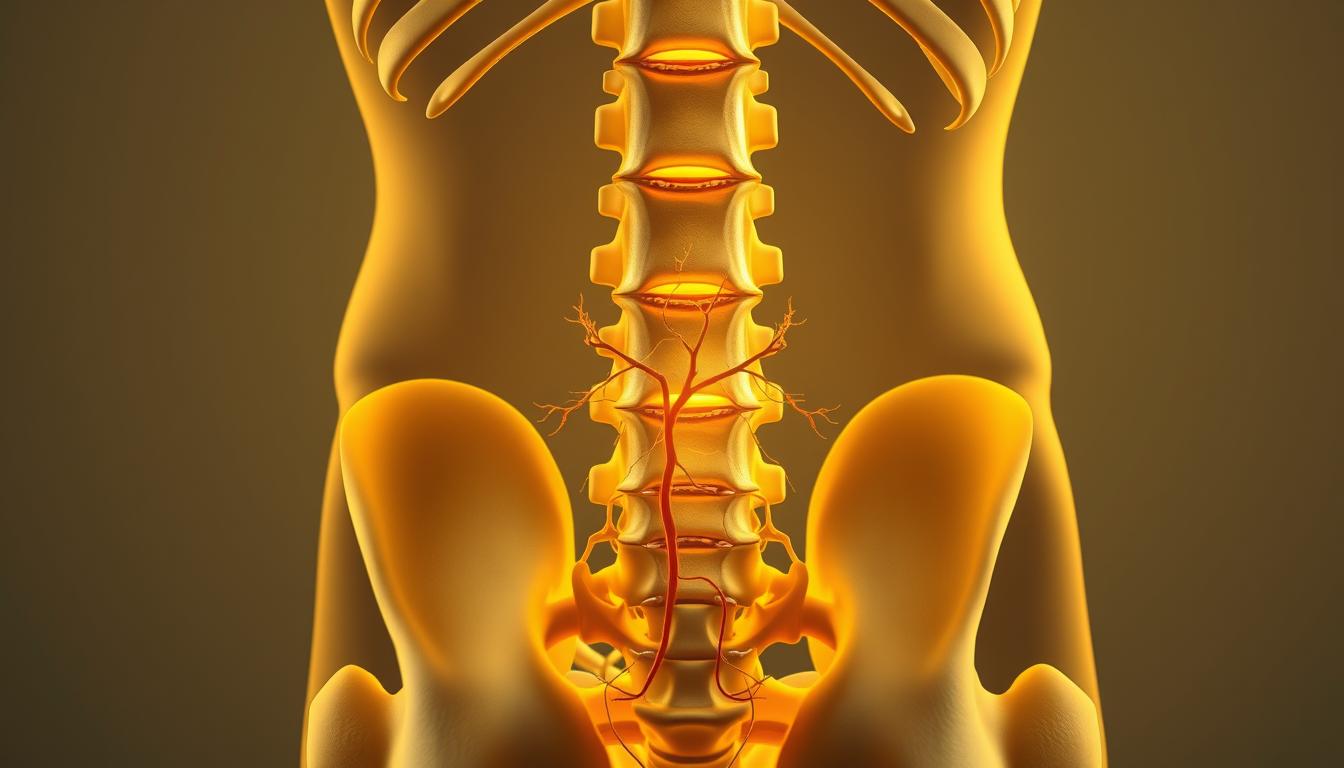
Understanding the lumbar spine is key to managing low back pain. It’s made up of many parts that work together. They support the body and help it move.
Structural Components of the Lumbar Region
The lumbar region has several important parts.
Vertebrae, Discs, and Ligaments
The lower spine’s vertebrae are its foundation. Between them, discs act as shock absorbers. Ligaments, like the anterior and posterior longitudinal ligaments, add support and stability.
Nerve roots leave the spinal canal through the intervertebral foramina. They carry signals between the spinal cord and the body. When these nerve roots get compressed or irritated, it can cause pain and other symptoms.
Biomechanics of the Lower Back
The lumbar spine’s biomechanics involve how its parts work together. Vertebrae, discs, and ligaments help with movements like bending and twisting. They also keep the spine stable.
“The lumbar spine is subjected to various mechanical stresses, which can lead to degenerative changes and pain generation.”
Pain Generation Mechanisms
Pain in the lumbar area can come from different sources. This includes disc degeneration, facet joint osteoarthritis, and muscle strain. Knowing how pain is made is important for treating it.
Key factors contributing to low back pain include mechanical stress, inflammatory responses, and neurological irritation. Doctors need to think about these when they see patients with low back pain.
Low Back Pain: Classification and Etiology
It’s important to know how to classify and understand the causes of low back pain. This knowledge helps doctors diagnose and treat it better. Low back pain can be divided based on how long it lasts, its causes, and what’s causing it.
Acute vs. Chronic Low Back Pain
Low back pain is usually either acute or chronic. Acute pain lasts less than 6 weeks. Chronic pain goes on for more than 12 weeks. Knowing the difference helps doctors choose the right treatment.
Mechanical Causes
Mechanical causes are a big reason for low back pain. These include:
- Muscle strain and ligament sprain
- Herniated discs
- Facet joint dysfunction
Muscle Strain and Ligament Sprain
Muscle and ligament injuries often cause lower back pain. These injuries can happen from overuse or sudden accidents.
Herniated Discs and Facet Joint Dysfunction
Herniated discs happen when the soft center of the disc bulges out. This can irritate nerves. Facet joint dysfunction causes pain and limits movement because of inflammation or irritation.
Degenerative Conditions
Degenerative conditions like degenerative disc disease and osteoarthritis also cause low back pain. These conditions come from wear and tear on the spine over time.
| Condition | Description |
|---|---|
| Degenerative Disc Disease | Wear and tear on the spinal discs, leading to pain and reduced mobility. |
| Osteoarthritis | Inflammation and degeneration of the joints, causing pain and stiffness. |
Inflammatory and Systemic Disorders
Inflammatory and systemic disorders like ankylosing spondylitis and fibromyalgia can also cause low back pain. These conditions need a treatment plan that tackles the underlying issue.
“The classification and etiology of low back pain are complex and multifactorial, requiring a thorough understanding to guide clinical management.” –
In conclusion, knowing how to classify and understand the causes of low back pain is key. By dividing it into acute or chronic and identifying its causes, doctors can create better treatment plans.
Clinical Presentation and Red Flags
Low Back Pain (LBP) is complex and needs careful evaluation. Patients can have mild discomfort or severe pain. It’s important to understand the range of symptoms.
Cardinal Symptoms of Low Back Disorders
The main symptoms of low back disorders are pain, stiffness, and limited mobility. Pain is the most common, and it can spread to the legs. Stiffness and limited mobility come from muscle spasms or spine changes.
Warning Signs Requiring Immediate Attention
Some warning signs, or “red flags,” show serious conditions that need quick medical help.
Cauda Equina Syndrome
Cauda Equina Syndrome (CES) is a serious issue caused by nerve compression. Symptoms include severe back pain, leg pain, and trouble with urination. It’s a medical emergency that needs immediate surgery.
Malignancy and Infection Indicators
Red flags for cancer include unexplained weight loss, a history of cancer, and being over 50. Signs of infection include fever, chills, and recent bacterial infections. These signs need more testing.
Neurological Assessment Findings
A detailed neurological assessment is key for LBP patients. It checks muscle strength, sensation, and reflexes in the lower legs. Any abnormal findings could mean nerve compression or other neurological issues.
The Likert Scale: Foundation and Development
The Likert Scale was created in the early 20th century. It has become a key tool for measuring attitudes and pain levels. Its simplicity and effectiveness make it a favorite in many fields, including healthcare.
Historical Context and Creation
Rensis Likert introduced the Likert Scale in 1932 for assessing attitudes. Later, it was used to measure pain intensity. This change is important in healthcare, where knowing a patient’s pain level is key for treatment.
Psychometric Properties
The psychometric properties of the Likert Scale are key to its use as a pain assessment tool.
Reliability Measures
Reliability means the scale’s measurements are consistent. Research shows the Likert Scale is reliable for measuring pain levels over time.
Validity Assessments
Validity checks if the Likert Scale really measures pain intensity. Studies confirm its construct validity, showing it effectively captures pain.
Comparison with Other Pain Scales
The Likert Scale is compared to other pain tools like the Visual Analog Scale (VAS) and Faces Pain Scale (FPS). While each has its own benefits and drawbacks, the Likert Scale is known for its simplicity and easy use.
- The Likert Scale offers a straightforward method for pain assessment.
- It has been adapted from its original use in attitude measurement.
- Its psychometric properties support its use in clinical settings.
In conclusion, the Likert Scale is a valuable tool in pain assessment, backed by strong psychometric research. Its ongoing use and development highlight its critical role in healthcare.
Implementing the Likert Scale for Low Back Pain Assessment
Clinicians use the Likert Scale to measure low back pain. It’s a simple yet effective tool for understanding pain levels.
Administration Protocol
Administering the Likert Scale requires clear instructions. It’s important for patients to understand the scale correctly.
Patient Instructions
Patients rate their pain from 0 (no pain) to 5 or 10 (worst pain). They should know the scale is personal and reflects their own pain.
Scoring Methodology
The score is based on what the patient says. This score is kept for future use and comparison.
Interpretation Guidelines
Understanding the Likert Scale scores is key. Higher scores mean more pain, helping doctors decide on treatment.
| Likert Scale Score | Pain Severity | Clinical Implication |
|---|---|---|
| 0-2 | Mild Pain | Minimal intervention required |
| 3-6 | Moderate Pain | Conservative management |
| 7-10 | Severe Pain | Aggressive treatment necessary |
Clinical Application and Decision-Making
The Likert Scale helps doctors make better decisions. It shows how severe the pain is, helping tailor treatments.
Using the Likert Scale improves care. It gives a clear measure of pain, helping doctors diagnose and treat more accurately.
Lumbar Spinal Stenosis: Pathoanatomy and Classification
To understand Lumbar Spinal Stenosis, we need to look at its pathoanatomy and how it’s classified. This condition is when the spinal canal gets narrower. This narrowing can cause a lot of pain and make it hard to move.
This narrowing happens because of changes in the spine over time. These changes can affect how the spine works.
Definition and Types
LSS is when the spinal canal gets too narrow. This puts pressure on the spinal cord and nerves. There are different types of LSS, based on where and why it happens.
Central Canal Stenosis
Central canal stenosis is when the middle part of the spinal canal gets smaller. This can press on the cauda equina, a group of nerves. This can cause pain, numbness, and weakness in the legs.
Lateral Recess and Foraminal Stenosis
Lateral recess stenosis is when the area where nerves exit the spine gets smaller. Foraminal stenosis is when the openings for nerves get smaller. Both can cause pain and other symptoms by pressing on nerves.
Degenerative Cascade Leading to LSS
The degenerative cascade is a series of changes that happen over time. These include disc degeneration, joint arthritis, and thickening of ligaments. These changes can make the spinal canal narrower.
As these changes happen, the risk of getting LSS goes up. Knowing about this cascade helps doctors catch it early.
Natural History and Progression
How LSS progresses can vary. Some people’s symptoms get worse slowly, while others stay the same for a long time. The severity of stenosis, other health issues, and treatment can affect how it progresses.
Watching how LSS changes is key to finding the right treatment. This might include non-surgical methods, minimally invasive procedures, or surgery. It depends on how bad the symptoms are and how they affect daily life.
Clinical Features and Diagnosis of Lumbar Spinal Stenosis
It’s important to know the signs of Lumbar Spinal Stenosis for the right treatment. This condition narrows the spinal canal. It causes pain and makes it hard to move.
Characteristic Symptom Patterns
People with Lumbar Spinal Stenosis have certain symptoms. One key symptom is Neurogenic Claudication. It’s pain, weakness, or tiredness in the legs and buttocks, worse when standing or walking.
Neurogenic Claudication
Neurogenic Claudication happens when nerves in the lumbar spine get compressed. Symptoms are usually on both sides but can be uneven. Sitting or leaning forward can help feel better.
Positional Relief Phenomena
Some positions help symptoms go away. For example, leaning forward or sitting. This is a big clue for doctors to diagnose LSS.
Physical Examination Findings
Doctors might find less movement in the lumbar spine. They might also find nerve problems at the stenosis level. But, not finding nerve problems doesn’t mean LSS isn’t there.
Diagnostic Imaging Modalities
Diagnostic Imaging is key to diagnosing Lumbar Spinal Stenosis. MRI and CT scans are often used.
MRI and CT Assessment Criteria
MRI is best for seeing soft tissues like nerves and discs. CT scans are better for bones. Doctors look at the dural sac area to measure stenosis.
Dynamic Studies and Their Significance
Dynamic studies, like flexion-extension radiographs, show how stable the spine is. They help plan treatment by showing how stenosis changes.
Comprehensive LSS Assessment Tools and Scales
LSS assessment uses special questionnaires and tests to measure the condition’s impact. These tools help doctors understand how severe LSS is and how it affects patients’ lives.
Disease-Specific Questionnaires
Disease-specific questionnaires focus on LSS symptoms and challenges. Two key questionnaires are:
Swiss Spinal Stenosis Questionnaire
The Swiss Spinal Stenosis Questionnaire checks symptom severity, physical function, and treatment satisfaction. It gives a detailed view of the patient’s condition and tracks changes.
Oxford Spinal Stenosis Score
The Oxford Spinal Stenosis Score evaluates symptom severity and functional impairment. It guides doctors in making treatment decisions.
Functional Capacity Evaluations
Functional capacity evaluations check a patient’s ability to do daily tasks and physical activities. These tests are key to understanding LSS’s impact on daily life.
| Evaluation Component | Description | Clinical Significance |
|---|---|---|
| Walking Distance | Measures the distance a patient can walk without significant pain or discomfort. | Indicates the level of functional impairment. |
| Standing Tolerance | Assesses how long a patient can stand before experiencing symptoms. | Reflects the severity of LSS symptoms. |
| Daily Activity Limitation | Evaluates the extent to which LSS limits daily activities. | Provides insight into the patient’s quality of life. |
Objective Performance Measures
Objective performance measures, like timed walks and stair climbing tests, give exact data on physical abilities. These tests are vital for tracking progress and treatment response.
By using disease-specific questionnaires, functional capacity evaluations, and objective performance measures, doctors get a full picture of LSS. This helps in better management and treatment planning.
Integrating Likert Scale with LSS Assessment
Using the Likert Scale with LSS assessment helps doctors understand how pain and movement issues are linked. This approach gives a full picture of a patient’s health. It helps doctors choose the best treatment plans.
Correlation Between Pain Intensity and Functional Limitation
The Likert Scale is great for measuring pain, which shows how severe LSS symptoms are. By linking pain with how it affects daily life, doctors can see how LSS impacts patients. This helps in understanding their quality of life.
| Pain Intensity (Likert Scale) | Functional Limitation | Clinical Implication |
|---|---|---|
| 1-3 (Mild) | Minimal limitation | Conservative management |
| 4-6 (Moderate) | Noticeable limitation | Physical therapy and pain management |
| 7-10 (Severe) | Significant limitation | Surgical intervention considered |
Tracking Treatment Response
Using the Likert Scale with LSS assessment also helps track how well treatments work. By watching how pain and movement issues change, doctors can fine-tune treatment plans. This makes sure patients get the best care possible.
Prognostic Value in Clinical Decision-Making
The Likert Scale and LSS assessment together are very useful in planning treatment. They help doctors predict how well a patient will do and who might need stronger treatments. This helps doctors make better choices for their patients.
Evidence-Based Treatment Approaches
The treatment for Low Back Pain and Lumbar Spinal Stenosis includes many options. These range from non-invasive to surgical methods. Each approach aims to ease symptoms, improve function, and enhance life quality.
Conservative Management Options
For Low Back Pain and Lumbar Spinal Stenosis, the first step is often conservative management. This includes physical therapy and medication.
Physical Therapy Protocols
Physical therapy is key in conservative management. It focuses on exercises that boost flexibility, strengthen back muscles, and correct posture. A physical therapist creates a personalized program, which may include:
- Stretching exercises to improve flexibility
- Strengthening exercises for core and back muscles
- Aerobic conditioning to improve overall fitness
Pharmacological Interventions
Medications are used to manage pain and inflammation. Common choices include:
- Nonsteroidal anti-inflammatory drugs (NSAIDs)
- Muscle relaxants for acute muscle spasms
- Oral corticosteroids for short-term use in severe cases
Minimally Invasive Procedures
When conservative methods fail, minimally invasive procedures are considered. These include:
- Epidural steroid injections to reduce inflammation
- Facet joint injections for pain relief
- Radiofrequency ablation to disrupt pain signals
Surgical Indications and Techniques
Surgery is for severe cases or when other treatments have not worked. Surgical options include decompression and fusion or stabilization techniques.
Decompression Procedures
Decompression surgery aims to relieve pressure on the spinal cord or nerves. Techniques include:
- Laminectomy to remove part or all of the vertebra
- Discectomy to remove a herniated disc
Fusion and Stabilization Considerations
Fusion surgery joins two or more vertebrae together to stabilize the spine. This is needed for significant instability or deformity.
Understanding the various treatment options helps healthcare providers create personalized plans. This approach optimizes outcomes and improves life quality for those with Low Back Pain and Lumbar Spinal Stenosis.
Special Patient Populations and Considerations
Special patient groups face unique challenges with Low Back Pain (LBP) and Lumbar Spinal Stenosis (LSS). They need custom-made approaches for diagnosis, treatment, and care.
Geriatric Patients
Older patients often have complex LBP and LSS. This is due to aging, other health issues, and many medicines. Comprehensive geriatric assessment is key. It looks at how well they function, their thinking, and their support system.
- Assessment of functional capacity and mobility
- Evaluation of cognitive status and possible dementia
- Review of medications and possible interactions
Comorbidities Affecting Assessment
Other health issues can greatly change how LBP and LSS are seen and treated. Problems like diabetes and blood vessel disease can make diagnosis and treatment harder.
Diabetes and Peripheral Neuropathy
Diabetes can cause nerve damage, making LBP and LSS harder to diagnose. Careful neurological examination is needed to tell if it’s nerve damage or LSS symptoms.
Vascular Disease and Claudication
Vascular disease can lead to claudication, which might look like LSS symptoms. Differential diagnosis is key to finding the right treatment.
Psychosocial Factors in Chronic Pain
Psychological and social factors are big in dealing with chronic LBP and LSS. Things like depression, anxiety, and negative thinking can affect how pain is felt and treated.
It’s important to understand these factors for effective treatment plans. These plans should tackle both the physical and mental sides of chronic pain.
Digital Health and Technological Advances in Assessment
Digital health technologies are changing how we assess and manage Low Back Pain (LBP) and Lumbar Spinal Stenosis (LSS). These new tools help doctors give more precise diagnoses and tailor treatments to each patient.
Mobile Applications for Pain Tracking
Mobile apps are now used for tracking pain. They let patients keep an eye on their symptoms and talk better with doctors. These apps gather data on how much pain they feel, how often, and what makes it better or worse.
Telemedicine Applications
Telemedicine is making healthcare more accessible for those with LBP and LSS, even in hard-to-reach areas. It lets doctors see patients, talk about treatments, and check on progress without needing to meet in person.
Artificial Intelligence in Diagnosis and Prognosis
Artificial Intelligence (AI) is being looked at to improve diagnosis and predict outcomes for LBP and LSS. AI can sift through lots of data, like scans and medical records, to spot trends and forecast how a patient will do.
Wearable Technology for Functional Monitoring
Wearable tech is used to keep an eye on how well patients with LBP and LSS can move. These devices track movement, posture, and more, giving doctors insights into how well a patient is doing and how they’re responding to treatment.
By using these digital health tools, doctors can give patients with LBP and LSS better care. This leads to better health outcomes and a better quality of life for everyone.
Conclusion: Optimizing Patient Care Through Comprehensive Assessment
A Comprehensive Assessment is key for better care of those with Low Back Pain and Lumbar Spinal Stenosis. Using tools like the Likert Scale helps doctors diagnose and treat these issues well.
Good care means looking at many things. This includes checking the patient, using scans, and listening to what the patient says. This way, doctors can make plans that really help patients.
For Low Back Pain and Lumbar Spinal Stenosis, a full check-up is very important. It helps find problems early, so doctors can act fast. This way, patients can avoid getting worse and feel better sooner.
In short, a Comprehensive Assessment is vital for top-notch care. It leads to better health and a better life for those with Low Back Pain and Lumbar Spinal Stenosis.