 by
by The Horn of Africa is a key area in East Africa. It’s known for its unique shape and important location.
It includes countries like Djibouti, Eritrea, Ethiopia, and Somalia. Each country has its own culture and history.
This area is very interesting because of its political importance. It also has a wide range of landscapes.
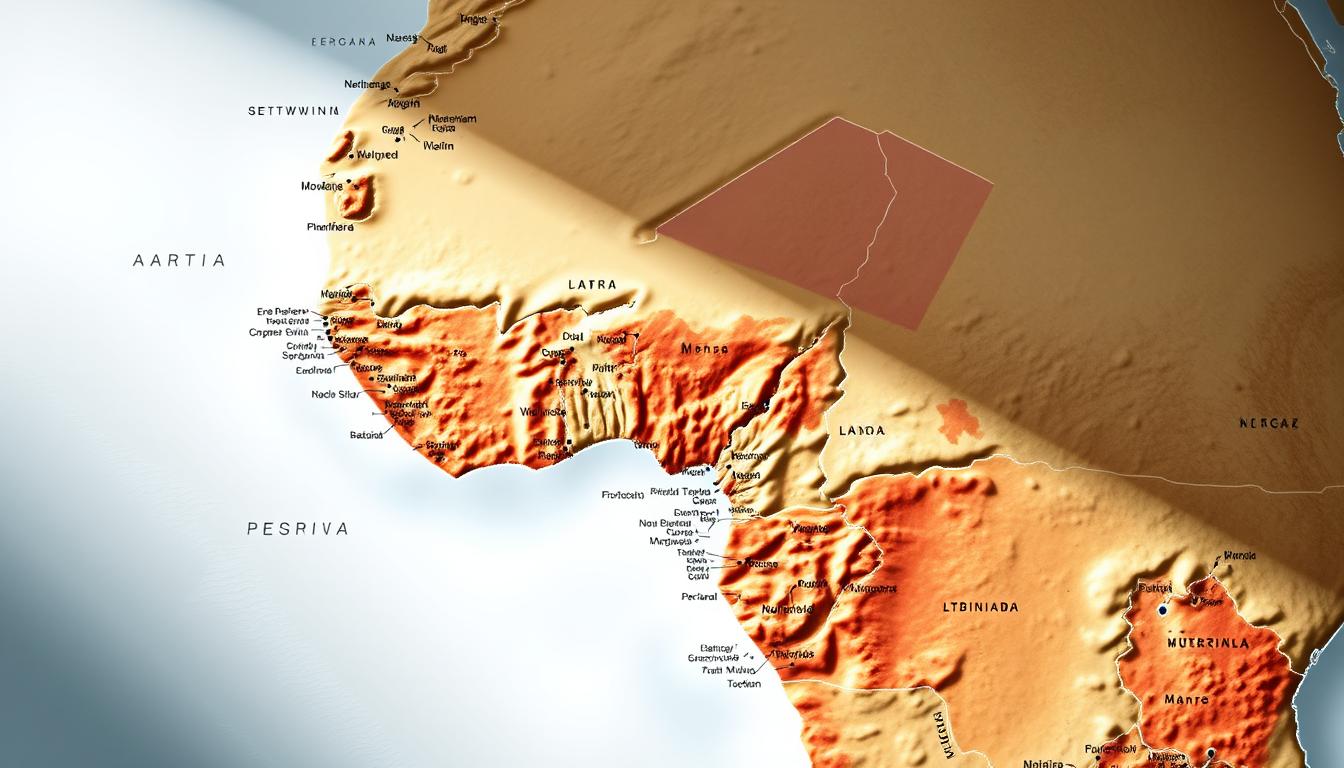
The map in this article shows the countries of the Horn of Africa. It highlights their borders and important places.
The Horn of Africa Region
The Horn of Africa is a region of significant geographical diversity.
This diversity is reflected in its varied landscapes. It includes highlands, mountains, and coastal areas. Countries like Djibouti, Eritrea, Ethiopia, and Somalia are part of this region. Kenya is also considered part of the broader Horn of Africa region.
Geographical Definition and Extent
The Horn of Africa’s geography is marked by mountainous terrains and extensive coastlines. Its geography greatly influences its climate, culture, and economy.
Mountains and Highlands
The region boasts the Ethiopian Highlands, known for their rugged terrain and high peaks. These highlands have been the cradle of various ethnic groups and civilizations.
- The Ethiopian Highlands are a significant geographical feature.
- They are known for their high peaks and rugged terrain.
- This region has been home to numerous ethnic groups.
Coastal Areas and Plains
The coastal areas along the Red Sea and the Indian Ocean have facilitated trade and cultural exchange. These regions are characterized by plains and coastal lowlands.
The geographical features of the Horn of Africa, including its mountains, highlands, and coastal areas, contribute to its diverse ecosystems and climates. This diversity supports a wide range of flora and fauna, making the region ecologically significant.
Historical Development of Regional Boundaries
The Horn of Africa’s history is filled with ancient kingdoms and colonial legacies. This complex past has greatly shaped its current political scene.
Ancient Kingdoms and Territories
The Horn of Africa was once home to many ancient kingdoms. The Kingdom of Aksum, in present-day Ethiopia and Eritrea, is one of the most famous. Another key entity was the Sultanate of Adal, covering parts of Ethiopia, Somalia, and Djibouti. These kingdoms helped form the region’s diverse cultures and ethnic groups.
Aksumite Legacy: The Kingdom of Aksum’s reach went far beyond its borders. It played a big role in trade and cultural exchange across the Red Sea and beyond.
Colonial Partitioning
The colonial era changed the Horn of Africa’s borders a lot. European powers like Britain, France, and Italy divided the region, ignoring traditional ethnic and territorial lines. This led to artificial borders that have caused many conflicts.
Post-Independence Border Formations
After gaining independence, the new nations kept the colonial borders. The post-independence era saw many border disputes and conflicts. Countries like Ethiopia, Eritrea, and Somalia struggled with their territorial claims and ethnic tensions. The legacy of colonial partitioning is very much alive in the region’s politics.
| Country | Colonial Power | Independence Year |
|---|---|---|
| Eritrea | Italy | 1993 |
| Ethiopia | Italy (briefly) | Never formally colonized, but occupied |
| Somalia | Italy and Britain | 1960 |
The Horn of Africa’s complex history has shaped its regional boundaries. This history is key to understanding the region’s current politics and future challenges.
Ethiopia: The Heartland of the Region
Ethiopia is seen as the heart of the Horn of Africa. It has a wide range of landscapes, from the Ethiopian Highlands to the dry Afar Triangle.
Geographical Features and Landscapes
Ethiopia’s geography is varied, with highlands, lowlands, and rift valleys. The Ethiopian Highlands are known as the “Roof of Africa.” They are a cultural and ecological treasure.
- The highlands are home to many ethnic groups and diverse plants and animals.
- The lowlands, like the Afar Triangle, have extreme temperatures and unique rocks.
Administrative Regions and Major Cities
Ethiopia is split into several regions, each unique. The capital, Addis Ababa, is a big city. It’s important for the country’s economy and politics.
- Addis Ababa is the heart of Ethiopia’s politics and culture.
- Other big cities like Dire Dawa and Mekelle also play important roles.
Strategic Position in the Horn
Ethiopia is a key player in the Horn of Africa. It affects regional politics and economies.
Access to Resources
Ethiopia has many natural resources like water, minerals, and land. Its hydroelectric power is big, thanks to projects like the Grand Ethiopian Renaissance Dam.
Regional Influence
Ethiopia has a big impact in the region. It’s active in diplomacy and economy. It’s a key partner in efforts to bring stability and cooperation to the Horn of Africa.
Somalia: The Eastern Peninsula
Somalia is a key country in the Horn of Africa. It has a long coastline along the Indian Ocean and the Gulf of Aden. This shape of its land greatly affects its economy, culture, and how it interacts with others.
Coastline and Maritime Territory
Somalia’s coastline is over 3,000 kilometers long. This makes it a vital spot for sea trade. The ports of Mogadishu and Berbera are big for business. The Gulf of Aden, next to Somalia’s north, is a key path for ships from Europe to Asia.
Internal Geographical Divisions
Somalia is split into different areas, each with its own traits. The states of Somaliland and Puntland stand out for their unique politics and culture.
Territorial Challenges
Somalia has many territorial issues. It has disputes with its neighbors and fights within itself. The areas of Somaliland and Puntland have their own rules, which can cause problems with the central government.
Somaliland
Somaliland is in the northwest and declared freedom in 1991. But, the world doesn’t officially recognize it. It has a stable government compared to others.
Puntland
Puntland is in the northeast and has a lot of freedom. It was once known for pirates and has a tricky relationship with the federal government.
| Region | Status | Capital |
|---|---|---|
| Somaliland | Self-declared state | Hargeisa |
| Puntland | Autonomous region | Garoowe |
Eritrea: The Red Sea Nation
Eritrea is a country in the Horn of Africa with a coastline on the Red Sea. Its location is key for trade and security in the Red Sea area.
Coastal Geography and Ports
Eritrea’s coast has important ports like Massawa and Assab. These ports are essential for the country’s economy. They help with trade and are key for sea activities.
The coast has sandy beaches, rocky shores, and coral reefs. This variety supports a rich marine life, with many fish and other sea creatures.
Highland Territories
Eritrea’s highlands are known for their rugged terrain and rich culture. They are home to several ethnic groups, each with their own traditions and history.
The highlands also have a variety of plants and animals. Some areas are protected to keep the natural habitat safe.
Strategic Location and Significance
Eritrea’s location on the Red Sea makes it important in regional and international affairs. Its ports and military bases along the coast boost its role in security and trade.
Eritrea’s strategic position in the Horn of Africa and its Red Sea coastline give it a unique role in regional politics, as a regional expert noted.
| Port | Location | Significance |
|---|---|---|
| Massawa | Central Red Sea Coast | Major commercial port |
| Assab | Southern Red Sea Coast | Strategic military and commercial port |
Djibouti: Strategic Gateway
Djibouti’s spot at the Bab-el-Mandeb strait makes it key to the Horn of Africa. This small nation plays a big role in regional politics, despite its size.
Geographical Position and Features
Djibouti has a unique geography. It has a coastline on the Red Sea and varied landscapes, including volcanoes and deserts. Its location helps it control major shipping lanes, making it a key trade hub.
Port Facilities and Access
The Port of Djibouti is a vital spot for trade. It connects to the Red Sea and Indian Ocean, serving as a major stop for goods. The port’s facilities handle a lot of international trade, boosting Djibouti’s global commerce role.
International Military Presence
Djibouti is home to several international military bases, like those of the United States and France. This presence highlights Djibouti’s importance in global security and politics. It makes the country a key spot for military operations worldwide.
In summary, Djibouti’s strategic location, port facilities, and military bases make it a vital gateway to the Horn of Africa. Its unique geography and geopolitical importance keep it a significant player in both regional and global affairs.
Kenya’s Northern Frontier
Kenya’s northern frontier is key to the Horn of Africa. It’s not just about where it is. It’s also about the culture and economy it brings to the region.
Connection to the Horn of Africa
Kenya’s north is closely tied to the Horn of Africa. This includes Somalia, Ethiopia, and Eritrea. It’s not just about where they are. It’s also about their shared culture and economy.
The Turkana Region is a great example. It’s home to pastoral communities with ties to other countries.
Geographical and Cultural Transitions
The northern frontier of Kenya is very diverse. You’ll find everything from dry lands to mountains. This diversity supports different ways of life, like farming and herding.
The area is also known for its multilingual communities. Here, old traditions meet new ways of living.
Turkana Region
The Turkana Region is a standout in Kenya’s north. It’s known for its tough climate and rich culture. The Turkana people, who live here, are mostly herders.
The area is also famous for its ancient history. Archaeologists have found evidence of early humans here.
Border with Somalia and Ethiopia
Kenya’s north borders Somalia and Ethiopia. These areas have complex histories and cultures. The borders are porous, allowing for the flow of people and goods.
But, these borders have also seen conflict. This is due to regional instability and security issues.
The connection to the Somali Peninsula and the Horn of Africa is vital. It shapes the region’s identity and role in the area.
Major Waterways of the Horn of Africa
The Horn of Africa has many important waterways. These water bodies are key for local communities and the region’s economy. They support life and play a big role in the ecosystem.
The Nile River System
The Nile River System is a major waterway in the Horn of Africa. It supports agriculture, industry, and cities across the region. Countries like Ethiopia, Sudan, and Eritrea rely on the Nile.
The Nile’s annual flooding brings nutrient-rich silt. This silt makes the soil fertile, helping crops grow well.
Lakes and Inland Water Bodies
The Horn of Africa also has many lakes and inland water bodies. For example, Lake Turkana and Lake Abaya. These lakes are important for fishing, helping local economies and providing food.
Lake Turkana is known for its rich biodiversity. It’s also a key site for scientific research. Lakes help regulate the climate and support wildlife.
Water Resource Management Challenges
Despite their importance, the Horn of Africa faces big challenges in managing its water. Climate change, population growth, and water demands threaten the sustainability of water bodies. Good water management is key to solving these problems.
The region’s waterways face environmental pressures like pollution and habitat destruction. Conservation efforts are underway to protect these vital resources. It’s important to work together to manage water resources effectively.
- The Nile River System supports extensive agriculture and industry.
- Lakes like Turkana and Abaya are vital for local fishing industries.
- Effective water management is critical for sustainability.
Climate Zones and Environmental Challenges
The Horn of Africa has different climates, from dry to temperate. This makes it a place of great environmental variety and challenges. The changing climate affects the ecosystems, biodiversity, and how people live.
Regional Climate Patterns
In the Horn of Africa, some areas get rain twice a year. The long rains are from March to May, and the short rains from October to December. Regional climate patterns are key to farming, water, and the environment’s health.
Climate change is changing these patterns. This leads to unpredictable weather. Some places have more droughts, while others get more floods.
Drought-Prone Areas
Drought is a big problem in the Horn of Africa, hitting countries like Ethiopia, Somalia, and Kenya. Drought-prone areas struggle with food, water, and jobs. This hurts pastoral and farming communities a lot.
“The recurring droughts in the Horn of Africa have devastating impacts on the local populations, necessitating sustained humanitarian assistance and long-term resilience strategies.”
Environmental Degradation and Conservation Efforts
The Horn of Africa is facing big environmental problems. These include deforestation, desertification, and bad land use. Deforestation is caused by farming, charcoal making, and logging. It harms biodiversity and disrupts ecosystems.
Deforestation
- Less forest means less carbon capture.
- Deforestation causes soil erosion and less water.
- Planting trees is vital for fixing ecosystems.
Desertification
Desertification is a big problem, made worse by climate change and bad land use. It makes land less productive and hurts people who depend on farming and herding.
To tackle these issues, we need to plant trees, use land wisely, and grow crops that can handle climate change. Working together and involving local communities is key to success.
Territorial Disputes and Border Conflicts
The Horn of Africa is known for its complex territorial disputes and border conflicts. These issues have deep historical roots and affect regional stability and cooperation.
Ethiopia-Eritrea Relations
The relationship between Ethiopia and Eritrea has been strained for decades. The Ethiopia-Eritrea border conflict has caused significant military battles. Despite some calm periods, tensions are always present, impacting regional stability.
“The conflict between Ethiopia and Eritrea is a complex issue that has been ongoing for many years, with deep historical roots and significant humanitarian consequences.”
Somalia’s Border Challenges
Somalia has major border challenges, including the status of Somaliland and Puntland. These regions have declared autonomy, creating tension with the Somali federal government. They have their own administrations and security forces.
| Region | Status | Key Issues |
|---|---|---|
| Somaliland | Declared independence | Recognition, border disputes |
| Puntland | Autonomous region | Relations with federal government, security |
Maritime Boundary Issues
Maritime boundary issues are critical in the Horn of Africa. The Red Sea and Indian Ocean boundaries are key for stability. They affect fishing, oil and gas exploration, and shipping.
Resolving these disputes needs diplomatic efforts and cooperation. Regional organizations and international partners are key in facilitating dialogue and negotiation.
Transportation Infrastructure and Connectivity
The Horn of Africa is getting a big upgrade in its transport systems. This change is key for the area’s growth, making it easier to move goods and people around.
Road Networks
Roads are essential for trade in the Horn of Africa. New investments have made these roads better, linking big cities and towns. For example, Ethiopia has built more roads, helping trade with its neighbors.
Maritime Routes and Port Facilities
Ports and sea routes are vital for the Horn’s trade with the world. Places like Djibouti and Berbera have been upgraded. This boost is important for the region’s role in global trade.
Regional Integration Projects
There are plans to make the Horn of Africa more connected. Projects like railways and highways are underway. They aim to boost economic ties between countries.
Railway Development
Railways are a big part of the region’s transport. New lines and upgrades are making rail travel better. They connect cities and ports across the area.
Cross-Border Highways
Highways that cross borders are being built. They will help move goods and people, supporting trade and cooperation in the region.
Natural Resources and Economic Geography
The Horn of Africa is rich in natural resources. These resources are key for its economic growth. The area has minerals, fertile land, and energy resources.
Mineral Wealth Distribution
The Horn of Africa has many minerals like gold, copper, and potash. Ethiopia and Eritrea stand out for their mineral wealth. For example, Ethiopia’s gold mining is growing fast. Eritrea’s mines are rich in copper and gold too.
- Gold deposits are found in Ethiopia and Eritrea.
- Copper mining is significant in Eritrea.
- Potash reserves are also present in the region.
Agricultural Zones
Agriculture is vital for the Horn of Africa’s economy. The Ethiopian Highlands are very fertile. They are a key area for farming. Somalia and Kenya’s north also add to the region’s farm output.
“Agriculture remains a vital sector for the economies of the Horn of Africa, providing livelihoods for millions of people.”
Energy Resources and Development
The Horn of Africa is also rich in energy. Countries like Somalia and Ethiopia have oil and gas. Developing these resources is important for the region’s future.
- Exploration activities are ongoing in Somalia.
- Ethiopia is also investing in its energy sector.
- Regional cooperation is essential for the development of energy resources.
Managing and developing these resources is key for the Horn of Africa’s growth. As the region grows, its natural resources will shape its economy.
Population Distribution and Demographic Patterns
The Horn of Africa has a complex demographic landscape. It has both urban and rural areas, and groups that move with their animals. This mix enriches the region’s culture and economy.
Major Urban Centers
Cities like Addis Ababa and Mogadishu are key in the Horn of Africa. They are centers for business, culture, and new ideas. Addis Ababa, for example, is not just Ethiopia’s capital but also a major business hub.
Abebe Gubela, an urban planner, said, “City growth brings both chances for growth and challenges for services and infrastructure.“
Rural Settlement Patterns
Rural areas in the Horn of Africa vary a lot. They are shaped by the land and farming. Many people farm to survive, which is key for food and jobs.
A report by the Food and Agriculture Organization says, “Rural areas need more than just farming. They need better roads, markets, and services too.“
Pastoral and Nomadic Populations
Communities like the Somali and Afar are vital to the Horn of Africa. They herd animals, moving with the seasons. Their way of life is tough but important for the region’s livestock trade.
But, their way of life can be hard for governments to manage. As
“The resilience of pastoral communities is remarkable, but it is vital that their needs are met with the right policies,”
Ms. Fatima Haji, a regional expert on pastoralism, pointed out.
The Somali Peninsula: Geographical Unity and Political Division
The Somali Peninsula, which includes Somalia and parts of eastern Ethiopia, is unique. It has diverse landscapes like coastal plains, mountains, and deserts. These features make it stand out.
Physical Geography of the Peninsula
The Somali Peninsula’s geography is varied. The coast is flat, with plains along the Gulf of Aden and the Indian Ocean. The interior has mountains and plateaus, with the Karkaar Mountains being a highlight.
The desert areas, like the Haud plateau, are harsh. They have little vegetation due to the climate.
Cultural Continuity Across Borders
Despite political divisions, the Somali Peninsula has a strong cultural bond. The Somali people share a common language, culture, and history. This unity is key to the region’s identity and social and economic life.
Contemporary Political Fragmentation
The Somali Peninsula faces political fragmentation today. It is split among several countries, with Somalia at its center. Political instability, border disputes, and various political groups have caused this division.
This situation affects not just the Somali people but the whole Horn of Africa. It’s a big challenge for regional stability and security.
In summary, the Somali Peninsula is both united and divided. Its geography and cultural ties are vital to understanding its political issues. Addressing these challenges is essential for the region’s future.
Conclusion: The Dynamic Geography of the Horn of Africa
The Horn of Africa is a complex region with a rich culture. It spans East Africa, featuring diverse landscapes. From Ethiopia’s highlands to Somalia’s coastal plains and Djibouti’s ports, it’s a unique place.
The history and culture of the Horn of Africa have created both challenges and opportunities today. It’s a key spot in African politics. Knowing its geography helps solve issues like territorial fights and environmental problems.
The region’s geography, including rivers and different climates, affects its economy and culture. The Horn of Africa’s role in East Africa and African politics is clear. It’s a place of great importance.
Looking at the Horn’s geography, culture, and economy helps us understand its future. It’s a region full of challenges and chances for growth.