 by
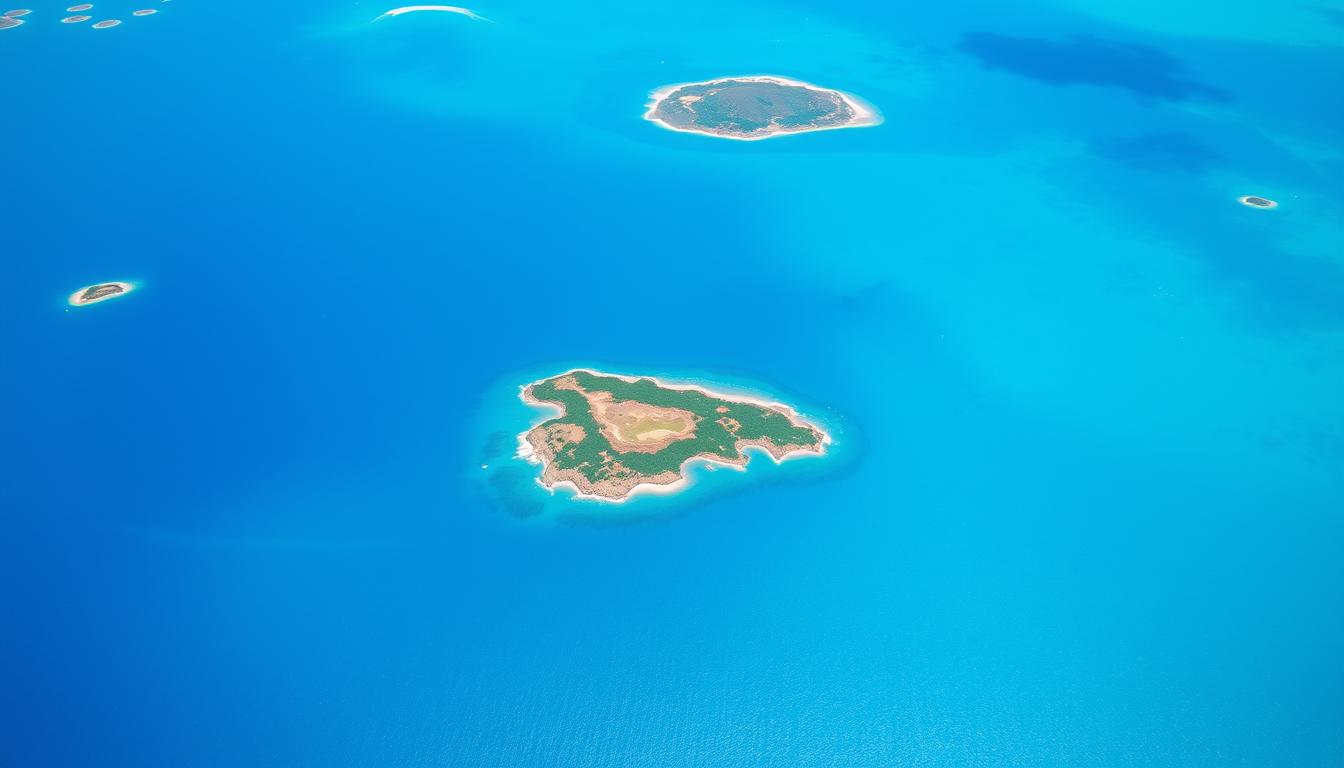
by The island of Hispaniola is in the Caribbean Sea. It is shared by two countries: Haiti and the Dominican Republic.
The strategic location of Hispaniola has greatly influenced its history, culture, and economy. Knowing where Hispaniola is helps us understand its role in the region.
Hispaniola is divided between Haiti and the Dominican Republic. This division has led to two distinct cultures, economies, and histories. It makes Hispaniola a very interesting topic to study.
Geographic Overview of Hispaniola
Hispaniola, made up of Haiti and the Dominican Republic, is a true marvel in the Caribbean. It’s the second-largest island in the area, covering about 76,192 square kilometers.
Basic Facts About the Island
Hispaniola boasts diverse landscapes and key geographic features. These aspects greatly influence its climate, economy, and culture.
Land Area and Population Statistics
The island is split between Haiti and the Dominican Republic. It’s home to over 22 million people, making it densely populated. You’ll find both urban and rural areas here.
Geographic Significance in the Caribbean
Hispaniola’s location in the Caribbean makes it a key spot for trade and commerce. Its geography has also played a big role in its history, with many important events happening here.
Size and Dimensions
The island is quite large, stretching about 650 kilometers in length and 241 kilometers in width.
Length and Width Measurements
Hispaniola’s size and shape make it a major player in the Caribbean.
Comparison to Other Caribbean Islands
Hispaniola is bigger and more varied than many Caribbean islands. It’s larger than Jamaica and Puerto Rico, for example.
Hispaniola Location: Coordinates and Boundaries
Hispaniola is the second-largest island in the Caribbean. It is located between specific geographic coordinates. Knowing its location helps us understand its importance.
Latitude and Longitude
Hispaniola’s location is defined by its latitude and longitude. It sits between 17° and 20° north latitude. It is also between 68° and 72° west longitude.
Exact Geographic Coordinates
The exact coordinates for Hispaniola are between 17° and 20° N latitude and 68° and 72° W longitude. This places Hispaniola in the northern Caribbean.
Position Relative to the Equator and Prime Meridian
Hispaniola is north of the equator and west of the Prime Meridian. Its latitude ranges from 17° to 20° north. This means it is close to the equator but in the northern hemisphere. The longitude, from 68° to 72° west, shows it is in the western hemisphere.
Maritime Boundaries
Hispaniola’s maritime boundaries are defined by its territorial waters and exclusive economic zones. These boundaries are key for understanding the island’s maritime rights and responsibilities.
Territorial Waters
The territorial waters of Hispaniola extend several nautical miles from its coastlines. This is based on international maritime law. These waters are under the jurisdiction of Haiti and the Dominican Republic.
Exclusive Economic Zones
Hispaniola’s exclusive economic zones (EEZs) give the countries sharing the island rights to marine resources. The EEZs are important for fishing, oil exploration, and other economic activities.
| Category | Details |
|---|---|
| Latitude | 17° to 20° N |
| Longitude | 68° to 72° W |
| Territorial Waters | Defined by international law |
| Exclusive Economic Zones | Rights for marine resource exploitation |
Political Division of Hispaniola
Hispaniola is divided into two countries: Haiti in the west and the Dominican Republic in the east. This split comes from historical and political reasons that have shaped the island.
Haiti: Western Portion
Haiti covers about 27,750 square kilometers in the island’s west. It has varied landscapes, from mountains to coastal plains.
Geographic Extent and Borders
Haiti’s western side faces the Caribbean Sea. Its northern side is the Atlantic Ocean. It borders the Dominican Republic to the east.
Major Cities and Their Locations
Port-au-Prince, Haiti’s capital, is by the coast. Cap-Haïten and Les Cayes are also important, known for their history and economy.
Dominican Republic: Eastern Portion
The Dominican Republic spans about 48,442 square kilometers in the island’s east. It has mountains, valleys, and coastlines.
Geographic Extent and Borders
The Dominican Republic’s west is with Haiti. Its north and east are the Atlantic Ocean. Its south is the Caribbean Sea.
Major Cities and Their Locations
Santo Domingo, the capital, is on the southern coast. Santiago de los Caballeros and Puerto Plata are also key, for their culture and economy.
| Country | Capital | Area (km²) | Major Cities |
|---|---|---|---|
| Haiti | Port-au-Prince | 27,750 | Cap-Haïten, Les Cayes |
| Dominican Republic | Santo Domingo | 48,442 | Santiago de los Caballeros, Puerto Plata |
Neighboring Islands and Territories
Hispaniola is near Cuba, Jamaica, and Puerto Rico. These islands are important for their history, culture, and economy. They are close in both distance and connection.
Cuba to the Northwest
Cuba is to the northwest of Hispaniola. They are separated by the Windward Passage.
Distance and Orientation
The distance between Hispaniola and Cuba is about 80 kilometers. Cuba is northwest of Hispaniola.
The Windward Passage
The Windward Passage connects the Atlantic Ocean to the Caribbean Sea. It’s key for sea travel between the two.
Jamaica to the West
Jamaica is to the west of Hispaniola. They are separated by the Jamaica Channel.
Distance and Orientation
Jamaica is about 190 kilometers west of Hispaniola. This makes Jamaica a close neighbor in the Caribbean.
The Jamaica Channel
The Jamaica Channel is a key waterway. It separates Jamaica from Hispaniola, aiding in navigation and trade.
Puerto Rico to the East
Puerto Rico is to the east of Hispaniola. The Mona Passage divides the two islands.
Distance and Orientation
Puerto Rico is about 230 kilometers east of Hispaniola. This shows how close these Caribbean islands are.
The Mona Passage
The Mona Passage connects the Atlantic Ocean to the Caribbean Sea. It’s known for its strong currents and sea traffic.
The islands near Hispaniola are not just close. They also share a rich history and culture. The waters between them are vital for sea activities in the region.
Bodies of Water Surrounding Hispaniola
The Atlantic Ocean and the Caribbean Sea surround Hispaniola. They deeply affect the island’s ecosystems and economy. Hispaniola’s location in the Caribbean Sea makes it key for maritime activities.
Atlantic Ocean to the North
The Atlantic Ocean borders Hispaniola to the north. It shapes the island’s northern coast with its strong currents and tides.
Coastal Features and Currents
The northern coast has rugged cliffs and sandy beaches. These are formed by the Atlantic’s currents.
Impact on Climate and Weather
The Atlantic Ocean moderates the climate. Its warm waters help create a tropical climate and shape weather patterns.
Caribbean Sea to the South
Hispaniola is bounded by the Caribbean Sea to the south. This sea is vital for maritime trade and tourism.
Coastal Features and Currents
The southern coast has bays, coves, and mangrove forests. Its currents support a rich marine ecosystem.
Maritime Significance
The Caribbean Sea is a key shipping route. It connects Hispaniola to other Caribbean islands and countries.
Mona Passage to the East
The Mona Passage is east of Hispaniola. It connects the Atlantic Ocean to the Caribbean Sea.
Strategic Importance
This passage is vital for international shipping. It offers a shortcut between the two oceans.
Navigation Challenges
Navigating the Mona Passage is tough. It faces strong currents and severe weather.
| Body of Water | Location | Significance |
|---|---|---|
| Atlantic Ocean | North | Climate moderation, coastal shaping |
| Caribbean Sea | South | Maritime trade, tourism |
| Mona Passage | East | Strategic shipping route |
Hispaniola’s Position in the Greater Antilles
Hispaniola is part of the Greater Antilles, sharing a rich history with other islands. This group includes Cuba, Jamaica, and Puerto Rico. Together, they make up a big part of the Caribbean.
The Island Chain Formation
The Greater Antilles has a long and complex history. It was shaped by tectonic movements and volcanic activity over millions of years.
Geological Origins
The islands of the Greater Antilles, like Hispaniola, started forming about 145 million years ago. This was during the Cretaceous period. They were created as the Caribbean plate sank under the North American plate.
Tectonic Setting
Hispaniola sits in a seismically active area. This is because it’s near the boundary of the Caribbean and North American tectonic plates. This has led to its mountainous landscape.
Comparative Size and Importance
Hispaniola is the second-largest island in the Caribbean, after Cuba. Its size and location have made it a key spot for trade and cultural exchange for centuries.
Second-Largest Caribbean Island
Hispaniola covers about 76,192 square kilometers. This makes it a big island in the Caribbean. It supports a wide range of ecosystems and natural resources.
Historical and Contemporary Significance
Hispaniola has been very important in the Caribbean’s history. It was the site of the first permanent European settlement in the Americas. Today, it’s a key area for culture and economy.
| Island | Area (km²) | Population |
|---|---|---|
| Cuba | 109,884 | 11.3 million |
| Hispaniola (Haiti and DR) | 76,192 | 22 million |
| Jamaica | 10,991 | 2.9 million |
Topographical Features of Hispaniola
Hispaniola, the second-largest island in the Caribbean, has a diverse landscape. It has rugged mountains, fertile valleys, and beautiful coastlines. These features have greatly influenced its history and ecology.
Mountain Ranges
The mountains of Hispaniola are a key part of its landscape. They offer stunning views and help shape the island’s climate and ecosystems.
Cordillera Central
The Cordillera Central mountain range is in the Dominican Republic. It includes Pico Duarte, the Caribbean’s highest peak. This range is known for its tough terrain and rich wildlife.
Massif du Nord and Other Ranges
In Haiti, the Massif du Nord mountain range stretches across the north. Other ranges, like the Chaîne de la Selle, also add to the island’s varied landscape.
Valleys and Plains
Hispaniola also has fertile valleys and plains. These areas are vital for farming and support a large part of the population.
Cibao Valley
The Cibao Valley in the Dominican Republic is very fertile. It has rich soil and a good climate, making it a key farming area.
Central Plateau of Haiti
Haiti’s Central Plateau is a flat area in a country mostly covered in mountains. It’s good for farming and has several communities.
Coastlines and Beaches
Hispaniola’s coastlines have sandy beaches, rocky shores, and mangrove forests. The northern and southern coasts are different and attract tourists and support marine life.
Northern Coast Features
The northern coast is famous for its beautiful beaches and busy ports. It’s a favorite spot for tourists and has several major cities.
Southern Coast Features
The southern coast has sandy beaches and rocky areas. It’s a wilder landscape. It’s also important for marine life and supports local fishing.
Climate Patterns Related to Geographic Position
Hispaniola’s spot in the Caribbean Sea makes it face many climate-related issues. The island’s climate is tropical, making it prone to hurricanes and other weather events.
Tropical Climate Zones
Hispaniola has different tropical climate zones. Each zone has its own climate features. The island’s climate changes a lot, with different areas having different temperatures and rainfalls.
Temperature Variations by Region
The island’s geography affects its temperature. Mountainous areas are cooler than the coast. The temperature stays between 70°F and 90°F (21°C to 32°C) all year.
Rainfall Patterns
Rainfall on Hispaniola changes with the seasons. Most of the island gets wet in the summer. The Dominican Republic, which takes up the eastern two-thirds, has varied rainfall due to its diverse landscape.
Hurricane Vulnerability
Hispaniola is in a hurricane-prone area. This makes it vulnerable to these powerful storms. The island’s mountains can affect a hurricane’s path and strength.
Historical Hurricane Impacts
Many hurricanes have hit Hispaniola, causing damage and loss of life. The island’s risk from hurricanes is a big worry for both Haiti and the Dominican Republic.
Seasonal Risk Factors
The Caribbean hurricane season, which includes Hispaniola, runs from June to November. During this time, the island faces a higher risk of hurricanes. The peak months are usually August and September.
| Climate Factor | Description | Impact on Hispaniola |
|---|---|---|
| Tropical Climate | High temperatures and high humidity | Creates ideal conditions for hurricanes |
| Rainfall Patterns | Seasonal rainfall with wet and dry seasons | Affects agriculture and water resources |
| Hurricane Vulnerability | Location in a hurricane-prone area | Significant risk of damage and loss of life |
Historical Significance of Hispaniola’s Location
Christopher Columbus’s arrival on Hispaniola started European exploration in the Americas. This event changed history for the indigenous peoples. It also led to European colonization in the region.
Columbus’s Arrival and European Contact
The arrival of Columbus on Hispaniola in 1492 was a key moment. It led to the first European settlement in the Americas.
First European Settlement in the Americas
The first European settlement, La Navidad, was set up on Hispaniola in 1492. Though it failed, it opened the door for more settlements.
La Navidad and Santo Domingo
The settlement of Santo Domingo was started in 1496. It became the first permanent European settlement in the Americas. As
“The oldest continuously inhabited European-established settlement in the Americas”
, it was key for further exploration and colonization.
Strategic Importance During Colonial Era
Hispaniola’s location made it key for European powers in the colonial era. Countries like Spain, France, and Britain fought over the island.
Spanish Control and Influence
Spain first controlled Hispaniola, using it for more colonization. The Spanish influence is seen in the Dominican Republic’s culture and architecture.
French and British Interest in the Island
The western part of Hispaniola went to France and became Haiti. The British also wanted the island, trying to capture it several times.
Economic Implications of Hispaniola’s Location
Hispaniola sits in the Greater Antilles, making it a key spot for trade. Its location helps in the flow of goods across the Caribbean. This makes it a major economic hub.
Trade Routes and Access
Hispaniola is a key spot in trade routes. Its ports connect to major shipping paths. This links it to markets in the Americas and worldwide.
Historical Trade Patterns
In the past, Hispaniola was a key stop for trade between Europe and the Americas. Its ports were vital for moving goods like sugar and coffee.
Modern Shipping and Commerce
Today, Hispaniola remains a big player in regional trade. The Dominican Republic and Haiti have modernized their ports. This helps in trading goods with other Caribbean countries and the world.
Natural Resources Related to Geography
The island’s geography gives it valuable natural resources. This boosts its economic value.
Agricultural Potentials
Hispaniola’s land is perfect for farming. Crops like sugarcane, coffee, and tobacco have been important. The Dominican Republic is a top producer of some of these crops.
Mineral Deposits and Mining
The island is rich in minerals like gold, silver, and copper. Mining has been around for centuries. Both Haiti and the Dominican Republic mine these resources.
| Resource | Location | Economic Importance |
|---|---|---|
| Gold | Dominican Republic, Haiti | High-value export commodity |
| Coffee | Mountainous regions | Significant export crop |
| Sugarcane | Valleys and plains | Historically significant crop |
Cultural Development Influenced by Geographic Position
Hispaniola’s location in the Caribbean has made it a cultural melting pot. It has been shaped by indigenous people, European colonizers, and African slaves. This mix of cultures has deeply influenced the island’s identity.
Indigenous Taíno Culture
The Taíno people were the first to inhabit Hispaniola. They left a lasting mark on the island’s culture. Their way of living and adapting to the environment was key in shaping early Hispaniola.
Pre-Columbian Settlement Patterns
The Taíno settled near rivers and coastlines. This gave them food and access to trade routes.
Adaptation to Island Environment
The Taíno developed advanced farming and used the island’s resources. This helped them thrive in Hispaniola’s environment.
African Influences Due to Slave Trade Routes
The slave trade brought enslaved Africans to Hispaniola. This greatly influenced the island’s culture. Their impact is seen in modern Haitian and Dominican cultures.
Plantation Economy Development
The slave trade led to a plantation economy. Enslaved Africans worked on crops like sugar and coffee.
Cultural Retention and Adaptation
Despite slavery, Africans kept and adapted their culture. They blended it with indigenous and European cultures.
European Colonial Impact
European colonization, by Spain and France, deeply affected Hispaniola’s culture. The legacy of colonial rule is seen in language, architecture, and cultural practices.
Spanish Influence in Dominican Republic
The Dominican Republic, the eastern part of the island, was colonized by Spain. This left a lasting Spanish influence in its culture and architecture.
French Influence in Haiti
Haiti, the western part of Hispaniola, was colonized by France. This resulted in a distinct French influence on its culture, language, and traditions.
| Cultural Influence | Impact on Hispaniola |
|---|---|
| Indigenous Taíno | Legacy in cultural heritage and settlement patterns |
| African | Influence on music, dance, and cultural practices |
| European (Spanish and French) | Language, architecture, and colonial legacy |
Modern Transportation Connections
Hispaniola, in the Caribbean, has a wide range of modern transport links. Its Hispaniola coordinates have helped build key transport systems. This makes it easier to connect with the world.
Major Ports
The island has many major ports that are vital for its economy. These ports help move goods in and out, boosting trade.
Port-au-Prince and Cap-Haïtien
Port-au-Prince, Haiti’s capital, has a busy port. It handles a lot of cargo. Cap-Haïtien is another big port in Haiti, key for trade.
Santo Domingo and Puerto Plata
In the Dominican Republic, Santo Domingo’s port is a big deal for cruise ships and cargo. Puerto Plata, on the north coast, is famous for cruise ship tourism.
International Airports
Hispaniola is also connected by air, with many international airports.
Toussaint Louverture International Airport
Toussaint Louverture International Airport, near Port-au-Prince, is Haiti’s main airport. It helps people travel to and from the island.
Las Américas International Airport
Las Américas International Airport, in Santo Domingo, is a big aviation center in the Caribbean. It connects to many places around the world.
Regional Maritime Routes
Hispaniola’s Hispaniola Location in the Caribbean makes it a key spot for maritime routes.
Passenger Services
Regular ferries link Hispaniola to nearby islands. They offer important passenger services.
Cargo Shipping Lanes
The island is also a major stop for cargo ships. Many shipping lines use its ports.
| Transportation Hub | Type | Location |
|---|---|---|
| Port-au-Prince | Port | Haiti |
| Santo Domingo | Port | Dominican Republic |
| Toussaint Louverture International Airport | Airport | Haiti |
| Las Américas International Airport | Airport | Dominican Republic |
Tourism Based on Geographic Features
The island of Hispaniola is a treasure trove for tourists. It boasts a mix of beautiful beaches and rugged mountains. This variety caters to many different interests.
Beach Destinations
Hispaniola’s beaches are famous worldwide. The eastern part, mainly in the Dominican Republic, is known for its stunning coastlines.
Punta Cana and Bávaro
Punta Cana and Bávaro are top spots for beach lovers. They have white sand and clear waters. These places offer luxury resorts and activities for visitors from around the globe.
Labadee and Other Coastal Resorts
Labadee in Haiti is a hidden gem for beachgoers. It’s less crowded than other spots. Other resorts in both Haiti and the Dominican Republic offer relaxation and adventure.
Mountain Attractions
Hispaniola’s mountains are a draw for adventure seekers. The highest peak, Pico Duarte, is here.
Pico Duarte and Hiking Destinations
Pico Duarte is a top spot for hikers. It has tough trails and stunning views. The area is full of plants and animals, perfect for nature enthusiasts.
Jarabacoa and Mountain Retreats
Jarabacoa is called the “City of Eternal Spring” for its nice weather. It’s great for hiking, rafting, and learning about local culture.
Ecological Tourism Sites
Hispaniola is rich in ecological sites. These places show off the island’s biodiversity and natural wonders.
Lake Enriquillo
Lake Enriquillo in the Dominican Republic is a key ecological site. It’s home to many American crocodiles and birds.
National Parks and Protected Areas
The island has many national parks and protected areas. Del Este National Park is one, preserving nature. It’s perfect for hiking and birdwatching.
Environmental Challenges Related to Location
Hispaniola, the second-largest island in the Caribbean, faces big environmental challenges. It’s shared by Haiti and the Dominican Republic. The island is hit hard by many environmental stressors.
Deforestation Contrasts Between Haiti and Dominican Republic
The deforestation rates in Haiti and the Dominican Republic are very different. Both countries are on the same island. But, they use land in very different ways, leading to different environmental results.
Historical Causes
Historical reasons, like colonial times and how land was used, have led to this difference. In Haiti, deforestation is mainly because of charcoal making and farming.
Current Status and Border Visibility
Today, you can see the deforestation difference at the border between Haiti and the Dominican Republic. Satellite pictures show a clear difference in forest areas. The Dominican Republic has more forests.
Climate Change Impacts on an Island Nation
Climate change is a big threat to Hispaniola. Rising sea levels and stronger storms are major worries.
Rising Sea Levels
Rising sea levels are a danger to coastal areas and ecosystems. They could force people to move and damage buildings.
Increasing Storm Intensity
More intense hurricanes and storms are a big risk for the island. They could cause huge damage in both Haiti and the Dominican Republic.
Hispaniola’s environmental challenges show we need to work together to solve them. Knowing the island’s geography and history helps us tackle these problems.
Cartographic Representations of Hispaniola
Maps of Hispaniola have changed a lot. They started with simple drawings by early explorers. Now, we have detailed satellite images.
Mapping Hispaniola shows how cartography has grown. It also shows how people’s interests and needs have changed over time.
Historical Maps
Old maps of Hispaniola give us a peek into the island’s history. They show how different cartographers saw its geography over the years.
Colonial Era Cartography
In the colonial era, maps were key for navigation and control. Cartographers like Christopher Columbus mapped the island’s coasts and some of its interior.
Evolution of Mapping Techniques
Cartography got better over time. Maps of Hispaniola became more accurate and detailed. This shows how important the island became.
Modern Satellite Imagery
Today, satellite images have changed how we see Hispaniola. They give us detailed views of its terrain, land use, and environmental changes.
Geographic Information Systems (GIS) Applications
GIS technology helps us analyze and manage spatial data. It’s useful for planning cities, managing resources, and watching the environment.
Remote Sensing and Environmental Monitoring
Remote sensing helps us track environmental changes. It shows us things like deforestation and coastal erosion. This helps us protect the environment better.
Geopolitical Significance in the Caribbean Region
Hispaniola is in the heart of the Caribbean, playing a big role in regional politics. The island, home to Haiti and the Dominican Republic, is key because of its location and resources.
Border Relations Between Haiti and Dominican Republic
The border between Haiti and the Dominican Republic is very important. It’s shaped by old tensions and new cooperation efforts.
Historical Tensions
Old issues like border disputes and cultural and economic differences have caused tension. These have sometimes led to conflicts, affecting the whole region.
Contemporary Cooperation Efforts
Despite past problems, there are now efforts to work together. Agreements on trade, the environment, and security are part of this. They aim to improve relations and regional unity.
Regional Alliances and Organizations
Hispaniola’s role is also shaped by its involvement in regional groups. Haiti and the Dominican Republic work with others to boost development, security, and cultural exchange.
Caribbean Community (CARICOM) Participation
Haiti is part of the Caribbean Community (CARICOM). This group helps countries work together and integrate. Being part of CARICOM helps Haiti connect with other Caribbean nations.
Relations with North and South America
The Dominican Republic and Haiti also have ties with North and South America. They join in regional talks and agreements, affecting their economies and politics.
Conclusion: The Strategic Importance of Hispaniola in the Caribbean
Hispaniola’s location in the Caribbean has made it very important throughout history. It is shared by Haiti and the Dominican Republic. This has made it key for trade, cultural exchange, and politics.
The island’s geography is diverse, with mountains, valleys, and coastlines. This has helped its economy and culture grow. Hispaniola’s role in history and today shows its strategic value.
Knowing where Hispaniola is and its geography helps us understand its impact. Its unique spot helps it in regional alliances, trade, and culture. This makes it a key part of the Caribbean’s identity and future.