 by
by Knowing the acidity levels in beverages is key for those who care about their diet. The pH level of a drink affects its taste, quality, and health impact.
Popular fruit-based drinks have different acidity levels. Some are more alkaline than others. This comparison helps find out which drinks might harm teeth or digestion.
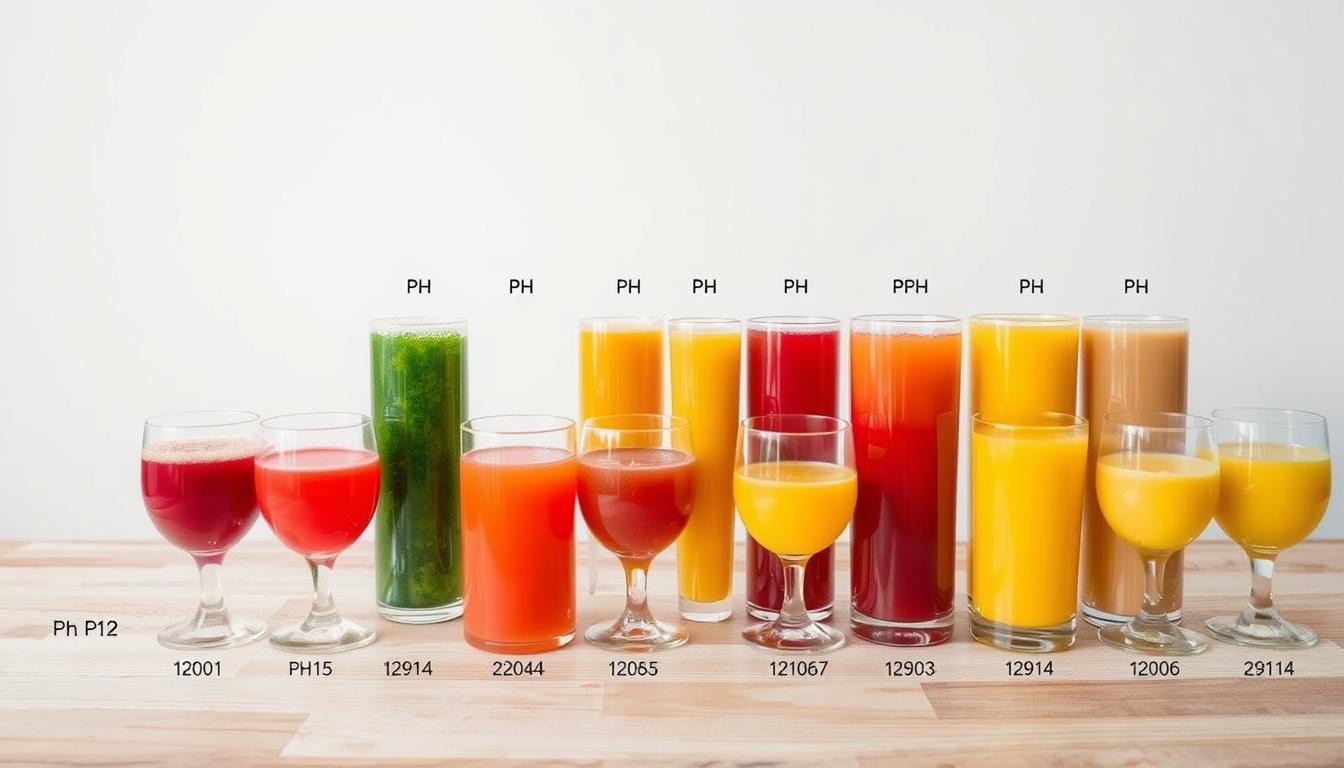
This article shows a detailed comparative table of fruit juice pH. It highlights the acidity differences in various drinks. By looking at this data, readers can understand the pH levels of their favorite drinks better.
Understanding pH Scale in Beverages
Beverages come in many different acidity and alkalinity levels. These levels are measured by the pH scale. The pH scale shows how many hydrogen ions are in a solution, telling us if it’s acidic or alkaline.
What is pH and How is it Measured?
The pH scale goes from 0 to 14, with 7 being neutral. Numbers below 7 are acidic, and numbers above 7 are alkaline. Knowing this helps us understand what makes different drinks unique.
The Acid-Base Spectrum
Substances fall into acidic, neutral, or alkaline categories based on pH. Acidic drinks have a pH below 7, neutral ones are at 7, and alkaline ones are above 7. Knowing this spectrum helps us understand what makes drinks different.
pH Measurement Tools
There are many ways to measure pH, like pH meters and pH paper. pH meters give exact digital readings. pH paper shows pH levels through color changes.
The pH Range of Common Beverages
Various drinks have different pH levels. For example, citrus juices are acidic, while some plant-based milks are more alkaline.
Acidic vs. Alkaline Drinks
Drinks like sodas and citrus juices are acidic, with lower pH values. On the other hand, alkaline drinks like some mineral waters and plant-based milks have higher pH values.
“The pH level of a beverage can significantly impact its taste and possible health effects.”
Neutral pH Beverages
Drinks like water have a neutral pH of about 7. These drinks are neither acidic nor alkaline.
| Beverage Type | pH Range |
|---|---|
| Acidic Drinks | 0-6.9 |
| Neutral Drinks | 7 |
| Alkaline Drinks | 7.1-14 |
Fruit Juice pH: Fundamentals and Importance
The acidity of fruit juices is measured by their pH level. This affects their flavor. Fruits have natural acids that influence their taste. Knowing this is key for both makers and consumers.
Natural Acids in Fruits
Fruits have acids like citric and malic that affect their pH. These acids make fruits taste tart and flavorful.
Citric Acid
Citric acid is common in citrus fruits. It makes them sour and is key to their pH. Citric acid also helps preserve fruit juices, making them last longer.
Malic Acid
Malic acid is found in apples and grapes. It adds tartness and is part of fruit metabolism. Malic acid levels change with fruit ripeness and growing conditions.
Other Organic Acids
Other acids like tartaric and succinic are present in smaller amounts. They add to the juice’s acidity and flavor.
Factors Affecting Acidity Levels in Fruit Juice
Fruit juice acidity can change due to several factors. Knowing these helps control juice pH.
Ripeness and Harvest Time
Fruit ripeness at harvest time affects its acidity. As fruits ripen, they become less acidic. Harvesting at the right time is key for the perfect balance of sweet and tart.
Growing Conditions
Growing conditions like climate and soil impact fruit acidity. Warmer climates make fruits less acidic. Farmers can adjust these conditions to get the right acidity.
Storage and Processing
How fruits are stored and processed into juice also matters. Storage temperature and handling can change juice pH.
“Proper handling and storage can help maintain the natural acidity of fruit juices.”
Methodology for Testing Fruit Juice pH
Testing the pH of fruit juices can be done in labs or at home. It’s important to get it right to ensure the juice is safe and of good quality.
Laboratory Methods
In labs, several methods are used to measure fruit juice pH. These include:
Digital pH Meters
Digital pH meters are popular for their accuracy and simplicity. They give a direct pH reading, making them great for lab work.
Spectrophotometric Analysis
This method uses light absorbance to find the pH. It’s very accurate and often used in research.
Titration Techniques
Titration involves adding a substance to the juice until a reaction shows the pH. It’s precise and commonly used.
At-Home Testing Options
For those at home or making small batches, there are options. These include:
pH Test Strips
pH test strips are easy and affordable. They change color based on pH, giving a quick read.
Portable pH Meters
Portable pH meters are more accurate than test strips. They’re made for use at home or in the field.
Accuracy Considerations
When testing at home, the accuracy matters. Make sure to calibrate and use the devices correctly for reliable results.
Comparative Table of Fruit Juice pH Levels
Fruit juices come in a variety of pH levels, showing their acidity and health effects. The type of fruit, how it’s processed, and any additives used all play a role.
Citrus Juices
Citrus juices are popular for their refreshing taste and vitamin C. Their pH levels vary, affecting their flavor and nutrition.
Orange Juice
Orange juice has a pH of 3.5 to 4.0, making it moderately acidic. This acidity gives it a unique taste and helps keep it fresh.
Lemon and Lime Juice
Lemon and lime juices are very acidic, with pH levels below 2.5. Their acidity is great for cooking and adding flavor.
Grapefruit Juice
Grapefruit juice has a pH of 3.0 to 3.5. It’s more acidic than orange juice but less than lemon or lime juice.
Mandarin and Tangerine Juice
Mandarin and tangerine juices are slightly less acidic than orange juice. Their pH levels are usually around 3.5 to 4.2.
Berry Juices
Berry juices are known for their antioxidants and flavors. They have different pH levels, which can change their taste and health benefits.
Cranberry Juice
Cranberry juice is very acidic, with a pH of 2.5 to 3.0. This is due to its high organic acid content.
Blueberry Juice
Blueberry juice has a pH of 3.0 to 3.5. It’s less acidic than cranberry juice.
Strawberry Juice
Strawberry juice has a pH of 3.5 to 4.0. It’s moderately acidic, similar to orange juice.
Raspberry and Blackberry Juice
Raspberry and blackberry juices are more acidic. Their pH levels are between 2.5 and 3.5, thanks to malic and citric acids.
Knowing the pH levels of fruit juices helps us choose wisely. It’s about finding the right balance between taste and health.
pH Levels in Tropical Fruit Juices
It’s important to know the acidity of tropical fruit juices. Juices like pineapple, mango, and papaya are popular for their taste and health benefits.
Pineapple, Mango, and Papaya Juice pH
The pH levels of these juices vary a lot. Pineapple juice, for example, is quite acidic.
Pineapple Juice Acidity
Pineapple juice has a pH of 3.2 to 4.0. This is because it has a lot of citric and malic acids.
Mango Juice pH Range
Mango juice has a pH of 3.8 to 4.5. This depends on how ripe the mangoes are.
Papaya Juice pH Characteristics
Papaya juice’s pH is between 4.0 and 5.0. This can change based on the fruit’s ripeness and how it’s processed.
Coconut Water and Other Tropical Beverages
Other tropical drinks, like coconut water, also have unique pH levels.
Coconut Water pH Profile
Coconut water is mostly neutral, with a pH of 4.7 to 5.7. It’s a favorite for staying hydrated.
Passion Fruit Juice
Passion fruit juice is very acidic, with a pH of 2.8 to 3.5. This is because it has a lot of citric acid.
Guava and Lychee Juice
Guava and lychee juices have pH levels of 3.5 to 4.5. This can vary based on the fruit type and how it’s made.
| Tropical Fruit Juice | pH Range |
|---|---|
| Pineapple Juice | 3.2 – 4.0 |
| Mango Juice | 3.8 – 4.5 |
| Papaya Juice | 4.0 – 5.0 |
| Coconut Water | 4.7 – 5.7 |
| Passion Fruit Juice | 2.8 – 3.5 |
| Guava Juice | 3.5 – 4.5 |
| Lychee Juice | 3.5 – 4.5 |
Stone Fruit and Pome Fruit Juice pH Analysis
Juices from stone and pome fruits have different acidity levels. This depends on the fruit type and how it’s processed. Knowing this is important for both makers and drinkers, as it changes how the juice tastes and what it’s good for.
Apple, Pear, and Quince Juice
Juices from apples, pears, and quince are loved for their taste and health benefits. The pH of these juices can change a lot. This is because of the fruit type, how ripe it is, and how it’s made.
Apple Juice Varieties and pH
Apple juice pH can be between 3.35 and 4.0. Sweeter apples make juice with a higher pH. The type of apple greatly affects the acidity. Some apples can make juice as acidic as 3.3.
Pear Juice Acidity
Pear juice is usually more alkaline than apple juice, with a pH from 3.8 to 4.4. The ripeness of the pear when juiced can also change the juice’s pH.
Quince Juice Characteristics
Quince juice is very acidic, with a pH of 3.0 to 3.5. The way it’s processed can also affect its pH. Quince is often cooked, which can make it less acidic.
Peach, Plum, and Cherry Juice
Juices from peaches, plums, and cherries are tasty and healthy. The pH of these juices depends on the fruit’s natural acidity and how it’s made.
Peach Juice pH Levels
Peach juice has a pH of about 3.4 to 4.2. The ripeness and type of peach are important. Clingstone peaches make juice with a slightly higher pH than freestone ones.
Plum Juice Acidity
Plum juice is quite acidic, with a pH from 3.2 to 3.8. The kind of plum used can really change the juice’s acidity. Some plums make more acidic juice.
Cherry Juice Varieties and pH
Cherry juice pH varies, depending on whether it’s from sweet or sour cherries. Sour cherries make juice with a pH of 3.2 to 3.4. Sweet cherries have a pH of 3.5 to 4.0.
Commercial Fruit Drinks vs. Fresh Juices: pH Comparison
Commercial fruit drinks and fresh juices have different pH levels. This is due to how they are made and what’s added to them. Knowing this helps those who worry about the acidity in their drinks.
Impact of Processing on pH Levels
How fruit juices are processed changes their pH levels. Different methods used in making commercial drinks affect their acidity.
Pasteurization Effects
Pasteurization helps drinks last longer but can slightly change their pH. This change is usually small.
Concentration and Reconstitution
When juice is concentrated and then mixed with water, its pH can change. This is because some compounds are lost during concentration. The water used to mix it back up can also change the pH.
Shelf-Stable Treatments
UHT processing and other shelf-stable methods can also change the pH. They might break down some acids, affecting the drink’s overall acidity.
Additives and Their Effect on Acidity
Additives in commercial drinks can greatly affect their acidity. These are added to improve taste, keep the drink fresh, and balance flavors.
Preservatives and pH
Preservatives can change the pH by adding acidity or reacting with other ingredients. This can alter the drink’s pH level.
Sweeteners and Acidity Balancers
Sweeteners, whether natural or artificial, can make drinks taste less sour. Acidity balancers are added to make the pH more pleasant.
Flavor Enhancers
Flavor enhancers can also impact how acidic a drink tastes. They can either match or contrast with the natural acidity of the juice, changing the taste.
These additives can make the final product have a different pH than fresh juice. As people focus more on health, knowing how these additives affect acidity is key.
“The pH difference between commercial drinks and fresh juice isn’t just about processing. It’s also about the additives that change the drink’s acidity.”
Looking at how processing and additives affect pH in commercial drinks and fresh juices helps consumers make better choices.
Non-Fruit Beverages: pH Spectrum Analysis
The pH levels of non-fruit drinks vary a lot. This affects how people like them and their health. Drinks like sodas, teas, coffee, and plant-based milks have different pH levels. These levels can change their taste, quality, and nutritional value.
Sodas and Carbonated Drinks
Sodas and other fizzy drinks are usually acidic. This is because of carbon dioxide and ingredients like citric acid and phosphoric acid. The pH of these drinks can change a lot based on what’s in them.
Cola Products
Colas are quite acidic, with a pH between 2.5 and 3.5. This is mainly because of phosphoric acid, a key ingredient in colas.
Lemon-Lime Sodas
Lemon-lime sodas, like Sprite or 7 Up, are even more acidic. Their pH is around 3.0 to 3.5. This is because of citric acid in them.
Root Beer and Other Varieties
Root beer and other specialty sodas are slightly less acidic. Their pH is between 4.0 and 5.0. This depends on their ingredients and how they’re made.
Tea, Coffee, and Plant-Based Beverages
Tea, coffee, and plant-based drinks have a wide range of pH levels. This is because of their ingredients and how they’re made.
Tea Varieties and pH
The pH of tea changes with the type. Black tea is more acidic than green tea. Tea’s pH is usually between 5.5 and 6.5.
Coffee pH Levels
Coffee is acidic, with a pH of 5.0 to 5.5. The brewing method can slightly change the pH. But coffee is generally quite acidic.
Plant Milk Alternatives
Plant-based milks, like almond or soy milk, are more neutral. Their pH is around 6.0 to 7.0. But this can vary by brand and additives.
A study on beverage acidity found that “the pH of a drink can significantly affect its taste and health impacts”
“Understanding the acidity of beverages is key for both makers and consumers.”
This shows why pH levels in non-fruit drinks are so important.
Health Implications of Beverage pH Levels
The pH level of drinks affects our health, mainly our teeth and digestion. Drinks with low pH can harm our teeth and digestion. Knowing how pH levels impact our health helps us choose better drinks.
Dental Health Considerations
Drinks with low pH can damage tooth enamel, causing dental problems. The acidity of a drink is key in determining its dental impact.
Enamel Erosion Risk
Drinks like fruit juices and sodas can weaken tooth enamel. Enamel erosion makes teeth more prone to decay and sensitivity.
Mitigating Strategies
To reduce enamel erosion risk, use a straw for acidic drinks, rinse with water, and brush well.
pH Thresholds for Dental Safety
Beverages with a pH below 4.5 can erode tooth enamel. Knowing your drink’s pH is important.
Digestive System Effects
Drink pH levels can affect digestion, causing acid reflux and stomach acid interactions.
GERD and Acid Reflux
Acidic drinks can worsen Gastroesophageal Reflux Disease (GERD) and acid reflux. The acidity can irritate the esophagus.
Stomach Acid Interactions
The stomach is very acidic. While our body can handle pH changes, very acidic drinks may interact with stomach acid.
Alkaline vs. Acidic Beverage Consumption
The debate on alkaline vs. acidic drinks is ongoing. Some say alkaline water is better. But, our body’s natural pH balance is key.
Optimal pH for Fruit Juice Quality and Preservation
The pH level of fruit juice is key to its quality and how long it lasts. Keeping the pH in the right range is important. It helps keep the juice’s taste, color, and nutrients good.
Shelf Life and pH Relationship
The pH of fruit juice affects how long it stays fresh. A lower pH means less chance for harmful bacteria to grow. This makes the juice last longer.
Microbial Growth Prevention
A pH under 4.6 stops most harmful bacteria from growing. For example, Clostridium botulinum can’t grow at this pH.
Enzymatic Activity and pH
The pH also impacts the juice’s enzymes. Some enzymes can spoil the juice if the pH is off.
Color and Flavor Stability
Lastly, pH affects the juice’s color and taste. Anthocyanins, which give red and purple colors, stay stable at lower pHs.
Industry Standards for Different Juice Types
Each fruit juice type has its own best pH range. Industry standards help keep all juices safe and of good quality.
FDA and USDA Guidelines
In the U.S., the FDA and USDA set pH guidelines for juices. These rules help keep juices safe.
International Standards
Worldwide, the Codex Alimentarius Commission sets standards for juices. This includes pH requirements.
Quality Control Checkpoints
Quality checks are done at every step of juice making. They test and adjust the pH as needed. This includes before and after packaging.
| Fruit Juice Type | Optimal pH Range |
|---|---|
| Orange Juice | 3.8 – 4.0 |
| Apple Juice | 3.3 – 3.5 |
| Grapefruit Juice | 3.0 – 3.2 |
Seasonal and Geographic Variations in Fruit Juice pH
Fruit juice pH levels change a lot due to the season and where fruits are grown. It’s important for both people who drink juice and those who make it to know this.
Climate Impact on Fruit Acidity
The climate where fruits grow affects their acidity. Things like temperature, sunlight, rain, and how water is used are key.
Temperature and Sunlight Effects
When it’s hotter and sunnier, fruits tend to be less acidic. For example, fruits from tropical places are often less acidic than those from cooler areas.
Rainfall and Irrigation Influence
Enough rain and careful water use can change a fruit’s sugar and acid levels. Places with even rain tend to grow fruits with the right balance of acidity.
Regional Differences in Popular Juices
Every area has its own fruit types, and their juice pH levels can vary. Looking at these differences helps us understand what affects juice acidity.
North American vs. European Varieties
Apples from North America, like Red Delicious, might have a different pH than European apples, like Granny Smith. This is because of things like climate, soil, and how they’re grown.
Tropical vs. Temperate Climate Fruits
Fruits from warm places, like mangoes and pineapples, have a different acidity than those from cooler areas, like apples and pears.
| Fruit Type | Region | Average pH |
|---|---|---|
| Apple | North America | 3.4 |
| Apple | Europe | 3.2 |
| Mango | Tropical | 4.0 |
| Pineapple | Tropical | 3.8 |
Balancing Fruit Juice pH for Better Taste and Health
Making homemade fruit juices can make them taste better and be healthier. It’s important to get the pH right. This makes the juice taste great and is good for you.
Methods to Adjust Acidity in Homemade Juices
There are a few ways to change the acidity of homemade juices. You can use natural pH adjusters or dilute the juice.
Natural pH Adjusters
Adding honey or alkaline minerals can change the juice’s acidity. Honey makes it sweeter and helps balance the pH. A well-known nutritionist says,
“Using natural ingredients like honey can significantly enhance the taste and health benefits of fruit juices.”
Dilution Techniques
Mixing the juice with water or another juice can also balance the pH. This is good for very acidic fruits like lemons or limes.
Combining Juices for Balanced pH Profiles
Mixing different fruit juices can also balance the pH. Pairing juices with the right pH levels makes a healthy drink.
Complementary Juice Pairings
Apple and cranberry juices are a great pair. The sweetness of apples balances the tartness of cranberries, making a tasty drink.
Recipe Suggestions for Optimal pH
Try mixing orange juice with a bit of lemon juice and then add water. Or blend grapefruit with pineapple for a balanced taste.
Using these methods, you can make fruit juices that are tasty and healthy. They will have a balanced pH that makes them enjoyable to drink.
Conclusion
The pH levels of fruit juices and drinks are key to their quality, taste, and health impact. The table we looked at shows how different juices vary in acidity. This includes citrus, berry, tropical, and stone fruit juices.
It’s important for both those who drink and make fruit juices to manage pH levels. Knowing about beverage acidity helps people choose better for their health. For makers, keeping the right pH ensures their products stay good and last longer.
In short, understanding fruit juice pH is very important. Knowing about pH in drinks helps us see how juice is made and what affects its quality. This knowledge helps people make better choices and companies make products that meet those needs.