 by
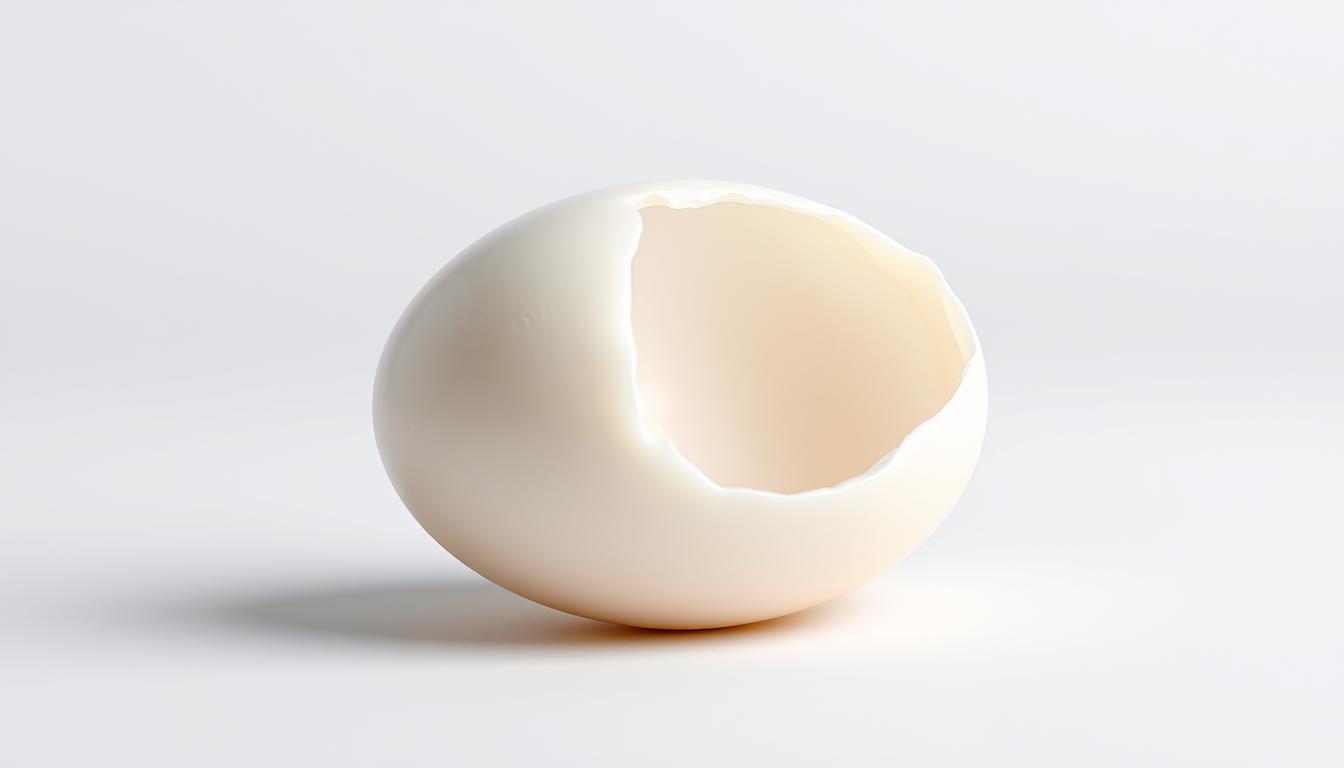
by The egg is a complex and fascinating structure. It has different parts like the shell, membranes, albumen, and yolk. Its unique oval form has caught the eye of scientists.
Studying the egg shape is key in biology and engineering. The egg’s parts work together. They give strength, protection, and function.
By looking into the egg’s form, researchers learn about its amazing traits. They also find new uses for it.
The Fundamental Characteristics of Egg Shape
The shape of an egg is based on its ovoid geometry. This shape is not perfectly uniform. It has variations that are key to understanding the egg’s structure.
Defining Ovoid Geometry
Ovoid geometry means the egg is roughly oval but not perfectly symmetrical. The ovoid shape has rounded and elliptical features. These features shape the egg’s overall form.
The Asymmetry of Natural Eggs
Natural eggs are often not symmetrical. One end is more pointed than the other. This difference makes each egg unique.
Blunt vs. Pointed Ends
The egg’s shape is defined by its blunt and pointed ends. The blunt end is larger and rounder. The pointed end is smaller and more tapered.
Axial Symmetry Properties
Even though eggs are asymmetrical, they show axial symmetry along their longest axis. If you slice the egg lengthwise, both halves will look like mirror images of each other.
| Egg Shape Characteristic | Description |
|---|---|
| Ovoid Geometry | Roughly oval shape, not perfectly symmetrical |
| Asymmetry | One end more pointed than the other |
| Blunt End | Larger, more rounded end |
| Pointed End | Smaller, more tapered end |
The Evolution and Biology of Egg Shape
Egg shape is a fascinating example of how biology and physiology come together. It shows how symmetrical, organic forms can evolve. This process is shaped by natural selection and the bird’s body.
Natural Selection Pressures on Egg Morphology
Natural selection is key in shaping egg shapes. The shape affects how stable an egg is and if it might roll out of the nest. In places like cliffs or branches, eggs that don’t roll away easily are more likely to survive.
Relationship Between Bird Physiology and Egg Form
A bird’s body, like its pelvis and flight abilities, affects egg shape. The bird’s anatomy can lead to different egg forms.
Pelvic Structure Influence
The size and shape of a bird’s pelvis can limit egg size and shape. This is because larger eggs might not fit through the pelvis, affecting egg size and shape in different species.
Flight Adaptations and Egg Design
Birds meant for flight often have bodies that are streamlined. This can make their eggs more elliptical or asymmetrical. This helps the eggs fit better in the bird’s body, making it more aerodynamic.
The connection between a bird’s body and its eggs shows a complex mix of factors. These factors have evolved to help birds reproduce successfully.
Comprehensive Egg Shape Diagram Analysis
Studying egg shape diagrams is key to understanding egg structure. These diagrams show the egg’s detailed structure. They help researchers study its shape and size.
Anatomical Cross-Sections
Anatomical cross-sections of eggs are vital. They show the egg’s inside. This lets researchers see how the egg’s parts shape its form.
External Geometry Mapping
Mapping the egg’s outside surface is important. It helps us see the egg’s smooth shape and its overall shape.
Curvature Measurements
Measuring the egg’s curvature is key. It tells us about the egg’s shape. Researchers use these measurements to understand the egg’s geometry.
Dimensional Proportions
Knowing an egg’s size is important. Researchers measure its length and width. This helps them see how the egg’s size affects its stability.
| Dimension | Measurement | Proportion |
|---|---|---|
| Length | 5 cm | 1.2 times width |
| Width | 4 cm | 0.8 times length |
| Curvature | 0.5 cm-1 | Affects overall shape |
Studying egg shape diagrams gives us important insights. By looking at the egg’s inside and outside, we learn about its contour and structure. This helps researchers understand the egg’s shape better.
Mathematical Models Describing Egg Shape
The shape of an egg has always been a mystery to scientists. They have created many mathematical models to understand it. These models range from simple geometric shapes to complex computer simulations. Each model gives us a new way to see the egg’s shape.
Classical Equations for Egg Curves
For a long time, scientists used simple shapes to describe eggs. The oval or ellipse was a common choice. But eggs are more complex, needing more detailed models.
The ovoid model is closer to the real thing, with its asymmetry. But even this model is not perfect. To get a better picture, scientists use a mix of curves, like the ellipse and the Cassini oval.
Modern Computational Approaches
Today, computers help us understand egg shapes better. They use parametric equations and 3D modeling. These methods are more accurate and detailed.
Parametric Representations
Parametric equations let us describe eggs in a flexible way. By using parameters, we can model different shapes with great precision. This is very useful for studying the variety of egg shapes in nature.
3D Modeling Techniques
Three-dimensional modeling gives us a full view of egg shapes. With CT scans and 3D reconstruction, we can make detailed digital models. These models help us study the strength, movement, and other important features of eggs.
The table below compares old and new ways to model egg shapes:
| Approach | Description | Key Features |
|---|---|---|
| Classical Equations | Use geometric shapes to approximate egg shape | Simple, based on ovals or ellipses, limited precision |
| Parametric Representations | Define egg contour using parameters | Flexible, high precision, suitable for morphological analysis |
| 3D Modeling Techniques | Create detailed digital models of eggs | Comprehensive, captures full geometry, useful for biomechanical studies |
By mixing old ideas with new technology, scientists now understand eggs better. This knowledge helps not just biology but also engineering and design. It shows how efficient eggs are structurally.
Comparative Morphology of Eggs Across Species
Eggs vary greatly among different species, showing how they adapt to their surroundings. These variations in shape and size help each species reproduce successfully. They are key to the life cycle of many animals.
Avian Egg Diversity
Avian eggs come in many shapes and sizes. Some, like those of songbirds, are oval. Others, like seabirds’, are more oblong. These differences help each bird species reproduce and survive better.
Seabirds vs. Land Birds
Seabirds, like albatrosses and petrels, have eggs that are pointed at one end. This shape helps them not roll away on rocky shores. Land birds, on the other hand, have eggs that vary in shape based on their nests and how many eggs they lay.
Size-Shape Relationships
Bigger eggs tend to be more elliptical. This is true for many bird species. The size and shape of eggs depend on the female bird’s size and how much energy she puts into making the egg.
Reptilian and Monotreme Variations
Reptiles and monotremes have different egg shapes too. Reptile eggs are often spherical to withstand pressure. Monotremes, like the platypus, lay soft-shelled, oval eggs. These shapes reflect their unique ways of reproducing.
Invertebrate Egg Structures
Insects and mollusks have a wide range of egg shapes. Some eggs are oblong or have complex shapes. They often have spines or thick coatings to protect them from predators and harsh environments.
The Physics and Biomechanics of Egg Shape
Understanding the physics and biomechanics of an egg’s shape is key. It shows how the egg stays strong and balanced. The egg’s symmetrical, organic shape helps it handle different forces. This makes it a great topic for scientists to study.
Structural Integrity Under Pressure
The egg’s shape is vital for its strength. Its curved surface spreads out forces, making it strong for its size. This is important for the egg to survive, as it must handle outside pressures without harming what’s inside.
Balance and Stability Properties
The egg’s shape helps it stay balanced. Its symmetry lets it keep its balance, making it less likely to fall. This is key for birds that nest in places where eggs could roll away.
Rolling Behavior Analysis
When an egg is pushed, its shape affects how it rolls. Its curve makes it roll in circles, which can be helpful in some nests. Scientists have studied this in different bird species, learning about their nesting habits.
Impact Resistance Mechanisms
The egg’s shape also helps it resist impacts. When it hits something, its shape spreads out the force, protecting what’s inside. This is very useful for birds that nest in places where they might fall.
| Property | Description | Benefit |
|---|---|---|
| Structural Integrity | The egg’s shape distributes force evenly | Provides strength relative to size |
| Balance and Stability | The egg’s symmetry maintains equilibrium | Prevents rolling away or toppling |
| Rolling Behavior | The egg rolls in a circular motion | Advantageous in certain nesting environments |
| Impact Resistance | The egg’s shape absorbs shocks upon impact | Protects the contents from damage |
Quantitative Analysis Methods for Egg Shape
Understanding egg shape needs a mix of methods. We use morphometric measurements and advanced stats. This way, we can describe and classify egg shapes accurately.
Morphometric Measurement Techniques
Morphometric methods are key for measuring egg shape. They involve precise measurements of length, width, and curvature. Tools like digital photography and 3D scanning help gather detailed data.
Statistical Approaches to Shape Classification
Stats are vital for egg shape classification. They help spot patterns and differences in species.
Principal Component Analysis
Principal Component Analysis (PCA) is a strong tool. It simplifies complex data by finding key components. This makes comparing and classifying egg shapes easier.
Machine Learning Applications
Machine learning is also used in egg shape analysis. It can learn from big datasets to spot patterns and make predictions. This is a smart way to understand egg shapes.
By combining morphometric methods and stats, we get a solid way to study egg shape. This method is key for learning more about egg morphology and its role in biology.
Environmental Influences on Egg Shape
External factors can greatly affect the shape of eggs laid by birds and other species. The shape of eggs isn’t just about genetics. Environmental conditions also have a big role.
Climate and Habitat Correlations
The shape of eggs can match the climate and habitat of the species. Birds in cold climates often lay rounded eggs. This shape helps keep the eggs warm.
In warmer climates, eggs are more oval. This shape helps them cool down more efficiently.
Predation Pressure Effects
Predation pressure also shapes egg shapes. Species facing more predators might lay eggs that are harder to find. These eggs fit better in nests, making them safer.
Camouflage Considerations
Camouflage is key for egg survival. Eggs that blend in with their surroundings are less likely to be found. Their shape and color help them hide.
Nest Architecture Relationships
The nest’s design can also affect egg shape. Birds with narrow nest entrances might lay elongated eggs. This makes it easier to move and arrange them in the nest.
| Environmental Factor | Influence on Egg Shape |
|---|---|
| Climate | More rounded in colder climates to conserve heat |
| Predation Pressure | Shapes that are harder to detect or more secure in nests |
| Nest Architecture | Elongated shapes for easier arrangement in confined nests |
Historical Scientific Perspectives on Egg Shape
The scientific world has always been curious about egg shape. Early naturalists carefully studied their forms. This curiosity has grown into a detailed field of study.
Early Naturalists’ Observations
Early naturalists were the first to deeply study egg shape. They saw how different eggs are across species. Their work helped us understand egg shapes better.
Development of Egg Morphology as a Field
The study of egg shape has become its own field. It uses many different areas of study.
Key Historical Studies
Important studies have looked at morphological characteristics of eggs. They’ve given us clues about how eggs evolved.
Technological Advancements in Analysis
New technology, like imaging, has improved how we study egg shape. It lets us measure and compare eggs more accurately.
By combining old knowledge with new tech, we’ve learned a lot about egg shape. This knowledge is important in many areas of biology.
Advanced Imaging and Visualization of Egg Shape
Advanced imaging and visualization have greatly improved our knowledge of egg shapes. These methods let researchers study egg shapes in detail with great accuracy.
CT Scanning and 3D Reconstruction
CT scanning is a key tool for looking at egg insides without harming them. It combines many images to make 3D models of egg shapes. This lets researchers study both the inside and outside contour details.
Digital Morphometrics
Digital morphometrics uses software to measure egg shapes and sizes. It moves from old ways of studying shapes to new, detailed methods. This helps us understand egg shapes better.
Surface Mapping Techniques
Surface mapping creates detailed maps of egg surfaces. These maps show small changes in egg shapes. They help us learn about what affects egg shapes.
Virtual Reality Applications in Research
Virtual reality (VR) is being used in egg shape research. VR lets researchers explore virtual worlds with 3D egg models. It helps them understand complex egg shapes better.
These advanced imaging and visualization methods are changing how we study egg shapes. They open up new ways for research and discovery.
Practical Applications of Egg Shape Research
Studying egg shapes has led to big breakthroughs in many fields. It uses their symmetrical and organic features. Eggs’ unique shapes have sparked new ideas in different areas.
Agricultural and Poultry Industry Implementations
In farming, egg shape research has helped improve chicken breeding. It found the best egg shapes for healthier chickens and better farming. This has made farming more efficient.
Biomimetic Engineering Inspired by Eggs
The symmetrical and organic design of eggs has inspired biomimetic engineering. Egg shapes’ strength and efficiency have shaped designs in many areas.
Architectural Applications
Architects have used egg shapes for creative, strong buildings. Dome-shaped buildings inspired by eggs are strong and look great.
Product designers have used egg shape principles for better products. Egg-inspired designs are in many products, making them more useful and attractive.
These uses show how egg shape research is useful in many fields. It goes beyond biology to help in technology and design.
Egg Shape Anomalies and Pathologies
Egg shape anomalies are not just oddities; they often point to bigger ecological problems affecting bird health. Studying these anomalies can give us important insights into environmental and physiological factors affecting bird reproduction.
Causes of Common Deformities
Egg shape deformities, like oval or oblong eggs, can come from many sources. These include genetic factors, nutritional deficiencies, and environmental stress. For example, a lack of calcium can cause eggs to be soft-shelled or misshapen.
Diagnostic Value in Wildlife Health
Looking at egg shape anomalies can help diagnose bird population health. Abnormal egg shapes can show if birds are exposed to pollutants or other environmental dangers.
Case Studies of Unusual Morphologies
Many studies have found unusual egg shapes in birds exposed to certain pollutants. Birds living near industrial pollution often lay eggs with deformed shapes.
Environmental Contaminant Indicators
Egg shape anomalies can be signs of environmental health. By watching these anomalies, conservationists can spot areas where bird populations are stressed by pollutants or other ecological factors.
Future Frontiers in Egg Shape Research
The study of egg shape is on the verge of a new era with emerging technologies. Researchers are diving into the complexities of egg morphology. New methods and interdisciplinary approaches are leading the way.
Emerging Technologies and Methodologies
New imaging tech like CT scanning and 3D reconstruction is changing the game. Digital morphometrics is also making waves, allowing for precise measurements of egg shape traits.
Interdisciplinary Research Directions
The study of egg shape is now a team effort, combining biology, physics, and math. Climate change impact studies are a key area where this teamwork shines. They look at how environmental shifts might alter egg shapes.
Climate Change Impact Studies
Scientists are studying how climate change affects egg shape and its impact on bird populations. A study on temperature and humidity’s effects could reveal how species adapt.
| Research Area | Methodologies | Potential Outcomes |
|---|---|---|
| Climate Change Impact | Field observations, statistical analysis | Understanding of how environmental changes affect egg shape |
| Evolutionary Developmental Biology | Genetic analysis, comparative morphology | Insights into the evolutionary pressures shaping egg form |
Evolutionary Developmental Biology Approaches
Evolutionary developmental biology is another exciting field. It looks at how genes and environment shape egg shape. This research helps us understand how different egg forms evolved.
“The study of egg shape is a fascinating field that continues to evolve with new technologies and methodologies.”
Conclusion
The study of egg shape shows how biology, physics, and the environment work together. Eggs come in shapes like oval, rounded, and elliptical. These shapes are not just pretty; they help eggs survive.
Egg shapes are symmetrical and organic, making them strong. Their smooth shape helps them stay balanced. Knowing about egg shapes is important for many areas, like farming and wildlife health.
As we learn more about egg shapes, we see their importance. It’s not just about biology. It’s about finding new technologies inspired by nature. Studying egg shapes has led to new research in many fields.