 by
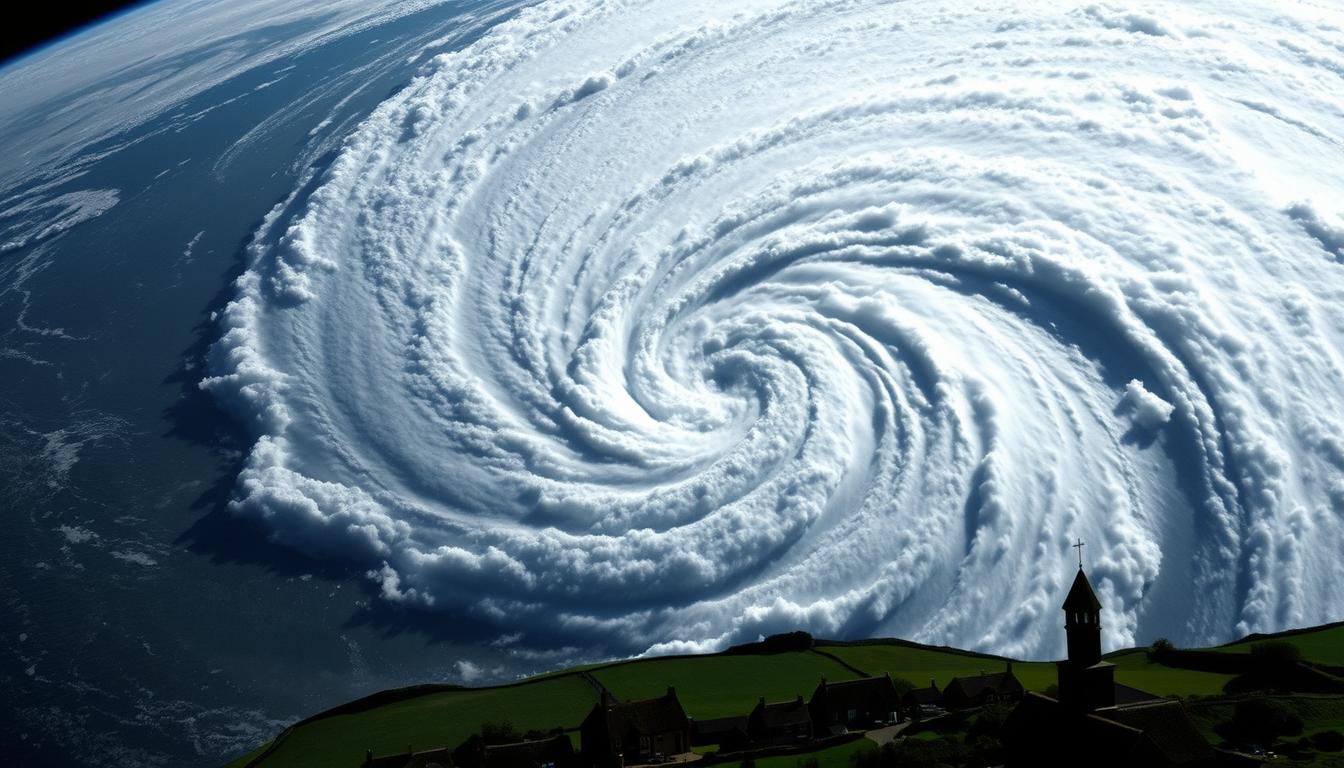
by On September 16, 1961, Hurricane Debbie hit Ireland, but as an extratropical cyclone. This storm had a big impact on the area.
The storm was the fourth named storm of the 1961 Atlantic hurricane season. It brought severe weather to Ireland. The leftovers of Debbie caused a lot of damage.
This article will look at the storm’s path, the weather leading up to it, and its effects on Ireland. It will show how tropical storms can affect areas when they change into extratropical cyclones.
The Genesis and Early Development of the Storm
In late August 1961, a disturbance started over Central Africa. This was the first sign of what would become Hurricane Debbie.
Formation in the Eastern Atlantic
The disturbance moved westward, reaching Senegal’s coast on September 5. It began to take shape in the eastern Atlantic. This area is perfect for tropical storms because of its warm waters.
Classification and Strengthening
As it grew, it was named Debbie and classified as a tropical storm. This was thanks to satellite images and reports from planes. Weather forecasting was getting better, helping track Debbie’s path and strength.
Debbie got stronger because of low wind shear and warm waters. These are key during the hurricane season.
Meteorological Conditions of September1961
The weather in September 1961 was key to Hurricane Debbie’s path. Knowing these conditions helps us see how the storm hit Ireland.
Atlantic Weather Patterns
In September 1961, the Atlantic had a big high-pressure area. This high-pressure system greatly affected Hurricane Debbie’s path. Research on Atlantic hurricanes shows that such systems can push hurricanes towards Europe.
This high-pressure system steered Hurricane Debbie towards Ireland. It was a major reason for the storm’s landfall.
Unusual Atmospheric Conditions
September 1961 had unusual weather that made Hurricane Debbie worse. Two main factors were the jet stream’s position and sea surface temperatures.
Jet Stream Positioning
The jet stream is a fast-moving air current in the upper atmosphere. In September 1961, it helped Hurricane Debbie stay strong as it hit Ireland. This positioning helped the storm keep its hurricane-force winds.
Sea Surface Temperatures
Sea surface temperatures in the Atlantic were also important. Warm waters can make hurricanes stronger. In September 1961, these temperatures helped Hurricane Debbie get stronger. The warm waters helped the storm intensify.
These weather conditions made Hurricane Debbie hit Ireland hard. It caused severe weather and natural disasters. Even though forecasting was hard back then, understanding these conditions helps us see the storm’s impact.
Hurricane Debbie’s Atlantic Trajectory
Debbie moved northwesterly across the Atlantic, growing into a Category 1 hurricane. This path is key to understanding its growth and possible effects.
Path Across Open Waters
Hurricane Debbie followed a northwesterly path across the open Atlantic. This path greatly helped its growth. As it crossed the warm Atlantic waters, it got stronger, thanks to good weather conditions.
Intensification Timeline
The growth of Hurricane Debbie was complex, involving changes in wind speed and pressure.
Wind Speed Evolution
The wind speed of Hurricane Debbie went up steadily as it moved. It reached Category 1 on September 11. This intensification led to a big jump in wind speed, which could threaten areas in its path.
Pressure System Changes
The pressure inside Hurricane Debbie also changed a lot. The central pressure got deeper, showing the storm was getting stronger. This pressure change was important for the hurricane’s growth and its storm surge risk.
| Date | Wind Speed (mph) | Central Pressure (mb) |
|---|---|---|
| September 10 | 80 | 1000 |
| September 11 | 120 | 980 |
| September 12 | 100 | 990 |
Approach to the Irish Coast
As Hurricane Debbie approached the Irish coast in September 1961, forecasters faced big challenges. They struggled with old forecasting tools and methods. This was a major part of the weather forecasting problems of that time.
Forecasting Challenges in 1961
The year 1961 was tough for weather forecasting, with Hurricane Debbie heading towards Ireland. Forecasters had to work with basic data and old methods. These were not enough to accurately predict the storm’s path and strength.
Without advanced tech like satellite images, tracking the hurricane was hard. This made it tough to guess where it would hit.
Initial Warning Systems
Despite the hurdles, early warning systems were set up to warn people. These systems were key for emergency preparedness. They used radio, sirens, and other ways to alert the public.
Available Technology
In 1961, weather forecasting tech was simple. It included radar, weather stations, and data from ships and planes. These tools gave some insight but were not as advanced as today’s.
Public Alerts
Public alerts were sent out through radio and newspapers. They warned people about the natural disaster coming. These alerts were important for getting ready and were a big part of emergency preparedness.
These alerts were clear about the risks and what to do. This helped lessen the storm’s effects.
The Complete Track of Hurricane Debbie Over Ireland
The path of Hurricane Debbie over Ireland on September 16, 1961, is key to understanding severe weather. It landed in County Mayo, bringing a lot of data. This data helps us see how it moved and the measurements it took across the island.
Chronological Movement by Hour
Hurricane Debbie’s journey over Ireland was closely tracked. Records show its movement every hour. It started at 0600 UTC on the western coast, then moved eastward.
By 1200 UTC, the storm had moved deeper into the country. Its effects were felt over a wide area. The storm’s path and speed were shaped by wind patterns and atmospheric pressure.
Meteorological Measurements Across the Island
Hurricane Debbie’s journey over Ireland was filled with many meteorological measurements. These included wind speed records and barometric pressure readings.
Wind Speed Records
The hurricane brought strong winds, with gusts up to 100 mph in some places. The highest winds were in the western counties, where it landed.
Barometric Pressure Readings
Barometric pressure readings showed a big drop as the hurricane’s center passed over. The lowest pressure recorded was 950 mbar, showing the storm’s strength.
| Location | Wind Speed (mph) | Barometric Pressure (mbar) |
|---|---|---|
| County Mayo | 90 | 955 |
| Galway | 85 | 958 |
| Dublin | 60 | 965 |
Extreme Weather Phenomena Experienced
Ireland saw some of its most extreme weather during Hurricane Debbie’s passage.
Record-Breaking Wind Gusts
The storm brought record-breaking wind gusts to Ireland. The highest gust was 181 km/h at Malin Head. These winds caused a lot of trouble, mainly in rural areas.
Precipitation and Storm Surge
The hurricane also brought a lot of precipitation and a strong storm surge to the Irish coast. This mix of heavy rain and surge led to very bad weather.
Flooding Events
Heavy rain from the hurricane caused flooding events all over Ireland. These floods damaged buildings and roads, forced people to leave their homes, and hurt local businesses.
Coastal Impacts
The storm surge hit coastal areas hard, causing erosion and damage. Low-lying areas were hit the worst, as sea walls failed to protect them.
Impact on Western Irish Counties
Hurricane Debbie hit Ireland’s western counties hard. The storm brought strong winds and heavy rain. Galway and Mayo were hit the worst.
Galway and Mayo Devastation
Galway and Mayo saw a lot of damage. The storm surge flooded the coast in Galway. In Mayo, the winds knocked down buildings and power lines.
Clare and Limerick Damage Reports
Clare and Limerick also faced a lot of damage. Flooding and property damage were common. The damage varied by area.
Rural Areas
Rural areas saw a lot of damage to farms and roads. This made it hard to help these areas quickly.
Urban Centers
Urban areas had flooding and property damage. Emergency teams worked fast to help those trapped. But, the damage was big and needed a lot of help.
| County | Damage Assessment | Response Efforts |
|---|---|---|
| Galway | Significant infrastructure damage | Emergency services deployed |
| Mayo | Widespread power outages | Relief teams assisted affected areas |
| Clare | Property damage and flooding | Evacuations carried out |
| Limerick | Agricultural losses | Support provided to farmers |
Effects on Eastern and Northern Regions
Hurricane Debbie hit eastern and northern Ireland hard. The storm caused damage in many ways, with different areas feeling the impact differently.
Dublin Metropolitan Area
The Dublin area was also affected by Hurricane Debbie. Strong winds and rain caused flooding and disrupted daily life. Emergency teams worked hard, but the area was better off than the west.
Northern Ireland Experience
Northern Ireland was hit hard by the storm. It brought a lot of rain and strong winds.
Belfast Damage Assessment
In Belfast, the capital of Northern Ireland, most damage was to buildings and roads. Roofing damage and fallen trees were common, but no big buildings fell.
Border Counties Impact
The border counties between Northern Ireland and the Republic of Ireland saw both flooding and wind damage. Emergency teams on both sides worked together to respond.
| Region | Damage Type | Severity |
|---|---|---|
| Dublin Metropolitan Area | Flooding, Wind Damage | Moderate |
| Belfast | Property Damage, Fallen Trees | Moderate |
| Border Counties | Flooding, Wind Damage | High |
Structural and Infrastructure Damage
The storm’s fury caused a lot of damage across the island. Hurricane Debbie’s strong winds and heavy rain strained Ireland’s buildings, roads, and utilities.
Residential and Commercial Buildings
The hurricane damaged both homes and businesses. Roofs were lost, windows broken, and walls cracked. This made many buildings unsafe or needing big repairs.
Businesses lost a lot because their buildings were destroyed. This hurt the local economy. Also, many families lost their homes and had to find temporary places to stay.
Transportation and Utility Networks
The storm hit hard on transportation and utilities. Roads and rails were blocked, and power and communication services were down. This left many without the basics.
Road and Rail Disruption
Hurricane Debbie’s winds and floods blocked roads and rails. Roads were blocked by debris and floods. Rail services stopped because of track and signal damage.
Power and Communication Failures
The hurricane caused power outages. Strong winds knocked down power lines and damaged substations. Phone and internet services were also hit hard by the storm.
| Infrastructure Type | Damage Description | Impact |
|---|---|---|
| Residential Buildings | Roofs torn off, windows shattered | Displacement of families |
| Commercial Buildings | Structural damage, loss of business | Economic losses |
| Road Networks | Debris, flooding, impassable roads | Transportation disruption |
| Power and Communication | Power outages, network disruptions | Loss of essential services |
Human Toll of Hurricane Debbie
Hurricane Debbie had a big impact on the island, affecting many people. The storm brought severe weather that deeply affected the population.
Fatalities and Injury Reports
The hurricane caused 24 deaths, with 18 in the Republic of Ireland and 6 in Northern Ireland. Many were injured, needing medical help for storm-related accidents.
Displacement and Emergency Response
Many lost their homes due to the storm’s strong winds. Emergency teams quickly helped, focusing on temporary housing and medical care.
Temporary Housing Efforts
Shelters were set up quickly to house those displaced. Organizations worked hard to provide basic needs to those affected.
Medical Services Mobilization
Medical teams were fast to respond to storm injuries. Hospitals and emergency responders worked hard, showing the value of emergency preparedness in natural disasters.
The aftermath of Hurricane Debbie showed the need for better disaster plans. The experience helped improve Ireland’s emergency preparedness for future storms.
Economic Aftermath
After Hurricane Debbie hit Ireland, the country faced big economic problems. The storm damaged many areas, hurting the economy a lot.
Agricultural Sector Losses
The storm hit the agricultural sector hard, causing $50 million in damages. Strong winds and heavy rain destroyed crops and damaged farms.
Many farms in counties Galway and Mayo were hit the hardest, a report said.
“The destruction of crops and livestock was catastrophic, leading to long-term economic implications for farmers.”
Industrial and Commercial Impacts
The storm also hurt the industrial and commercial sectors. Businesses had to close, which lowered productivity and income.
Insurance Claims
Many people and businesses filed insurance claims for storm damage. These claims were worth a lot, adding to the economic strain.
Long-term Economic Effects
The storm’s long-term effects on the economy were huge. Some industries took years to get back on their feet. It showed the need for better disaster plans to avoid future economic hits.
| Sector | Estimated Losses |
|---|---|
| Agricultural | $50 million |
| Industrial | $20 million |
| Commercial | $30 million |
Hurricane Debbie in Historical Perspective
Hurricane Debbie’s landfall in Ireland in 1961 is a rare event. It’s key to understand its impact by comparing it with other severe weather in Ireland. We also look at its role in Atlantic hurricane records.
Comparison with Other Irish Severe Weather Events
Ireland has seen many severe weather events. But Hurricane Debbie is unique because it was a hurricane that hit land. Other big events include the Great Gale of 1839 and the Storm of the Century in 1990. Debbie’s impact was special because it was a hurricane.
- The Great Gale of 1839 caused a lot of damage, mainly in Dublin.
- The Storm of the Century in 1990 brought strong winds and floods to Ireland.
- Hurricane Debbie, while not as destructive as some, was notable for being a hurricane.
Significance in Atlantic Hurricane Records
Hurricane Debbie’s path and landfall in Ireland are key in Atlantic hurricane records. Its effects were felt across the island, helping in meteorological studies.
Meteorological Rarities
The storm’s landfall as a hurricane was rare. It gave insights into hurricanes in the North Atlantic.
Statistical Extremes
Debbie’s winds and rain were among the highest in Ireland in the 20th century. It stands out in weather records.
In conclusion, Hurricane Debbie’s impact in Ireland in 1961 was a major event. Its rarity as a hurricane makes it a key study in meteorology.
Lasting Legacy and Lessons Learned
Hurricane Debbie in 1961 left a lasting mark on Ireland. It pushed for better weather forecasting and disaster planning. The storm showed the need for improved systems to handle severe weather.
Evolution of Weather Forecasting in Ireland
After Debbie, Ireland focused on improving weather forecasting. They used new technologies and strengthened their meteorological services. This led to more accurate and timely warnings for future storms.
Development of Emergency Preparedness Protocols
Hurricane Debbie’s impact was huge. It showed the need for strong emergency plans. Ireland then created detailed emergency response plans, including evacuation and infrastructure strengthening.
Policy Changes
Policy changes followed to better prepare for disasters. More resources were given to emergency services. New guidelines for emergency responses were also developed.
Modern Applications
Today, Ireland’s emergency plans are top-notch. The country keeps updating its plans, using lessons from Debbie and other storms. Modern tech, like radar and early warning apps, helps a lot.
| Year | Major Improvements | Impact on Emergency Preparedness |
|---|---|---|
| 1965 | Introduction of radar technology | Enhanced weather monitoring capabilities |
| 1980 | Establishment of emergency response units | Improved coordination among emergency services |
| 2010 | Adoption of advanced forecasting models | More accurate and timely weather forecasts |
Hurricane Debbie’s legacy is strong in Ireland’s weather and emergency planning. The lessons from the storm have been key. They help Ireland face and handle natural disasters better.
Conclusion
Hurricane Debbie’s visit to Ireland in September 1961 left a lasting impact. It showed how important it is to understand and prepare for natural disasters.
The storm’s path and effects highlight the need for good forecasting and emergency plans. Events like Hurricane Debbie can cause a lot of damage and loss of life.
The experience with Hurricane Debbie has helped improve weather forecasting in Ireland. There have been big steps forward in measuring weather and warning systems. This shows the importance of keeping up with disaster preparedness.
Ireland and other places at risk of severe weather are working on better emergency plans. Learning from disasters like Hurricane Debbie helps communities get stronger. This can save lives and reduce economic losses.