 by
by Assessing the Maturity of Critical Technology Elements is key in tech development.
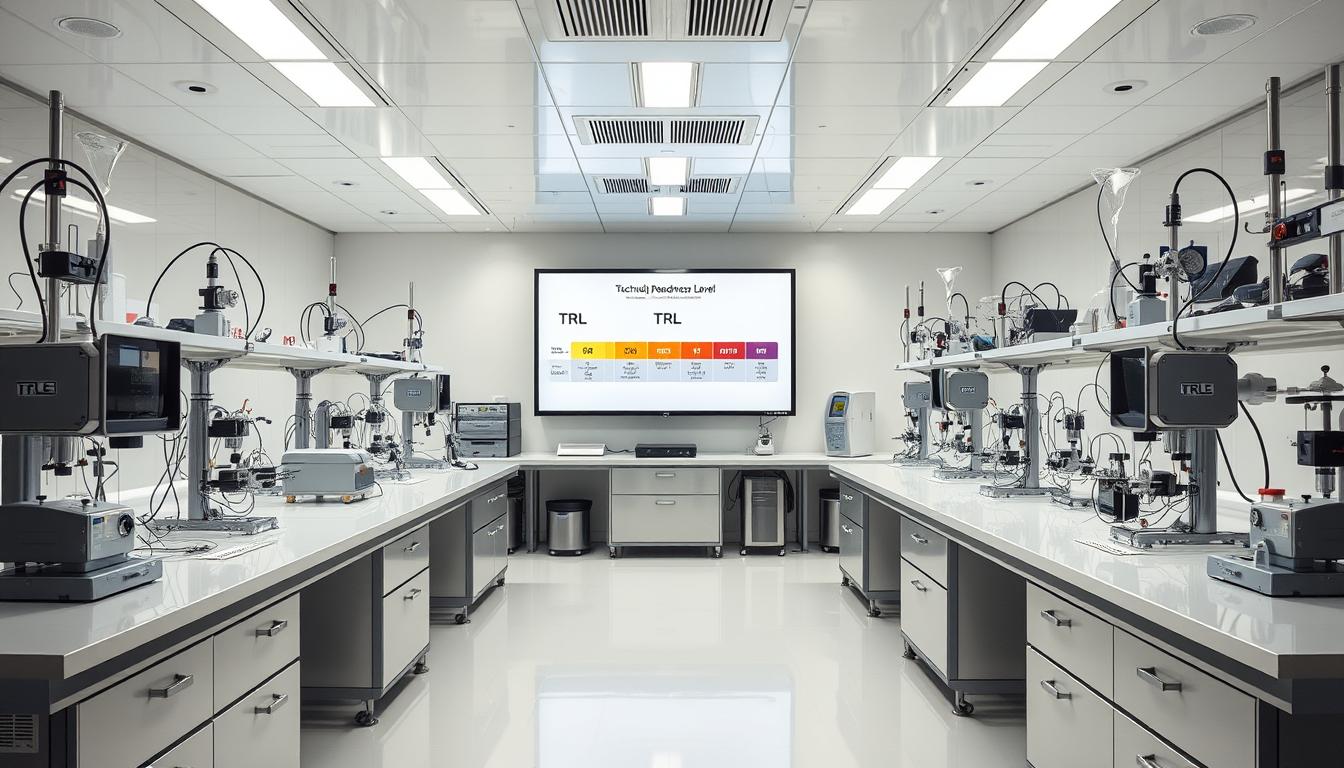
The Technology Readiness Level (TRL) helps measure a technology’s maturity. It’s important for making decisions about when to use a technology.
Critical Technology Elements (CTEs) are essential parts that need careful checking. This ensures they are ready for use. By looking at the TRL of CTEs, companies can make smart choices about their tech plans.
Understanding Technology Readiness Levels (TRLs)
TRLs are a way to measure how ready a technology is. Knowing this helps companies make smart choices about new tech.
Definition and Purpose of TRLs
The Technology Readiness Level (TRL) shows how advanced a tech is. It looks at how well it works and how reliable it is. TRLs help everyone talk about tech readiness in the same way.
They go from 1 to 9. Level 1 is just starting, and Level 9 is ready to use. This helps companies decide when to use or improve a tech.
| TRL Level | Description |
|---|---|
| 1-3 | Basic research to proof of concept |
| 4-6 | Technology development and demonstration |
| 7-9 | System development and deployment |
Historical Development of the TRL Framework
The TRL system started with NASA in the 1970s. It was for space tech. Now, it’s used in many fields like defense and business.
TRLs came from a need for a clear way to check tech readiness. Knowing how TRLs grew helps us see their value today.
Using TRLs makes it easier to choose where to invest. It helps companies pick the most promising tech.
The Nine Levels of TRL Assessment
TRL assessment uses a scale to measure technology maturity. It ranges from basic research to proven systems. This framework helps evaluate technology readiness in various industries.
TRL1-3: Research to Prove Feasibility
The early stages of TRL focus on researching and proving a technology’s feasibility. This phase is key for setting the stage for further development.
Basic Principles Observation (TRL1)
At TRL1, we observe and understand a technology’s basic principles. This stage involves scientific research and identifying possible applications.
Technology Concept Formulation (TRL2)
TRL2 is about forming the technology concept. It defines the technology’s capabilities and limitations.
Analytical and Experimental Proof of Concept (TRL3)
TRL3 involves proving the technology’s feasibility through analysis and experiments. This stage is vital for deciding if to move forward with development.
TRL4-6: Technology Development and Demonstration
As technologies advance, they enter the development and demonstration phase. Here, components are validated, and system models are shown.
Component Validation in Laboratory (TRL4)
TRL4 validates technology components in a lab. This stage is key for ensuring components work as expected.
Component Validation in Relevant Environment (TRL5)
At TRL5, components are tested in a relevant environment. This simulates real-world conditions to test performance and robustness.
System/Subsystem Model Demonstration (TRL6)
TRL6 demonstrates a system or subsystem model in a relevant environment. This stage identifies issues and areas for improvement.
TRL7-9: System Development and Deployment
The final stages of TRL focus on technology development and deployment. They ensure the technology is fully mature and operational.
System Prototype in Operational Environment (TRL7)
At TRL7, a system prototype is tested in an operational environment. This stage is critical for validating performance in real-world scenarios.
Actual System Completed and Qualified (TRL8)
TRL8 involves completing and qualifying the actual system. This includes thorough testing and validation to ensure the technology meets all requirements.
Actual System Proven in Operational Environment (TRL9)
The highest level, TRL9, means the actual system has been proven in an operational environment. This marks the technology as mature and ready for deployment.
Understanding these nine levels of TRL assessment is vital for organizations to effectively evaluate and mature their critical technology elements.
Critical Technology Elements (CTEs) Explained
CTEs are key in making tech projects successful. They are the technologies a system needs to work well. Without them, a project might not succeed.
Definition and Identification of CTEs
CTEs are important technologies that affect a system’s performance. Finding CTEs means looking at how they impact the system’s success. It’s about seeing the risks if they don’t work right.
Importance of CTEs in System Development
CTEs are vital for complex systems. They help the system meet its goals and stay within safe limits. Using CTEs well can make a system better and increase shareholder value by making more money.
Technical Risk Factors
Risks with CTEs include their complexity, how new they are, and how hard they are to integrate. Handling these risks is key to avoid delays and extra costs.
Performance Requirements
CTEs must meet strict standards to work well. This means they need thorough testing and checks to ensure they work as expected.
| CTE Characteristics | Description | Impact on System |
|---|---|---|
| Complexity | High technological complexity | Increased risk of integration challenges |
| Maturity | Level of technological maturity | Affects reliability and performance |
| Performance | Ability to meet performance requirements | Directly impacts system functionality |
The Intersection of TRL and CTEs
TRL and CTEs are important in new technology development. The Technology Readiness Level (TRL) shows how ready a technology is. Critical Technology Elements (CTEs) are key for a project’s success. Knowing how they work together is essential for managing technology and making smart investments.
Why TRL Assessment Matters for CTEs
Checking the TRL of CTEs is important. It helps understand their readiness and risks. Experts say, “Evaluating TRL is key for smart tech investments.”
A good TRL check helps spot areas needing more work. This ensures CTEs are ready for bigger systems. It’s vital for investment evaluation and improving the return on investment formula.
Risk Management Through TRL Evaluation
TRL checks are key in managing risks. They help spot tech risks early. This lets project managers plan better and avoid problems.
As books on tech management say, “TRL assessments are vital for managing risks in tech projects.” Using TRL checks helps make better choices. It lowers the chance of expensive delays or failures.
TRL Assessment Methodologies for CTEs
Evaluating TRLs for CTEs requires a mix of qualitative and quantitative methods. This ensures a thorough assessment. It helps determine a technology’s readiness and its chances of success in larger systems.
Qualitative Assessment Approaches
Qualitative methods are key in the early stages of TRL evaluation. They offer insights into a technology’s feasibility and challenges. These methods rely on expert opinions and collective knowledge to gauge technology maturity.
Expert Opinion and Delphi Methods
Expert opinions and Delphi methods are common qualitative techniques. The Delphi method collects opinions from experts through surveys. It aims to reach a consensus on a technology’s TRL. This is helpful for new technologies with limited data.
Technology Readiness Questionnaires
Technology Readiness Questionnaires are used to assess TRL. They gather detailed information about a technology’s current state and challenges. They are often combined with expert opinions to confirm TRL assessments.
Quantitative Measurement Techniques
Quantitative methods offer an objective TRL assessment using numbers and statistics. These methods are vital for validating CTE maturity and guiding development and deployment decisions.
Metrics and Scoring Systems
Metrics and scoring systems quantify technology readiness. They use scores based on criteria for comparing CTEs. Metrics include prototype testing, successful deployments, and integration with other systems.
Statistical Analysis Methods
Statistical analysis methods use statistics to analyze technology performance and reliability. These methods help understand variability and risks in CTEs. They support more accurate TRL assessments.
TRL in Defense and Aerospace Applications
TRL is key in defense and aerospace, helping to grow important technologies. The defense and aerospace industries use TRL to check if new tech is ready. They make sure it’s ready for complex systems.
Department of Defense TRL Implementation
The Department of Defense (DoD) uses TRL to check tech maturity. The DoD aims to mitigate risks in tech development. This ensures tech is ready before it’s used in weapons or defense.
This method helps in making smart tech investment choices. It also helps in deciding where to put resources.
NASA and Space Technology Readiness
NASA uses TRL to check space tech readiness. By using TRL, NASA can see if tech is ready for space missions. This is key for NASA’s success and for learning more about space.
TRL’s use in defense and aerospace shows its value. It helps these industries manage risks better. By using TRL, they can make better tech investment choices. This leads to better financial metrics and project success.
TRL in Commercial Technology Development
TRL was first used in defense and aerospace. Now, it’s being used in commercial tech. This is key for companies to handle risks when introducing new tech to the market.
Adapting TRL for Private Sector Innovation
The private sector is using TRL to improve innovation. It helps companies decide where to put resources and manage risks. TRL assessment spots problems early in tech development.
Industry-Specific TRL Considerations
Each industry has its own needs for TRL. For example:
Information Technology
In IT, TRL checks if software and hardware are ready. Big names like Google and Microsoft use it to see if their tech is mature enough.
Biotechnology and Pharmaceuticals
In biotech and pharma, TRL looks at new medical tech and drugs. It checks if they work well and are safe.
Energy and Clean Tech
The energy sector uses TRL for new energy tech like solar and wind. It helps figure out if these techs can make money.
TRL helps companies in commercial tech manage innovation risks. This makes tech development and use more efficient.
TRL Assessment Challenges and Limitations
Organizations use TRL assessments to guide technology development. But, they face challenges and limitations with this framework. The TRL assessment helps evaluate technology maturity, but its effectiveness can be affected by several factors.
Subjectivity in TRL Evaluations
One big challenge in TRL assessment is the subjectivity in evaluating technology readiness. Different assessors might have different views on the same technology’s maturity. This can lead to inconsistent results. To overcome this, it’s important to have clear, standardized criteria for TRL evaluation and train assessors well.
Integration Readiness Concerns
TRL assessment mainly looks at individual technology readiness. But, it often misses the integration readiness of these technologies in larger systems. This can cause integration challenges later on, which might delay projects and increase costs. To fix this, we need a more complete approach to TRL assessment that looks at system-level integration.
Addressing TRL Assessment Gaps
To make TRL assessments more valuable, we need to address the gaps in the framework. This includes using more quantitative methods and aligning TRL evaluations with project goals. For more on dealing with TRL challenges, check out AcqNotes.
TRL Advancement Strategies for CTEs
To make the most of Critical Technology Elements, we need good TRL advancement strategies. Moving CTEs up the TRL scale is key for tech success and use.
Technology Maturation Planning
Planning for tech maturation is vital for TRL growth. It’s about making a plan for CTEs to grow and get ready for use. This plan should have clear goals, timelines, and how to use resources well.
Good planning needs to understand the tech and its challenges. It also needs teamwork from researchers, developers, and managers.
Resource Allocation Based on TRL
How we use resources is important for TRL growth. Resources like money and people should match the CTE’s TRL. This makes sure we use what we have wisely.
Funding Distribution Models
How we give out funds is key for TRL growth. There are many ways to do this, like a stage-gate model. This model gives money in stages when certain TRL goals are met.
| TRL Level | Funding Allocation | Personnel Requirements |
|---|---|---|
| TRL 1-3 | High-risk, high-reward funding | Research experts |
| TRL 4-6 | Development-focused funding | Development engineers |
| TRL 7-9 | Deployment and integration funding | Integration specialists |
Personnel and Expertise Requirements
The people and skills needed change with the TRL level. For early stages, we need research experts. For later stages, we need development engineers and integration specialists.
A tech development expert says, “The secret to TRL success is a solid plan and smart resource use.” This shows how important planning is for TRL growth.
“The key to successful TRL advancement is a well-planned technology maturation plan and effective resource allocation.”
Case Studies: Successful TRL Implementation
TRL implementation has changed how we develop technology, with big wins in defense and business. It helps organizations manage risks and boost their innovation. This makes technology development more effective.
Military Technology Development Examples
The Department of Defense (DoD) has used TRL assessments to improve military tech. For example, advanced radar systems have been developed with careful TRL checks. This ensures they’re ready for use.
The Phased Array Radar is a great example. It went through detailed TRL evaluations. This helped the DoD move it from development to use smoothly.
| Technology | Initial TRL | Final TRL | Outcome |
|---|---|---|---|
| Phased Array Radar | 3 | 9 | Successful Deployment |
| Advanced Propulsion Systems | 2 | 8 | Enhanced Performance |
Commercial Innovation Success Stories
Businesses have also seen big benefits from TRL. Companies like Lockheed Martin and Northrop Grumman use TRL to improve their innovation. This has led to better financial results and more value for shareholders.
Autonomous vehicles are another success story. TRL assessments have helped mature this technology. This has attracted big investments and progress in the field.
TRL in Project Management and Decision Making
Effective project management uses TRL to check the maturity of key technologies. This helps make smart decisions and plan resources well.
Checking TRL is key to see if a technology is ready for a bigger system. It helps managers spot risks and plan how to avoid them.
Go/No-Go Decision Points Based on TRL
TRL is a big help in deciding whether to move forward with a project. By looking at a technology’s TRL, managers can see if it’s ready for the next step.
This way, resources are used wisely and projects don’t get held up by unfinished tech.
TRL Milestones in Project Planning
TRL milestones are vital in planning a project. They give a clear plan for developing and adding new tech.
Stage-Gate Process Integration
The stage-gate method is common in project management. Adding TRL to this method helps managers make better choices at each stage.
TRL Transition Management
Getting a technology from one TRL to the next is a big part of project management. It needs careful planning and action to make sure the tech is ready for the next step.
| TRL Level | Description | Project Management Action |
|---|---|---|
| TRL 1-3 | Research to prove feasibility | Resource allocation for research |
| TRL 4-6 | Technology development and demonstration | Prototype development and testing |
| TRL 7-9 | System development and deployment | System integration and deployment planning |
International Standards and Variations of TRL
Across the globe, TRL is a key metric. Yet, its use varies among space agencies and organizations. The core idea stays the same, but how it’s applied and what’s needed changes. This reflects the different needs of countries and industries.
European Space Agency TRL Framework
The European Space Agency (ESA) uses TRL with its own set of rules. The ESA focuses a lot on making technology ready for space. TRL standards are followed closely to make sure tech is ready for space missions.
| TRL Level | Description | ESA Specific Requirements |
|---|---|---|
| TRL 1 | Basic principles observed | Initial research and documentation |
| TRL 3 | Experimental proof of concept | Experimental validation in relevant environment |
| TRL 7 | System prototype demonstration | Prototype demonstration in operational environment |
ISO Standards Related to Technology Readiness
ISO has set standards for technology readiness. These standards offer a common framework. They help track technology development and ensure readiness levels. This boosts shareholder value by lowering project risks.
Emerging Extensions to the TRL Framework
New technologies are pushing the TRL framework to grow. It now covers more complex and connected tech. This makes the TRL better for assessing readiness.
Manufacturing Readiness Levels (MRL)
Manufacturing Readiness Levels (MRL) are a key addition to TRL. They check if manufacturing can keep up with tech development. This is very important for defense and aerospace.
Adding MRL to TRL helps see if tech is ready for making. This lowers the chance of delays or extra costs. MRL has nine levels, from basic research to proven manufacturing.
Integration Readiness Levels (IRL)
Integration Readiness Levels (IRL) focus on combining different tech or subsystems. They check how well interfaces and components work together. This is key for complex systems.
IRL spots integration problems early, so we can fix them before they cause trouble. Using IRL with TRL ensures systems are both mature and well-integrated.
System Readiness Level (SRL)
System Readiness Level (SRL) combines TRL and IRL for a full system check. It looks at the maturity of each part and how they work together. This gives a complete view of system readiness.
Commercial Readiness Index (CRI)
The Commercial Readiness Index (CRI) checks if tech is ready for the market. It looks at demand, competition, and rules. Using CRI with TRL helps decide if investing in tech is wise.
Future Trends in TRL Assessment for CTEs
Technology is always changing, and so is how we assess Technology Readiness Levels (TRL) for Critical Technology Elements (CTEs). New technologies and methods will make TRL evaluations more accurate and efficient.
AI and Automation in TRL Evaluation
Artificial Intelligence (AI) and automation are becoming key in TRL assessment. They can quickly analyze data, find patterns, and predict outcomes. This makes the evaluation process faster and more precise.
AI-driven tools also reduce the guesswork in traditional TRL assessments. This leads to more consistent and reliable results. Automation allows for real-time updates, helping in making quicker decisions.
Adaptive TRL Frameworks for Rapid Innovation
Another trend is the creation of adaptive TRL frameworks for fast innovation. Traditional TRL frameworks can be too rigid for new technologies. Adaptive frameworks are flexible, keeping up with technological changes.
By adding financial metrics and investment analysis, these frameworks help in making better decisions. This ensures resources are used wisely and technology is developed effectively.
Best Practices for TRL Implementation
To make technology integration work, knowing the best TRL practices is key. Using TRL assessment well can really boost the growth and use of important tech parts.
Documentation and Evidence Collection
Keeping good records is vital for TRL checks. It means gathering and keeping up with all the details of tech development, tests, and reviews. These records prove how ready the tech is, helping make smart choices.
Cross-Functional TRL Assessment Teams
Teams with members from different areas are essential for TRL checks. They make sure the tech gets a full review. Getting stakeholders involved is also key.
Stakeholder Involvement
Having stakeholders involved in TRL checks is important. It makes sure everyone’s views are heard. This helps manage risks better and improves tech development.
Continuous Monitoring and Reassessment
Keeping an eye on TRL and checking it often is needed. It helps adjust to new project needs and tech updates. This keeps the TRL check up-to-date and accurate.
Following these best practices helps organizations get the most out of TRL checks. It can lead to higher shareholder value by improving tech and cutting down risks.
| Best Practice | Description | Benefit |
|---|---|---|
| Documentation | Detailed records of technology development | Informed decision-making |
| Cross-Functional Teams | Comprehensive evaluation by diverse teams | Better risk management |
| Stakeholder Involvement | Engagement of relevant stakeholders | Effective technology development |
Conclusion: Maximizing the Value of TRL for Critical Technologies
Using Technology Readiness Level (TRL) assessment is key to getting the most out of critical technologies. It helps organizations understand how mature these technologies are. This knowledge guides decisions on where to invest and how to use resources, leading to better returns for shareholders.
TRL offers a clear way to check if technologies are ready. It helps companies spot risks and chances. With TRL, businesses can make their tech development better, save money, and get better results from projects.
As technology keeps changing, TRL’s role will grow. Companies that use TRL well, like with teams and detailed records, will lead the way. They’ll make sure their key technologies are developed and used well, helping them stay ahead and succeed in the long run.