 by
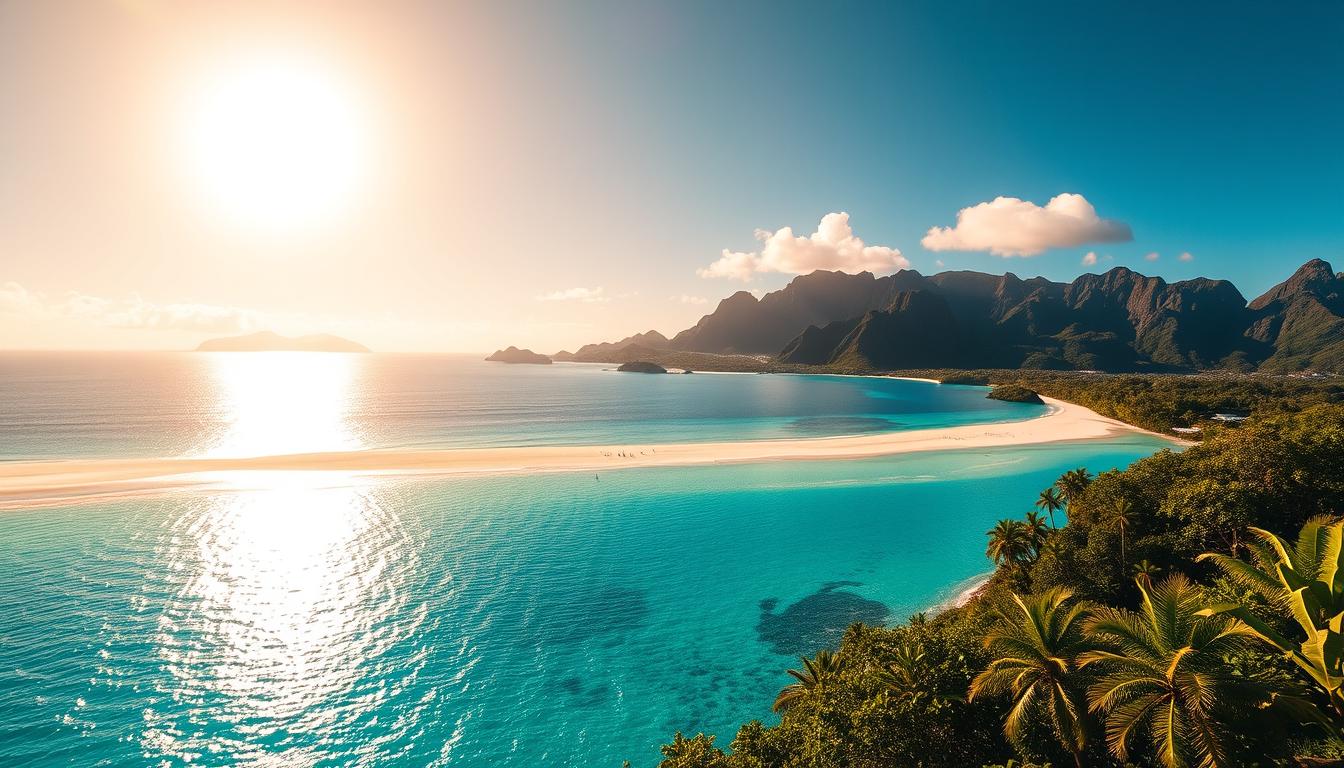
by The Fiji Islands are a key archipelago in the South Pacific Ocean. They are north of New Zealand and east of Australia. Known for their clear lagoons and palm-lined beaches, these islands are a favorite spot for many.
This island nation boasts a unique geography and diverse ecosystems. Knowing where Fiji is helps us understand its culture and environment.
The South Pacific is vast, with many islands. Fiji’s location makes it special in this region.
Geographical Coordinates and Position of Fiji
Fiji is in a special spot in Oceania. Its exact location is key to understanding its climate, culture, and economy. The latitude and longitude of Fiji are vital for this.
Exact Latitude and Longitude
Fiji is at 18.1667° S latitude and 178.4500° E longitude. This spot in the South Pacific Ocean makes Fiji unique. It’s surrounded by island nations and diverse cultures. Knowing Fiji’s coordinates helps with navigation and understanding its role in the world.
Distance from Major Landmasses
Fiji is close to big landmasses and island nations. It’s near Australia, New Zealand, Tonga, Tuvalu, and Vanuatu. This closeness affects Fiji’s climate, trade, and culture.
Fiji is about 1,100 miles (1,770 km) north of New Zealand. It’s also 300 miles (480 km) west of Tonga. These distances are important for Fiji’s connections with other places.
| Landmass/Island Nation | Approximate Distance from Fiji |
|---|---|
| Australia | 2,500 miles (4,023 km) |
| New Zealand | 1,100 miles (1,770 km) |
| Tonga | 300 miles (480 km) |
Position in the South Pacific
Fiji is a key player in the South Pacific Ocean. Captain James Cook said Fiji is important in the Pacific’s geography and culture. Fiji’s location helps it in regional politics and economies.
Fiji is a center for tourism and trade in the Pacific. Its strategic location makes it a vital hub for regional activities.
“Fiji’s strategic location in the Pacific makes it an important hub for regional activities and a significant player in the geopolitical landscape of Oceania.”
Fiji in the Context of Oceania
Fiji’s location in Oceania is key to understanding its culture and economy. It’s part of Melanesia, along with Vanuatu and the Solomon Islands.
Neighboring Island Nations
Fiji is surrounded by island nations that add to the region’s cultural richness. New Zealand lies to the south, and Tonga to the east. Vanuatu is to the west. These countries have historical and cultural ties with Fiji, shaping its growth and international relations.
- New Zealand: A significant economic partner for Fiji
- Tonga: Shares cultural exchanges and historical ties
- Vanuatu: Collaborates on regional issues within Melanesia
Fiji’s Position in Melanesia
Fiji plays a big role in Melanesia, adding to the subregion’s culture and economy. As a larger island nation, Fiji hosts regional events and organizations. Suva, its capital, is called the “Hub of the Pacific” for its strategic location and economic activity.
Fiji’s role in Melanesia is multifaceted, involving:
- Hosting regional political and economic forums
- Participating in cultural exchanges and preserving Melanesian heritage
- Engaging in economic cooperation with neighboring countries
Relative Size and Importance in the Region
Fiji is a significant island nation in Oceania, with a land area of about 18,274 square kilometers. Its size and location make it a key player in regional affairs. Fiji’s economy, driven by tourism and agriculture, boosts its influence in the Pacific Islands Forum and other organizations.
The country’s importance is also seen in its role in maintaining regional stability and promoting economic growth among Pacific island nations.
The Fiji Archipelago: Island Composition
Fiji has about 300 islands, making it a complex archipelago. The islands differ in size, shape, and who lives there. This makes Fiji a unique and interesting place to explore.
Major Islands of Fiji
The major islands of Fiji are key to its identity. They are big and important for Fiji’s economy and culture.
Viti Levu and Vanua Levu
Viti Levu, or “Great Fiji,” is the biggest island. It has the capital, Suva, and most of Fiji’s people and work. Vanua Levu is the second biggest. It’s known for its tough terrain and valuable minerals. These two islands are a big part of Fiji’s land and people.
Taveuni and Other Significant Islands
Taveuni, called the “Garden Island,” is the third largest. It’s famous for its greenery and beauty. Other important islands include Kadavu, Ovalau, and the Mamanuca and Yasawa islands. Each has its own special features and draws. These islands help make Fiji a tropical paradise.
Distribution and Arrangement of Islands
The Fiji Islands are spread out over a big area, mostly in the Koro Sea. They’re not scattered randomly. They’re grouped into clusters or chains. This has shaped history, settlement, and tourism.
Inhabited vs. Uninhabited Islands
About 100 of the 300 islands have people living on them. These range from big, developed islands like Viti Levu to small, remote ones. The uninhabited islands are important for Fiji’s nature and conservation. They’re often protected areas or nature reserves.
The variety in Fiji’s islands makes it appealing to visitors and important for nature. Knowing about these islands helps us understand Fiji’s culture, economy, and environment.
Fiji Location: Understanding Its Geographic Significance
The Fiji Islands are in the heart of the South Pacific. This spot makes them key for regional and global talks. Fiji’s location has helped it grow as a major center for trade, culture, and politics.
Strategic Position in the South Pacific
Fiji sits at the center of the South Pacific Ocean. This strategic position makes Fiji a vital link between Pacific Island nations and the world. Its close location to shipping and air routes boosts its role as a key hub for logistics and communication.
Historical Importance of Fiji’s Location
Fiji’s location has always been appealing to traders, explorers, and missionaries. Its natural harbors and fertile lands helped early settlers. This position also made it a key spot for exchanging goods and ideas across the Pacific.
Modern Geopolitical Significance
Today, Fiji’s location is just as important. The country is active in regional groups like the Pacific Islands Forum. Fiji works to solve common problems and boost cooperation among Pacific nations. Its diplomatic work and peacekeeping efforts show its dedication to global peace.
Fiji’s importance is seen in its strategic spot, historical value, and role today. As Fiji deals with the challenges of regional and global issues, its location is key to its identity and influence in the South Pacific.
Physical Geography of the Fiji Islands
The Fiji Islands have a wide range of ecosystems. From dense forests to coral reefs, they are truly unique. This makes Fiji a fascinating place to explore.
Topographical Features
Fiji’s landscape is varied, with mountains and valleys. The islands have rugged terrain and high peaks. The highest peak, Tomanivi, is 1,324 meters high.
Coastal Characteristics and Coral Reefs
Fiji’s coastlines are extensive, with many beautiful beaches. The islands are also surrounded by coral reefs. These coral reefs are home to a wide variety of marine life.
Mountain Ranges and Volcanic Activity
Fiji’s mountains were formed by volcanic activity. Even though Fiji is not active now, its terrain shows the past volcanic activity. Volcanic rocks and soils are common.
The mix of these features makes Fiji’s geography rich and diverse. It supports both the natural environment and the economy.
Maritime Boundaries and Exclusive Economic Zone
Fiji’s maritime boundaries and Exclusive Economic Zone (EEZ) are key to its economy and environment. Its location in the South Pacific Ocean gives it a vast maritime area.
Territorial Waters
Fiji’s territorial waters stretch 12 nautical miles from its coast. Here, Fiji controls the water, seabed, and subsoil, plus the air above. Managing these waters is vital for fishing activities, maritime navigation, and resource extraction.
These waters are also important for maritime law enforcement. Fiji fights against piracy and drug trafficking here. Working with neighbors and following international law is necessary for effective management.
Maritime Agreements with Neighboring Nations
Fiji has made maritime agreements with nearby countries. These agreements help define its maritime boundaries and manage shared resources. They are key to avoiding disputes and using marine resources sustainably.
| Neighboring Nation | Agreement Type | Year Signed |
|---|---|---|
| Tonga | Maritime Boundary Treaty | 1983 |
| Vanuatu | EEZ Boundary Agreement | 2011 |
| Solomon Islands | Maritime Cooperation Agreement | 1992 |
These agreements help Fiji and its neighbors in fisheries management, maritime surveillance, and environmental protection. They are vital for regional stability and economic growth.
“The effective management of maritime boundaries and the EEZ is vital for the economic and environmental sustainability of Pacific island nations like Fiji.”
Climate and Weather Patterns of Fiji
Fiji has a tropical climate with warm weather and diverse ecosystems. It faces challenges from weather events like cyclones. Its location near the International Date Line adds to its unique climate.
Tropical Climate Characteristics
Fiji’s climate is warm and humid all year. Temperatures range from 22°C to 30°C (72°F to 86°F). This makes it perfect for tropical crops and marine life.
The warm waters around Fiji support coral reefs. These reefs are key for Fiji’s biodiversity and tourism.
Fiji gets a lot of rainfall, mainly during the wet season. This rain keeps the islands green and fills up freshwater sources.
Seasonal Variations and Best Times to Visit
Fiji has two seasons: wet and dry. The wet season is from November to April, with more rain and humidity. The dry season, from May to October, has clearer skies and better temperatures.
The best time to visit Fiji is during the dry season. It’s great for snorkeling, diving, and hiking. You can enjoy Fiji’s beaches and nature without rain.
Impact of Location on Climate and Weather Events
Fiji’s location in the Pacific makes it prone to weather events like cyclones. These storms can cause damage and disrupt communities.
Global weather patterns like El Niño and La Niña also affect Fiji’s climate. Knowing these patterns helps predict and prepare for extreme weather.
Historical Discovery and Mapping of Fiji
Fiji’s history is fascinating, from its indigenous roots to European discovery. The islands have been home to Pacific Islanders for thousands of years. Later, Europeans arrived, marking a new chapter in Fiji’s story.
Early Polynesian Navigation to Fiji
Pacific Islanders were the first to inhabit Fiji. They were expert navigators, traveling long distances with ancient methods. They brought their culture, language, and customs, creating a vibrant community in Fiji.
European Discovery and Exploration
Dutch explorer Abel Tasman was the first European to see Fiji in 1643. Later, James Cook, a British explorer, visited in the 18th century. His visits greatly helped map Fiji and share it with Europe. European arrival brought new technologies, diseases, and cultural practices to Fiji.
Evolution of Fiji on World Maps
As time went on, Fiji’s place on world maps changed. From early mistakes to accurate maps, Fiji’s geography became clearer. This shows how far maritime exploration has come and Fiji’s key role in the Pacific.
Transportation to and from Fiji
Fiji is easy to reach from around the world. It has international airports and ports. This makes planning your trip simple, whether you’re coming from nearby islands or the United States.
International Air Routes from the United States
Fiji is reachable by several international airlines from major U.S. cities. Fiji Airways has direct flights from Los Angeles and San Francisco. This is great for American travelers. Other airlines might have flights with connections, giving more travel options.
- Fiji Airways operates direct flights from the U.S. West Coast.
- Other international airlines offer connecting flights.
- Flight schedules change with the seasons, so check with airlines for updates.
Maritime Connections and Cruise Options
Fiji is also a favorite stop for cruise ships in the Pacific. Many cruise lines include Fiji in their routes. This lets passengers see the islands’ beauty without changing hotels often. Travelers can also take cargo ships or private yachts, if they prefer the sea.
“Fiji’s ports are equipped to handle a variety of vessels, from large cruise ships to smaller yachts.”
Internal Transportation Between Islands
Traveling between Fiji’s islands is easy with domestic flights, ferries, and private boat charters. Fiji Airways and Pacific Island Air offer flights. Ferries connect major islands. Private boat charters offer a flexible way to see Fiji’s coastlines up close.
In summary, Fiji’s transport options are varied and meet different needs. Whether you arrive by air or sea, or travel between islands, there are many ways to make your trip enjoyable.
Time Zone and International Date Line Considerations
Fiji’s time zone and its spot near the International Date Line are key for travelers and businesses. Fiji is in the UTC+12 time zone. This affects how it works with the world and plans for travel.
Fiji’s Time Zone
Fiji is on UTC+12, welcoming a new day early. This is good for international business because it lets Fiji start the day early. It also makes planning trips easier for visitors.
The stable time zone helps Fiji’s tourism too. It makes it easier for people from other countries to adjust their plans.
Relationship to the International Date Line
Fiji is close to the International Date Line (IDL). Being west of it, Fiji is among the first to start a new day. This has historical and cultural significance for Fiji.
Being near the IDL also affects Fiji’s international dealings. It changes how Fiji works with countries on the other side of the date line.
Cultural and Demographic Landscape
Fiji’s cultural and demographic landscape is a fascinating mix. It comes from its diverse population and geography. The country’s people live on many islands, showing a rich cultural diversity.
Population Distribution
The people of Fiji live unevenly across its islands. Viti Levu, the biggest island, holds most of the population. This includes the capital, Suva. Other islands, like Vanua Levu and the Mamanuca and Yasawa islands, also have people. They are often found near tourism spots and local businesses.
Cultural Diversity
Fiji’s culture shows its geography and history. The iTaukei people live alongside Indians, Europeans, Chinese, and other Pacific Islanders. This mix is celebrated in festivals and traditions, making Fiji’s culture rich.
Urban and Rural Areas
Places like Suva and Nadi are bustling with life. They offer modern services and culture. But, rural areas keep traditional ways alive. They focus on farming and crafts. This mix of city and country life makes Fiji’s culture special.
Major Tourist Destinations Based on Geography
Fiji’s unique geography, with many islands and coral reefs, is perfect for island-hopping and beach fun. The country’s varied landscapes, from beautiful beaches to lush forests, appeal to many tourists.
Beach and Coastal Attractions
Fiji is famous for its stunning beaches and coral reefs. It’s a dream spot for beach lovers and snorkeling fans. The Mamanuca and Yasawa islands are known for their stunning beaches and clear waters.
Some top beach spots include:
- Monuriki Island, famous from “Cast Away”
- Natadola Beach, with its white sand and clear waters
- Denarau Island, great for luxury resorts and golf
Inland Natural Wonders
Fiji’s inland natural wonders show the country’s varied geography. Viti Levu, Fiji’s biggest island, has lush forests, waterfalls, and trails for hiking.
Places to see include:
- The Sigatoka Sand Dunes National Park, a unique site
- The Pacific Harbour, for adventure like zip-lining and rafting
- The Mount Tomanivi, Fiji’s highest peak, for hiking
Island-Hopping Opportunities
Fiji’s many islands make it perfect for island-hopping. Each island has its own charm and attractions.
A great island-hopping trip might include:
| Island | Main Attractions |
|---|---|
| Mamanuca Islands | Surfing, snorkeling, and luxury resorts |
| Yasawa Islands | Scenic beauty, coral reefs, and cultural experiences |
| Coral Coast | Affordable resorts, water sports, and local culture |
Travel experts say, “Fiji’s island-hopping lets visitors see the Pacific Islands’ beauty in one trip.”
Economic Implications of Fiji’s Location
Fiji’s spot in the Pacific has big economic benefits. It’s in the heart of the South Pacific, making it a top spot for tourists. It’s also key for trade in the region.
Tourism Industry and Geographic Appeal
Fiji’s economy gets a big boost from tourism. Its stunning beaches and coral reefs draw visitors from everywhere. This helps a lot in boosting Fiji’s GDP.
Trade Routes and Access to Markets
Fiji sits on major shipping paths, making it a trade center in the Pacific. Its ports link to important markets, helping with imports and exports. This helps Fiji grow economically by connecting to global trade.
Natural Resources and Their Distribution
Fiji has natural resources like timber, minerals, and fish. These resources are spread across its islands, bringing both chances and hurdles for growth. Managing these resources well is key to Fiji’s economic future.
Conclusion: Fiji’s Place in Our World
Fiji stands out as a unique cultural and geographical gem in the Pacific. It’s a top choice for travelers from around the world. Its location in the South Pacific boosts its economic and cultural standing.
Fiji is a major tourist spot, thanks to its coral reefs and lush islands. These features offer a wide range of experiences for those who want to Explore Fiji. The country’s cultural diversity, shaped by its geography, also makes it appealing.
Fiji’s importance is rooted in its rich history, vibrant culture, and breathtaking natural beauty. Its tourism industry and geography play key roles in its economy. This makes Fiji a significant player in the regional economy.
In summary, Fiji’s value goes beyond its beautiful landscapes. It represents a mix of cultural heritage and economic strength. This solidifies its role in the global community.