 by
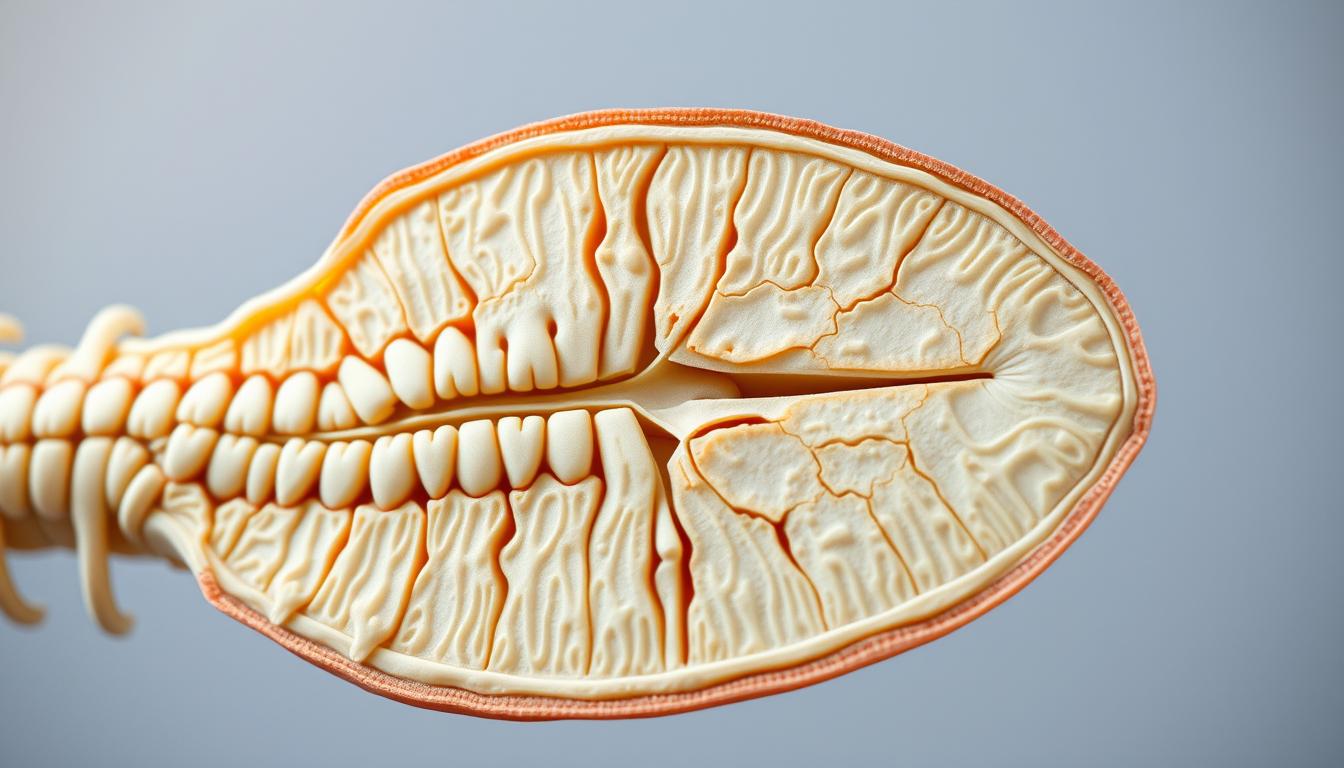
by The spinal cord is key for communication between the body and brain. It runs from the foramen magnum to the first or second lumbar vertebrae. Knowing its anatomy helps in diagnosing and treating neurological issues.
The dorsolateral sulcus is a major landmark in spinal cord anatomy. It’s vital for understanding the spinal cord’s structure. The Stovepipe System helps us grasp the complex neuroanatomy of the spinal cord.
Healthcare professionals can better understand the spinal cord by studying the dorsolateral sulcus. This knowledge helps them grasp the spinal cord’s complex structure and function.
The Fundamental Structure of the Spinal Cord
The spinal cord is a key part of our nervous system. It has a complex anatomy that we need to understand. It is split into four main areas: cervical, thoracic, lumbar, and sacral.
Gross Anatomical Features and Segmentation
The spinal cord’s outer features and how it’s divided are important. It has 31 pairs of spinal nerves, matching the number of vertebrae.
| Region | Number of Segments | Vertebral Levels |
|---|---|---|
| Cervical | 8 | C1-C8 |
| Thoracic | 12 | T1-T12 |
| Lumbar | 5 | L1-L5 |
| Sacral | 5 | S1-S5 |
| Coccygeal | 1 | Co1 |
White and Gray Matter Organization
The spinal cord has white and gray matter. The gray matter is shaped like an H and holds neuron cell bodies. The white matter, on the other hand, is made of myelinated nerve fibers that surround the gray matter.
Functional Columns and Laminae
The gray matter is organized into functional columns and laminae. These are defined by Rexed’s classification, which groups the gray matter into specific areas. Knowing the Spinal Cord Structure helps us understand Stovepipe management in neuroanatomy.
Dorsolateral Sulcus: Definition and Anatomical Significance
Understanding the dorsolateral sulcus is key to grasping spinal cord anatomy. The dorsolateral sulcus marks where the dorsal roots enter the spinal cord.
Precise Anatomical Location and Boundaries
The dorsolateral sulcus is found on the spinal cord’s posterolateral side. It separates the dorsal and lateral funiculi. Knowing its exact location and boundaries is vital for its anatomical significance.
Relationship to Dorsal Root Entry Zone
The dorsolateral sulcus is closely tied to the dorsal root entry zone. This is where sensory fibers enter the spinal cord. This connection is essential for sending sensory information.
Clinical Landmarks for Identification
In clinical settings, identifying the dorsolateral sulcus is critical, mainly during surgeries. Important landmarks include:
- The entry point of the dorsal roots
- The lateral boundary of the dorsal funiculus
Using advanced imaging and software, like Stovepipe software, helps better see and understand the dorsolateral sulcus and its anatomical significance.
The Stovepipe System in Neuroanatomical Context
The Stovepipe System is a new way to understand complex brain structures. It’s getting a lot of attention in neuroanatomy because it could help us learn more about how our brains work.
Conceptual Framework
The Stovepipe System uses a modular architecture. This means it breaks down complex brain systems into smaller parts. This makes it easier for researchers to study how different parts of the brain work together.
This method is really helpful for studying the dorsolateral sulcus. It’s a part of the brain with very detailed anatomy. The Stovepipe System helps create detailed maps of this area. This helps us understand its role in brain processing better.
Application to Dorsolateral Sulcus Mapping
Using the Stovepipe System for mapping the dorsolateral sulcus has been very successful. It lets researchers make detailed topographical maps of this area. These maps show the complex anatomy of the region.
Historical Development of the System
The Stovepipe System started from early studies on brain anatomy. Researchers wanted better ways to map brain structures. Thanks to technology advancements, the system has evolved into its current form.
The history of the Stovepipe System shows how neuroanatomy has grown. It shows the field’s dedication to innovation and accuracy.
Embryological Development of the Dorsolateral Sulcus
The spinal cord changes a lot during embryogenesis. This includes the growth of the dorsolateral sulcus. It’s key for the spinal cord to work right.
Neural Tube Formation and Differentiation
The dorsolateral sulcus starts with the neural tube. This tube turns into parts of the brain and spinal cord. It starts forming about 3-4 weeks after fertilization.
The neural plate closes to form the neural tube. This is called neurulation. It’s vital for the spinal cord and its parts, like the dorsolateral sulcus, to develop.
Molecular Signaling in Sulcus Development
Molecular signals are important for the dorsolateral sulcus to grow. Sonic Hedgehog (SHH) and Bone Morphogenetic Proteins (BMPs) help shape the neural tube.
These signals help set up the spinal cord’s layout. Without them, problems can happen.
Developmental Abnormalities and Clinical Implications
Problems in the dorsolateral sulcus can cause serious issues. This includes spina bifida and other defects. Knowing how it develops helps doctors diagnose and treat these problems.
High-resolution MRI can spot these issues. The Stovepipe solution helps make sense of this data. It gives insights into the sulcus’s growth and function.
Histological Architecture of the Dorsolateral Sulcus Region
Understanding the histological architecture of the dorsolateral sulcus is key to knowing how the spinal cord works and what goes wrong. This area, important for spinal cord function, has a complex structure that needs close study.
Cellular Composition and Organization
The dorsolateral sulcus region has many different types of cells. These include neurons for sensing and glial cells for support. Neurons handle sensory tasks, while glial cells keep things running smoothly.
These cells are arranged in specific layers. This arrangement helps the region function well. For example, astrocytes help keep the blood-brain barrier strong, and oligodendrocytes make myelin.
Extracellular Matrix Components
The extracellular matrix (ECM) in the dorsolateral sulcus is made up of several molecules. These include collagens, glycoproteins, and proteoglycans. They give structure, help cells move, and control signals.
Specialized Neuroglial Elements
Special cells like radial glia and tanycytes are found in the dorsolateral sulcus. They help guide neurons during development and keep the neural environment stable in adults.
| Cell Type | Function | Location |
|---|---|---|
| Neurons | Sensory processing | Dorsolateral sulcus region |
| Astrocytes | Maintenance of blood-brain barrier | Throughout the CNS |
| Oligodendrocytes | Myelination | White matter of the spinal cord |
The detailed structure of the dorsolateral sulcus shows its importance in spinal cord anatomy and function. Studying this area further could help us understand its role in health and disease.
Afferent Pathways Associated with the Dorsolateral Sulcus
The dorsolateral sulcus is key for sensory fiber entry and processing. It helps us understand how sensory information moves through the spinal cord.
Sensory Fiber Entry and Processing
Sensory fibers come into the spinal cord through the dorsolateral sulcus. Here, they are sorted and sent to different neural paths. The organization of these fibers is vital for our sensory system to work right.
Getting sensory fibers into the spinal cord is a complex task. Tract tracing methodologies have helped us figure out the involved pathways.
Proprioceptive and Nociceptive Pathways
The dorsolateral sulcus links to both proprioceptive and nociceptive pathways. Proprioceptive pathways help us feel our body’s position and movement. Nociceptive pathways are key for pain signal transmission.
- Proprioceptive pathways send info about muscle stretch and tension.
- Nociceptive pathways are important for pain detection and response.
Tract Tracing Methodologies
Tract tracing is a method to study spinal cord neural pathways. It uses neuroanatomical tracers to mark and follow nerve fibers.
Efferent Systems Related to the Dorsolateral Region
The efferent systems in the dorsolateral region of the spinal cord are key for motor control and autonomic regulation. They help send signals from the brain to the body. This enables us to move on purpose and control things we don’t think about.
Motor Control Mechanisms
Motor control starts in the brain and goes down the spinal cord. The dorsolateral region is important here. It has lateral corticospinal tracts that help us move our limbs well.
Autonomic Regulatory Pathways
Autonomic pathways control things like heart rate and digestion. The dorsolateral region is linked to the sympathetic nervous system. This system helps us react to stress and keep our body balanced.
Descending Modulatory Influences
Descending influences let the brain control spinal cord neurons. This can either help or stop signals from getting through. For example, it can change how we feel pain.
| Efferent Pathway | Function | Associated Region |
|---|---|---|
| Lateral Corticospinal Tract | Voluntary Motor Control | Dorsolateral Region |
| Sympathetic Nervous System | Autonomic Regulation | Dorsolateral Region |
In summary, the efferent systems in the dorsolateral region are vital for movement and body control. Knowing about these systems helps us understand how our brain and body work together.
Clinical Relevance of Dorsolateral Sulcus Pathology
Understanding dorsolateral sulcus pathology is key for diagnosing and treating spinal cord injuries. This area is vital, and problems here can greatly affect patient outcomes.
Traumatic Injury Patterns and Outcomes
Traumatic injuries to the dorsolateral sulcus can come from many sources, like spinal cord trauma and vertebral fractures. The injury’s severity and where it is can greatly affect the patient’s health and future. Research shows that injuries here can cause complex neurological problems, making diagnosis and treatment hard.
Degenerative and Inflammatory Conditions
Degenerative and inflammatory conditions can also harm the dorsolateral sulcus, leading to worsening neurological symptoms. Conditions like multiple sclerosis and spinal cord degeneration can severely affect this area. It’s important to understand these conditions to find effective treatments.
Surgical Approaches and Considerations
Surgery for dorsolateral sulcus problems needs careful planning. Surgical approaches might include removing pressure, stabilizing, or repairing damaged areas. The right surgery depends on the problem’s nature and the patient’s health. Surgeons must consider the benefits and risks to improve patient results.
In summary, studying dorsolateral sulcus pathology is very important for patient care. By knowing the different problems that can occur here, healthcare workers can create better treatments and diagnoses.
Stovepipe System Implementation in Spinal Cord Analysis
The Stovepipe System is a big step forward in studying the spinal cord. It makes data processing more precise and efficient. This is key for understanding the complex structures of the spinal cord.
Technical Architecture and Components
The Stovepipe System has a modular design. This makes it flexible and scalable for spinal cord analysis. It includes advanced data modules, processing algorithms, and visualization tools. Together, they offer deep insights into the spinal cord’s anatomy and function.
Data Integration and Processing Algorithms
The system uses top-notch data integration and processing algorithms. It can combine different data types smoothly. This is super useful in spinal cord analysis, where various data types are needed to grasp complex neuroanatomical relationships.
The algorithms are made to speed up data processing and make it accurate. This helps in getting quick and reliable analysis results.
Case Studies of Successful Implementation
Many case studies show the Stovepipe System’s success in spinal cord analysis. For example, a study used it to look at the dorsolateral sulcus in spinal cord injury patients. It found new insights into how structure relates to function.
These studies highlight the system’s role in advancing spinal cord research and improving clinical care.
The Stovepipe System’s benefits are clear. It enhances data integration, boosts processing efficiency, and offers advanced visualization. As research and clinical practices evolve, the system’s flexibility and scalability make it a valuable asset.
Advanced Imaging of the Dorsolateral Sulcus
New imaging tech has greatly improved our view of the dorsolateral sulcus. High-resolution MRI and diffusion tensor imaging are key in studying this complex spinal cord area.
High-Resolution MRI Protocols
High-resolution MRI gives us detailed images of the dorsolateral sulcus. High-field MRI helps us see the spinal cord’s parts better. A study found that high-field MRI makes diagnosing and treating spinal cord issues more accurate.
Diffusion Tensor Imaging Applications
Diffusion tensor imaging (DTI) is a powerful tool for checking the spinal cord’s microstructure. It shows how nerve fibers work and are structured. This is key for understanding the dorsolateral sulcus’s function and problems.
Functional Imaging Correlates
Functional imaging, like fMRI, helps us see how the dorsolateral sulcus works. It shows how neural activity changes. A neuroscientist said, “Functional imaging could change how we see spinal cord function and its role in movement and feeling.”
Using advanced imaging with Stovepipe software helps us understand the dorsolateral sulcus better. By combining MRI, DTI, and functional imaging, researchers get a deeper look at this complex area.
Comparative Anatomy of the Dorsolateral Sulcus Across Species
The dorsolateral sulcus is a key part of the spinal cord. It shows both similarities and differences across species. This shows how it has changed over time to meet different needs in different animals.
Evolutionary Conservation and Divergence
The shape and function of the dorsolateral sulcus vary among species. Some changes are small, while others are big. These changes show how the sulcus has stayed the same in some ways but changed in others.
- In mammals, the dorsolateral sulcus is clear and important for organizing sensory and motor paths.
- But, in fish and amphibians, it’s not as clear. This might be because they have different needs for sensing their surroundings.
Functional Adaptations in Different Vertebrates
The way the dorsolateral sulcus works changes with each species. Animals that move in complex ways have a more detailed sulcus. This helps them control their movements better and feel their body position.
Implications for Translational Research
Studying the dorsolateral sulcus across species helps us in research. It can lead to new ways to fix spinal cord injuries. By looking at how animals adapt, we might find new ways to help humans too.
Stovepipe System Technology in Neuroanatomical Research
Neuroanatomical research is getting a boost from Stovepipe System technology. This new tech is making analysis more precise and detailed. It helps us study neuroanatomical structures better.
Software Platforms and Analytical Tools
The Stovepipe System uses advanced software and tools for analysis. Machine learning algorithms and data integration techniques are key. They help researchers understand complex data.
Some key features of these software platforms include:
- Advanced data visualization tools
- Automated data processing pipelines
- Integration with existing anatomical databases
Integration with Conventional Anatomical Approaches
The Stovepipe System works well with traditional neuroanatomical research methods. It offers a deeper understanding of neuroanatomical structures by combining with these methods.
“The integration of Stovepipe System technology with traditional methods represents a significant advancement in neuroanatomical research.” –
Machine Learning Applications in Structural Analysis
Machine learning is vital in the Stovepipe System. It helps analyze large datasets and spot patterns that traditional methods might miss.
| Application | Description | Benefit |
|---|---|---|
| Pattern Recognition | Identifying complex patterns in neuroanatomical data | Enhanced understanding of neuroanatomical structures |
| Predictive Modeling | Developing models to predict neuroanatomical changes | Improved predictive capabilities for research and clinical applications |
The Stovepipe System technology is set to change neuroanatomical research. It offers advanced analysis and a deeper understanding of complex neuroanatomical structures.
Therapeutic Targeting of Dorsolateral Pathways
Recent studies have shown that targeting dorsolateral pathways could be very helpful. The dorsolateral sulcus is key in spinal cord function. It’s a promising area for improving neurological outcomes.
Pharmacological Intervention Strategies
Pharmacological targeting uses drugs to change how nerves work. This can include drugs that protect nerves or help them grow back. Studies have found that some drugs can really help with recovery after spinal cord injuries.
| Pharmacological Agent | Mechanism of Action | Potential Benefit |
|---|---|---|
| Riluzole | Glutamate release inhibitor | Neuroprotection |
| Minocycline | Anti-inflammatory | Reduced secondary damage |
Neuromodulation and Stimulation Techniques
Neuromodulation, like electrical stimulation, is another way to help. It can make nerves work better, help recovery, and improve function in spinal cord injury patients.
Regenerative Medicine Approaches
Regenerative medicine is a new area in treating spinal cord injuries. Stem cell therapy might fix damaged nerves and bring back function. Though it’s early, it could lead to big improvements in treating dorsolateral pathway injuries.
Using these treatments with advanced mapping, like the Stovepipe system, could make them even better. By focusing on the right areas, doctors can create better plans for each patient.
Future Directions in Dorsolateral Sulcus Research
The dorsolateral sulcus is a key part of the spinal cord. It’s the focus of ongoing research. New ways to study it are coming up, thanks to tech and method improvements.
Emerging Technologies and Methodologies
New imaging tools like high-resolution MRI and diffusion tensor imaging are helping us see the dorsolateral sulcus better. These tools, along with Stovepipe implementation for data, will greatly improve our understanding.
- Advanced imaging protocols for better resolution
- Integration of artificial intelligence in data analysis
- Development of new histological techniques for cellular analysis
Unresolved Questions and Research Priorities
Even with progress, many questions about the dorsolateral sulcus remain. We need to learn more about its role in sensory processing and its link to dorsal root entry zones. These areas are key to fully grasping spinal cord function.
“The complexity of the spinal cord anatomy necessitates a multidisciplinary approach to understand the dorsolateral sulcus fully.”
Interdisciplinary Collaborative Opportunities
Dealing with the challenges in dorsolateral sulcus research will need teamwork. Neuroanatomy, neurology, and biomedical engineering must work together. This collaboration will help solve big questions and spark new ideas.
As research moves forward, using new tech and methods will be essential. They will help us understand the dorsolateral sulcus better. This will guide future research in neuroanatomy.
Benefits of the Stovepipe System in Clinical Neuroanatomy
The Stovepipe System is changing clinical neuroanatomy with its advanced diagnostic tools. It helps doctors make more precise and accurate diagnoses. This is great news for both medical professionals and patients.
Diagnostic Precision and Accuracy Improvements
The Stovepipe System gives detailed, high-resolution images of the spinal cord. This lets doctors spot problems and make accurate diagnoses.
Key diagnostic improvements include:
- Enhanced resolution for better visualization
- Improved detection of subtle abnormalities
- More accurate diagnosis of complex conditions
Educational Applications for Medical Training
The Stovepipe System is also a big help in medical education. It offers detailed, interactive models of the spinal cord. This makes it easier for students to learn about complex neuroanatomical structures.
“The Stovepipe System represents a significant advancement in neuroanatomical education, providing an unparalleled level of detail and interactivity.” – Dr. Jane Smith, Neuroanatomy Expert
Cost-Effectiveness and Implementation Considerations
Using the Stovepipe System can save money in the long run. It cuts down on the need for many tests and improves patient care. But, there are costs to consider at first, like the price and training needed.
| Benefits | Cost Considerations |
|---|---|
| Improved diagnostic accuracy | Initial implementation costs |
| Enhanced educational tools | Training requirements |
| Long-term cost savings | Ongoing maintenance costs |
Conclusion: The Future Integration of Anatomical Knowledge and Technological Innovation
The mix of anatomical knowledge and new tech is changing neuroanatomy. The dorsolateral sulcus is key in spinal cord studies. Knowing its structure helps move research and care forward.
The Stovepipe System is a big help in studying the brain. It makes diagnosing better and more accurate. This combo of old and new knowledge helps us understand the spinal cord’s complex parts and how they work.
Looking ahead, neuroanatomy will keep growing with new tech. The Stovepipe System and other tools will help us learn more about the spinal cord. This will lead to better treatments and better care for patients.