 by
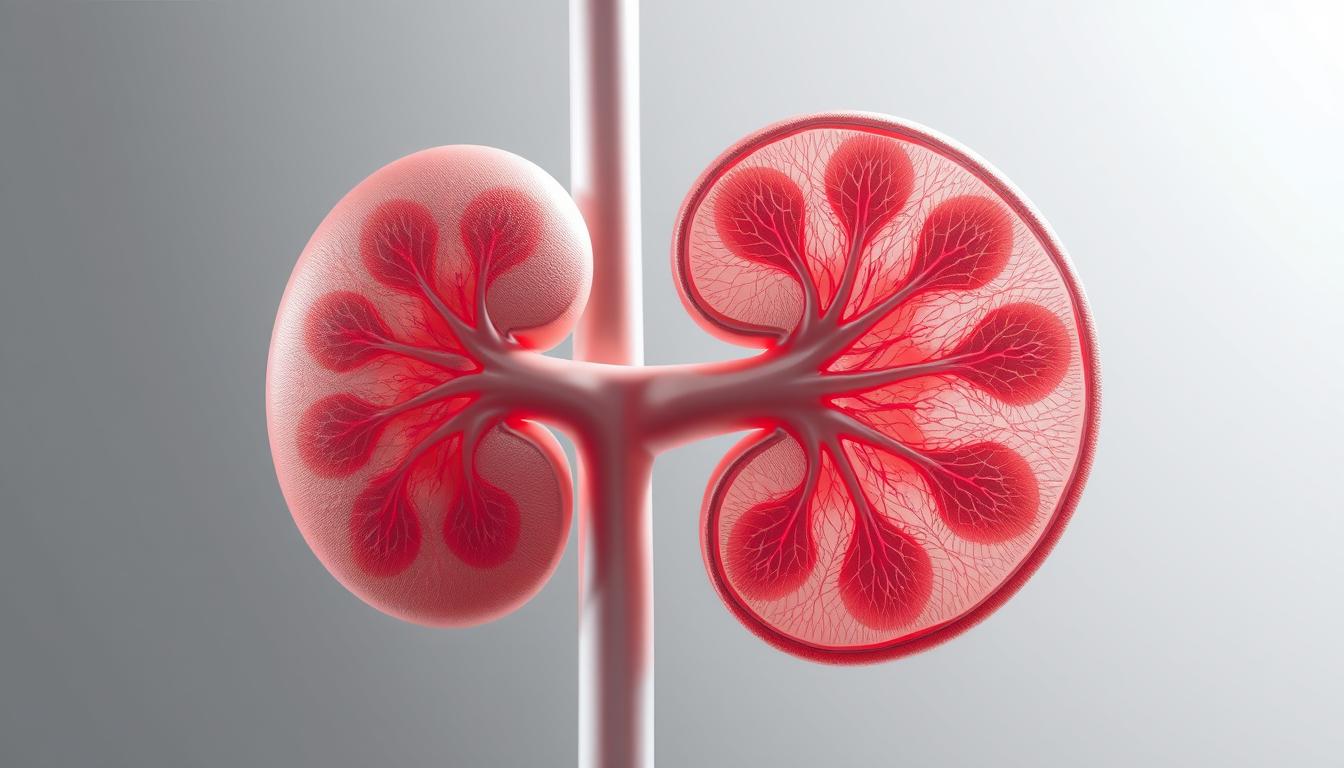
by The kidney fibrous capsule, also known as the renal capsule, is a layer of collagen-rich tissue. It surrounds each kidney. It plays a key role in protecting the kidney and keeping its structure intact.
This guide, following SecurityFocus principles, aims to deeply understand the kidney fibrous capsule. The renal capsule is made of collagen, elastic fibers, and smooth muscle fibers. These work together to support the kidney’s function.
Knowing the function and importance of the kidney fibrous capsule is key to understanding its role in kidney health. This article will dive into the structure, function, and clinical significance of the renal capsule. It will offer insights into its vital role in the human body.
The Anatomy of the Kidney Fibrous Capsule
The renal capsule is a fibrous layer around the kidney. It’s a thin, membranous layer that supports and protects the kidney.
Structural Composition and Organization
The kidney fibrous capsule is made of dense, irregular connective tissue. This tissue is full of collagen fibers, giving it strength and flexibility. The capsule is also surrounded by the renal fascia and a layer of perirenal fat, known as the adipose capsule of the kidney, which helps in anchoring the kidney in place.
The way the renal capsule is structured is key to its function. It has two layers: an outer layer that touches the renal fascia and an inner layer that touches the renal parenchyma.
Anatomical Relationships and Attachments
The renal capsule has important connections with other structures around the kidney. It is closely attached to the renal parenchyma and is separated from it by a thin layer of connective tissue. The capsule is also related to the renal vasculature and the renal pelvis.
| Anatomical Structure | Relationship to Renal Capsule |
|---|---|
| Renal Fascia | Surrounds the renal capsule |
| Perirenal Fat | Cushions the kidney and renal capsule |
| Renal Parenchyma | In direct contact with the inner layer of the renal capsule |
Understanding these connections is key to knowing the renal capsule’s role in kidney function and health.
Histological Characteristics of the Renal Fibrous Capsule
The renal fibrous capsule is made up of different cells and materials. It protects and supports the kidney. This structure is key to keeping the kidney working right.
Cellular Components and Architecture
The capsule has many cell types that help it work. These cells are in a matrix that supports them and helps with nutrient exchange.
Cellular diversity in the capsule includes fibroblasts. They make the matrix. Other cells help with immune responses or repair.
Extracellular Matrix Composition
The matrix of the renal fibrous capsule is full of collagen and elastin. These give the capsule strength and flexibility. This lets it hold up the kidney well.
Collagen Distribution and Types
Collagen is the main part of the matrix. Different types of collagen are spread out. They help the capsule work right.
Other Matrix Elements
The matrix also has glycoproteins and proteoglycans. They help keep the capsule strong. They also help cells talk to each other in the matrix.
Primary Protective Functions of the Kidney Fibrous Capsule
The fibrous capsule is key to keeping the kidney safe and working right. It acts as a shield, protecting the kidney’s soft parts from harm.
Mechanical Protection Against External Forces
The kidney fibrous capsule offers mechanical protection by wrapping the kidney in a strong, fibrous layer. This layer helps spread out forces, keeping the kidney’s soft parts safe. It’s vital in stopping damage from blows or pressure.
This capsule also keeps the kidney in place in the retroperitoneal space. It stops the kidney from moving too much or twisting the renal vessels. This is important for keeping the kidney working well.
Structural Support for Renal Parenchyma
The fibrous capsule also gives structural support to the kidney’s soft parts. It keeps the kidney’s shape and helps the renal vessels and tubules work right. This support is key for the kidney’s normal functions.
This support is also important for the kidney’s health. It makes sure the kidney’s soft parts stay in the best environment. This lets the kidney filter, reabsorb, and secrete efficiently.
In short, the kidney fibrous capsule has many protective roles. It guards against outside forces and supports the kidney’s soft parts. Both are essential for the kidney’s health and function.
The Role of Fibrous Capsule in Kidney Physiology
The kidney’s fibrous capsule is more than just a cover. It actively helps keep the kidney healthy and working well.
This capsule is key in kidney physiology. It helps control internal processes. One important job is managing intrarenal pressure.
Regulation of Intrarenal Pressure
The fibrous capsule keeps intrarenal pressure just right. This is essential for the kidney to function properly. It does this by adjusting to changes in kidney size.
Kenhub says the capsule also helps manage kidney size when blood pressure goes up. This is important to protect the kidney’s soft parts from too much pressure.
“The renal capsule plays a significant role in maintaining the structural integrity of the kidney and aids in the regulation of intrarenal pressure.”
| Function | Description |
|---|---|
| Regulation of Intrarenal Pressure | Maintains optimal pressure within the kidney |
| Structural Support | Provides a protective fibrous enclosure |
Influence on Renal Blood Flow Dynamics
The fibrous capsule also affects renal blood flow dynamics. It wraps around the kidney, creating a stable space. This can influence blood flow and pressure in the kidney’s vessels.
In summary, the fibrous capsule has many roles in kidney physiology. It impacts both intrarenal pressure and blood flow. Knowing these roles helps us understand the kidney’s complex workings.
SecurityFocus: The Kidney’s Natural Defense System
The renal capsule is a vital barrier that protects the kidneys from harm. It keeps the delicate kidney tissue safe. This layer is key to keeping the kidneys working well.
The fibrous capsule is a strong part of the kidney’s defense. It acts as a strong barrier function. This barrier stops harmful substances and pathogens from getting in.
Barrier Function Against Pathogenic Invasion
The renal capsule is the first defense against harmful invaders. It wraps around the kidney, keeping out bacteria and other harmful microorganisms. This is key to keeping the kidneys infection-free.
In essence, the fibrous capsule is like a shield. It keeps the kidney safe from infections and inflammation. Its health is essential for the kidney’s well-being.
Protection Against Environmental Toxins
The renal capsule also protects against environmental toxins. These toxins can harm the kidney if they get in. The capsule helps prevent this.
The capsule’s role is multifaceted. It provides both mechanical support and a barrier against toxins. This is vital for keeping the kidneys healthy and functioning.
In conclusion, the kidney’s defense system, led by the fibrous capsule, is vital. Its barrier function and protective role are key to keeping the kidneys safe from harm.
Developmental Biology of the Kidney Fibrous Capsule
The kidney fibrous capsule’s growth is closely tied to the kidney’s development. Knowing how it grows helps us understand its role in kidney health and disease.
Recent studies show the kidney fibrous capsule is key to keeping the kidney safe. This is like how SecurityFocus protects important organs.
Embryonic Origin and Formation
The kidney fibrous capsule starts forming from the mesodermal layer during embryo development. It grows around the kidney’s inner parts to protect and support them.
“The formation of the renal capsule is a critical step in the development of the kidney, providing a protective barrier against external forces and infection.”
The capsule’s early development is important. It sets the stage for its role in kidney health and problems later on.
Postnatal Development and Maturation
After birth, the kidney fibrous capsule keeps growing and getting stronger. It gets thicker and its cells change.
| Developmental Stage | Characteristics |
|---|---|
| Embryonic | Formation of the capsule from mesodermal layer |
| Postnatal | Thickening and maturation of the capsule |
Understanding these growth stages is key. It helps us see how the kidney fibrous capsule works in health and disease. This knowledge guides security solutions for kidney issues.
Pathological Alterations of the Renal Fibrous Capsule
Changes in the renal fibrous capsule can harm kidney function. This part of the kidney is vital and can change due to disease. These changes can affect how well the kidney works.
Inflammatory Processes and Responses
Inflammation can alter the renal fibrous capsule. This can happen due to infection, injury, or autoimmune diseases. The capsule may become thick and stick to nearby tissues.
Cells like immune cells and fibroblasts play a role in inflammation. They release substances that can make inflammation worse. This creates a cycle of damage and repair.
Fibrotic Changes and Capsular Sclerosis
Fibrotic changes in the renal fibrous capsule involve too much protein buildup. This leads to capsular sclerosis. It can be caused by long-term inflammation, injury, or other diseases.
Causes of Fibrosis
Fibrosis in the renal fibrous capsule can be caused by many things. Chronic kidney disease, high blood pressure, and diabetes are common causes. These conditions activate fibroblasts and lead to protein buildup.
Progressive Effects on Kidney Function
Fibrosis and sclerosis in the renal fibrous capsule can harm kidney function. A thickened and sticky capsule can block the kidney’s normal work. This can lead to reduced kidney function and even chronic kidney disease.
| Pathological Condition | Effect on Renal Fibrous Capsule | Impact on Kidney Function |
|---|---|---|
| Chronic Inflammation | Thickening and adhesion | Reduced kidney function |
| Fibrosis | Excessive ECM deposition | Impaired renal perfusion |
| Capsular Sclerosis | Capsule hardening | Chronic kidney disease |
The changes in the renal fibrous capsule show its key role in kidney health. Knowing about these changes is vital for diagnosing and treating kidney diseases.
Clinical Implications of Fibrous Capsule Disorders
It’s key to grasp the clinical effects of fibrous capsule disorders for better kidney disease care. The fibrous capsule is vital for the kidney’s health and function.
Problems with the fibrous capsule can cause kidney function issues and make infections more likely. Medical studies show that trouble with removing the capsule at autopsy means the kidney was sick.1 This shows how important the fibrous capsule is for kidney health.
Impact on Overall Kidney Function
The fibrous capsule’s health is key for normal kidney work. Damage to it can lead to many problems. For example, inflammation or scarring can make it hard for the kidney to filter waste and balance fluids.
| Condition | Effect on Kidney Function | Clinical Implication |
|---|---|---|
| Fibrosis of the Fibrous Capsule | Reduced renal flexibility and increased intrarenal pressure | Chronic kidney disease progression |
| Inflammation of the Fibrous Capsule | Impaired renal blood flow and filtration | Acute kidney injury |
Relationship to Systemic Diseases
Fibrous capsule issues can also affect overall health. For instance, diabetes and high blood pressure can harm the fibrous capsule. The link between these diseases and the fibrous capsule is complex.
“The kidney’s response to injury involves complex interactions between the renal parenchyma and the fibrous capsule, influencing overall kidney function and disease progression.”
Also, fibrous capsule disorders have parallels in network security. A breach in the capsule’s integrity is like a SecurityFocus vulnerability, threatening the whole system.
In summary, fibrous capsule disorders have wide-ranging effects on kidney function and overall health. It’s vital to understand these impacts to develop effective treatment plans.
Modern Diagnostic Approaches for Capsular Assessment
Modern methods have changed how we check the kidney’s fibrous capsule. This part of the kidney is key for diagnosing many kidney issues. We use advanced imaging and tissue studies to check it.
Advanced Imaging Techniques
Advanced imaging is key for looking at the kidney’s fibrous capsule. These methods give us clear pictures of the capsule and the kidney around it.
Ultrasonography and Elastography
Ultrasonography is a common tool for checking the kidney and its capsule. It shows live images and is great for spotting problems like cysts or tumors. Elastography, a part of ultrasonography, checks how elastic tissues are. This helps find fibrosis in the kidney capsule.
CT and MRI Applications
CT and MRI are advanced imaging tools that give us detailed pictures of the kidney capsule and nearby areas. CT scans are good for finding calcifications and structural issues. MRI, on the other hand, shows soft tissues well, helping us see if the capsule is damaged or not.
Histopathological and Molecular Evaluation
Looking at the kidney’s fibrous capsule through tissue and molecular studies is also important. Histopathology involves looking at tissue samples under a microscope, usually from a biopsy.
| Diagnostic Method | Advantages | Limitations |
|---|---|---|
| Ultrasonography | Real-time imaging, non-invasive | Limited detail for complex structures |
| CT Scan | High-resolution images, detects calcifications | Radiation exposure, contrast required |
| MRI | Excellent soft tissue contrast, no radiation | High cost, claustrophobia in some patients |
By using these methods together, doctors can fully understand the state of the kidney’s fibrous capsule. This helps in diagnosing and treating kidney diseases.
Cutting-Edge Research on Kidney Fibrous Capsule Function
Research is uncovering the kidney fibrous capsule’s complex roles in kidney health and disease. Advances in molecular and cellular biology have greatly helped us understand its functions.
Molecular and Cellular Studies
Molecular studies have shown the kidney fibrous capsule’s detailed makeup. It plays a key role in kidney function. The cells in the capsule, like fibroblasts and immune cells, are vital to its work. Changes in these cells can cause disease.
Recent studies have looked into how the capsule develops and works. For example, certain genes and proteins are linked to its structure and ability to control pressure inside the kidney.
Functional and Physiological Investigations
Studies have shown the kidney fibrous capsule’s vital role in keeping the kidney balanced. It protects the kidney from outside forces and keeps the kidney tissue intact.
| Research Focus | Key Findings |
|---|---|
| Molecular Composition | Identification of key genes and proteins involved in capsule development and function |
| Cellular Components | Role of fibroblasts and immune cells in maintaining capsule integrity |
| Functional Investigations | Mechanical protection and structural support provided by the capsule |
These studies highlight the kidney fibrous capsule’s role in kidney health and disease. They show the need for more research in this field.
Therapeutic Strategies for Fibrous Capsule-Related Conditions
Therapeutic strategies for fibrous capsule-related conditions are key to keeping kidneys healthy. The renal fibrous capsule protects the kidney from harm and keeps it in shape. When this capsule is affected, it can cause serious kidney problems, making treatment essential.
Managing fibrous capsule-related conditions involves different treatments. These treatments fall into two main categories: medicines and surgery. Each has its own use and benefits.
Pharmacological Approaches
Medicines are often the first treatment for fibrous capsule issues. They can include anti-inflammatory drugs to lessen inflammation and prevent the capsule from thickening. They also help manage conditions like high blood pressure or diabetes, which can harm the kidney capsule.
Anti-inflammatory drugs help reduce inflammation in the kidney capsule, preventing more damage. It’s also important to control blood pressure and blood sugar levels to keep the kidney and its capsule healthy.
Surgical and Interventional Techniques
When medicines don’t work, surgery or other interventions might be needed. These can range from simple procedures to more complex surgeries, based on the condition’s severity.
Surgery might be needed to clear blockages, fix damage to the capsule, or handle complications from capsule disease. Minimally invasive techniques, like percutaneous drainage or stenting, can be effective and have shorter recovery times.
Effective treatment for fibrous capsule-related conditions needs a deep understanding of the condition and the best treatments. By using both medicines and surgery, healthcare providers can give personalized care to patients with kidney capsule disorders.
Comparative Physiology: Renal Capsules Across Species
Studying renal capsules in different species shows how they adapt and change. The renal capsule is key to the kidney’s health. It helps us understand how kidneys work and stay healthy.
Evolutionary Adaptations
The renal capsule changes and adapts in different ways across species. This is due to various environmental pressures and needs. For example, some have thicker capsules for protection, while others have flexible ones for size changes.
- In desert animals, the renal capsule may be thicker to conserve water.
- In aquatic mammals, it may be more elastic to accommodate changes in kidney size due to diving pressures.
Functional Variations in Different Organisms
The role of the renal capsule varies by species. In some, it helps control pressure inside the kidney. In others, it protects against outside forces.
“The diversity in renal capsule structure and function across species showcases the complex relationship between anatomy and physiology. It helps us adapt to different environments.”
This study not only deepens our knowledge of kidney function. It also helps in SecurityFocus by showing vulnerabilities and adaptations in various species.
Conclusion
The kidney fibrous capsule is key to keeping our kidneys healthy. It’s not just important for kidney health; it’s also vital for our overall well-being. This protective layer helps keep our kidneys safe from harm.
SecurityFocus shows us that security is complex. Like the kidney fibrous capsule, strong cyber security protects our digital lives. It keeps our information safe from threats.
There’s a strong link between keeping our kidneys healthy and keeping our online world safe. Good security tools and protocols are like the kidney fibrous capsule. They protect our digital space just as the capsule protects our kidneys.
In summary, the kidney fibrous capsule is essential for our kidneys. Studying it helps us understand security better. It shows us how important it is to have strong security in both our physical and digital worlds.