 by
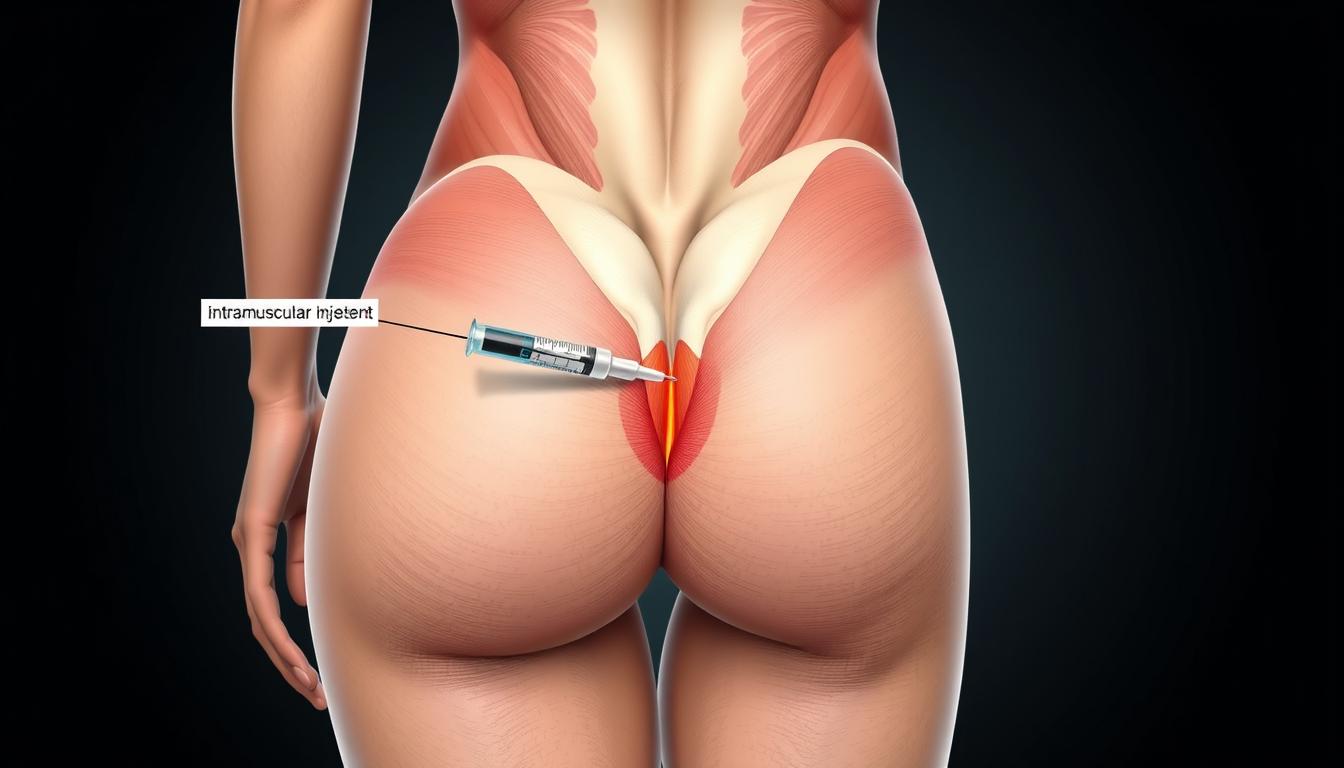
by Administering medications via intramuscular injections is common in healthcare. The buttocks are often used for these injections. The upper, outer quadrant is chosen because it’s far from major nerves and blood vessels.
Choosing the right intramuscular injection site is key for safe and effective medication delivery. Wrong injection spots or techniques can cause nerve damage or poor drug absorption.
This article will explore why the correct site on the buttocks is important for intramuscular injections. We’ll focus on the upper, outer quadrant. It aims to help healthcare professionals do these injections safely and well.
Understanding Intramuscular Injections (IMI)
Knowing how intramuscular injections work is key for healthcare pros. IMI shots put medicine right into muscle tissue. This makes the medicine work faster and is good for drugs that don’t absorb well when taken by mouth.
Definition and Purpose of IMI
Intramuscular injections put medicine into a muscle. They are fast and effective for many medicines and vaccines. This method is great for medicines that need a strong dose or don’t absorb well orally.
Types of Medications Administered via IMI
Many medicines get given through IMI shots. This includes vaccines, antibiotics, and some psychiatric drugs. For example, flu and hepatitis vaccines are often given this way. The deltoid muscle is used for vaccines, while the gluteal area is used for other medicines.
Importance of Proper Site Selection
Choosing the right spot for IMI shots is very important. The right spot can make the treatment work better and safer. The wrong spot can cause problems like nerve damage or not enough medicine being absorbed. So, knowing the anatomy of possible spots, like the gluteal area, is vital for healthcare workers.
A study says picking the right spot for IMI shots is key to avoiding problems. Knowing the anatomy and getting proper training are important for safe IMI shots.
Anatomy of the Gluteal Region
Knowing the anatomy of the gluteal region is key for safe IMI injections. This area has many layers of muscles, nerves, and blood vessels. It’s complex, so understanding it well is important.
Gluteal Muscles Structure
The gluteal region has three main muscles: the gluteus maximus, gluteus medius, and gluteus minimus. The gluteus maximus is the biggest and sits on top. It helps extend and rotate the hip outward. Below it, the gluteus medius and gluteus minimus muscles help in moving the hip and rotating it inward.
Nerves and Blood Vessels in the Buttocks
The gluteal region has many nerves and blood vessels. It’s important to know where these are to avoid them during IMI. The sciatic nerve, the biggest nerve, runs through here. The superior and inferior gluteal nerves and vessels also supply the muscles. Knowing their locations is essential for safe injections.
Anatomical Landmarks for Safe Injection
To safely give IMI in the gluteal region, finding key landmarks is vital. The posterior superior iliac spine (PSIS) and the greater trochanter are important. They help mark the upper outer quadrant, the best spot for injections. By feeling and seeing these landmarks, you can avoid major nerves and vessels.
| Landmark | Description | Importance in IMI |
|---|---|---|
| Posterior Superior Iliac Spine (PSIS) | Bony prominence at the base of the spine | Helps delineate the upper outer quadrant |
| Greater Trochanter | Bony prominence on the femur | Used to identify the injection site |
| Sciatic Nerve | Largest nerve in the body, runs through the gluteal region | Must be avoided during injection |
Understanding gluteal anatomy well improves IMI techniques. This boosts IMI online visibility and IMI search engine optimization. It helps make healthcare better for everyone.
The Upper Outer Quadrant as the Preferred IMI Site
Intramuscular injections in the upper outer quadrant of the gluteal region are common. They are supported by history and clinical evidence. This site is chosen for IMIs because it is safe and effective.
Historical Context of Buttock Injections
The buttocks have been used for injections for decades. The dorsogluteal site was a main spot for these injections. The upper outer quadrant was seen as a safe area because of its muscle structure and low risk of nerve or blood vessel damage.
Advantages of the Dorsogluteal Site
The dorsogluteal site, or the upper outer quadrant, has many benefits. It can handle larger doses of medication because of the muscle size. It’s also easy to reach, making it a good choice for doctors.
“The dorsogluteal site is a traditional and preferred location for IMIs, balancing safety and effectiveness.” – Clinical Guidelines
Safety Profile Compared to Other Sites
The upper outer quadrant is safer than other IMI sites. The risk of harming major nerves, like the sciatic nerve, is lower with the right technique. Here’s a comparison of common IMI sites:
| IMI Site | Risk of Nerve Damage | Muscle Mass |
|---|---|---|
| Upper Outer Quadrant | Low | High |
| Ventrogluteal Site | Moderate | High |
| Deltoid Site | High | Low |
Knowing the benefits and safety of the upper outer quadrant helps doctors choose the best IMI site. This improves patient care and reduces risks from intramuscular injections.
Properly Identifying the IMI Site in the Upper Outer Quadrant
Finding the right spot for intramuscular injections in the upper outer quadrant is a mix of looking, feeling, and knowing the body’s layout. This way, injections are done safely and work well.
Visual Identification Methods
First, we look at the gluteal area to spot the injection site. We check for any landmarks or oddities. It’s key to make sure the patient is comfy and in the right spot.
Palpation Techniques
Next, we use our hands to feel the muscles in the gluteal area. By pressing gently, we find the muscle shapes and the best spot for the injection. This method helps pinpoint the upper outer quadrant.
Using Anatomical Landmarks
Knowing the body’s landmarks is vital for finding the right spot for injections. The dorsogluteal and ventrogluteal areas are two main spots, each with its own landmarks.
The Ventrogluteal Method
The ventrogluteal area is a safe spot for injections because it’s far from nerves and blood vessels. To find it, we use the greater trochanter, the anterior superior iliac spine, and the iliac crest as guides.
The Dorsogluteal Method
The dorsogluteal area is in the upper outer part of the buttocks. It’s a common spot for injections. We find it by looking at the outer edge of the buttock and dividing it into sections.
Here’s a quick guide on how to find the IMI site in the upper outer quadrant:
| Method | Landmarks | Description |
|---|---|---|
| Ventrogluteal | Greater trochanter, anterior superior iliac spine, iliac crest | Considered safe due to fewer major nerves and vessels |
| Dorsogluteal | Outer edge of the buttock, upper outer quadrant | Common site, requires accurate quadrant identification |
By using our eyes, hands, and body knowledge, we can find the right spot for injections in the upper outer quadrant. This makes sure injections are safe and effective.
Patient Positioning for Gluteal IMI
Getting the right position is key for gluteal intramuscular injections. It helps find the best spot for the injection, lowers the chance of nerve damage, and makes giving the medicine smoother.
Prone Position Technique
The prone position is best for gluteal IMI. It lets you easily spot the upper outer quadrant. The patient lies on their stomach with their toes pointing inward. This relaxes the gluteal muscles, making the injection easier.
Side-Lying Position Technique
The side-lying position is good for those who can’t lie on their stomach. The patient lies on their side with the upper leg bent and the lower leg straight. This exposes the gluteal area and is helpful for patients with mobility problems.
Standing Position Considerations
The standing position is less common but can be used in some cases. The patient stands with their feet shoulder-width apart. The injector then finds the right spot. This position needs careful thought about the patient’s balance and stability.
| Position | Advantages | Disadvantages |
|---|---|---|
| Prone | Easy identification of injection site, relaxed gluteal muscles | May be uncomfortable for patients with certain conditions |
| Side-Lying | Useful for patients with mobility issues, exposes gluteal area | May require additional support for patient comfort |
| Standing | Can be used in specific situations | Requires careful consideration of patient balance and stability |
Each position has its own benefits and things to think about. Healthcare professionals need to look at what each patient needs. This helps pick the best position for gluteal IMI.
Equipment and Supplies for IMI Administration
Administering intramuscular injections (IMI) needs the right equipment and supplies. This ensures the medication is given safely and effectively. The right tools also make the procedure safer for the patient and better for their health.
Needle Selection and Considerations
Choosing the right needle is key for a successful IMI. The needle must be long enough to reach the muscle without harming nearby tissues. A length of 1 to 1.5 inches is usually best, based on the patient’s muscle and the injection spot.
The needle’s gauge is also important. A higher gauge (thinner needle) works well for thinner medications. A lower gauge (thicker needle) is better for thicker ones.
Needle selection criteria include:
- Length appropriate for the patient’s muscle mass
- Gauge suitable for the viscosity of the medication
- Material that minimizes tissue trauma
Syringe Types and Sizes
The syringe for IMI should match the medication volume. Syringes vary in size, and the right one depends on the dose. Make sure the syringe fits with the needle you’ve chosen.
Key considerations for syringe selection include:
- Volume capacity that matches the medication dose
- Compatibility with the selected needle
- Ergonomic design for ease of use
Additional Supplies Needed
More than just needles and syringes are needed for IMI. You’ll also need alcohol swabs for skin prep, gauze pads for after the shot, and a sharps container for needle disposal.
“Proper preparation and use of equipment are critical for safe IMI administration,” clinical guidelines say.
Having the right equipment and supplies helps healthcare professionals give IMI safely and effectively.
Preparation Steps for Safe IMI
Getting ready for safe IMI administration is key. It includes preparing medications, controlling infections, and checking patients. A top doctor says, “Getting ready is the first step to avoid problems during IMI.”
“The right preparation can significantly reduce the risk of adverse reactions.” – Dr. Jane Smith, Medical Expert
Medication Preparation
First, make sure the medication order is correct. Check the expiration date and the right dosage. Always follow the maker’s instructions for mixing the medicine. The IMI digital platform helps manage medication info and keeps things accurate.
Infection Control Measures
Keeping infections away is very important. This means good hand hygiene and using clean tools. Also, clean the injection area with the right antiseptic.
Patient Assessment and Education
Know the patient’s health history and current state before IMI. Talking to the patient about the procedure and possible side effects helps. It makes them feel better and more likely to follow instructions.
By taking these steps, healthcare workers can lower risks with IMI. This makes the administration process safe and effective.
Step-by-Step IMI Administration Technique
Knowing how to administer IMI injections is key. It’s about understanding the body’s structure and the steps involved. This method is vital for safely giving medicines through injections in the upper outer buttock area.
Pre-Injection Verification
Before giving the IMI, it’s important to check a few things. This ensures the patient’s safety and the medicine works right. You need to:
- Make sure the patient’s identity and the medicine match
- Look over the patient’s health history for any reasons not to give the medicine
- Check the patient’s current health and any possible dangers
Checking these things before the injection is a must. It helps avoid mistakes and makes sure the injection is safe.
Proper Injection Angle and Depth
The way you angle and insert the needle is very important. For injections in the buttocks, the needle should go straight into the muscle. The depth depends on the patient’s muscle size and the needle’s length.
Getting the angle and depth right helps avoid hitting nerves or blood vessels.
Z-Track Method for Gluteal Injections
The Z-track method is used to prevent the medicine from leaking into the skin. You pull the skin to the side before inserting the needle and then let it go after pulling the needle out.
- Pull the skin laterally by about 1-2 cm
- Insert the needle at a 90-degree angle
- Administer the medication
- Withdraw the needle and release the skin
This method keeps the medicine in the muscle.
Post-Injection Care
After the IMI, watch the patient for any bad reactions and take care of them. This includes:
- Applying gentle pressure to the injection site with a cotton ball or swab
- Watching for signs of bleeding or reaction
- Writing down the injection details in the patient’s medical record
Good care after the injection helps avoid problems and keeps the patient safe and comfortable.
Potential Complications of Upper Outer Quadrant IMI
Intramuscular injections in the upper outer quadrant of the buttocks are common. But, they come with risks that healthcare professionals need to know. It’s important to understand these risks for safe and effective injections.
Sciatic Nerve Injury
Sciatic nerve injury is a big risk with gluteal IMIs. This happens if the needle goes too deep or at the wrong angle. It can cause pain, numbness, or weakness in the leg.
Vascular Complications
Vascular issues like hematoma formation and vascular puncture can occur. These happen if the needle is placed wrong or if the technique is off. Knowing the anatomy well and injecting precisely is key.
Infection and Abscess Formation
Infection and abscess formation are risks too. They usually come from bad sterile technique or poor equipment handling. Following strict infection control rules is vital to avoid these problems.
Pain and Tissue Damage
Pain and tissue damage are common issues. They can be due to the injection method, the medicine used, or the needle size. Using the Z-track method can help lessen pain and tissue harm by stopping medicine leaks into the skin.
In summary, while the upper outer quadrant is a common spot for IMIs, it has several risks. Healthcare workers must be careful with their technique and check the patient well to lower these risks.
Special Considerations for Different Patient Populations
Different patient groups face unique challenges when it comes to IMI administration. Healthcare providers must take these into account to ensure safe and effective treatment.
Pediatric Patients
Pediatric patients need special care because of their smaller muscles and varying cooperation levels. Needle selection is key, with shorter and smaller needles often better. The dose and volume of medication must be carefully calculated based on the child’s age, weight, and medical condition.
Using distraction techniques and involving parents or guardians can help reduce anxiety. This makes the experience better for pediatric patients.
Geriatric Patients
Geriatric patients often have less muscle mass and may have conditions like osteoporosis or decreased circulation. Careful assessment of their overall health and muscle condition is necessary for IMI administration.
Adjusting the patient’s position may be needed to accommodate physical limitations or discomfort. This ensures the patient is as comfortable as possible during the procedure.
Obese Patients
Obese patients face challenges due to the depth of subcutaneous tissue. Needle length must be sufficient to reach the muscle, and the injection technique may need to be adjusted.
It’s also important to consider the increased risk of complications, such as infection or poor absorption, in this patient population.
Patients with Coagulopathies
Patients with bleeding disorders or coagulopathies require careful management to minimize the risk of bleeding complications following IMI. Pre-injection assessment should include evaluation of the patient’s coagulation status.
Techniques such as applying pressure after the injection or using a smaller needle gauge may help mitigate risks. Coordination with the patient’s hematologist or primary care physician may also be necessary.
Alternative IMI Sites When Gluteal Is Contraindicated
When the gluteal site is not safe, healthcare experts look for other places for intramuscular injections (IMI). This is key for patients who need to keep taking their medicine but can’t use the gluteal area.
Ventrogluteal Site
The ventrogluteal site is a good and safe choice for IMI. It’s on the hip, far from big nerves and blood vessels. This makes it a top pick for many doctors.
Advantages: This site has a low chance of hitting nerves or blood vessels. It can also hold more medicine.
Vastus Lateralis Site
The vastus lateralis site is on the thigh and is another good option for IMI. It’s great for patients who are overweight or have weak gluteal muscles.
Considerations: It’s easy to find and get to, but some patients might find it more painful because of the muscle.
Deltoid Site
The deltoid muscle in the upper arm is often used for IMI, like for vaccines and small amounts of medicine.
Limitations: The deltoid site isn’t good for big amounts or thick medicines because of the muscle size.
| IMI Site | Advantages | Considerations |
|---|---|---|
| Ventrogluteal | Safe, away from major nerves and vessels | Requires proper anatomical landmark identification |
| Vastus Lateralis | Useful for obese patients or those with gluteal atrophy | May be more painful due to muscle density |
| Deltoid | Commonly used for vaccines and small volume injections | Not suitable for larger volumes or viscous medications |
Clinical Documentation and Medical-Legal Aspects of IMI Site Selection
Choosing the right IMI site is more than just a clinical choice. It also has big legal and medical implications. Healthcare providers must find a balance. They need to make sure medication is given well and keep patients safe.
Required Documentation Elements
Good and detailed records are key for picking the right IMI site. You need to write down the site picked, why it was chosen, and any patient factors that mattered.
Key documentation elements include:
- Patient assessment details
- Medication administered
- Site selection rationale
- Any complications or adverse reactions
Informed Consent Considerations
Informed consent is very important for IMI shots. Patients must know what’s happening, including the risks and benefits of the site chosen.
Effective informed consent means:
- Clear explanation of the procedure
- Discussion of possible risks and benefits
- Teaching patients about after-care
Risk Management Strategies
It’s vital to have strong risk management plans for IMI site selection. This includes watching patients closely and being ready to handle any bad reactions fast.
Risk management includes:
- Regular training for healthcare providers
- Following set protocols for IMI shots
- Keeping up with patient checks and feedback
By paying attention to detailed records and following legal and medical rules, healthcare providers can make sure IMI site selection is safe and works well.
Best Practices for IMI Site Rotation and Management
Managing IMI sites well means rotating sites, teaching patients, and checking up on them. Rotating sites is key to avoid problems from too many injections.
Site Rotation Principles
Site rotation helps spread out the effects of injections. This lowers the chance of tissue damage and other issues. Healthcare providers should document the injection site and rotate to a different site for subsequent injections.
To rotate sites well, you can:
- Use a diagram to map injection sites
- Switch between different muscles or areas in the gluteal region
- Keep a record of where you’ve injected before
Patient Education on Site Care
Teaching patients how to care for their injection sites is key. They should know:
- How to spot signs of infection or other bad reactions
- How to take care of their wound and dress it right
- The need to tell you if they notice anything strange or concerning
Good communication and teaching patients can really help outcomes and make them happier.
Follow-up Assessment
Checking in regularly is important to watch the injection site and fix any problems fast. During these visits, healthcare providers should:
| Assessment Criteria | Indicators of Complications |
|---|---|
| Visual Inspection | Redness, swelling, or signs of infection |
| Patient Feedback | Pain, discomfort, or unusual sensations |
| Palpation | Tenderness, hardness, or other abnormalities |
By following these best practices for IMI site rotation and management, healthcare providers can make care safer and better for everyone.
Common Errors in Upper Outer Quadrant IMI Administration
Getting IMI administration right in the upper outer quadrant is key. Mistakes can make it less effective and less safe. Healthcare workers need to know these common errors to keep patients safe and get the best results.
Incorrect Site Identification
One big mistake is picking the wrong spot for the injection. The upper outer quadrant of the buttocks is best, but it’s easy to get it wrong.
To find the right spot, healthcare providers use landmarks. For example, the ventrogluteal site is found using the triangle method. This method uses the anterior superior iliac spine, the tubercle of the iliac crest, and the upper border of the greater trochanter to mark the spot.
Improper Technique
Another mistake is using the wrong way to inject. This includes the wrong angle, too short a needle, and not using the Z-track method. The Z-track method is important because it stops the medicine from leaking out and reduces irritation.
Inadequate Needle Length
Using a needle that’s too short can put the medicine in the wrong place. This makes the injection less effective. The right needle length depends on the patient’s muscle and fat.
| Error Type | Description | Prevention Strategy |
|---|---|---|
| Incorrect Site Identification | Injecting outside the upper outer quadrant | Use anatomical landmarks for precise localization |
| Improper Technique | Incorrect needle angle or failure to use Z-track method | Train on proper injection techniques and use Z-track method |
| Inadequate Needle Length | Using a needle too short for the patient’s muscle mass | Select needle length based on patient anatomy |
Knowing and avoiding these mistakes helps make IMI administration safer and more effective. Regular training and following best practices are key to high-quality care.
Evidence-Based Research on IMI Site Selection
Intramuscular Injection (IMI) site selection is key in medical practice. It has seen a lot of research. This shows the effort to improve patient care and safety.
Historical Evolution of IMI Practices
At first, the dorsogluteal site was often used for IMIs. But, research has moved to other sites like the ventrogluteal. This is because it has fewer risks.
Current Clinical Guidelines
Today’s guidelines stress picking the right IMI site for each patient. This includes looking at muscle mass and any health issues. Choosing the right site is key for the treatment’s success and avoiding side effects.
| IMI Site | Advantages | Disadvantages |
|---|---|---|
| Dorsogluteal | Familiarity among practitioners, relatively large muscle mass | Risk of sciatic nerve injury, variable muscle mass |
| Ventrogluteal | Lower risk of nerve injury, well-defined anatomical landmarks | Less familiarity among some practitioners |
Emerging Research and Trends
New studies aim to make IMI techniques better. This includes using ultrasound guidance for more accurate and safe injections. Research is also looking at how different sites affect patients, helping guide doctors.
Using research in practice has made IMIs safer and more effective. As studies keep coming, IMI site selection guidelines will likely get better, based on the latest science.
Conclusion
The upper, outer part of the buttocks is a key spot for intramuscular injections. It’s important to know how to use this area correctly. This ensures the medication is given safely and works well.
Doctors and nurses need to understand the gluteal area’s anatomy. They must know where nerves and blood vessels are. This knowledge helps avoid any problems.
Following the right guidelines for choosing the IMI site and how to inject is key. This way, patients get the best care possible.
Using the right technique and picking the right spot is very important. It affects how well a patient does and the quality of care they get.