 by
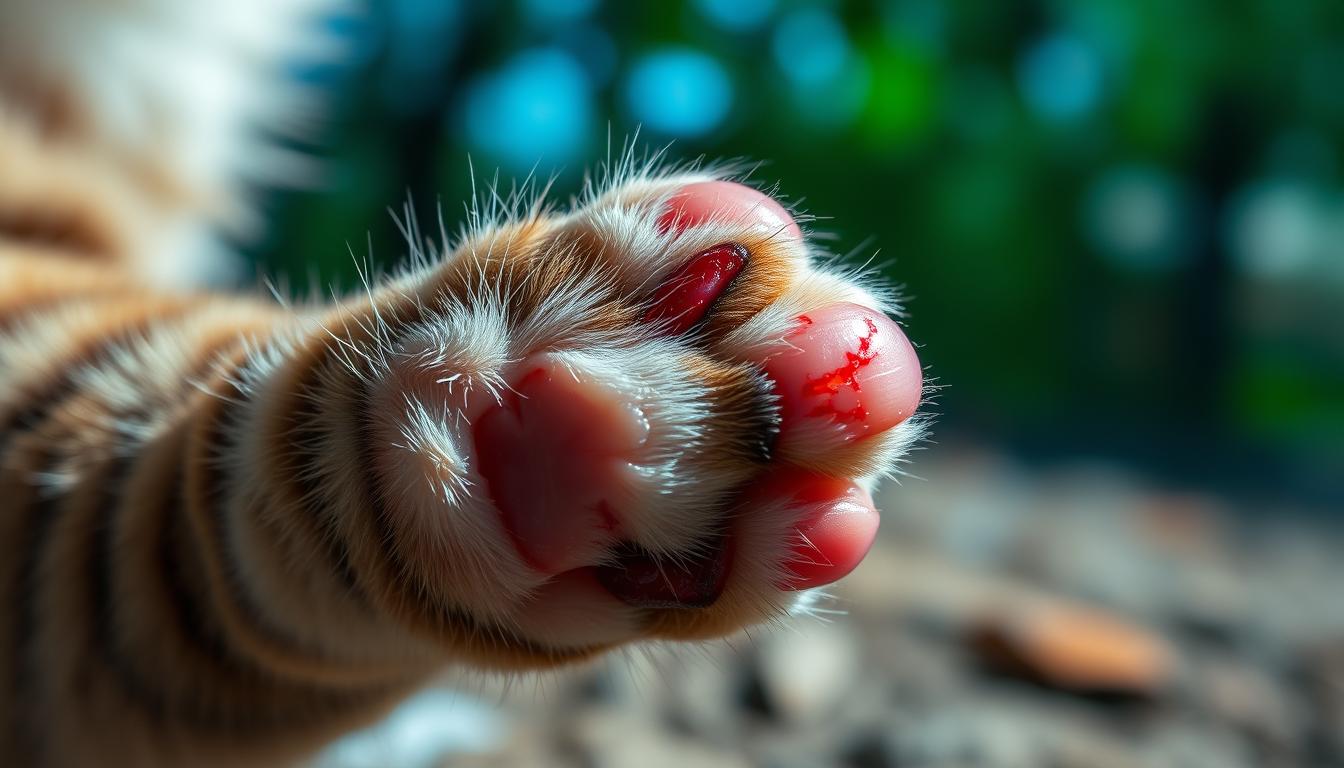
by Venomous snake bites can be very dangerous for cats. They can cause visible fang marks and a lot of swelling.
It’s important for cat owners to know about the dangers of venomous bites. This is true, even more so if you live where venomous snakes are found.
This article shows what happens when cats get bitten by venomous snakes. It gives a clear look at the snakebite symptoms they can face.
Looking at these pictures can help cat owners know if their pet has been bitten. It also helps them find the right vet care fast.
The Danger of Snake Envenomation in Felines
Snake bites are a big risk for cats. They can be very dangerous and even deadly. It’s important for cat owners to know about these dangers.
Incidence Rates Among Domestic Cats
Snake bites are a big threat to cats, even those that stay indoors. The risk changes based on where you live and the time of year. Cats are more likely to get bitten by venomous snakes in warmer months.
Seasonal Patterns of Snake Bites
Most snake bites happen from spring to fall. This is when snakes are most active. Knowing this can help cat owners protect their pets during these times.
Geographical Distribution in the United States
The risk of snake bites varies by where you live in the U.S. Places with lots of venomous snakes, like the southeast and southwest, are riskier for cats.
| Region | Common Venomous Snakes | Risk Level |
|---|---|---|
| Southeastern United States | Cottonmouths, Copperheads | High |
| Southwestern United States | Rattlesnakes | High |
| Northeastern United States | Copperheads | Moderate |
Knowing about local snakes and their homes can help keep cats safe. It’s important to prevent snake bites to protect cats from harm.
Venomous Snakes of North America: Threats to Cats
Knowing the venomous snakes in North America is key for cat owners. Cats, being curious and agile, often meet these snakes outdoors. The diverse geography of North America means many venomous snake species exist.
Pit Vipers: Rattlesnakes, Copperheads, and Cottonmouths
Pit vipers, like rattlesnakes, copperheads, and cottonmouths, cause most venomous bites. They have heat-sensing pits between their eyes and nostrils. Rattlesnakes, with their rattle and strong venom, are well-known. Copperheads and cottonmouths are also venomous, with copperheads more common in the east.
Coral Snakes and Their Distinctive Venom
Coral snakes, found in the southeastern United States, have bright colors and deadly venom. Unlike pit vipers, they lack heat-sensing pits. Their venom is designed to paralyze. Coral snake bites are rare but deadly if not treated quickly. For more on coral snake bites, visit this resource.
Regional Snake Species and Their Habitats
North America has different venomous snakes in each region. For example, the Mojave rattlesnake is common in the southwest, while the timber rattlesnake is in the northeast. Knowing local snakes helps cat owners prevent bites. Below is a table of common venomous snakes and where they live.
| Snake Species | Region | Habitat |
|---|---|---|
| Eastern Diamondback Rattlesnake | Southeastern United States | Coastal plains, forests |
| Western Diamondback Rattlesnake | Southwestern United States | Deserts, rocky areas |
| Coral Snake | Southeastern United States | Forests, sandy areas |
Mechanisms of Snake Envenomation in Cats
It’s important to know how snake bites work in cats. When a venomous snake bites, it injects venom into the cat’s body. This venom can cause serious problems.
How Venom Delivery Systems Work
A snake’s venom delivery system is quite complex. It includes venom glands, ducts, and fangs. When a snake bites, it uses its fangs to inject venom into the cat’s body.
Key components of the venom delivery system include:
- Venom glands: Produce and store venom.
- Ducts: Transport venom from the glands to the fangs.
- Fangs: Hollow or grooved teeth that deliver venom into the wound.
Types of Venom and Their Composition
Snake venom is made up of many different molecules. These molecules can affect the body in various ways. The type of venom a snake has can determine how it will affect a cat.
Common types of venom include:
- Neurotoxic venom: Affects the nervous system.
- Hemotoxic venom: Causes damage to tissues and disrupts blood clotting.
- Cytotoxic venom: Leads to local tissue damage and necrosis.
Dry Bites vs. Envenomation
Not every snake bite results in venom being injected. A dry bite happens when a snake bites but doesn’t inject venom. Envenomation, on the other hand, means venom is injected, leading to snakebite symptoms and snakebite complications.
Knowing the difference between dry bites and envenomation is key. Cats that get envenomated can show many snake venom effects. These can range from swelling and pain to serious problems like breathing issues or heart problems.
Photographic Guide to Fang Mark Identification
Snake bites in cats leave behind unique fang marks. These marks are key to diagnosing snake bites and understanding their severity.
Single vs. Double Puncture Wounds
Fang marks can be single or double punctures. Double puncture wounds happen when both fangs enter the skin. Single punctures might come from a glancing blow or uneven fangs.
Knowing the difference is vital for correct diagnosis.
Spacing and Depth Characteristics
The space between punctures can tell us about the snake. Larger snakes have wider spaced puncture wounds. The depth of the wounds shows how severe the bite is.
Looking at these details helps assess the risk and guide treatment.
Common Bite Locations on Feline Bodies
Snakes usually bite exposed areas like the face, legs, and paws. Bites to the head and neck are more dangerous because of the rich blood supply.
Knowing where bites often happen helps in quick identification and response.
By studying fang marks, including their type, spacing, depth, and common locations, vets and cat owners can better handle snake bites.
Visual Documentation of Swelling Progression
It’s key for cat owners and vets to track swelling after a snakebite. Seeing how swelling changes can help figure out how bad the bite is. It also helps decide the best treatment.
Initial Presentation (0-2 Hours)
Right after a snakebite, swelling starts to show in 0-2 hours. The area gets red and hurts. Studies show that swelling and red skin are common snakebite symptoms in cats.
Acute Phase Swelling (2-24 Hours)
As the venom spreads, swelling gets worse in 2-24 hours. This phase sees swelling get more severe, leading to big tissue swelling. The affected area gets very swollen, warm, and hurts a lot.
It’s very important to watch the cat closely during this time. How much swelling there is can show how bad the bite is.
Advanced Tissue Edema (24+ Hours)
If the bite is very bad, swelling can last more than 24 hours. This stage has very bad swelling that can cause serious problems. These include tissue death or infections.
At this point, a vet needs to step in to help manage symptoms and avoid lasting harm.
Photographic Timeline of Snake Envenomation Effects
It’s key to know how snake bites affect cats to get help fast. A photo timeline shows how bad the bite is and how it changes.
Immediate Post-Bite Appearance
Right after a snake bite, the wound looks different for each cat. Some have minimal swelling or puncture wounds. Others show more signs. Taking photos early on helps see how bad the bite is.
Day 1-3: Developing Symptoms
In the first few days, cats show more snakebite symptoms. They might swell more, hurt more, or feel tired or have trouble breathing. Photos help vets see how the bite is getting worse.
Day 4-7: Peak Manifestations
By days 4-7, the snake venom effects are at their worst. Cats might have a lot of swelling, dead tissue, or other serious signs. Photos from this time are very important to see how bad the bite is.
| Time Post-Bite | Common Symptoms | Photographic Evidence |
|---|---|---|
| Immediate | Puncture wounds, minimal swelling | Clear images of wound site |
| Day 1-3 | Increased swelling, pain, lethargy | Photographs showing progression of swelling |
| Day 4-7 | Peak swelling, possible necrosis | Images showing severe symptoms |
This photographic timeline shows why quick vet care is so important. It also shows how photos help manage snake bites in cats.
Clinical Signs Beyond Visible Swelling
Snake bites in cats can cause many symptoms beyond just swelling at the bite site. These symptoms can affect different parts of the body.
Neurological Manifestations
Neurological symptoms can happen because of the neurotoxic effects of snake venom. Cats might seem very tired, weak, or even unable to move. The NCBI says some snake venoms can really harm the nervous system.
Cardiovascular and Respiratory Symptoms
These symptoms include rapid heartbeat, difficulty breathing, and pale or white gums. They happen because the venom affects the heart and lungs.
| Symptom | Description |
|---|---|
| Rapid Heartbeat | Increased heart rate due to venom’s systemic effects |
| Difficulty Breathing | Respiratory distress caused by venom’s impact on the lungs |
| Pale or White Gums | Sign of poor circulation or shock |
Behavioral Changes Following Envenomation
Cats might act differently after a snake bite. They could drool, vomit, or seem less active. It’s important to notice these changes early.
Knowing these signs is key to treating snake bites in cats. Quick vet care is needed to manage symptoms and avoid lasting harm.
Diagnostic Imaging of Snake Envenomation
Diagnostic imaging is key in figuring out how bad a snake bite is in cats. Vets use different imaging methods to see how much damage the venom has done.
Ultrasound Findings in Affected Tissues
Ultrasound is great for checking how snake venom affects cat tissues. It spots swelling, fluid buildup, and tissue harm. Key ultrasound findings include:
- Hypoechoic areas showing tissue damage or swelling
- Fluid buildup in subcutaneous tissues
- Changes in tissue texture
These signs help vets understand how bad the bite is and what treatment to use.
Radiographic Evidence of Complications
X-rays are also important in checking snake bites. They show things like:
- Soft tissue swelling
- Gas in tissues (which means necrosis or infection)
- Possible foreign objects (like fang pieces)
X-rays help vets keep an eye on how the condition is getting worse and spot problems early.
Advanced Imaging Techniques
In serious or complicated cases, vets might use CT scans or MRI. These give detailed pictures of the damaged areas. This helps vets see exactly how bad the damage is and what complications might be there.
By using these imaging methods, vets can really understand how snake bites affect cats. This helps them find the best ways to treat these cats.
Emergency Veterinary Response and Treatment
When a cat gets bitten by a snake, vets act fast. They follow a detailed plan to help the cat. Quick action is key to avoid serious problems and boost survival chances.
Initial Assessment Protocol
Vets quickly check a cat suspected of being bitten by a snake. They look for signs like fang marks, swelling, and pain. They also check for vomiting or feeling very tired.
Knowing when the bite happened is very important. It helps them understand how bad the bite is.
They do a full check-up to see how the bite affects the cat. This includes checking the cat’s vital signs and how well it can move.
Stabilization Techniques
Keeping the cat stable is the first step. Fluid therapy helps manage shock and keep blood pressure up. If the cat is having trouble breathing, oxygen therapy might be used.
When to Administer Antivenom
Deciding when to give antivenom depends on how bad the bite is. Antivenom works best when given early, within a few hours. The vet decides based on the snake type, venom amount, and the cat’s health.
It’s important to watch for any bad reactions to antivenom. Cats can be sensitive. The vet chooses the right dose and type of antivenom carefully.
Antivenom Therapy for Feline Snake Envenomation
Antivenom therapy is key in treating snake bites in cats. It’s the only effective treatment for snake envenomation. Quick use of antivenom can greatly improve a cat’s chances of recovery.
Types of Antivenom Available for Cats
There are different antivenoms for snake bites in cats, depending on the snake. Crotalidae Polyvalent Antivenom is used for pit viper bites, like rattlesnakes. Crotalidae Polyvalent Immune Fab (Ovine) is effective against many pit viper species.
Administration Protocols and Dosing
Administering antivenom needs a vet’s guidance. The dose and how it’s given can change based on the snake and the cat’s condition. Antivenom is given through a vein, and the first dose is given slowly to watch for side effects. More doses might be needed based on how the cat responds.
Monitoring Treatment Response
It’s important to watch how the cat reacts to antivenom. Look for signs like swelling going down, stable vital signs, and better neurological function. Also, keep an eye out for any side effects from the antivenom.
Photographic Documentation of Recovery Process
Photographs are key in tracking how cats recover from snake bites. They show how symptoms change and how healing happens. This helps both vets and pet owners understand the recovery journey.
Tissue Healing Progression
The healing of cats after snake bites goes through many stages. Photographic records reveal the start with swelling and redness. As healing starts, these signs fade away. It’s important to watch these changes to see if treatment is working.
Resolution of Swelling
Swelling going down is a clear sign of getting better. As the venom is fought off and tissues mend, swelling lessens. Photos show this healing journey, giving a clear timeline of the cat’s recovery.
Permanent Scarring and Tissue Damage
Some snake bites can leave permanent scars and damage tissues. How bad this is depends on the bite and treatment. Photos document these lasting effects, showing what recovery might look like.
Complications and Long-term Effects
Snake bites in cats can lead to serious problems beyond the initial bite. These issues can greatly affect their health and happiness. It’s important to know about these long-term effects to give the right care.
Tissue Necrosis and Gangrene
Tissue necrosis and gangrene are serious problems from snake bites. The venom can damage cells, causing cell death and gangrene. Prompt veterinary attention is key to avoid more damage.
Secondary Infections
Secondary infections can also happen from snake bites. Bacteria from the bite can cause infections that spread. Antibiotic therapy might be needed to fight these infections.
Organ Damage and Systemic Complications
Snake venom can harm organs and cause other systemic problems. It can affect the kidneys or heart, among other systems. Close monitoring and supportive care are essential to help the cat recover.
Knowing about the complications and long-term effects of snake bites helps cat owners and vets. Together, they can give the best care to cats affected by snake bites.
Conclusion
Snake envenomation in cats is a serious issue that needs quick vet help. We’ve looked at the dangers of snake bites, including venomous snakes in North America. We also talked about how venom works and the signs of a snake bite.
To avoid snake bites, snakebite prevention is key. Cat owners can keep their pets safe by keeping them indoors and removing snake hiding spots.
If a cat gets bitten, snakebite treatment must start right away. Vets use antivenom to help and manage the situation. Knowing about snake envenomation helps cats get the best care.
By spotting snake bite signs and getting vet help fast, cat owners can help their pets. This can prevent serious problems and help with recovery.