 by
by The areas of Africa and the Middle East are full of different landscapes and complex political landscapes. It’s important to know their geography to understand their politics.
Looking at the Africa map with countries shows us many cultures, languages, and governments. This diversity is key to the continent’s identity.
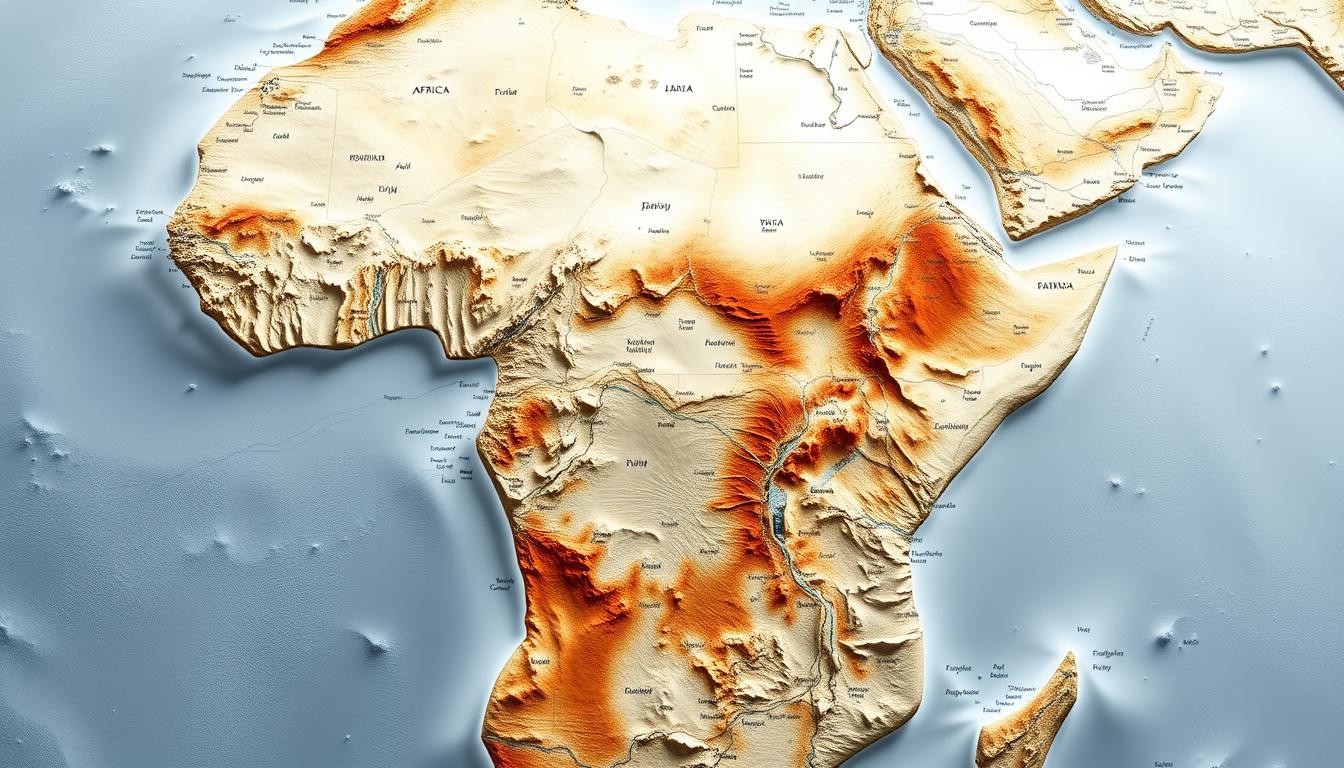
The geography map of these regions shows us the varied terrains. From deserts to mountains, these landscapes greatly affect the people living there.
By studying the geographic overview of Africa and the Middle East, we learn more about their politics and economies. This knowledge helps us understand their complex situations better.
Understanding the Political Geography of Africa and the Middle East
To grasp the political geography of Africa and the Middle East, we need to understand their varied lands and histories. These areas have complex political landscapes. They are shaped by geography, culture, and history.
Defining the Regions and Their Geographical Context
Africa and the Middle East have unique landscapes. Africa is the second-largest continent, with climates ranging from the Sahara to tropical rainforests. The Middle East has arid lands and important water bodies like the Persian Gulf.
Knowing the political map of Africa and the Middle East’s geography helps us understand their politics.
The Interconnected History of These Diverse Territories
The history of Africa and the Middle East is intertwined. Many empires and civilizations have come and gone over time. Ancient trade routes like the Trans-Saharan Highway and the Silk Road spread culture and religion.
Colonialism and the creation of modern states have made their politics complex. Looking at the Africa continent map and Africa region map sheds light on their past and present politics.
The Africa Political Map: A Comprehensive Overview
The Africa Political Map is key to grasping the complex politics of the continent. It shows countries, their borders, and political divisions clearly.
Evolution of African Political Boundaries Through History
Africa’s political boundaries have changed a lot over time. This was due to colonialism, wars, and political alliances. The colonial era drew many borders without thinking about ethnic or linguistic groups.
After colonialism, new nations formed and borders were redrawn. This led to conflicts over land and resources. Knowing this history helps us understand Africa’s politics today.
Modern Political Divisions and Sovereign Territories
Now, the Africa Political Map shows a mix of 54 recognized countries. Each country has its own political system, from democracies to authoritarian regimes.
How to Read and Interpret an Africa Political Map
To understand an Africa Political Map, you need to know its parts. Look for country borders, capitals, and key geographical features. It’s also vital to consider the history and culture behind the political divisions.
By understanding the Africa Political Map, you can see the continent’s political dynamics. This includes areas of conflict and cooperation.
The Middle East Political Landscape
Understanding the Middle East’s politics is complex. It involves geography, culture, and history. The region’s politics are shaped by many factors.
Defining the Middle East Region: Geographic and Cultural Perspectives
The Middle East spans across Asia, Africa, and Europe. It is bordered by the Arabian Peninsula, Turkey, and Iran. This area is where civilizations began and major religions were born.
The culture here is rich and varied. People from different ethnic groups live here. Arabs, Turks, Persians, and Kurds all add to the region’s identity.
Historical Development of Middle Eastern Borders
After World War I, Britain and France drew the Middle East’s borders. The Sykes-Picot Agreement of 1916 is a key example. It divided the region, ignoring ethnic and sectarian lines.
This history has led to many current disputes and tensions.
Current Political Divisions and Disputed Territories
Today, the Middle East faces many political challenges. Countries like Syria, Yemen, and Libya are in civil wars. Places like Palestine and the Golan Heights are disputed.
The region also sees sectarian divisions, mainly between Sunni and Shia Muslims. These divisions affect politics and society. Knowing about these issues helps us understand the Middle East’s politics today.
Cartography and Representation of African and Middle Eastern Politics
Mapping Africa and the Middle East is complex. It needs precision and a deep understanding of history. Cartography here is more than just drawing lines. It’s about showing the political, cultural, and historical stories that make these places unique.
Evolution of Mapping Techniques
Mapping these regions has changed a lot. From old hand-drawn maps to today’s digital ones, the progress is amazing. Modern cartography uses satellite images and GIS. This makes maps more accurate and detailed.
| Technique | Description | Advantages |
|---|---|---|
| Traditional Hand-Drawn Maps | Maps drawn by hand based on surveys and explorations | Artistic value, historical significance |
| Digital Cartography | Use of computer software to create maps | Accuracy, scalability, ease of update |
| GIS and Satellite Imagery | Utilizes satellite data and GIS for detailed mapping | High precision, ability to layer information |
Challenges in Accurately Representing Disputed Territories
One big challenge is showing disputed areas. As
“Maps are not neutral; they reflect the power dynamics and political agendas of their creators.”
, these areas are often a point of contention. Cartographers must be very careful when dealing with them.
Digital Mapping and Modern Cartographic Resources
Digital mapping has changed the game. It offers interactive maps that can be updated quickly. Tools like Google Earth and GIS software help show complex political landscapes in great detail.
North Africa: Where Continents and Cultures Converge
North Africa sits at the crossroads of Africa, the Middle East, and the Mediterranean. It’s a place where cultures and politics blend. For centuries, it has been a center of history, culture, and economy.
The Maghreb Countries: Morocco, Algeria, Tunisia, and Libya
The Maghreb region includes Morocco, Algeria, Tunisia, and Libya. It’s known for its varied landscapes and political systems. Each country has its own story, from Morocco’s stable monarchy to Libya’s recent turmoil.
Understanding the Africa Political Map helps us see the region’s complex politics.
Egypt and the Nile Valley: A Bridge Between Africa and the Middle East
Egypt is a key link between Africa and the Middle East. The Nile River runs through it, making it a cradle of ancient civilizations. Egypt’s role in politics and economy is significant.
Its strategic location makes it important in both African and Middle Eastern affairs. Looking at an Africa map with countries, Egypt’s influence is clear.
North Africa’s rich history and modern diplomacy make it interesting. It’s a place where politics and culture meet.
Sub-Saharan Africa: Regional Divisions and Political Entities
The political map of Sub-Saharan Africa is complex. It shows many countries with different political systems. These systems are shaped by history, culture, and geography.
West African Nations and Political Structures
West Africa has a variety of political systems. Countries like Nigeria, Ghana, and Senegal are working towards democracy. But, some face issues with political stability and corruption.
East African Political Geography and the Horn of Africa
East Africa, including the Horn, has a complex political landscape. Countries like Ethiopia, Kenya, and Tanzania are economically and politically powerful. The Horn of Africa, with Somalia, Eritrea, and Djibouti, faces security and political tensions.
Central and Southern African Countries and Regional Dynamics
Central and Southern Africa have many political entities. Countries like South Africa, Angola, and the Democratic Republic of Congo are key players. The region also has organizations that help with economic and political stability.
| Region | Key Countries | Political Characteristics |
|---|---|---|
| West Africa | Nigeria, Ghana, Senegal | Diverse political systems, democratic progress |
| East Africa & Horn of Africa | Ethiopia, Kenya, Somalia | Complex political geography, geopolitical tensions |
| Central & Southern Africa | South Africa, Angola, DRC | Varied political entities, sub-regional cooperation |
The Arabian Peninsula and Persian Gulf States
The Arabian Peninsula and Persian Gulf States have a complex history and culture. They are known for their strategic location, vast oil reserves, and influential monarchies.
Saudi Arabia and the Gulf Monarchies: Political Systems and Alliances
Saudi Arabia and other Gulf monarchies like the United Arab Emirates, Bahrain, and Oman rule as monarchies. They work together through the Gulf Cooperation Council (GCC) for economic and security cooperation. Their governments mix traditional and modern ways of ruling, with strong royal families at the helm.
These monarchies also have strong ties with global powers, like the United States and other Western countries. These ties are mainly about energy security and military cooperation.
Yemen and Its Complex Political Situation: Civil War and Humanitarian Crisis
Yemen, at the Arabian Peninsula’s southern edge, has been in a civil war for years. The war involves the Houthi rebels, the recognized government, and other groups. This has caused a severe humanitarian crisis, with famine, disease, and displaced people.
The United Nations and others are trying to end the war and help the people. Yemen’s situation is made worse by its importance in global politics and the involvement of regional powers.
The Levant and Eastern Mediterranean
The Eastern Mediterranean, mainly the Levant, shows both conflict and cooperation. This area includes Syria, Lebanon, Jordan, and Israel/Palestine. Each has its own history, culture, and politics.
Syria, Lebanon, Jordan, and Israel/Palestine: Conflicts and Coexistence
The Levant is known for long-standing conflicts, like the Israeli-Palestinian issue. Syria’s civil war has also spread its impact to Lebanon and Jordan. Yet, there are signs of peace and cooperation among the people.
| Country | Population (Millions) | Capital |
|---|---|---|
| Syria | 18.3 | Damascus |
| Jordan | 10.2 | Amman |
| Israel | 9.3 | Jerusalem |
| Palestine | 4.9 | Ramallah |
Cyprus and Turkey: Geopolitical Positioning Between Europe and the Middle East
Cyprus and Turkey sit between Europe and the Middle East. Cyprus has been split between Greeks and Turks for decades. Turkey, with its land in both continents, is a major player in regional politics.
The Levant and Eastern Mediterranean’s complex politics and history highlight the need for careful understanding and diplomacy. As the area changes, its role in global politics and security will stay important.
Iran, Iraq, and the Fertile Crescent
The Fertile Crescent, covering parts of Iran and Iraq, is very important. It has been a place where civilizations started. These early cultures have greatly influenced our history.
Historical Significance and Cultural Heritage
The Fertile Crescent is known for its rich culture. It was home to the Sumerians, Akkadians, and Babylonians. These early people lived in fertile plains and rivers, which helped them grow food and build societies.
Modern Political Challenges and Sectarian Divisions
Today, the region has many political problems. There are big differences between Sunni and Shia Muslims. Iran, with Shia Muslims, and Iraq, with both, face complex political issues because of these differences.
| Country | Population (millions) | Major Religion |
|---|---|---|
| Iran | 83 | Shia Islam |
| Iraq | 40 | Mixed (Shia & Sunni) |
International Relations and Regional Influence
Iran and Iraq’s influence goes beyond their borders. They affect the region and the world. Their ties with other countries and global powers are influenced by history, culture, and economics.
Knowing about Iran, Iraq, and the Fertile Crescent helps us understand the Middle East better.
Colonial Legacy and Its Impact on African Borders
Colonial history has deeply shaped the Africa continent map. The borders of today’s African states were set by European powers during the Scramble for Africa in the late 19th century.
The Berlin Conference and the Scramble for Africa
The Berlin Conference of 1884-1885 was key. European powers met to split Africa among themselves. This event started the Scramble for Africa, leading to almost the whole continent being colonized.
- The conference legitimized the colonization of Africa without African representatives.
- It led to Africa being divided into spheres of influence controlled by European powers.
Arbitrary Boundaries and Their Consequences for Ethnic Groups
The borders from the colonial era were often random. They cut through ethnic and linguistic groups. This has caused many conflicts and tensions between groups.
“The artificial boundaries created by colonial powers have been a major source of conflict in post-colonial Africa.”
Post-Colonial Border Disputes and Resolution Mechanisms
After gaining independence, many African countries faced border disputes. The African Union has been set up to help solve these issues.
Border Conflicts and Territorial Disputes in Both Regions
Border conflicts and territorial disputes are common in Africa and the Middle East. These issues come from complex histories and political situations. They often arise from colonial pasts, ethnic differences, and fights over resources.
Major Active Conflicts and Civil Wars in Africa
Africa faces many ongoing conflicts and civil wars. The Democratic Republic of Congo, Ethiopia’s Tigray region, and the Sahel are key areas. These issues are driven by ethnic tensions, fights over resources, and power struggles.
| Conflict Zone | Main Parties Involved | Key Issues |
|---|---|---|
| Democratic Republic of Congo | Government forces, rebel groups | Resource control, ethnic tensions |
| Tigray Region, Ethiopia | Ethiopian federal government, Tigray People’s Liberation Front | Political power, territorial control |
| Sahel Region | Jihadist groups, government forces, militias | Terrorism, resource competition |
Ongoing Territorial Disputes in the Middle East
The Middle East has several ongoing territorial disputes. The Israeli-Palestinian conflict, the Syrian civil war, and fights over water and oil are major issues. These disputes involve history, religion, and politics.
International Peacekeeping Efforts and Conflict Resolution
International efforts are key in managing conflicts in Africa and the Middle East. The United Nations, the African Union, and others work to keep peace. They do this through missions, diplomacy, and efforts to resolve conflicts.
To solve these conflicts, we need a detailed plan. We must tackle the root causes, encourage talks, and support lasting peace and stability.
Regional Organizations and Political Alliances
The political scene in Africa and the Middle East is shaped by many groups. These groups help with economic cooperation, keeping things stable, and solving regional problems.
The African Union and Sub-Regional Organizations: ECOWAS, SADC, EAC
The African Union (AU) is a big player in bringing African countries together. It works with groups like ECOWAS, SADC, and EAC to tackle big challenges. For example, ECOWAS helps keep West Africa peaceful, and SADC works on economic unity in Southern Africa.
Middle Eastern Alliances: Arab League, GCC, and Other Cooperative Frameworks
In the Middle East, groups like the Arab League and GCC are key. The Arab League works on economic unity and solving conflicts. The GCC focuses on energy and economic growth among its members. Other groups, like the Middle East Quartet, help with diplomacy and solving disputes.
These groups are vital in understanding the complex politics of Africa and the Middle East. They are shown on the political map of Africa and the wider Africa geography map.
Natural Resources and Their Influence on Political Geography
The political geography of Africa and the Middle East is deeply tied to their natural resources. Oil, gas, minerals, and fertile lands have shaped their politics and economies. They have also led to conflicts in these regions.
Oil, Gas, and Mineral Resources in the Middle East: The Politics of Energy
The Middle East is known for its huge oil and gas reserves. Countries like Saudi Arabia, Iraq, and Iran play big roles in global energy. The control of these resources creates complex politics, with many trying to gain influence.
The Strait of Hormuz is a key example. It’s a critical spot for oil exports. This shows how important energy resources are in the region.
Africa’s Resource Wealth: Minerals, Oil, and Agricultural Lands
Africa has many natural resources, including minerals, oil, and fertile lands. The Democratic Republic of Congo is a big producer of cobalt, important for tech. Nigeria and Angola have lots of oil, affecting their politics and economies.
Managing these resources is a big challenge. It affects political stability and economic growth across Africa.
Understanding the role of natural resources in Africa and the Middle East is key. The Africa continent map and Africa region map show how resources shape politics and regional dynamics.
Water Politics and Transboundary Resources
Managing water shared by countries is key in Africa and the Middle East. Water politics shape these regions’ politics. Many rivers and aquifers cross borders.
The Nile Basin: Water Diplomacy Between Egypt, Sudan, and Ethiopia
The Nile River is vital for eleven countries, including Egypt, Sudan, and Ethiopia. The Nile Basin Initiative (NBI) works to manage the Nile’s resources together. But, the Grand Ethiopian Renaissance Dam (GERD) has caused tension over water access.
Over 160 million people live in the Nile Basin. The river supports agriculture, industry, and cities. Good water diplomacy is needed to avoid conflicts and share the Nile’s benefits fairly.
Middle Eastern Water Conflicts: Jordan River, Tigris-Euphrates, and Aquifer Disputes
The Middle East has big water problems. Rivers and aquifers like the Jordan River are shared. Disputes over the Jordan River’s water are a major issue.
| River/Aquifer | Countries Involved | Issues |
|---|---|---|
| Jordan River | Israel, Jordan, Palestine | Allocation disputes, water scarcity |
| Tigris-Euphrates | Turkey, Iraq, Syria | Dam construction, water quality |
| Mountain Aquifer | Israel, Palestine | Access restrictions, over-extraction |
The Tigris-Euphrates basin is also critical, with Turkey’s dams affecting Iraq and Syria. The Mountain Aquifer, shared by Israel and Palestine, has access and over-extraction problems.
Geopolitical Significance in the Global Context
Africa and the Middle East are key to understanding global politics. Their strategic locations and the role of foreign powers are important. These areas are rich in resources and control vital waterways, affecting global trade and security.
Strategic Locations: Suez Canal, Strait of Hormuz, and Other Chokepoints
The Suez Canal and the Strait of Hormuz are critical for global trade. The Suez Canal, in Egypt, links the Mediterranean to the Red Sea. It’s a shortcut between Europe and Asia. The Strait of Hormuz, between Iran and Oman, is key for oil supplies. Any trouble here can hurt the world economy.
Foreign Powers’ Involvement: USA, China, Russia, and European Influence
Countries like the USA, China, Russia, and Europe have big interests in Africa and the Middle East. They want energy resources and strategic military bases. Their actions shape local politics and conflicts.
| Country/Region | Interests in Africa | Interests in the Middle East |
|---|---|---|
| USA | Counter-terrorism, oil | Security, oil, counter-terrorism |
| China | Economic investments, resources | Economic investments, energy security |
| Russia | Military cooperation, energy | Military presence, energy dominance |
| Europe | Economic ties, migration control | Energy security, counter-terrorism |
Economic Interests and Security Concerns in Both Regions
Africa and the Middle East are rich in oil, gas, and other valuable resources. But, these riches come with security risks like terrorism and piracy. Keeping these areas safe is vital for the world’s economic stability.
Conclusion: Navigating the Complex Political Landscapes of Africa and the Middle East
The political geography of Africa and the Middle East is complex. It’s made up of different cultures, histories, and landscapes. Knowing the Africa continent map and Africa region map helps us understand these complexities.
We’ve looked at how political boundaries have developed over time. We’ve seen how colonial legacies and natural resources shape politics. Each area, from the Maghreb to the Arabian Peninsula, has its own special features and challenges.
Regional groups, political alliances, and international relations are key to stability and cooperation. Places like the Suez Canal and the Strait of Hormuz show how important these areas are geopolitically.
In summary, knowing the Africa continent map and Africa region map is vital. It helps policymakers, scholars, and anyone interested in these regions. By looking at history, culture, and geography, we can truly grasp the complexities of these political landscapes.