 by
by Understanding Cercarial Dermatitis
Swimmer’s Itch, also known as cercarial dermatitis, is an allergic reaction. It happens when tiny parasites burrow into the skin while swimming or wading in contaminated water. This condition is most common in freshwater lakes and ponds. But it can also occur in saltwater environments.
The symptoms include an itchy skin rash. This rash can be uncomfortable and unsightly. Knowing the signs and causes is key to managing and preventing it.
This article aims to help you identify and manage Swimmer’s Itch. It ensures a safer and more enjoyable experience for those who love water activities.
What is Swimmer’s Itch?
Swimmer’s Itch is an itchy rash caused by an allergic reaction to parasites in water. It’s also known as cercarial dermatitis. This name comes from the cercariae of certain parasitic flatworms.
Definition and Medical Classification
It’s a type of dermatitis, which means it causes skin inflammation. The cercariae, the larval stage of parasitic flatworms like those from the genus Trichobilharzia, cause it. When they touch human skin, they try to get in, leading to an immune response and an itchy rash.
| Medical Classification | Description |
|---|---|
| Dermatitis | Skin inflammation caused by various factors, including allergic reactions. |
| Cercarial Dermatitis | A specific form of dermatitis caused by the cercariae of parasitic flatworms. |
Historical Background
Swimmer’s Itch was first found in lakes in North America and Europe in the early 20th century. At first, it was thought to be another skin condition or infection. But research found it was caused by the cercariae of parasitic flatworms that live in waterfowl and other animals.
Knowing the history and medical classification of Swimmer’s Itch helps in preventing and treating it. By understanding the causes and where the risk is higher, people can avoid the parasites that cause it.
The Biology of Swimmer’s Itch
To understand swimmer’s itch, we need to look at the parasites that cause it. These parasites are found in fresh and saltwater bodies. They make the skin itchy.
The Parasite Life Cycle
The parasites have a complex life cycle. It involves different hosts. The cycle starts with cercariae, a larval stage, released from infected snails into the water.
These cercariae look for a host, usually a waterfowl or mammal. They penetrate the host’s skin, causing an immune response. This leads to itching and a rash, known as swimmer’s itch.
“The life cycle of the parasite is intricately linked with its hosts and environment, making it a challenging condition to prevent.”
Host Animals and Transmission
Host animals, like ducks, are key in spreading swimmer’s itch. When cercariae enter human skin, they die but cause an immune response. This results in an itchy rash.
Transmission happens when people touch water with cercariae. Shallow water, snails, and warm weather increase the risk of encountering these parasites.
Prevention strategies include avoiding infested areas or reducing exposure.
Visual Identification of Swimmer’s Itch Symptoms
It’s important to know how to spot Swimmer’s Itch symptoms. This condition, also known as cercarial dermatitis, can cause mild irritation or a severe, itchy rash.
Initial Appearance
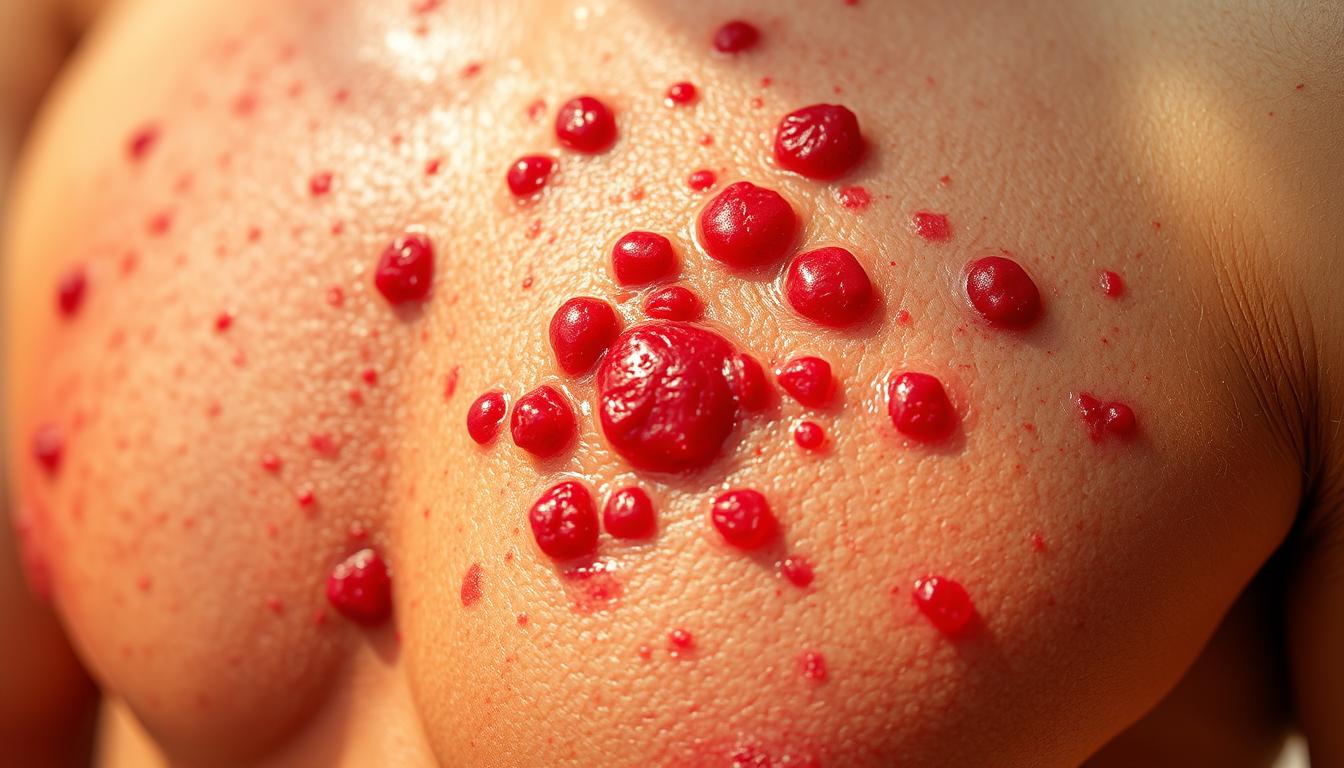
Swimmer’s Itch symptoms can show up quickly, within minutes to hours after swimming in contaminated water. They often begin with small, itchy red spots or papules. How severe the reaction is can vary based on how sensitive a person is to the parasites.
| Symptom | Description |
|---|---|
| Red Spots | Small, itchy red spots or papules |
| Itching | Intense itching sensation |
| Rash Progression | The rash can evolve over time, potentially becoming more severe |
Photographic Reference Guide
Visual aids are key for diagnosing Swimmer’s Itch. Photos help show how the rash changes and what it looks like.
Close-up Images of Early Symptoms
Close-up photos show the early stages of Swimmer’s Itch. They reveal tiny red papules that are very itchy.
Progression Documentation
Tracking how the rash changes over time is important. It helps understand how the condition develops. As it gets worse, the rash can become more noticeable and severe.
“Understanding the visual symptoms of Swimmer’s Itch is essential for accurate diagnosis and appropriate treatment. Visual documentation plays a critical role in this process.”
Knowing how Swimmer’s Itch starts and grows helps people recognize it. They can then get the right medical help if needed.
The Progression of Rash Development
Swimmer’s Itch symptoms can start quickly. The rash changes over a few days. It’s an itchy rash from swimming in contaminated water.
Early Stage Symptoms
At first, you might see redness and itching on your skin. This happens on areas that get wet. Symptoms can start within minutes to days after swimming in infested water. The itching skin can feel mild or very bad.
Developing Rash Characteristics
The skin rash gets worse over time. It turns into small, itchy bumps or blisters. These can grow into bigger, itchier areas. How bad it gets depends on how sensitive you are and how much contaminated water you’re exposed to.
Advanced Stage Appearance
When it gets worse, the rash can itch more and might get infected from scratching. Try not to scratch it to avoid more problems. The swimmer’s rash can take days to heal. Sometimes, it can leave your skin looking different.
Common Body Locations and Distribution Patterns
Swimmer’s Itch rash often shows up on skin not covered by swimsuits. This condition, also known as cercarial dermatitis, hits people who swim in contaminated water. Knowing where and how Swimmer’s Itch appears is key for treating it.
Typical Affected Areas
Swimmer’s Itch usually hits areas exposed while swimming. This includes arms, legs, and the torso, where swimsuits don’t cover. The face, neck, and hands are also common targets, as they often get wet.
The rash’s look and where it shows up can change. This depends on how much someone is exposed and their sensitivity to cercariae.
Visual Mapping of Rash Patterns
Spotting Swimmer’s Itch involves looking at its rash patterns. The rash looks like red, itchy patches or bumps, mainly on exposed skin. Doctors use these patterns to tell Swimmer’s Itch apart from other skin issues.
Photos can really help doctors figure out the condition and track its changes.
Differentiating Swimmer’s Itch from Similar Skin Conditions
Getting a correct diagnosis for Swimmer’s Itch means knowing the difference from other skin issues. These issues can cause itching and discomfort after swimming in fresh or salt water.
Sea Bather’s Eruption
Sea Bather’s Eruption is caused by marine larvae, like those from sea anemones and jellyfish. It happens when these larvae get stuck under clothes or swimwear, leading to an itchy rash. The symptoms might look similar, but the cause and setting are different.
Hot Tub Rash
Hot Tub Rash, or Pseudomonas dermatitis, comes from the bacterium Pseudomonas aeruginosa. It’s found in hot tubs and pools that aren’t well-chlorinated. The rash shows up a few hours to days after being exposed. It’s different from Swimmer’s Itch because it spreads more and is linked to hot tubs and pools.
Other Aquatic Dermatitis Conditions
Other issues, like Seabather’s eruption and contact dermatitis from aquatic plants, can look like Swimmer’s Itch. Each has its own signs and causes.
Side-by-Side Visual Comparisons
Looking at pictures can help tell these conditions apart. For example, Swimmer’s Itch usually shows up as a localized rash, mainly in areas that get wet.
Diagnostic Indicators
Important signs include where you were exposed (freshwater vs. saltwater, swimming vs. wading), how the rash spreads, and other symptoms like fever or feeling unwell.
It’s key to understand these differences for the right diagnosis and treatment. If you’re not sure about your rash, it’s best to see a doctor.
Risk Factors for Developing Swimmer’s Itch
Several factors can increase your chance of getting Swimmer’s Itch. Knowing these can help you avoid it.
Environmental Conditions
Where you swim matters a lot. Lakes and ponds with shallow water and lots of plants are more likely to have parasites. Aquatic snails, common in these places, carry the parasite that causes Swimmer’s Itch.
Weather also plays a part. Warm and calm days make parasites more active. Places with little water movement are also riskier.
| Environmental Factor | Description | Risk Level |
|---|---|---|
| Water Depth | Shallow water | High |
| Aquatic Vegetation | Abundant vegetation | High |
| Weather Conditions | Warm and calm | High |
| Water Circulation | Poor circulation | High |
Individual Susceptibility Factors
How likely you are to get Swimmer’s Itch also depends on you. Spending more time in infested waters increases your risk. People with sensitive skin may react worse to the parasite.
Being exposed to the parasite before can make you more sensitive. So, it’s important to know your risk and take steps to prevent it, if you swim in places with parasites.
Geographic Distribution in the United States
The United States has many lakes and reservoirs where swimmer’s itch parasites are found. This condition, also known as cercarial dermatitis, is an allergic reaction to certain parasites. These parasites live in freshwater lakes, ponds, and reservoirs.
High-Risk Lakes and Bodies of Water
Some lakes and bodies of water in the U.S. are more likely to have swimmer’s itch. This is because of the lake parasite. These include:
- Lakes with shallow water and lots of aquatic plants
- Ponds and reservoirs with slow water
- Places with lots of waterfowl and snails, which host the parasite
| Region | High-Risk Areas | Prevalence |
|---|---|---|
| Midwest | Lakes Michigan, Erie, and many inland lakes | High |
| Northeast | Lakes in New York, Massachusetts, and Vermont | Moderate to High |
| West Coast | Lakes and reservoirs in California and Oregon | Moderate |
Seasonal Variations
Swimmer’s itch happens more often in the summer. This is when the water is warm and people are more likely to be in it. Knowing when it’s most common helps in taking steps to prevent it.
Being aware of where and when swimmer’s itch occurs helps protect against this waterborne parasite.
Prevention Strategies
Learning how to prevent swimmer’s itch can greatly improve your water activities. Swimmer’s itch, or cercarial dermatitis, is an allergic reaction to parasites in contaminated water. It affects the skin.
Before Swimming Precautions
Choosing the right swimming spot is key to avoid swimmer’s itch. Stay away from areas known to have the parasite or where others have gotten it. Swimming in deeper waters is safer, as parasites are more common in shallow waters.
Pre-swimming checks are important. Look for signs or advisories about swimmer’s itch. Some places post warnings if there’s a risk.
During Swimming Behaviors
While swimming, try to avoid direct contact with possibly infested water. Steer clear of areas with lots of aquatic plants, where snails and parasites live. Swimming in slow or stagnant water also raises the risk.
Post-Swimming Protocols
After swimming, rinsing off thoroughly with fresh water is a good step. Drying your skin well, after swimming in possibly contaminated water, is also a must. Some research shows that drying your skin well can help remove the parasite larvae.
By following these prevention tips, you can lower your chances of getting swimmer’s itch. This makes enjoying water activities much better.
Treatment Options
Swimmer’s Itch has many treatment options, depending on how bad it is and what you prefer. Knowing these options is key to managing the condition well.
Relieving Symptoms at Home
Home remedies are great for easing Swimmer’s Itch symptoms. You can use cool compresses to lessen itching and swelling. Taking oatmeal baths can also soothe your skin. Baking soda helps by balancing your skin’s pH and easing itching.
Over-the-Counter Solutions
For really bad itching, you can try over-the-counter (OTC) options. Antihistamines like diphenhydramine can help with itching and improve sleep. You can also use hydrocortisone cream on the affected areas to reduce swelling.
Prescription Treatments
If Swimmer’s Itch is very severe, you might need prescription treatments. These could include stronger creams or pills for a short time.
Topical Applications
Topical treatments are applied directly to your skin. They include creams or ointments with corticosteroids to lessen inflammation and itching. Sometimes, doctors might suggest topical antihistamines or anesthetics.
Oral Medications
For more serious reactions, oral medications might be prescribed. These include pills to reduce itching and inflammation. If there’s a secondary infection, antibiotics might be needed.
| Treatment Type | Description | Use Case |
|---|---|---|
| Home Remedies | Cool compresses, oatmeal baths, baking soda | Mild symptoms |
| Over-the-Counter | Antihistamines, hydrocortisone cream | Moderate itching and inflammation |
| Prescription | Stronger corticosteroids, oral corticosteroids | Severe symptoms or secondary infections |
When to Seek Medical Attention
Knowing when to get medical help is key to avoiding serious issues from Swimmer’s Itch. This condition usually isn’t serious and often goes away by itself. But, some symptoms mean you should see a doctor.
Warning Signs of Complications
Look out for signs of infection like more pain, swelling, or pus. Also, watch for itching that doesn’t get better with treatment. If the rash spreads over a big area, you should get checked out.
What to Tell Your Healthcare Provider
Tell your doctor everything about your symptoms. Share when they started and any treatments you’ve tried. It’s also important to mention swimming in possibly contaminated waters.
“I’ve been experiencing severe itching after swimming in a lake, and the rash seems to be getting worse.” This kind of information helps doctors understand your situation better.
Long-term Effects and Recurrence
It’s important to know how swimmer’s itch affects you long-term. This condition, also known as cercarial dermatitis, can keep coming back. This happens if you keep swimming in water that has the parasite.
Potential for Sensitization
Getting exposed to the parasite again and again can make your body more sensitive. This means your reactions will get worse over time. Your immune system will start to react more strongly to the parasite. This leads to more intense itching and bigger rashes.
Experts say, “Staying away from contaminated water is key. It helps prevent the condition from getting worse.”
“The more you’re exposed to contaminated water, the more frequent and intense your case of swimmer’s itch can be.”
Managing Repeated Exposures
To deal with swimmer’s itch, it’s important to avoid contaminated water. Wear protective clothing and use treatments to help with symptoms.
| Prevention Strategies | Benefits |
|---|---|
| Avoiding contaminated water | Reduces risk of exposure |
| Using protective clothing | Minimizes skin contact with cercariae |
| Topical treatments | Alleviates itching and rash |
By understanding the risks and taking steps to prevent it, you can lessen the impact of swimmer’s itch.
Environmental Management and Control
Controlling the environment is key to stopping cercarial dermatitis, or swimmer’s itch. Lakes and ponds need good management to lower the risk of this issue.
Lake and Pond Management Strategies
It’s important to manage lakes and ponds to fight swimmer’s itch. This means using several methods, like:
- Reducing the number of snails and waterfowl.
- Boosting water quality with aeration and less nutrient runoff.
- Managing plants to cut down on parasite habitats.
| Management Strategy | Description | Effectiveness |
|---|---|---|
| Host Animal Control | Reducing snail and waterfowl populations. | High |
| Water Quality Improvement | Aeration and reducing nutrient runoff. | Medium |
| Vegetation Management | Managing aquatic vegetation. | Low-Medium |
Community Prevention Programs
Getting the community involved is vital in stopping swimmer’s itch. Public education helps people know the risks and how to avoid them. Community programs also help with environmental management.
Prevention Tips: Don’t swim where there are snails, and don’t feed waterfowl. This helps prevent the problem.
Recent Research and Advances in Understanding Swimmer’s Itch
Recent studies have greatly improved our understanding of swimmer’s itch. This condition, also known as cercarial dermatitis, affects people who enjoy water activities. It’s caused by a waterborne parasite.
Scientists have learned a lot about the parasites that cause swimmer’s itch. They found that certain snails help these parasites grow. Knowing this helps us find ways to prevent the condition.
Scientific Discoveries
Studies show that swimmer’s itch is more common in shallow water with lots of plants. Researchers found that the parasite likes to live in areas with specific snails.
They also discovered that getting swimmer’s itch more than once can make it worse. This is because the body gets more sensitive to the parasite. Finding good treatments is now a priority.
Emerging Prevention and Treatment Methods
New ways to prevent swimmer’s itch are being developed. These include special creams that can be applied before swimming. Researchers are also working on better treatments, like anti-itch creams and pills.
There are plans to control snail populations in areas where swimmer’s itch is common. This could help make water activities safer for everyone. It’s a step towards keeping our waterways safe and enjoyable.
Conclusion
Swimmer’s itch, also known as cercarial dermatitis, is a common issue. It happens when people touch contaminated water. Itching after swimming is a common symptom, caused by an allergic reaction to parasites.
To prevent and treat swimmer’s dermatitis, we need to be aware and take steps. Knowing the causes and how to avoid them helps a lot. This way, we can lower our chances of getting swimmer’s itch.
Being aware of our surroundings and our own risks is key. Taking the right precautions before and after swimming helps a lot. Knowing when to see a doctor is also important.
Staying up-to-date with new research on swimmer’s itch is helpful. This way, we can use the latest ways to prevent and treat it. This helps us deal with swimmer’s itch better.